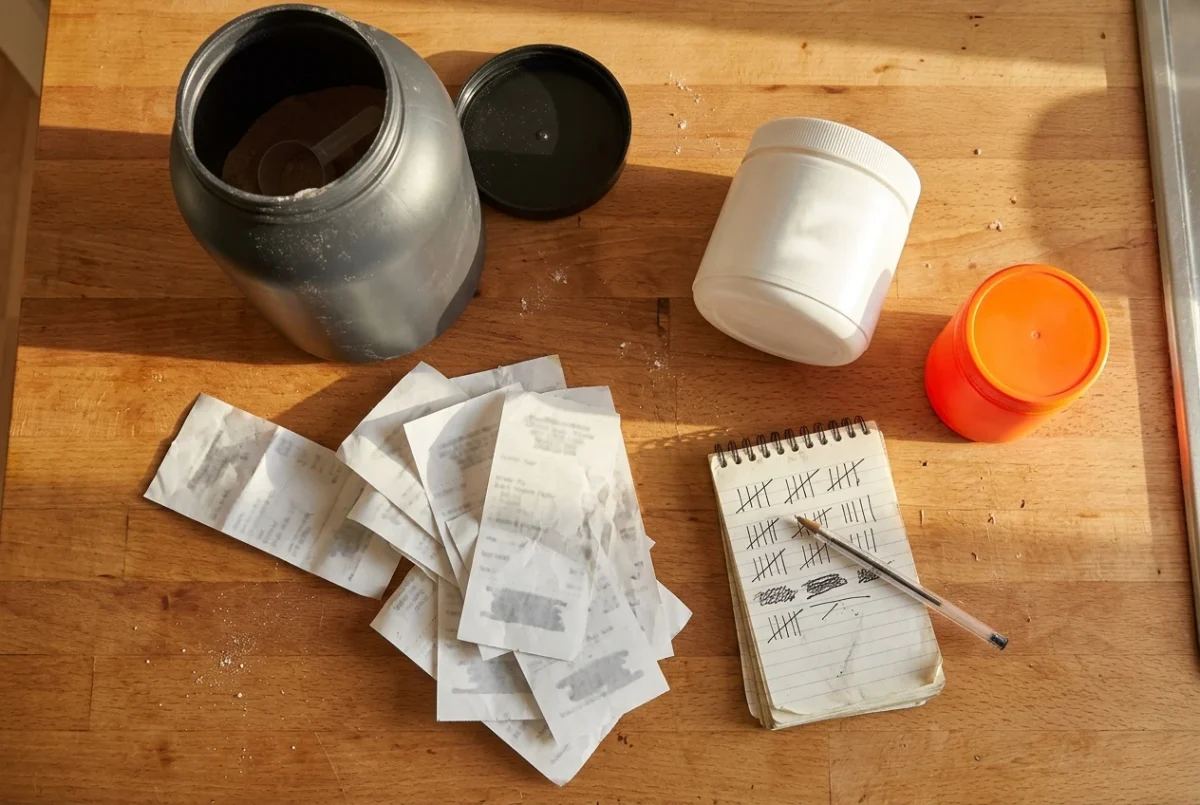
Are supplements a waste of money for lifters? Some of them are, and some of them are among the cheapest things you can buy for your training. The answer depends on which tubs are in your cupboard, and most lifters have never added up what those tubs cost across a year.
This article walks through that exercise. You will total what you spend, sort it into purchases with a job and purchases made out of habit, and move the habit money into gear in an order that matches what limits your training.
Add up what you spent on supplements over the last 12 months
Start with records, not memory. Pull up your bank and card statements, your order history at each online retailer, and any auto-ship subscriptions. Search for the names of the stores and brands you buy from.
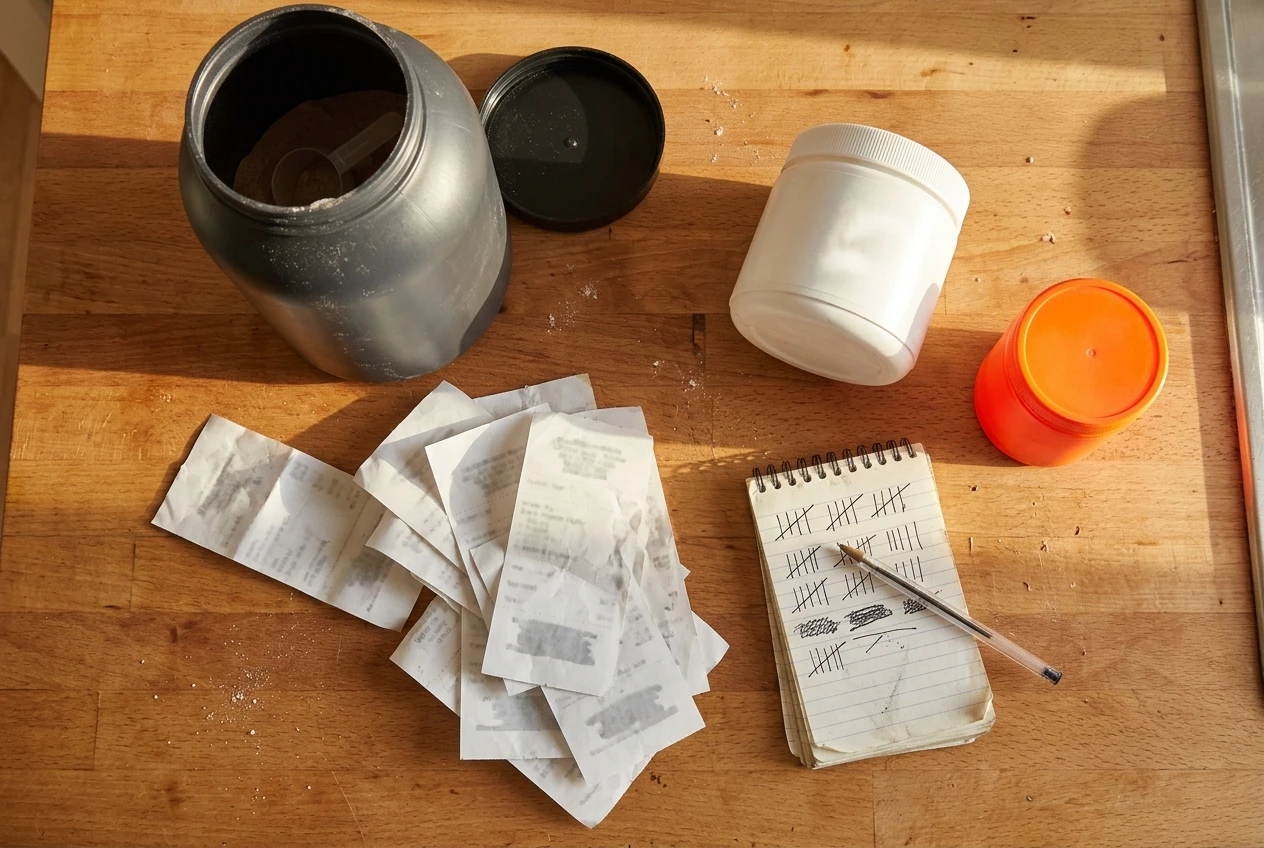
Count everything that goes with the habit:
- Powders, capsules, bottles, and bars
- Shipping charges and subscription fees
- Shakers, scoops, pill organizers, and flavor samples
- Trial tubs you bought and never finished
Check the cupboard too. A half-used tub of something you stopped taking is still money you spent, and it tells you something about which purchases lasted.
Write down the annual total. If you only know the monthly figure, multiply it by 12. Seeing the yearly number matters because a monthly charge feels small, while the same charge over twelve months is large enough to buy a serious piece of equipment.
Sort every tub and bottle into “has a clear job” or “habit purchase”
Make two columns and put each product in one. For each product, answer three questions:
- What specific problem does this solve for my training or diet?
- Is there solid research behind that claim, or only a label and a marketing page?
- If I stopped for a month, what would I notice?
A product has a clear job when you can answer all three without hesitating. Protein powder qualifies if your food falls short of your daily protein target and the powder is the easiest way to close the gap. Creatine monohydrate qualifies because it has one of the longest research records of any sports supplement for strength and training output. Caffeine qualifies if you use it deliberately to get through sessions.
A product is a habit purchase when the answers are vague. Common examples:
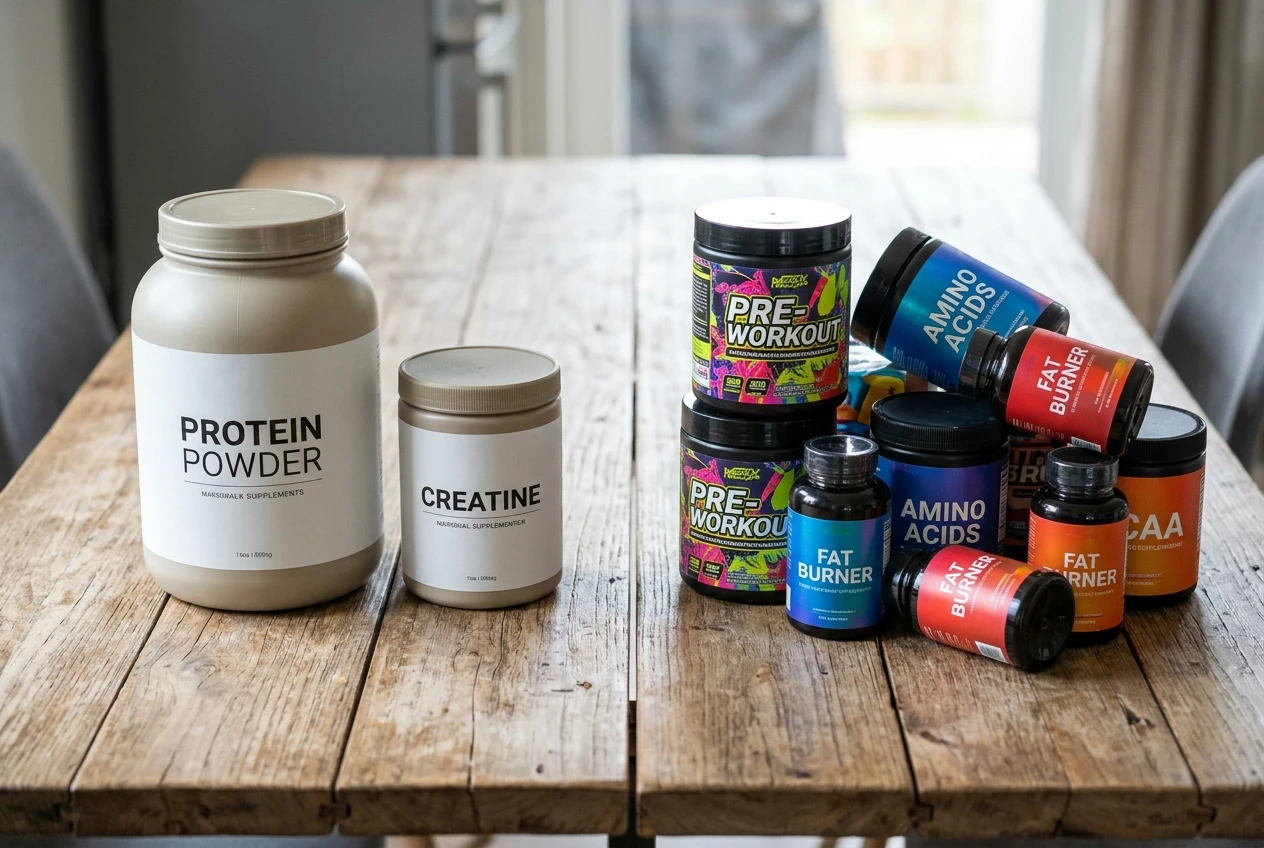
- Several products that overlap, such as a pre-workout, a separate caffeine pill, and a fat burner that all contain stimulants
- Proprietary blends that do not list the amount of each ingredient
- Products you bought because of a label, a sale, or an influencer
- Amino acid products when your daily protein is already adequate from food
If you keep any supplements, check whether the brand uses third-party testing. Supplements are not tested before sale the way medications are, and independent certification programs such as NSF Certified for Sport and Informed Sport exist so athletes can check what is in the container.
Add up the habit column, then multiply the monthly figure by 12. That is the money you can redirect.
Why gear and supplements are not the same kind of spend
A supplement is a consumable. You buy it, use it up, and buy it again, and when you stop buying it any effect it had stops with it. The cost never ends, and the product leaves nothing behind.
Gear is durable. A pair of lifting shoes or a roll of flooring gets used every session for as long as it lasts, so the cost per workout drops the longer you keep training. Gear also changes what your body is able to do in a lift. Shoes change your positions, a belt gives your torso something to brace against, and straps remove grip as a limit on back work. Supplements, even good ones, work at the margins of recovery and performance.
Gear also has downsides worth planning around. Some of it wears out: resistance bands crack and snap over time, and shoe soles compress. Some of it will not help you if the limit is somewhere else, because a belt will not fix a lifter who has never learned to brace. So the purchase should follow a diagnosis, not a shopping list.
If you would rather start from what your home gym lacks instead of from what you spend each month, the piece on deciding what your home gym actually needs next covers that angle. This article starts from money already leaving your account.
Which gear fixes which problem: shoes, belt, straps, bands, flooring
Match the purchase to the thing that ends your sets or limits your sessions. Ask what actually stops you, then buy the item that addresses it.
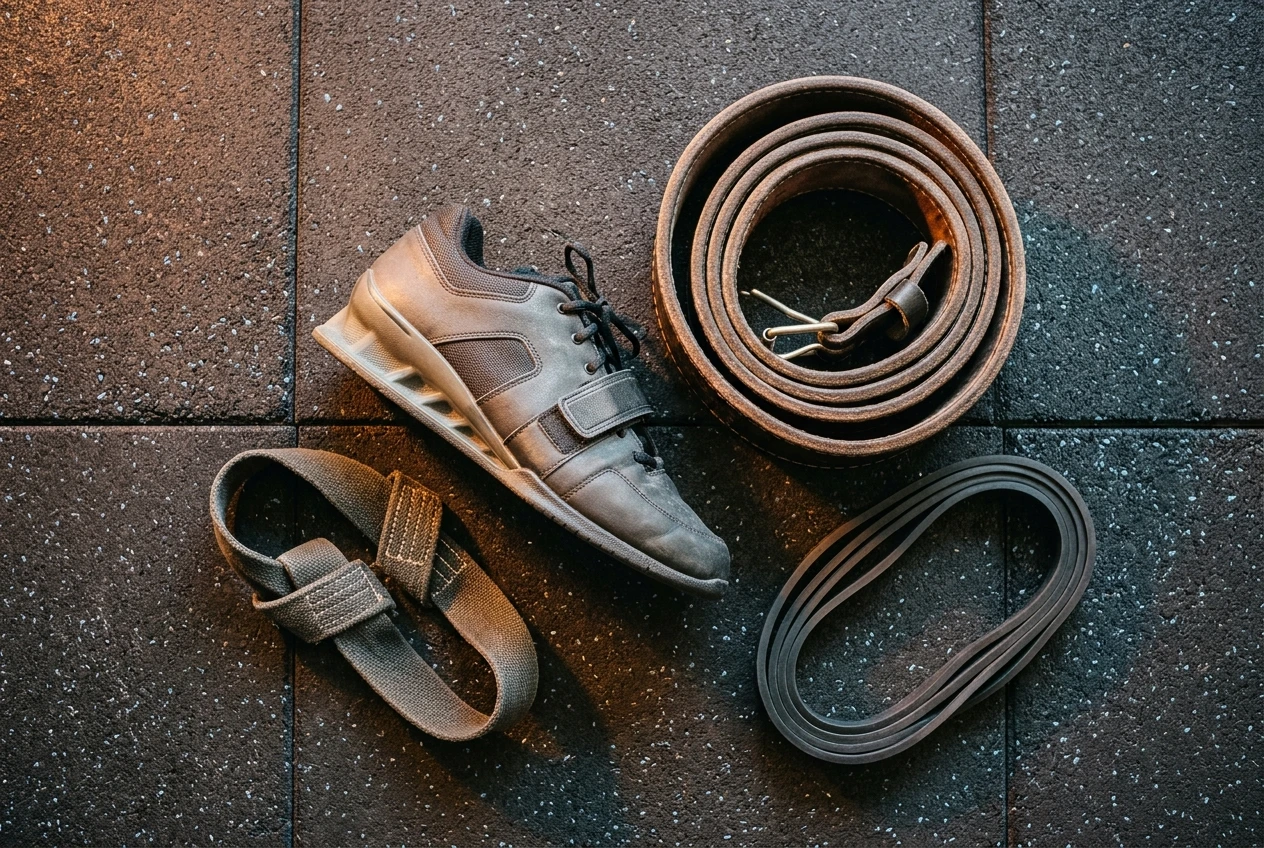
Shoes. If your heels lift or your torso tips forward when you squat, or your ankles limit your depth, a raised-heel lifting shoe can change your position. If you mostly deadlift, a flat, firm sole serves you better. Which one fits depends on what you train, and the guide to flat versus raised heel weightlifting shoes walks through that choice.
Belt. A belt gives your abdomen something to push against during heavy squats and deadlifts, which can help you brace harder. It adds to good bracing and does not replace it. Before you buy one, read what belts, wraps, straps, and shoes can and cannot protect, because many lifters expect injury prevention that no belt provides.
Straps. If your grip gives out before your back does on deadlifts, rows, or pulls, straps let the target muscles finish their work. Use them for top sets and heavy volume and keep training your grip separately. The article on when to use straps and when your grip should do the work sets out a simple rule for each.
Bands. Bands suit warm-ups, shoulder and hip prep, assistance work, and travel or small-space training. They are cheap relative to most gear, but they degrade, so it helps to know what a failing band looks like. The guide to resistance bands worth buying for a home gym covers that.
Flooring. If you drop barbells or deadlift at home, the surface under you matters for your floor, your equipment, and the noise. Flooring does nothing for your numbers directly, but a gym you can use without damaging the house is a gym you will use. See the guide to home gym flooring matched to how you lift.
A quick way to diagnose:
- Sets end because your grip fails: straps
- Squat depth or position breaks down at the ankle: shoes
- Heavy sets feel unstable through the trunk even though your bracing is sound: a belt
- You skip warm-ups or accessory work because setup is a hassle: bands
- You hesitate to deadlift at home because of the floor or the noise: flooring
Turn your monthly supplement budget into a gear purchase schedule
Take the habit column total and divide it by 12. That is the amount you free up each month. Then price the item you picked in the previous section and divide its price by the monthly amount. The result is how many months of redirected money it takes to pay for that item.
For example, suppose your habit column comes to 40 a month. An item that costs 120 would take three months of that money. Those numbers are only an illustration, so use your own totals and the actual price of the item you are considering.
Then set the order. A sensible sequence:
- Whatever stops you from training at all. If your space or surface prevents you from lifting the way you plan to, fix that first.
- Whatever ends your sets early. Grip failure or a position that breaks down at the same point every session is the clearest signal for straps or shoes.
- Whatever adds on top of sound technique. A belt belongs here, after you can brace well without it.
- Whatever improves convenience. Bands and smaller items come last unless a missing warm-up is hurting your sessions.
Stop the habit purchases gradually. Finish the tub you have and do not reorder it. Put the monthly amount into a separate savings account or a separate line in your budget, so it does not drift back into snacks and impulse orders. Buy one item at a time, use it for several weeks, and decide whether the next purchase is still the right one. Your limiting factor can change after the first purchase.
When a program is the better buy than another piece of equipment
Gear only helps if you know what to do with it. If you cannot say what you will lift next week, how heavy, and for how many sets, a program is a better use of the money than a fourth accessory.
A program is usually the right purchase when:
- You change your workouts every session and cannot tell whether you are progressing
- You have stalled for several weeks and are adding exercises instead of adding load in a planned way
- You already own the equipment you need and still feel stuck
- Your schedule is tight and you need sessions that fit it
Structure makes the equipment you own pay off. A plan that sets weekly loads and rest weeks helps you progress. The guide on adding load week to week explains progression when your app only tells you what to do today, and the piece on periodizing a 45-minute session covers training with limited time.
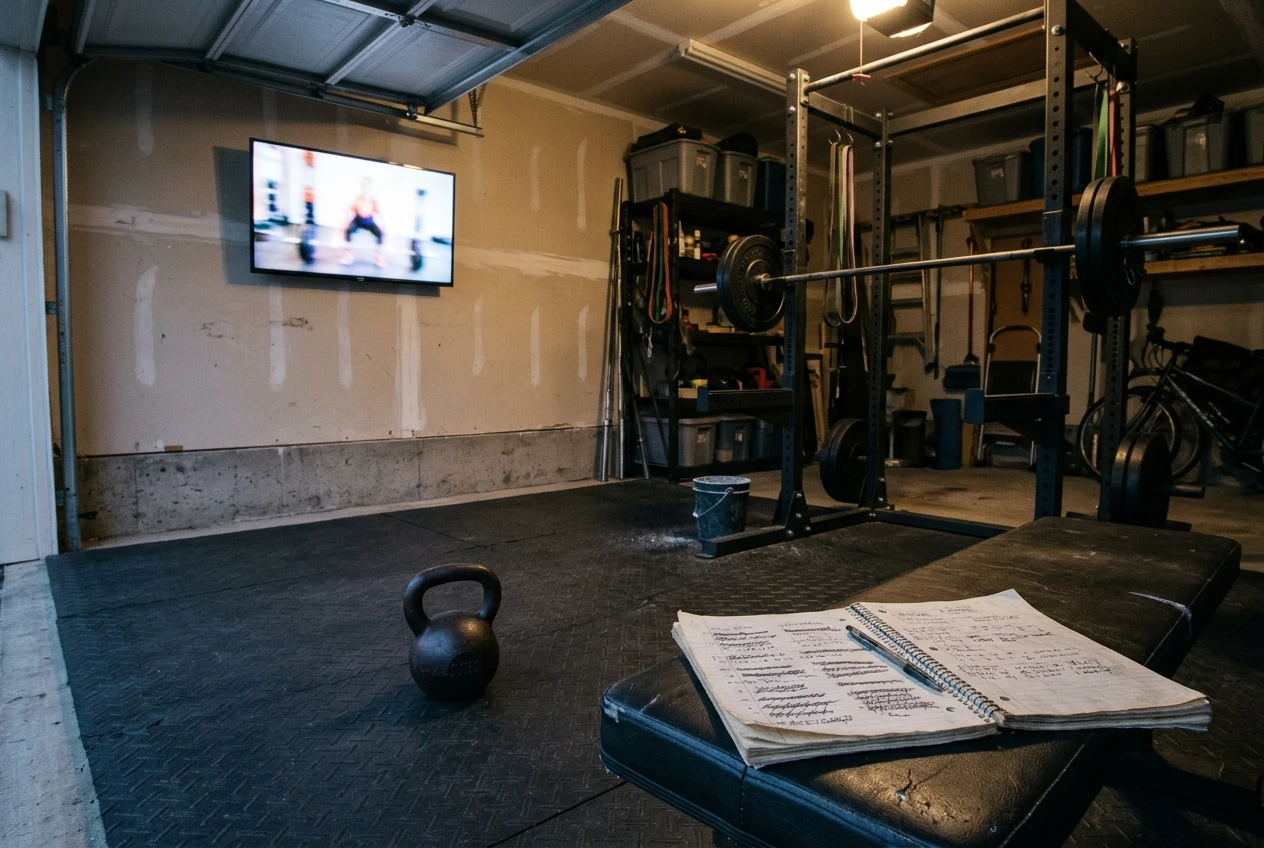
If you want kettlebell training to follow on a TV screen, the review of whether a Samsung TV kettlebell program is worth it compares it with writing your own sets. Either route can use the freed-up money: some lifters buy a program and some buy gear. A lifter with solid equipment and no plan should lean toward the program, and a lifter with a plan and a clear equipment limit should lean toward the gear.
Where supplements still earn a place in your budget
Cutting the habit column does not mean cutting everything. The items that passed your three questions can stay, and keeping them is reasonable.
- Creatine monohydrate has a long research record for strength and training performance, and it is usually inexpensive per serving compared with multi-ingredient products.
- Protein powder is a convenient way to reach a daily protein target when food alone falls short. If your meals already cover it, you do not need it.
- Caffeine works for many lifters who time it before hard sessions. A plain source costs less than most pre-workout blends, and you control the dose.
Any supplement for a medical reason, such as a vitamin or mineral, is a conversation for your doctor and, ideally, a blood test, not a guess from a product page. If you take medication or have a health condition, check with a clinician before adding anything.
The goal is a supplement list short enough that you can state the job of every item on it. Everything else is money you can spend on equipment or coaching that stays useful.
Price out one thing with the money you just freed up
Choose one item from the gear list or one structured program, look up its current price, and divide it by your monthly freed amount. That tells you how soon you can buy it and whether it is the right first purchase.
If you own a Samsung TV and want a guided kettlebell program you can follow on the screen, the Kettlebell Monster Samsung Tizen TV workout app is one option to price against the gear you are considering. Affiliate disclosure: I earn a commission if you buy through this link.