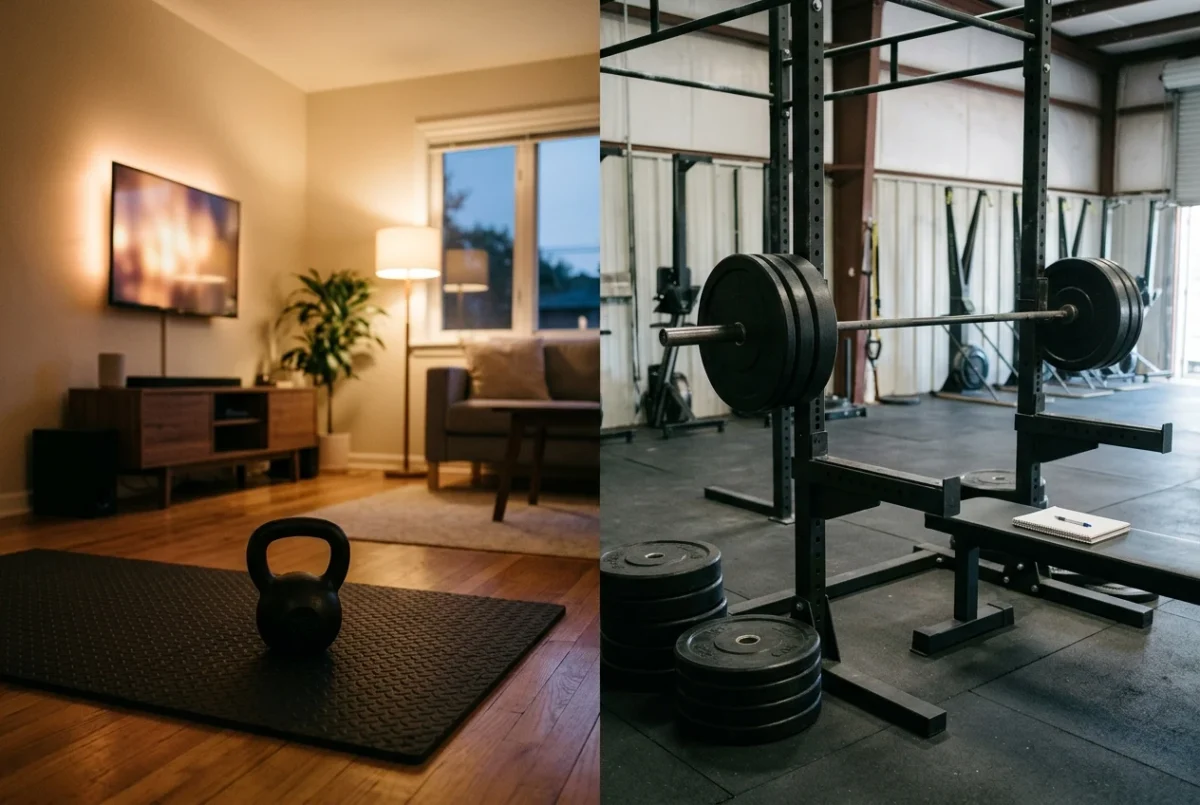
If you have been writing your gym sets on the fly, you already know how a session goes. You walk in, do the lifts you like, add a few sets until you feel done, and leave without being sure whether the session moved you forward. This kettlebell monster app review looks at whether handing those decisions to a TV-guided program is worth paying for, compared with writing your own plan from a traditional barbell routine.
Neither option is right for everyone. They fix different problems, and each leaves a different problem unsolved.
What guessing your gym sets really costs you
Making up sets as you go has a cost, and it rarely shows up in a single session. It shows up over a couple of months.
The first cost is that you pick the exercises you already enjoy. Most lifters drift toward their strong lifts and away from the ones that expose a weakness. If your upper back is your weak link, an improvised session will skip rows more often than it includes them.
The second cost is volume that nobody planned. Without a written target, you stop when you feel tired or bored, which is not the same as stopping at the right amount. Some weeks that is too little to drive progress, and other weeks it is more than you can recover from. If you are adding sets by feel, how to add sets without wrecking your elbows, knees, and lower back covers how to do it more safely.
The third cost is that you have no record to compare against. If you do not know what you did two weeks ago, you cannot say whether today was better. You end up judging progress by mood.
The fourth is ego sets. When nothing says what today’s load or rep count should be, the heaviest thing in the room starts to look like the answer. Those sets feel productive and often end in a ruined rep or a sore joint.
How a TV-guided program and a traditional gym program differ day to day
The two approaches differ most in where the decisions are made and who makes them.
With a TV-guided program such as Kettlebell Monster on the Samsung Tizen TV app, the session is on the screen. You open the app, pick up your kettlebell, and work through what is shown. The planning happened before you arrived, and the pace is set by the program rather than by you.
With a traditional gym program, you hold the plan. It might be a written template from a book, a spreadsheet, or a notes app. You choose the loads, you count the reps and rest, and you decide whether to add weight next time. The program gives you a structure, but you operate it.
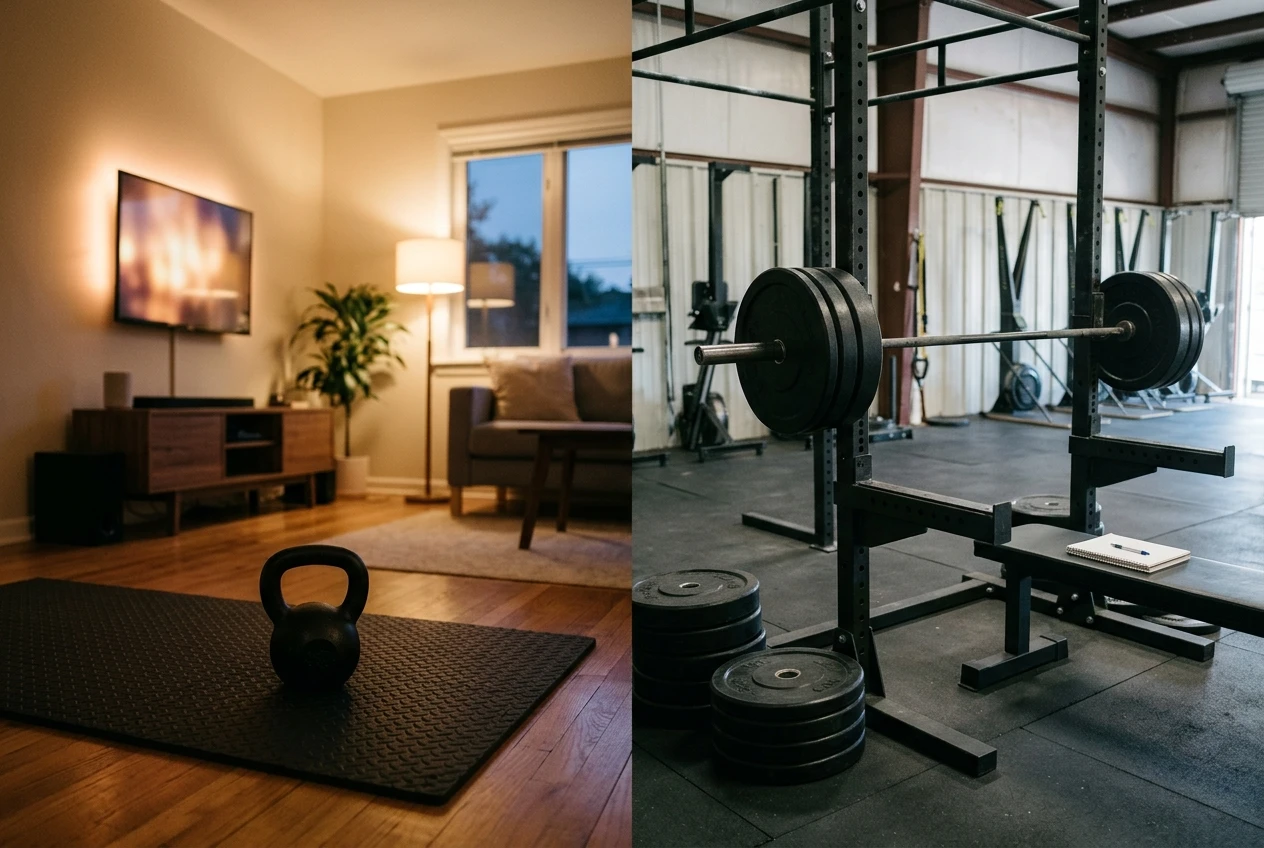
That difference has consequences:
- Decisions: the app removes most of them during the session. A written program removes the exercise-selection decisions but leaves load and rest to you.
- Setting: the app is built around your living room, garage or basement and a TV. A barbell program assumes a rack, a bar and plates.
- Tracking: with a written program, your log is the record. With a TV program, you need to keep your own notes if you want a record of how heavy you went.
- Equipment: the app centres on kettlebells. A barbell program centres on barbell lifts and the accessories around them.
Neither design is better in the abstract. The question is which set of responsibilities you are more likely to carry out week after week.
Where following the Samsung TV app wins: no planning, no skipped days, no ego sets
No planning
Writing a good program takes real time, and many lifters do it badly or not at all. A TV program hands you a finished session. If your main reason for improvising is that you never get around to planning, the app removes that excuse.
No skipped days
A plan on paper is easy to ignore. A session on your television is harder to ignore, because the screen is already in your home and starting takes a few taps. This is a practical advantage for home trainers. The less you have to set up and think about, the more likely you are to start.
That matters more than program quality for many people. A decent program done three times a week beats a better one done twice and then abandoned. If your home setup is not yet ready for following a screen, setting up your home lifting space so you can follow an app or video covers the floor space, screen position and surroundings that make it easier.
No ego sets
When the session tells you what to do and for how long, you stop negotiating with yourself. You do not decide on the spot to go heavier because someone nearby is lifting more. You follow the work as written and stop when it ends. For lifters whose main problem is overreaching on impulse, that structure is useful.
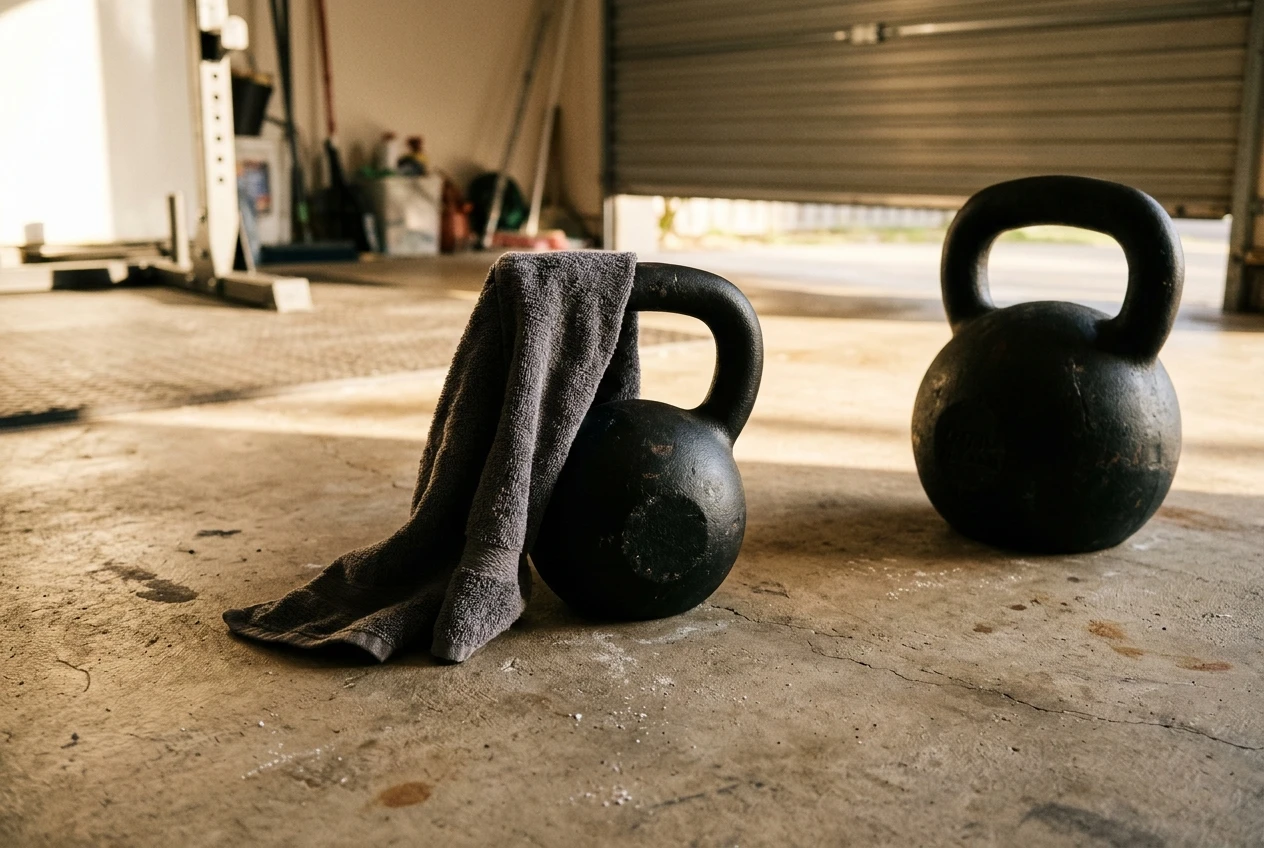
A fixed-length guided session also caps your volume. You are not tempted to tack on extra sets because you feel good, which is one way people overreach and end up sore for days.
Where a traditional barbell program still wins
A barbell program is the stronger tool in several situations, and the app does not change that.
Heavy, measurable load. A barbell can be loaded in small increments. You can add a little each week, record it and see a clear trend. Kettlebells come in fixed weights, and the jump from one bell to the next can be large relative to what you can add in one session. If your goal is a bigger squat, bench or deadlift, the barbell is the better instrument. For readers still working out their bell sizes, why one kettlebell won’t carry you through a program goes into that.
Specificity. If you want to get better at a barbell lift, you need to practise that lift under load. A kettlebell session can build general strength and conditioning, but it will not make your deadlift lockout or your squat depth better by itself. Lifters chasing a plateau on a barbell lift are usually better served by targeted accessories and barbell work, as in picking accessories that fix a powerlifting plateau.
Control over the plan. A self-written program can be adjusted to your weak points, your schedule and your recovery. A guided program is one plan for many viewers. If you have the knowledge to build and adjust a plan, a traditional approach gives you more control. Lifters who understand periodization or volume landmarks can use that knowledge in ways a general program cannot.
Built-in progression. A good barbell template has a rule for when to add weight. You hit the target reps, the load goes up. That rule is part of the program itself, not something you have to bolt on.
What the app will not do for you: load progression, form checks and your own recovery
A TV program shows you what to do. It cannot see you, and that leaves three gaps you will need to cover yourself.
Load progression
You choose the kettlebell. The TV cannot tell whether the bell in your hand is too light, too heavy or right for today. Because the session is the same for every viewer, you have to decide when you have outgrown a weight and move up. Keep a simple log of the bell you used and how the last reps felt, and use it to make that call. How to add load week to week when your training app only tells you what to do today goes through a method for this.
Form checks
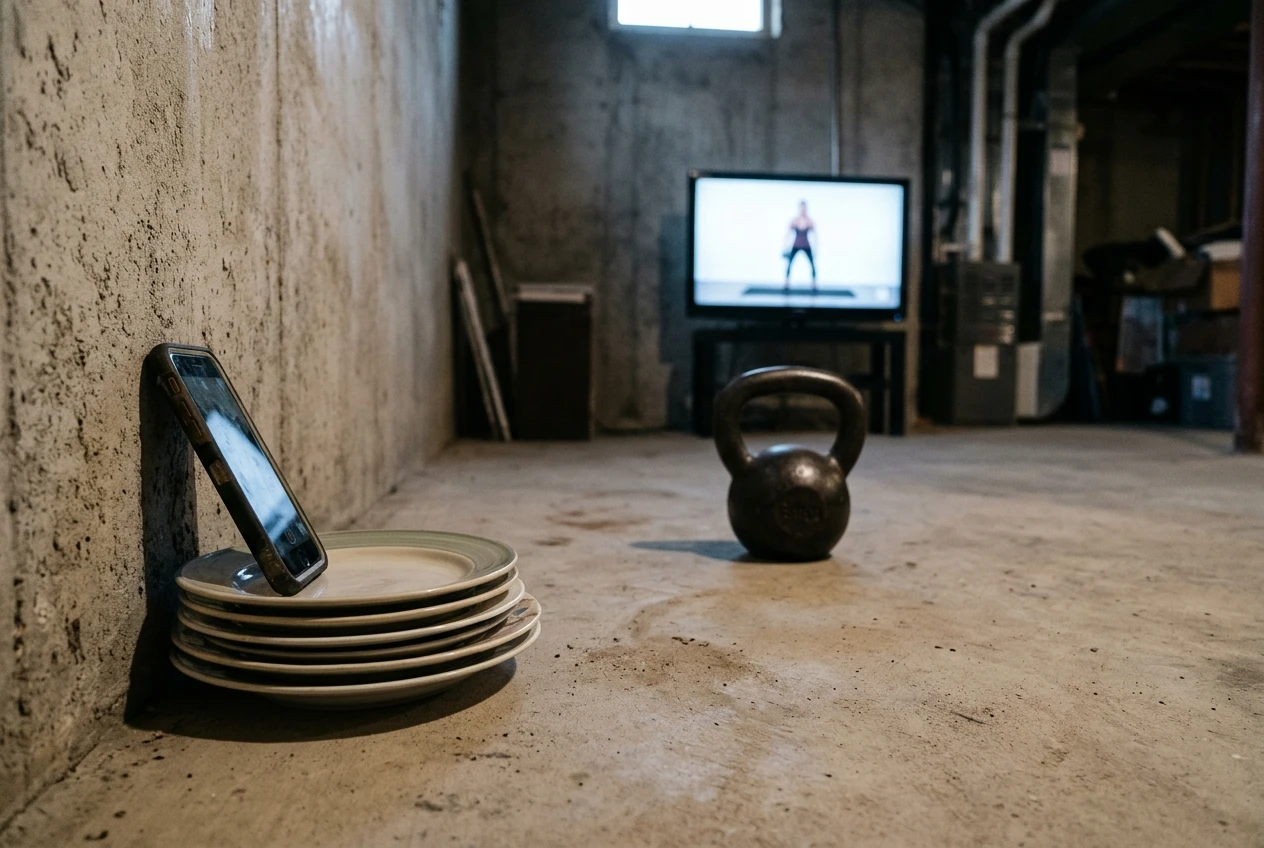
Nobody is watching your swing, clean or squat. You can copy what you see on screen and still repeat a fault for months, such as a rounded back, a knee collapsing inward or a bell pulled with the arms. The fix is to film yourself and compare it to the demonstration. A phone propped against a wall is enough, and how to film your squat and fix what you see shows what to look for. The same habit works for kettlebell movements.
Your own recovery
The session on screen does not know that you slept badly or that your lower back is sore from the weekend. It plays the same way regardless. You have to decide when to reduce the load, cut a few reps or skip a day. If you tend to push through everything because the program says so, this is the habit to watch. For planning lighter weeks, when athletes should deload is the place to start.
Who should follow Kettlebell Monster and who should stay with their own plan
The right choice depends on what your actual problem is.
Follow the app if:
- You train at home and want to start sessions with minimal setup.
- You skip workouts because you have to plan them first.
- You tend to overdo it, chase heavier weights on impulse or add sets until you are wrecked.
- You own a kettlebell or are willing to buy one and want a structure that fits it.
- You want general strength and conditioning rather than a specific barbell number.
- You have a Samsung TV that runs Tizen apps and enjoy following along on a big screen.
Stay with your own plan if:
- Your goal is a heavier squat, bench press or deadlift, and you train in a gym with a barbell.
- You already follow a written progression and it is working.
- You know how to adjust volume, intensity and recovery, and you like doing so.
- You need to log exact loads each week to see improvement.
Consider both if you lift barbells in a gym and want a simple kettlebell session on days you cannot get there. The two do not have to compete. A guided home session can fill the days a barbell plan does not cover. If you are deciding what to buy next, essential vs luxury home gym equipment can help you judge whether a program or a piece of gear should come first.
How to test the Samsung TV app before you commit
Before you pay, make sure the program fits your situation by running a short trial of your own.

- Check your TV. The app is made for Samsung Tizen TVs, so confirm that your television supports it before anything else.
- Read the current details. Look at the shop page for the current price and what is included. Those can change, so rely on the page rather than on this article.
- Do a handful of sessions. Run several sessions across one or two weeks, not just one. The first session tells you little about whether you will keep going.
- Keep notes. After each session, write down which bell you used and how the last few reps felt. If the load never feels right, that tells you something about the program’s fit.
- Film one set. Record a set of a movement and compare it to what is on screen. It will show you whether you can follow the program without someone watching.
- Ask one question at the end. Did you start every session you planned to? If yes, the program is solving your consistency problem. If you still skipped days, a different format may suit you better.
If the answers are positive, the app is probably worth keeping. If you found yourself wanting heavier loads, tighter tracking or more control over the plan, go back to a written barbell program.
Ready to try a program instead of making up sets?
If you fit the follow-a-program profile above, you can look at Kettlebell Monster (affiliate link: I may earn a commission if you buy through it) and the Samsung Tizen TV app (affiliate link: I may earn a commission if you buy through it). Check the current details on the shop page, run the test above, and keep your own log of loads and form so the program does the planning while you do the progressing.