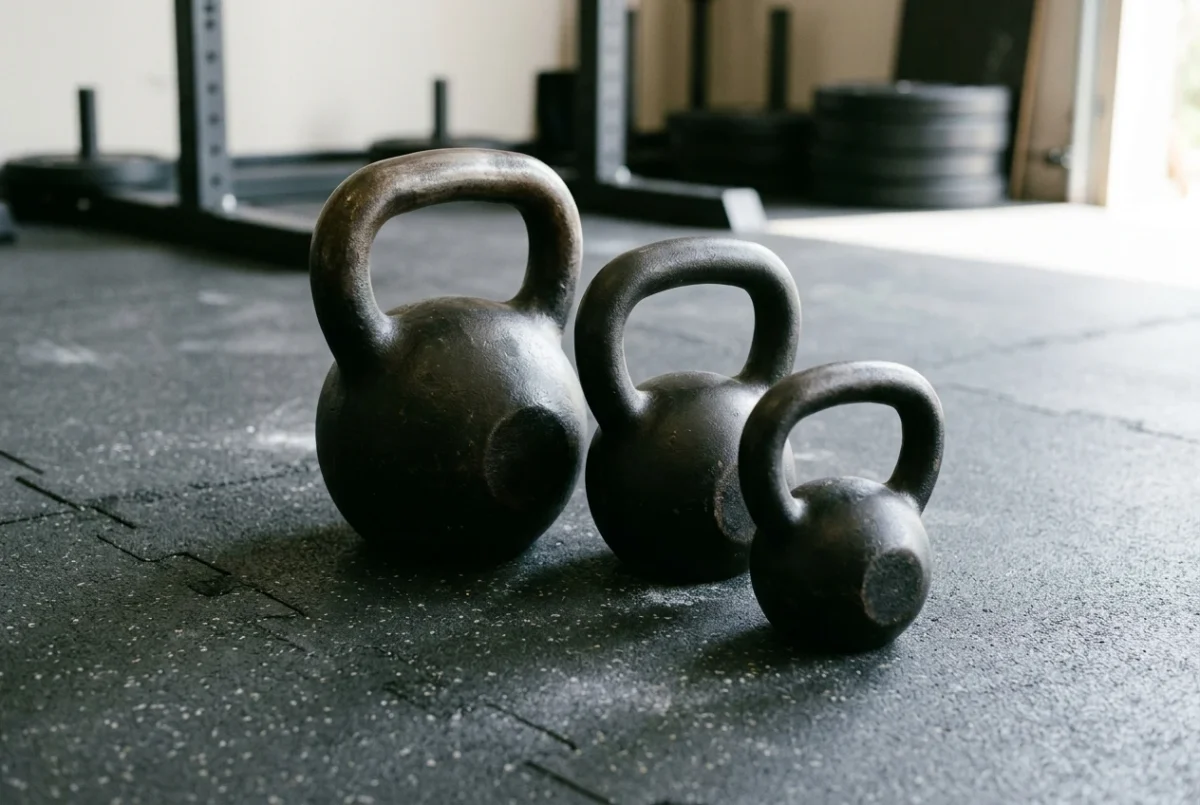
If you are asking what kettlebell weights you need, the honest answer is “more than one, and not the same ones for every lift.” A bell that suits your swing is usually too heavy for a strict press, and a bell you can press for a full set is usually too light for a swing to train anything. A program that mixes those movements will push you toward at least two bells, and often three.
This article covers the buying logic: why the weights differ, which one stalls you first, how to read a program’s weight prescription, and what order to buy in.
Why the bell that feels right on day one stops working by week six
On day one, you pick a bell that lets you learn the movements with clean form. Nearly any beginner choice does that job. The trouble is that you adapt to it, and you adapt at different speeds in different movements.
Swings and squats are driven by the glutes, hamstrings and quads, which are large muscles that respond quickly to repeated loading. Within a few weeks of consistent sessions, the bell that felt heavy on a swing starts to feel light. Presses rely on the shoulder, triceps and upper back, which are smaller muscles, and they move forward more slowly.
So by week six the same bell is often too light for one lift and still too heavy for another. A single bell cannot fit both, and no weight you choose on day one can predict which lift will outgrow it first.
Swings, squats, presses and carries each need a different weight
Each of the four staple movements is limited by a different part of your body, so each one has a different usable weight.
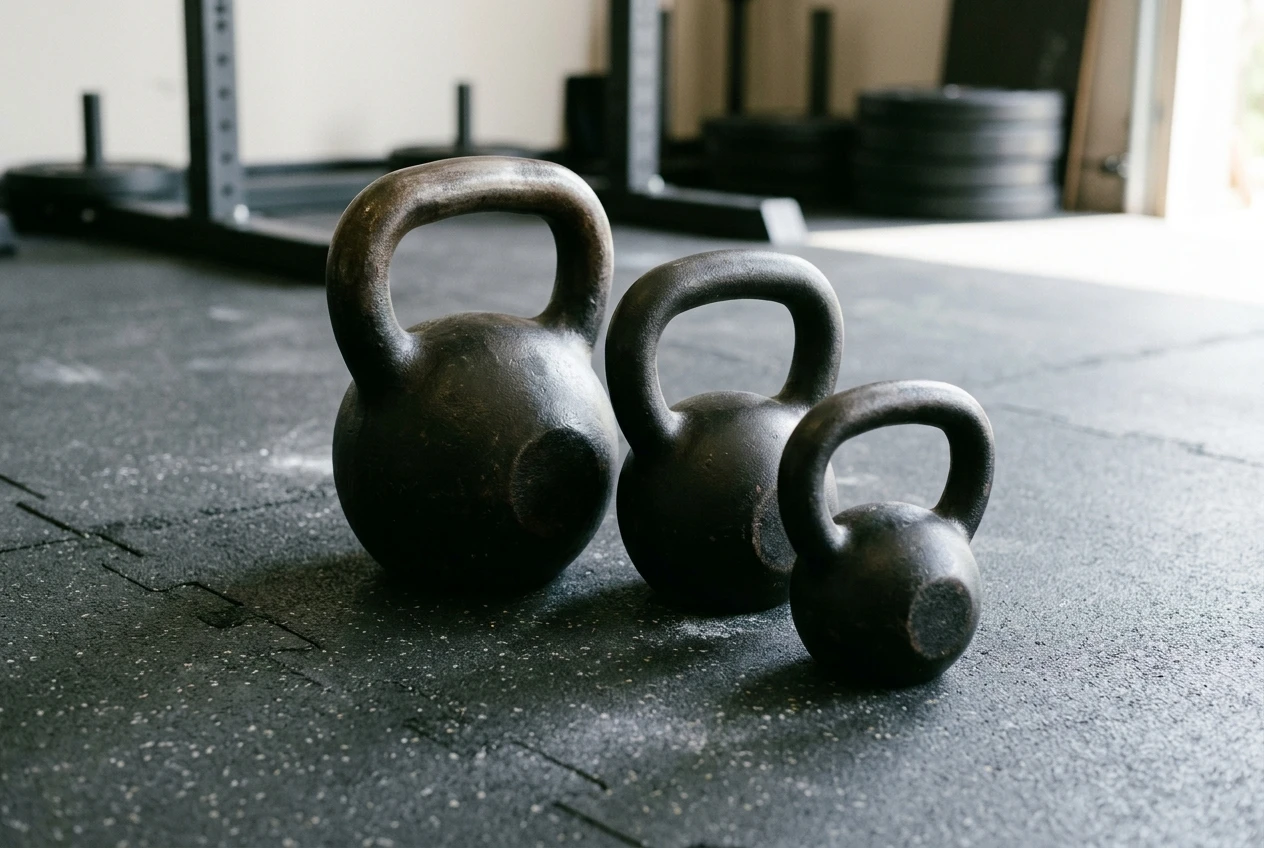
- Swings: The hips generate the force and the arms only guide the bell. This is typically where you can use your heaviest bell, because large hip muscles can move a lot of load. A bell that is too light turns the swing into a shoulder raise.
- Goblet and front-rack squats: The legs can handle more than you can comfortably hold. The limit is usually how long you can keep the bell at your chest while your upper back and arms tire. Squat weight often sits a step or two below your swing bell.
- Presses: Pressing is limited by the shoulder, and a single-arm press puts the whole load on one side. The press bell is commonly the lightest bell in a program.
- Carries: Grip and trunk set the ceiling. A suitcase carry can use a heavy bell, but your grip will give out before your legs do. A rack carry, with the bell held at the shoulder, is usually lighter.
As a hypothetical example, a lifter could swing a bell two sizes heavier than the one they press. The exact gap depends on the person, but a gap of some size almost always exists, and it widens as the legs and hips improve faster than the shoulders.
Why the press stalls first and what that means for your second bell
Bells come in fixed jumps. In the common metric range, those jumps are 4 kg (8, 12, 16, 20, 24 and so on). Going from 16 kg to 20 kg is a 25 percent increase, and going from 24 kg to 28 kg is about 17 percent. A press that has to absorb a 25 percent jump on one arm is a much harder step than a swing absorbing 17 percent with the hips.
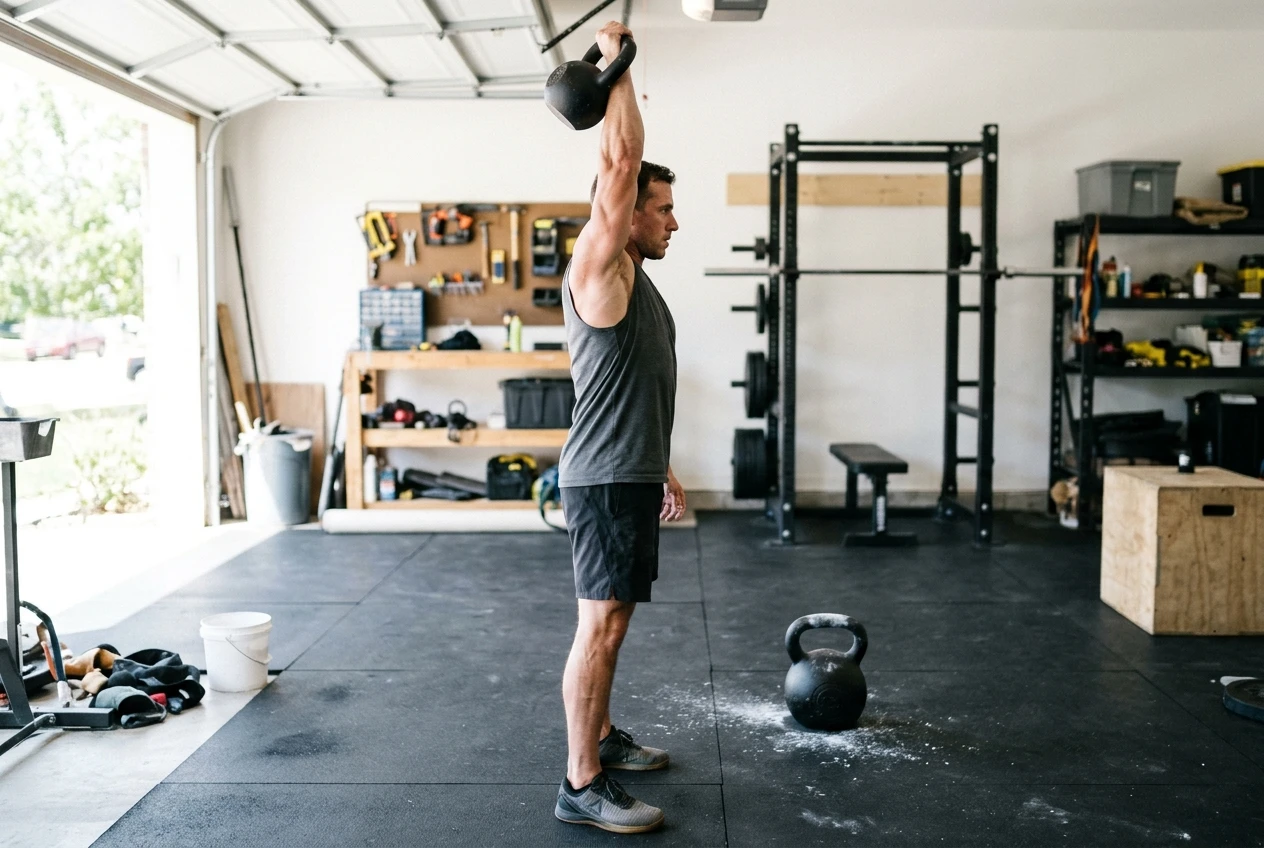
That arithmetic is why the press stalls first. You may be able to add reps for a few weeks, but eventually the next bell up is simply too heavy to press for the prescribed reps, and the current bell is too light to be a challenge.
What this means for your second bell depends on how you bought the first one:
- If your first bell was chosen to suit swings and squats, the press is probably the lift that stalled. The second bell should be a lighter one for pressing.
- If your first bell was chosen so you could press comfortably, your swings probably feel light. The second bell should be heavier, for swings and squats.
Either way, the press bell tends to stay in your kit for a long time, because it moves up slowly. Small progressions within one bell, such as more reps, slower lowering or added pauses, keep the press moving between bell sizes. The existing guide on programming kettlebell sessions when you only own a few bells covers how to build sessions around that limit.
Cast iron, competition and adjustable bells: what changes in your training
The three types differ in ways that affect how a program feels, beyond price and looks.
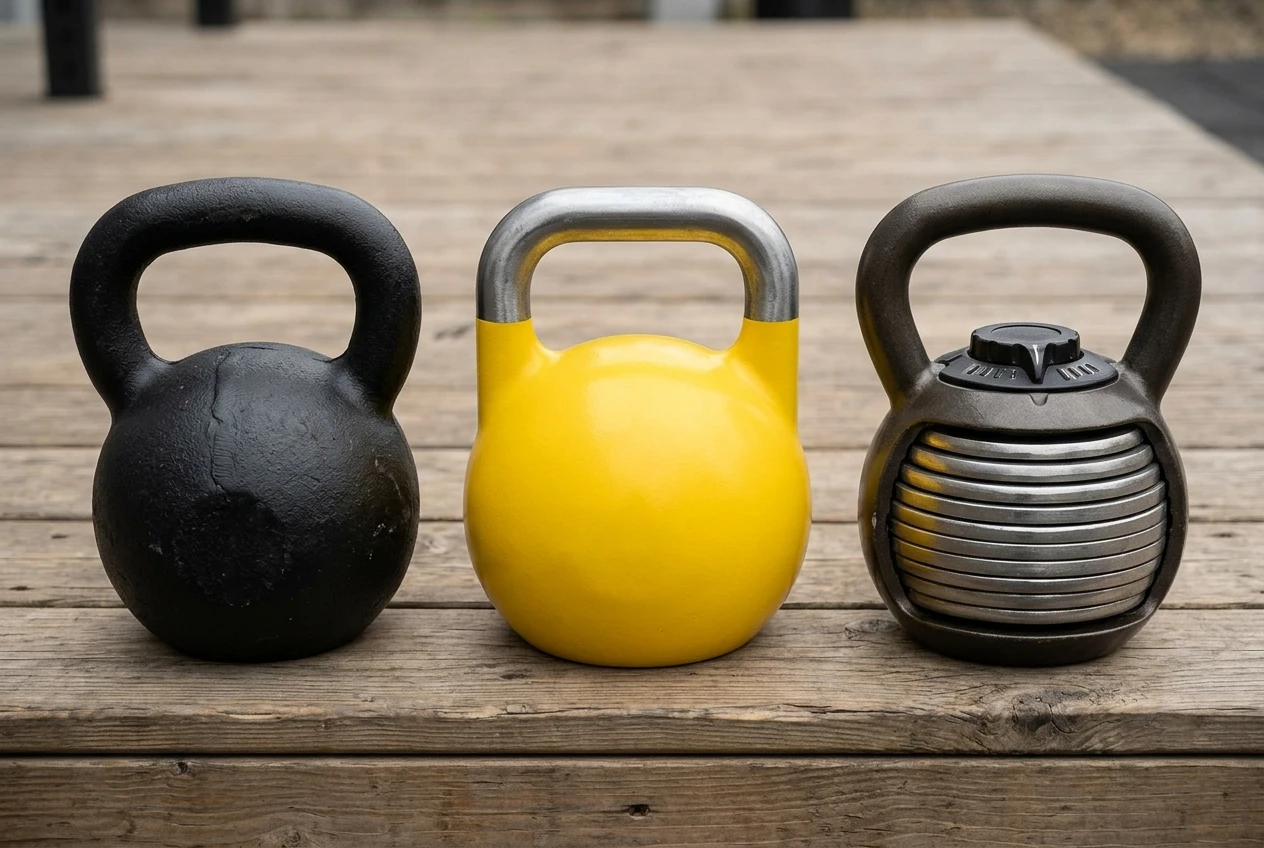
Cast iron bells are the common default. Their physical size grows as the weight increases, and handle thickness and finish vary by manufacturer. Moving from a lighter to a heavier bell can change your grip and the bell’s position on your forearm in the rack, so the same press can feel different even at similar loads. Rough handles and seams can irritate the hands during high-rep swings.
Competition bells are the same size at every weight, with the same handle diameter, and they are usually color-coded by weight. Because the dimensions never change, your rack position, grip and swing path stay the same when you move up. That consistency helps most when you own several bells and switch among them in a session.
Adjustable bells let you load plates or change a setting to alter the weight, so one handle covers a range. That is useful when you need small jumps, especially for pressing. The tradeoffs are that changing weight takes time, which slows sessions that switch bells often, and the shape and balance can differ from a solid bell, which some lifters notice in the rack position and in swings. Check how quickly the weight can be changed and how it feels in the rack before you rely on one for a program that changes weights mid-session.
How to read a program’s weight prescription before you buy anything
Before you buy a bell, read what your program asks you to move. Prescriptions come in several forms:
- A named bell size for each movement, which is the simplest to buy for.
- A descriptor such as “moderate” or “heavy,” which you have to translate yourself.
- An effort target such as “a weight you could press for 8 reps but stop at 5,” which tells you the load depends on your current strength.
- A rep range, where low reps imply a heavier bell and high reps a lighter one.
Go through the program and list each movement with its rep range and any weight guidance. Then group the movements by what is likely to limit them: hips for swings, upper body for presses, grip for carries. This shows you how many different weights the program actually uses.
Two other checks matter before you buy:
- Single or double bells. If the program calls for double presses or double front squats, you need two matching bells for those movements, not one.
- Weight changes within a session. If a single session moves from heavy swings to lighter presses, you need both bells within reach on the same day, which affects how many you must own and which type suits you best.
A buying order for one, two and three bells
The right order depends on what your program asks for most often.
One bell. Choose for the lift you do most and care about most, which is usually the swing or the squat. Use it for presses with lower reps and more pauses, and accept that the press will stall sooner than the rest. A bell that is slightly challenging for swings is a better buy than one that feels easy for the press.
Two bells. Add the one your first bell cannot cover. If the first was heavy, add a lighter one for pressing. If the first was light, add a heavier one for swings and squats. This is the purchase that removes most stalling, because it separates the lifts that move quickly from the ones that move slowly.
Three bells. Fill the largest remaining gap. For many lifters that means a second bell near the press weight, which allows double-bell work, or a bell between the first two, which smooths the jump in progression. If your program uses carries, a third bell can also be a heavier one for suitcase carries.
Gear that helps and gear you can skip
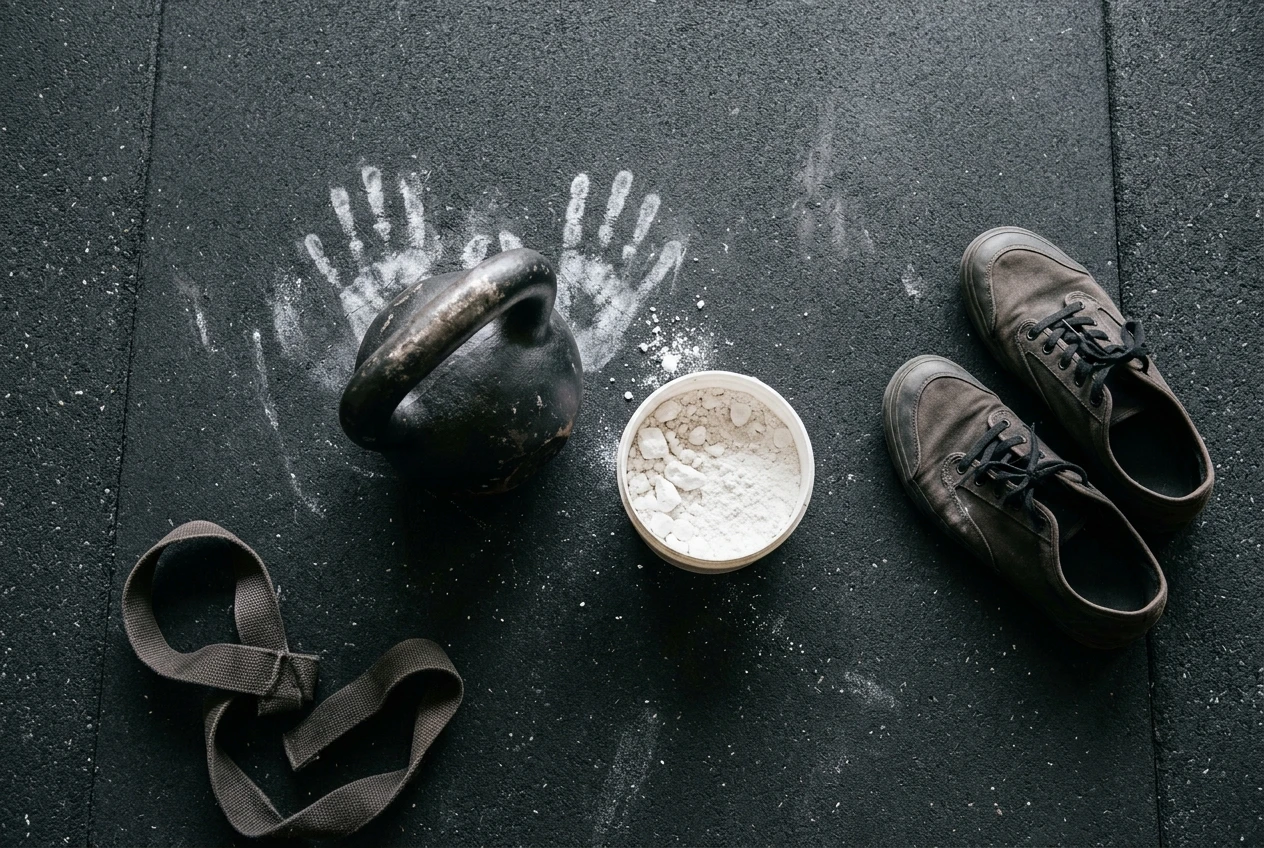
Most of what is sold alongside kettlebells is optional.
- Chalk helps when sweaty hands slip during long swing sets or carries. It is cheap and works on any bell finish.
- A firm mat helps if you want to protect a floor. A thick, soft mat makes footing unstable during squats and presses, so choose a dense one.
- Straps are usually unnecessary. Carries and swings train your grip, and straps remove that work. The guide on when to use lifting straps explains when that tradeoff makes sense.
- Flat, firm-soled shoes work well for squats and presses. Heavily cushioned shoes make the floor feel less stable under load.
- Racks and extra accessories can wait. Before buying anything beyond the bells, the piece on essential vs luxury home gym equipment can help you decide what is worth the money.
Checking your setup against your program before the next session
Before your next workout, compare what you own with what the program asks for. Go through this list:
- Do you have a bell that suits each movement’s rep range, or are you using one bell for everything?
- Is your swing bell heavy enough that the hips do the work?
- Is your press bell light enough that you can finish the prescribed reps with good form on both sides?
- Does the program call for two matching bells anywhere?
- Is there enough clear floor and ceiling space for overhead work? The guide on setting up your home lifting space to follow an app or video covers the layout.
If you find a gap, buy for that gap first. The upcoming session will tell you more than any chart.
If you would rather have guided sessions that tell you which bell to pick each day, Kettlebell Monster is built around that. (Affiliate disclosure: this is an affiliate link, and this site earns a commission if you buy through it, at no extra cost to you.) For those who train in front of a TV, there is also the Kettlebell Monster workout app for Samsung Tizen TVs. (Affiliate disclosure: this is also an affiliate link, with the same commission arrangement.) If you want the full verdict before deciding, read the Kettlebell Monster review covering what the program teaches first.