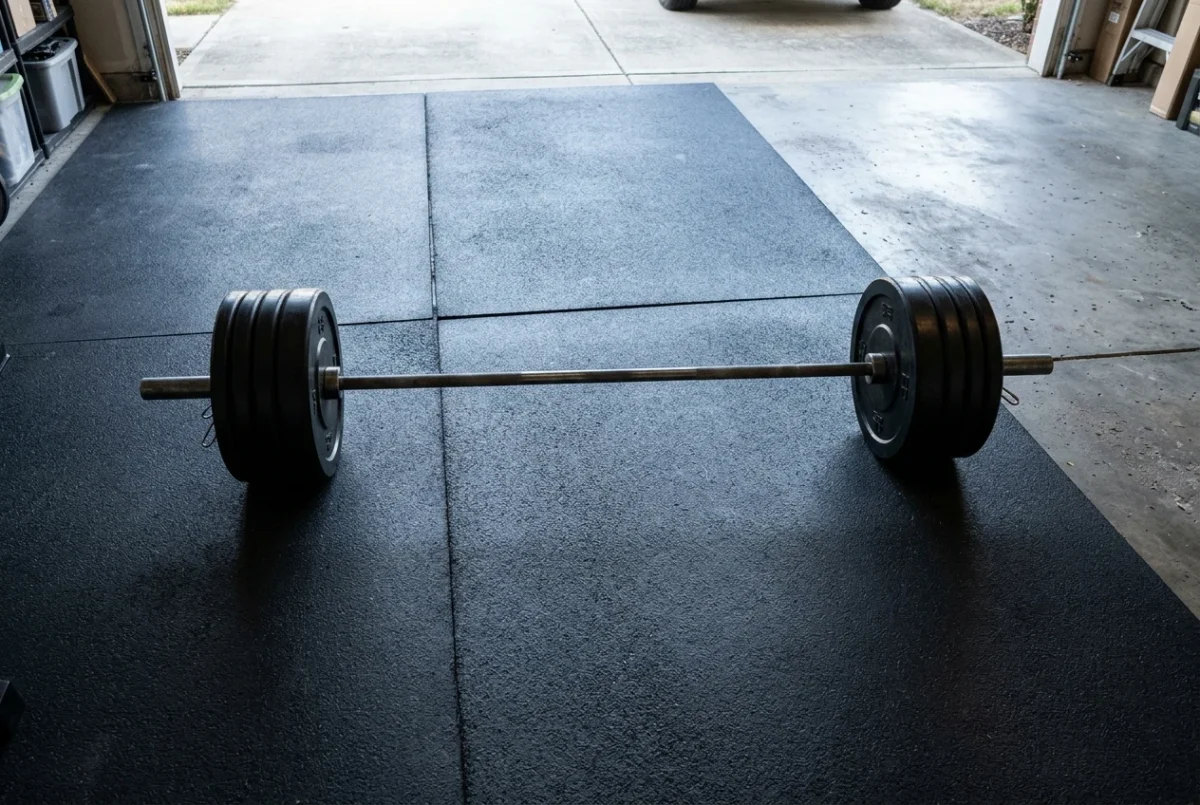
If you want the best home gym flooring for heavy lifting, the product matters less than three questions. Do you drop the bar from lockout? What is under the floor: a garage slab, a basement, or a wood subfloor upstairs? How much can you spend? Once you have answered those, most of the choice is made for you.
This article compares the three options most home lifters end up choosing between: horse stall mats, rubber rolls or tiles, and a built lifting platform. It says which lifter each one suits, and where each one fails.
What your floor actually has to do under a heavy barbell
A lifting floor has four jobs, and no single material does all of them equally well.
- Protect the surface underneath. Concrete chips and cracks where plates land hard. A wood subfloor can dent, and the joists below it carry whatever force you put down.
- Protect the equipment. Bars, plates, and rack feet last longer when they land on something that gives slightly.
- Give you stable footing. You push through the floor on every squat, deadlift, and overhead press. If it compresses or tilts under your feet, the lift changes.
- Control noise and vibration. This matters in a basement under a living room, and matters more upstairs.
A mat that handles the first two jobs well can still be a poor place to stand under 300 pounds. Keep all four in view while you choose.
Do you drop the bar or lower it?
This question decides how much floor you need.
If you lower every rep under control, including deadlifts, the floor mostly deals with the static weight of you, the bar, and the rack. Almost any firm, flat rubber surface works, and your money is better spent elsewhere.
If you drop the bar after heavy deadlifts, Olympic-style pulls, or failed overhead reps, the floor takes a sharp impact. Dropping works only with bumper plates, which are made of dense rubber for this purpose. Iron plates dropped on a slab can crack the concrete and mark the plate. Even with bumpers, the landing zone needs a thick, dense layer or a built platform.
There is a middle case. Some lifters lower the bar for most sets but occasionally dump a missed rep or drop the last deadlift of a heavy single. The floor has to handle that occasional hit, so plan for the worst thing that will realistically happen, not the average set.
Stall mats: why they are the default, and where they fall short
Horse stall mats are dense rubber sheets sold at farm and ranch supply stores. They are commonly cut in 4 by 6 foot pieces and are roughly three-quarters of an inch thick. Home lifters adopted them because the material is thick, heavy enough to stay put, and usually costs much less than mats marketed as gym flooring.
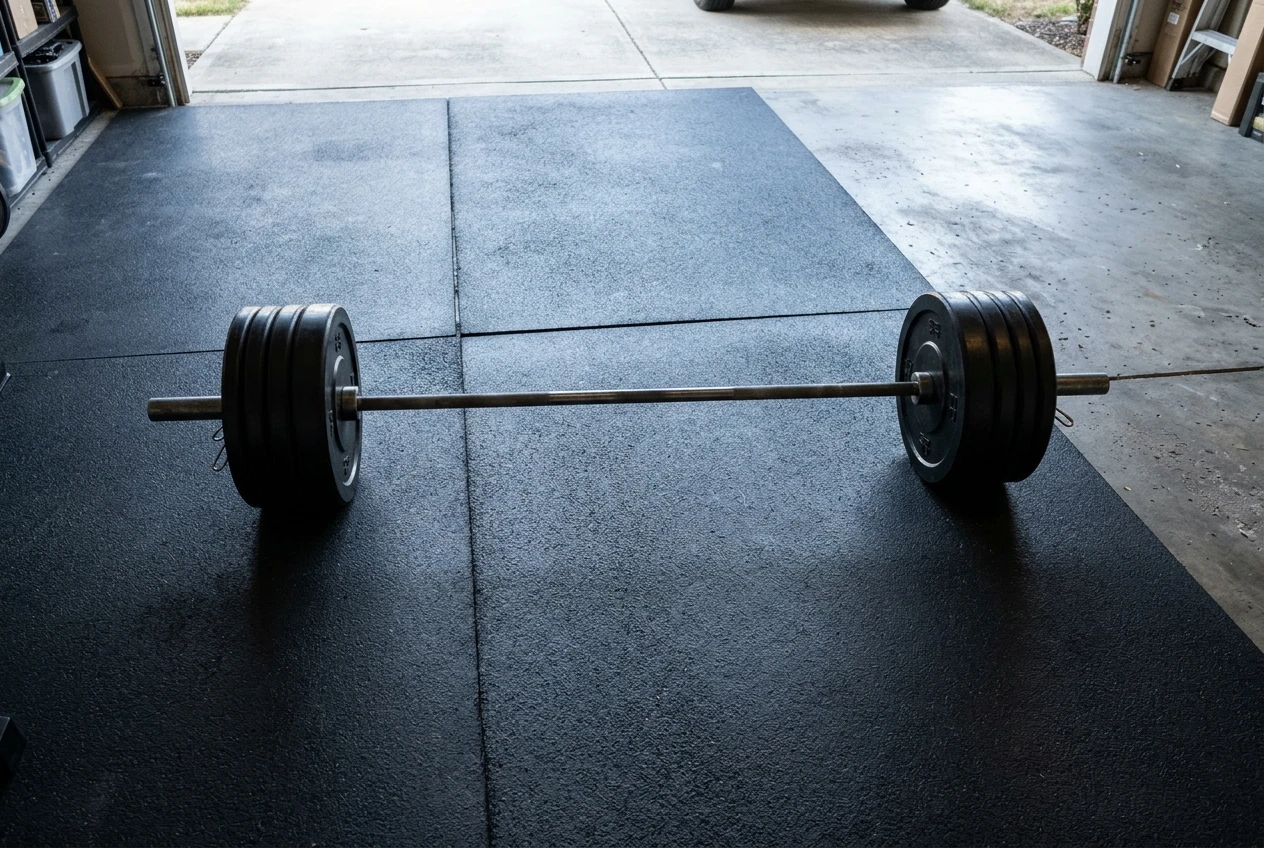
They work well for several reasons:
- The thickness absorbs a dropped bumper plate better than thin gym rubber.
- The weight keeps them from creeping under a rack.
- You can cut them with a sharp utility knife to fit the space.
- They give a firm surface to stand on.
They fall short in a few ways. New stall mats smell strongly of rubber, and the smell can take days or weeks to fade, which matters in a closed basement or spare room. They often arrive curled from being rolled or stacked, so lay them flat for a day or two before you trust them. Thickness can vary slightly from sheet to sheet, and the seams between sheets can leave small ridges or gaps. A barbell rolling across a seam or a foot catching a raised edge is a nuisance, and it is worth checking before you set up the rack.
Stall mats are also not designed for lifting, so they offer no consistent surface for deadlift setups. If you pull with a narrow stance and the plates land on a seam, the bar may sit slightly tilted. Put the lifting area in the center of one sheet, not across a seam.
For many home lifters, a stall mat under the lifting area is enough. It stops being enough if you drop heavy weight often, or if the surface underneath is something you cannot afford to damage.
Rubber rolls and tiles: when the extra cost makes sense
Rubber rolls and interlocking tiles are sold specifically as gym flooring. They are generally thinner than stall mats, though thickness varies by product, so read the listing before you buy. They cost more per square foot than a stall mat in most cases, and what you are paying for is finish, not impact protection.
Rolls cover large areas with few seams, which suits a room where you also do conditioning, stretching, or kettlebell work and want one continuous surface. They look cleaner and usually smell less than raw stall mat. Tiles let you replace a damaged section without redoing the room, but they can shift under a loaded rack, and the joints are another place a foot or bar can catch.
Where they make sense:
- A finished basement or spare room where appearance and smell matter.
- A space where you lower the bar and never drop it, so thickness is not the main concern.
- A room used by other people for other training.
Where they do not: under a heavy drop zone. A thin layer on concrete will keep the slab from scuffing and cut some noise, but it will not absorb a heavy repeated impact the way a thick stall mat or a platform does. If you drop the bar, check what the product is rated for, and do not pay extra for a finished look that a platform would have covered better.
Building a lifting platform: what it solves that mats cannot
A lifting platform is a raised, layered surface, usually plywood sheets stacked and fastened together, with rubber on the sides or ends where plates land and a wood surface in the middle where you stand. A common home build is roughly eight feet square, though the size should follow your own space and the length of the bar.
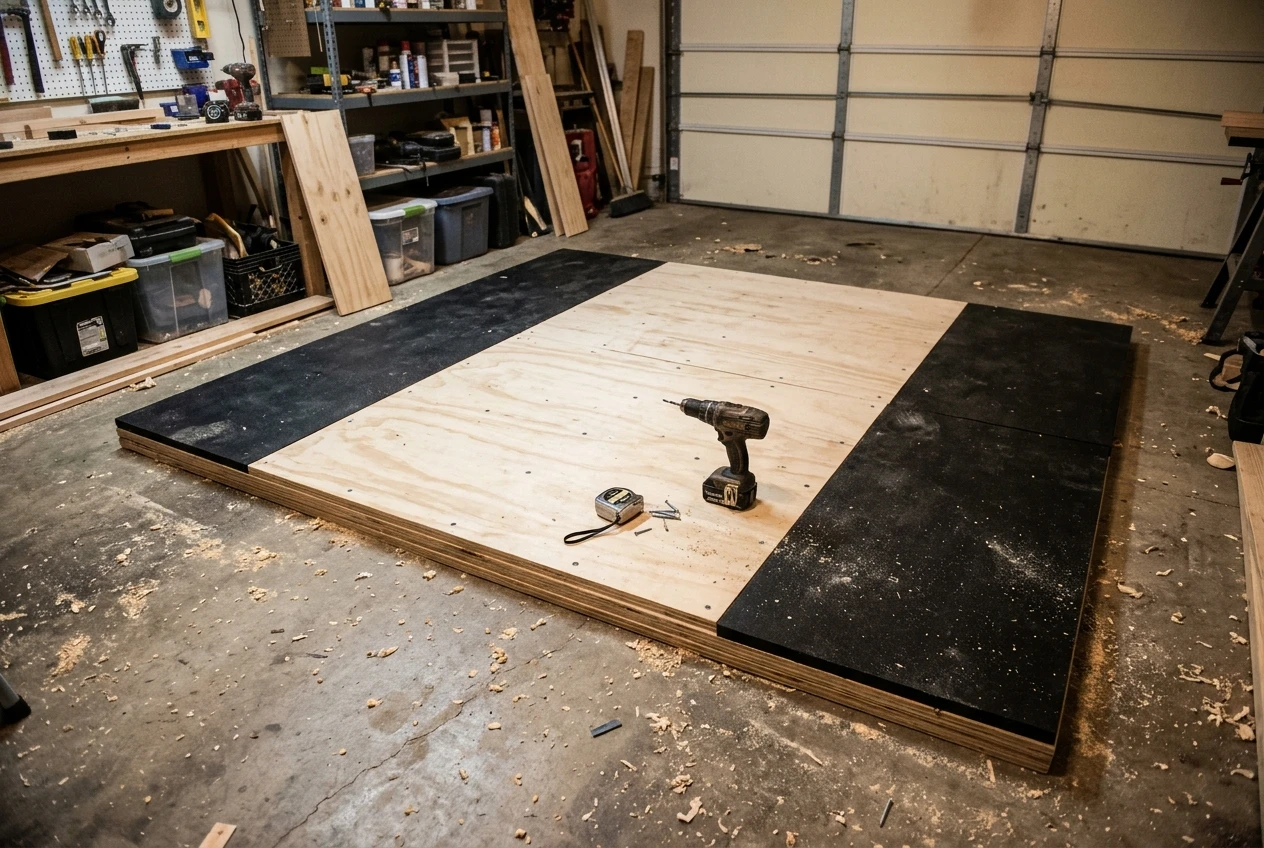
A platform solves problems that mats leave open:
- A single flat surface. There are no seams under your feet or under the bar, so the deadlift starts from the same position every time.
- Firm footing. Wood does not compress under your feet, so squats and pulls feel the same from set to set.
- Force spread across a wider area. The layered wood distributes impact over the floor below instead of concentrating it where the plates land.
- A fixed home for the lift. The rack sits on or beside it, and the setup stays consistent.
The costs are real. It needs materials, basic tools, and time to cut and fasten the sheets. It is also hard to move once built, so it suits a lifter who is staying in the space. It is not necessary for someone who lowers the bar and has a good floor already, but it is the clearest fit for someone who drops heavy weight, especially on a surface that cannot absorb it.
Concrete slab, basement, or upstairs: matching the floor to what is under it
Garage slab
A concrete slab takes a lot of weight, which is why most home gyms start in garages. The risk is chipping and cracking from dropped plates, and the cold, which stiffens rubber and makes it feel harder. Thick stall mats work well here for lifters who lower the bar. If you drop it regularly, put a platform on top of the mats, or at least double the mat layer under the landing area.
Basement
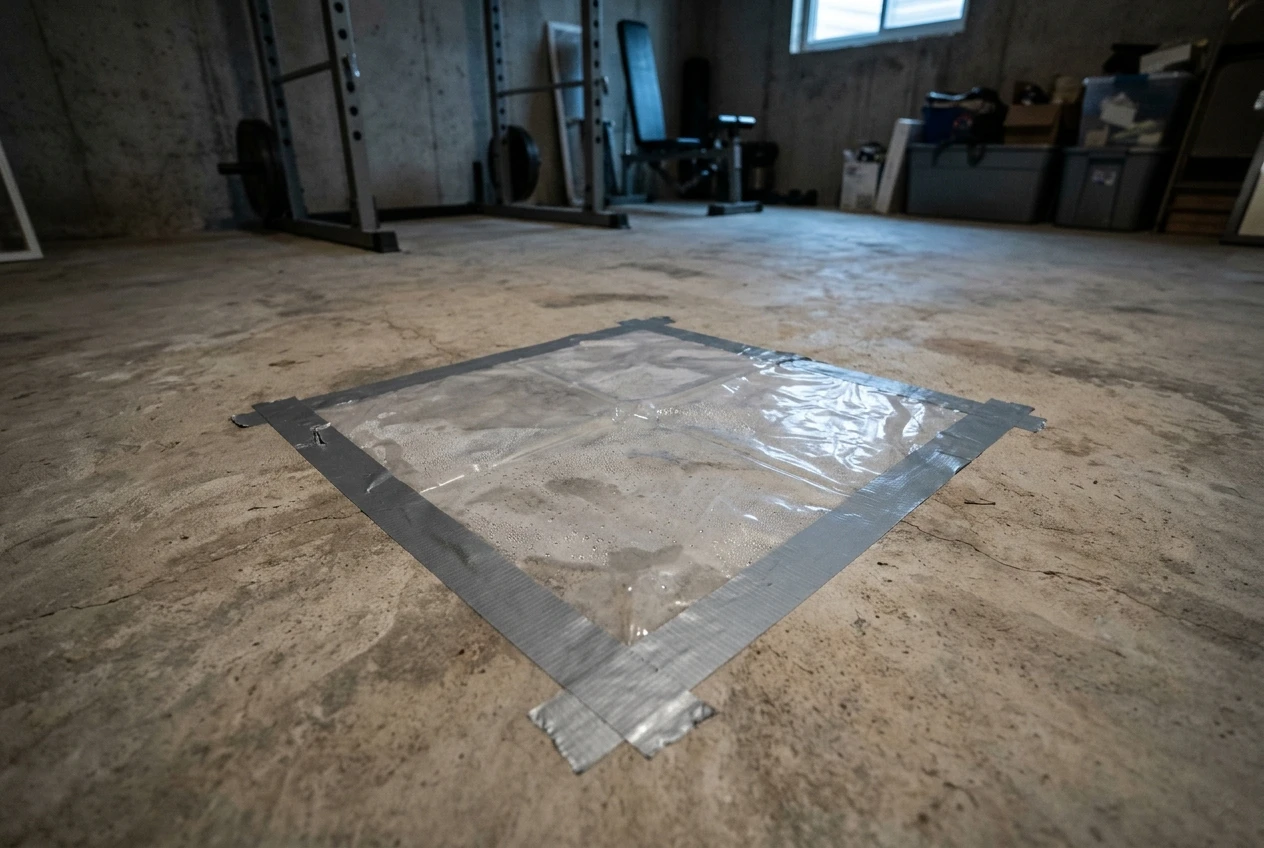
Basement slabs can hold moisture even when the floor looks dry. Rubber laid flat over damp concrete can trap that moisture and lead to odor or mildew underneath. Before you cover the floor, check it. Tape a piece of plastic sheeting to the slab for a day or two and see whether condensation collects underneath. If it does, deal with the moisture first. A raised platform, which lets air move beneath the wood, can also help, but a damp floor is a reason to find the source before you build.
Upstairs or over a wood subfloor
This is the hardest case. A wood floor sits on joists that were not designed for repeated impact, and the noise travels into the rooms below. The safest approach is to avoid dropping the bar at all and to spread the load: position the rack over or near the joists, and use a platform or layered mats to distribute weight. If you are unsure whether the floor can carry a loaded rack and a lifter, ask a builder or someone who can check the joist spacing and span before you load it heavily. That is a question about the house, and a flooring guide cannot answer it for you.
Footing and your back: how a spongy or uneven surface changes squats and deadlifts
Your feet are the base of every heavy lift. If the surface compresses under them, the force you push into the floor goes partly into the surface. That slight sink can shift your balance during a squat and make a deadlift start feel unstable.
Soft foam mats are the usual cause. They are comfortable to stand on, which is why they are sold for general exercise, but a heavy squat can compress them unevenly, so one foot sits lower than the other. Over a set, that can pull the bar slightly off its path and load one side of your lower back more than the other.
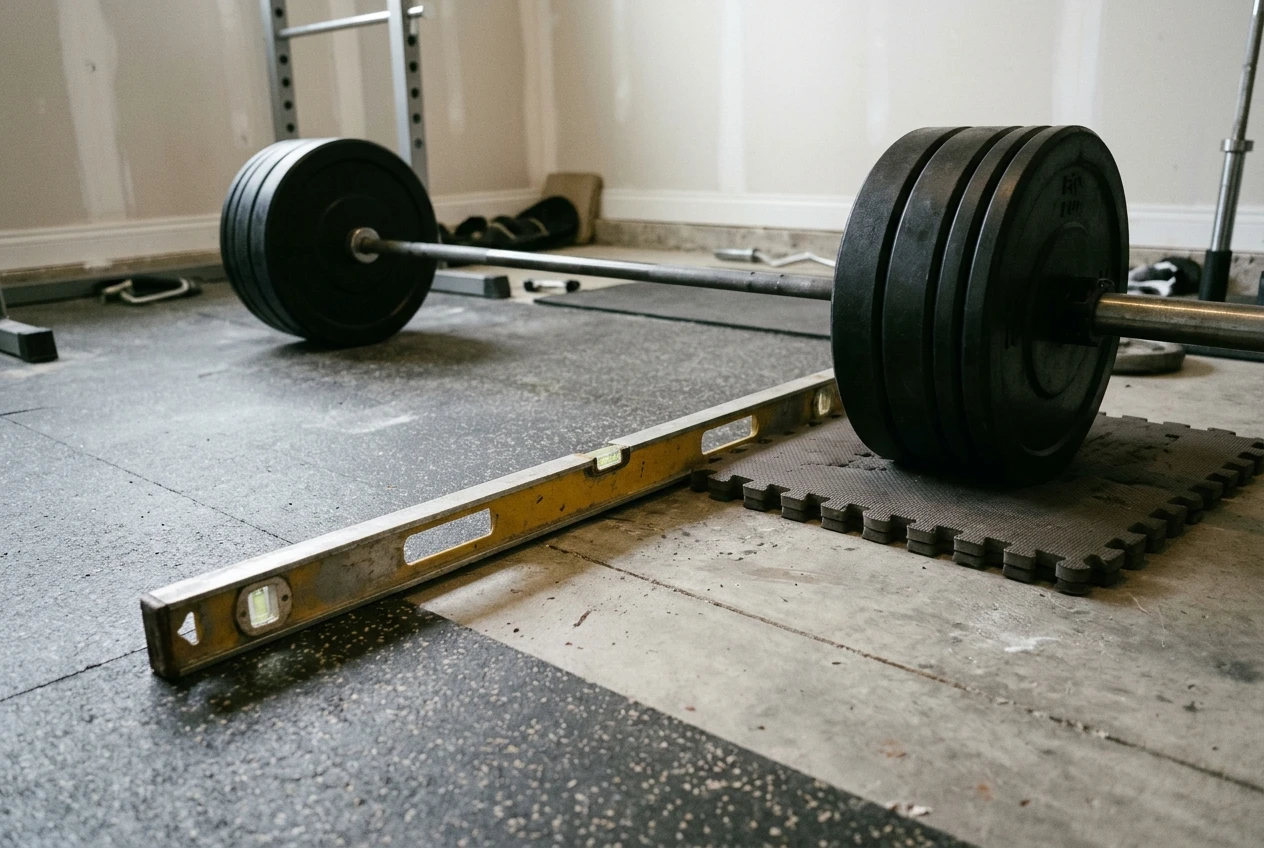
Uneven surfaces cause a similar problem. A seam, a raised edge, or a floor that slopes toward a drain will tilt your stance. Check your lifting area before you set up: lay a level across it in a few directions, and put a loaded bar on the floor to see whether it rolls.
Footwear interacts with the floor, too. A firm, flat shoe or a raised-heel lifting shoe both need a surface that does not give. If you are choosing between them, the guide on how much heel you need for squat depth and stability covers that side of the decision.
A simple pick-by-lifter guide: three common home setups and the floor for each
These three setups cover most home lifters. Find the one closest to yours.
The garage lifter who drops deadlifts. You have a concrete slab, bumper plates, and you let the bar go at the top of heavy pulls. Build a platform, or lay two layers of stall mat with the lifting area centered on a single sheet. The slab is the thing you are protecting, and this is the setup where spending more on the floor pays off.
The basement lifter on a budget who lowers every rep. You have a slab, maybe iron plates, and you set the bar down under control. A single layer of stall mat is enough, with the lifting area placed away from seams. Check for moisture first, and give the mats a few days to air out before you start training on them.
The spare-room lifter upstairs. You have a wood subfloor and people living below. Do not drop the bar. Use a platform or layered mats positioned over the joists, and confirm the floor can carry the load. Quiet and load spreading matter more here than they do in a garage.
Flooring is one line in a larger budget, and spending too much on it can leave you short on the rack, bar, or plates that you will use every session.
Floor sorted? Use the guide on what to buy first when building a home gym for heavy lifting to decide where the rest of your budget goes.