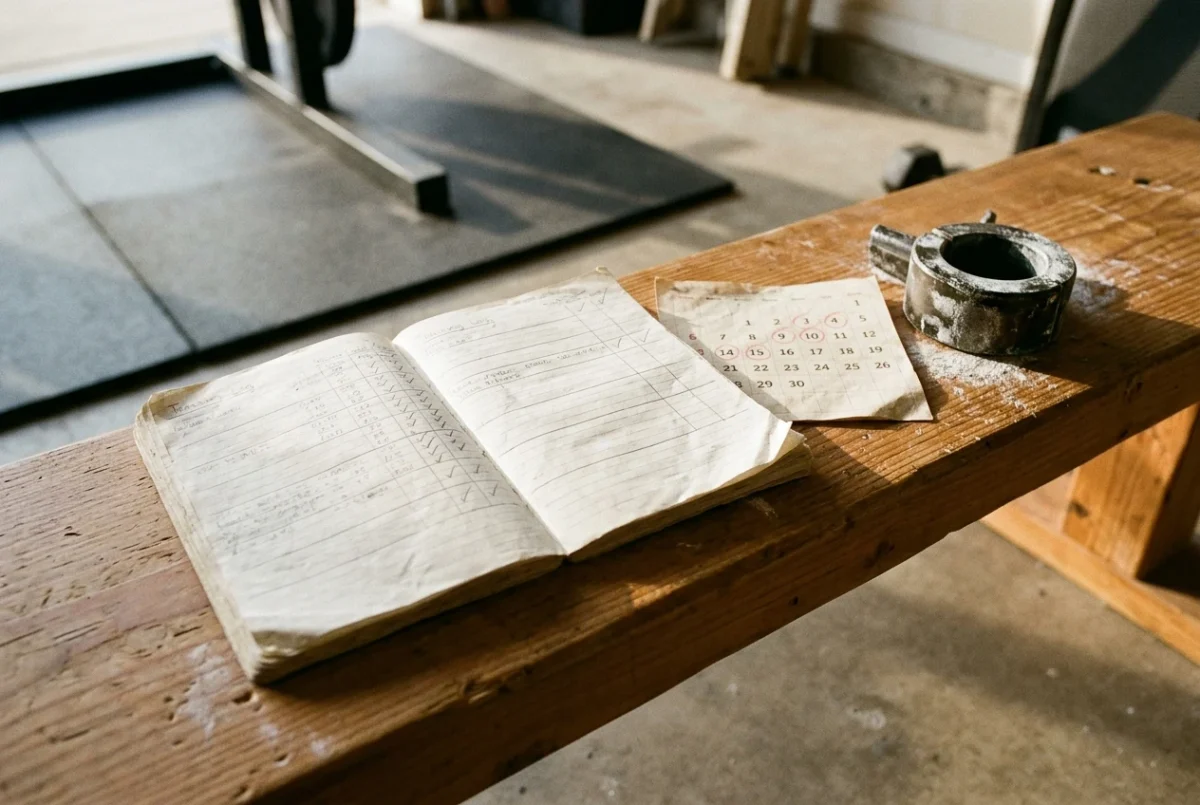
Most advice on getting stronger is about the bar: put more weight on it each week. Adding volume, meaning more sets, more reps, or an extra session, is a different change, and it injures lifters differently. If you train regularly and the same elbow, knee, or lower back flares up whenever you add work, the problem is usually how fast the volume went up.
This guide covers how to increase training volume safely: a rule for adding sets, a way to tell a hard week from an overuse problem, and clear signs that it’s time to back off.
Why volume injuries show up weeks after you add the sets
Muscle recovers and adapts quickly. Tendons and the tissue around your joints adapt more slowly, so a volume increase your muscles handle well can still be more than your elbows or knees are ready for. Because your strength feels fine, you keep adding sets, and the irritation builds underneath.
This is why the ache often arrives two or three weeks after the change that caused it. By then you have added more sets on top of the first ones, and the cause looks like whatever you did last week. You blame the heavy day when the real trigger was the ramp.
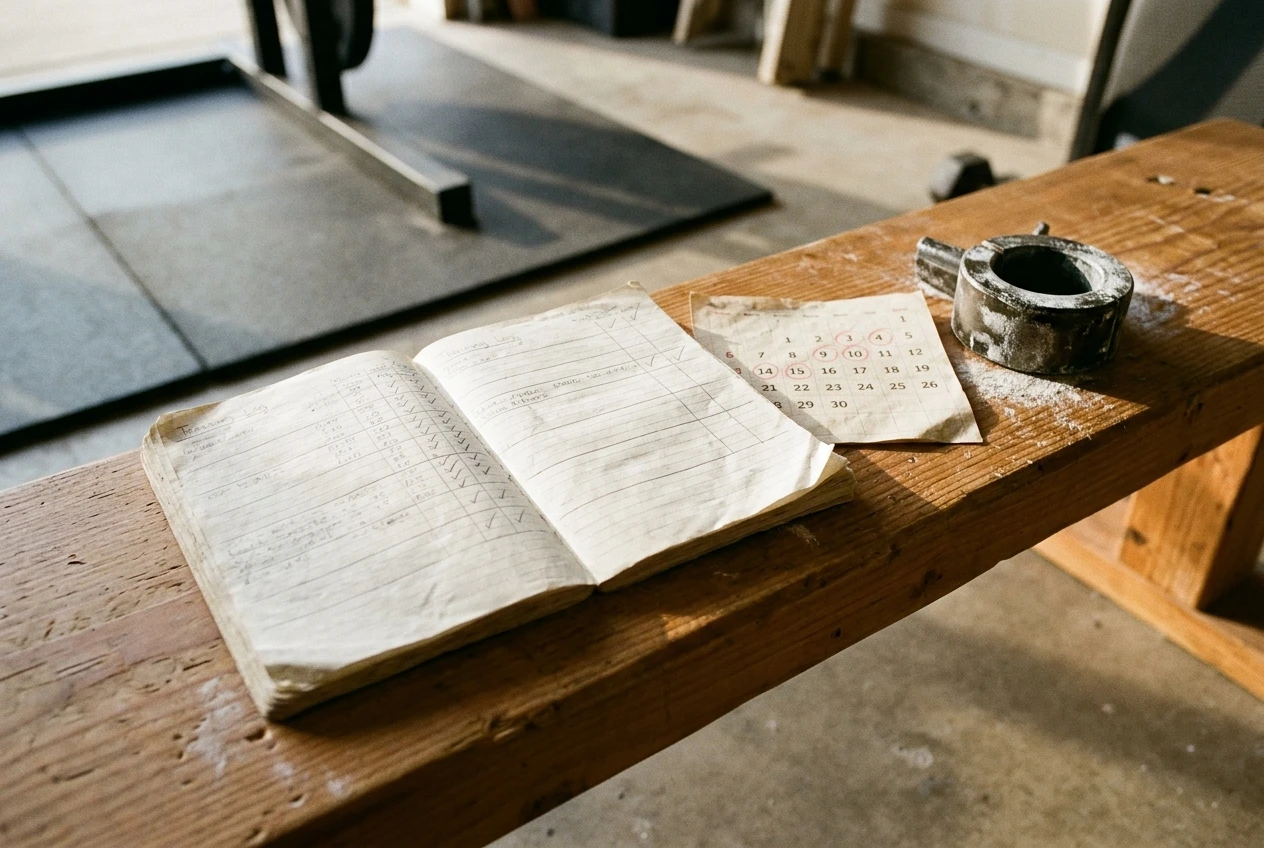
Two habits make this easier to manage:
- Judge a volume increase by how your joints feel the next morning and over the following two to three weeks, not by how the session felt.
- Write down the date you added each set. When something starts to ache, you can see what changed and when.
Late-session fatigue matters too. Extra sets at the end of a workout are done tired, and tired reps tend to have looser technique. A joint that handled ten clean sets can complain about twelve sloppy ones.
The one-change rule: raise sets or frequency or load, never all three
You can make a training week harder in three main ways: more sets, more sessions per week, or more weight on the bar. Each one stresses your body differently, and when you change two or three at once you can’t tell which one caused a problem.
Pick one lever for each block of training and hold the others still.
- Adding sets: keep the weight and the number of sessions the same.
- Adding a session: keep the weekly total of sets close to what it was, spread across more days, and keep the weight the same.
- Adding load: keep sets and sessions the same. The week-to-week load progression is covered in its own post, so this article leaves it alone.
This feels slow, and it is slower than changing everything at once. But if your elbow hurts after a block where only the sets changed, you know what to fix. After a block where sets, frequency, and weight all went up, you can only guess.
A volume block is also a good time to keep exercise selection steady. Swapping in new accessory movements while you add sets introduces a fourth change.
A simple way to add sets across a four to six week block
Count only hard sets: working sets taken close enough to failure that you could have done about two more reps, with warm-ups excluded. Use the same definition every week so the totals mean the same thing.
Here is a rule that works for most lifters:
- Add one hard set per week to a lift, at most. On a lift where you currently do only three or four sets, one set is a big jump, so add one every other week instead.
- Add sets to one or two lifts at a time, not all of them. If squat and bench both go up this block, leave deadlift flat.
- Put the new set in your first session of the week, when you are freshest, and keep the weight and rep target the same as your other sets.
- Hold the weight steady throughout the ramp. If the weight creeps up because it feels easy, you have broken the one-change rule.
- Hold for one week after two increases in a row. This gives your joints a pause before the next step.
- End the block with a lighter week (more on that below) before you start a new one.
A four-week block might be three weeks of adding and one of reducing. A six-week block can add for four weeks, hold for one, and finish with a lighter week. Choose the longer block if you have a history of tendon trouble.
Joints and tendons that complain first: elbows, knees, shoulders, low back
These four areas tend to flag a volume problem first. What follows is general guidance, not a diagnosis.
Elbows
Pressing, rowing, curling, and heavy gripping all load the elbow, so the total adds up faster than the bench sets alone suggest. When you add bench sets, check how much other elbow-heavy work you do that week, such as extra triceps work, chin-ups, and heavy rows. If the elbow aches, trim some of that accessory work before you drop the main lift.
Knees
The front of the knee is a common place for squat volume to show up. Depth, stance, and how your knees track all change how the load lands. Filming a set from the side and the front helps you see whether your knees cave or your heels lift when you are tired. The post on filming your squat to check depth, knees, and bar path walks through that check.

Shoulders
Bench press, overhead pressing, and dips all use the front of the shoulder. If the shoulder starts to ache, the cause is often a high total of pressing across the week, not one bad session. Count every pressing set, including the ones you do as accessories, before you add more.
Low back
Deadlifts and squats both load the lower back, and they leave it tired when your bracing weakens late in a set. Low back fatigue is also easy to carry from one session into the next without noticing. Add deadlift sets more slowly than sets for any other lift, and stop a set when your back position changes, even if you have reps left in the plan.
Soreness, ache, or pain: how to tell the difference during a hard week
A volume increase should feel harder. The skill is sorting normal training fatigue from the early signs of an overuse problem. These three categories cover most of what you will feel.
Soreness
- Sits in the belly of the muscle, usually on both sides.
- Peaks a day or two after training, then fades.
- Often feels better after a warm-up.
- Is normal during a hard week and is not a reason to cut volume.
Ache

- Is dull and sits in or around a joint or tendon, not the middle of a muscle.
- May ease during warm-up but return that evening or the next morning.
- Is the early warning. Take it seriously, but it does not mean you must stop.
Pain
- Is sharp, pinching, or very specific to one spot or one side.
- Gets worse as you load the movement, or changes how you lift.
- Includes any numbness, tingling, swelling, or pain that wakes you at night.
- Means stop the movement that causes it.
For an ache, a practical rule is to rate it from 0 to 10. Up to about 3 that settles by the next morning is a reasonable level to train through while you watch it. Anything higher, or any ache that is still there the next morning, is a signal to change something.
If you have sharp pain, numbness or tingling, swelling, or pain that has lasted more than two weeks, see a physiotherapist or doctor. A training article cannot tell you what is wrong with a specific joint.
When to hold, when to drop volume, and when to take a true deload
These are three different responses to three different situations. Match the response to what you are feeling.
Hold at the current number of sets when:
- Soreness is high but your joints feel fine.
- One session felt flat but the next one recovered.
- You have a mild ache, around 2 or 3 out of 10, that settles by the next morning.
Drop volume back to the last week that felt fine when:
- The same joint aches first thing in the morning after two sessions in a row.
- Your last sets of the session are well below your first sets in quality, and you are no longer stopping with about two reps left.
- Bar speed slows noticeably at weights that were moving well.
Take a true deload when:
- You reach the end of a planned block, whether or not you feel you need it.
- Several signs show up together, for example poor sleep, achy joints that don’t clear within a day, and a drop in motivation.
A true deload cuts the number of hard sets by about half for one week and keeps the weight the same. Do not use the week to test a max, and do not use it to add something new. The week is for recovery. Then restart the next block at the volume you finished the previous one, or slightly below it.
What to do when life cuts your recovery short
A bad week of sleep, a work deadline, travel, or illness all reduce how much training your body can absorb. A ramp planned on paper does not know that.
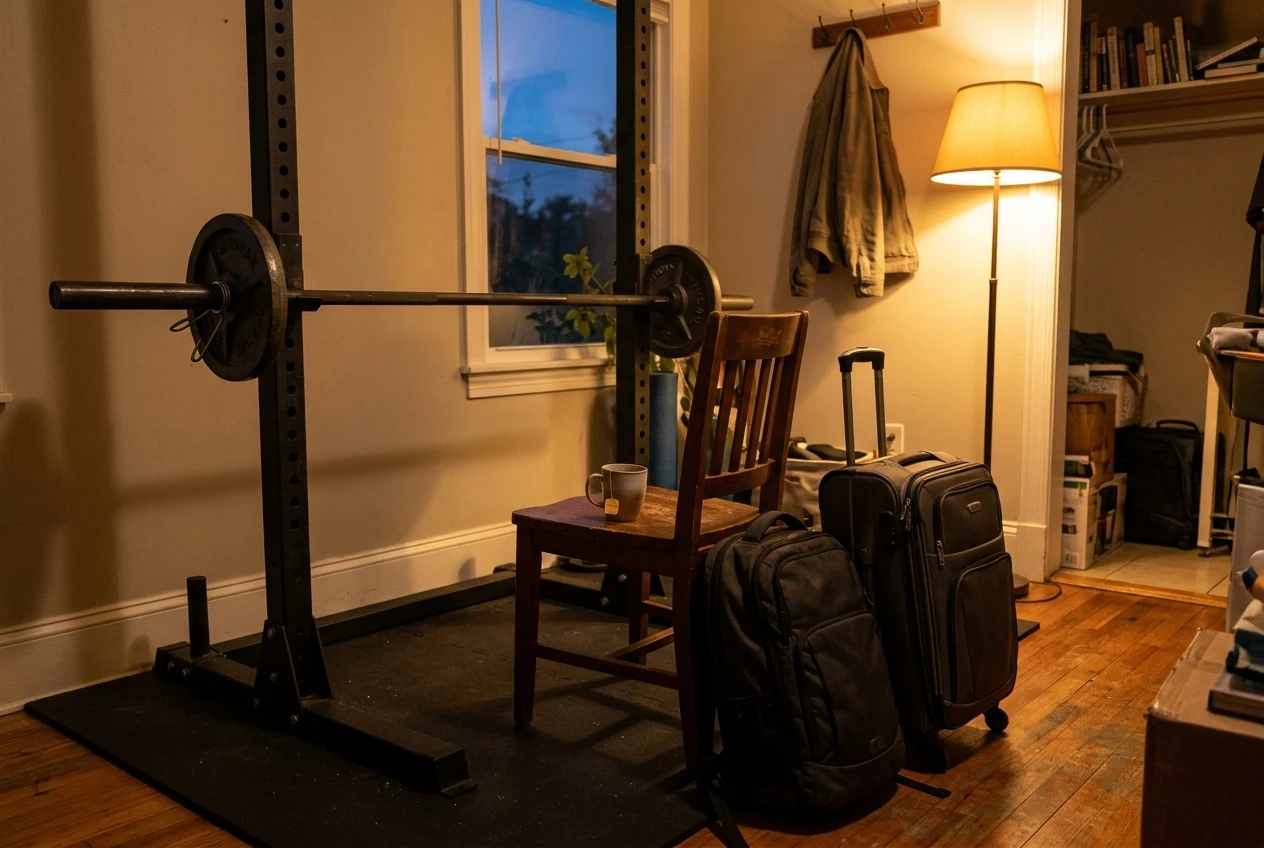
When a week is disrupted:
- Repeat the previous week’s volume instead of adding the next set. If sleep or stress was bad for several days, step back one week.
- Remove the most recently added set first. It is the one your body has had the least time to get used to.
- Skip missed sets rather than making them up. Cramming a week’s sets into fewer sessions raises the load on your joints in a single day.
- Keep the weight where it was. A disrupted week is a poor time to chase a heavier number.
If your schedule is regularly packed, build the ramp around it instead of fighting it. The post on running strength training cycles around a packed work calendar covers how to place heavier and lighter weeks around busy periods.
A sample volume ramp you can copy for squat, bench, and deadlift
This ramp is a six-week block for a lifter who trains squat and bench twice a week and deadlift once a week. The numbers are hard sets per week, with warm-ups excluded. Use your own current weekly totals as week 1 if they differ.
Week Squat Bench Deadlift Note 1 6 8 4 Starting point 2 7 9 4 Add a set to squat and bench 3 8 10 5 Add a set to each lift 4 8 10 5 Hold 5 9 11 6 Last increase 6 5 6 3 Deload: about half the sets, same weight
How to run it:
- Keep the weight the same for weeks 1 to 5. Use a load that leaves about two reps in reserve on the first week, and do not raise it even if it starts to feel easy.
- Add the new set in the first session of the week. Squat and bench add one set each in weeks 2, 3, and 5. Deadlift adds one in weeks 3 and 5 only, because it is the slowest to build.
- Check your joints the morning after each session. If an ache stays above 3 out of 10 into the next day, repeat the previous week instead of moving forward.
- Do the deload even if you feel good. The point of the week is to let your tendons catch up with the work.
- Start the next block at week 3 volume or week 1 volume, depending on how week 5 went.
If you would rather follow a program that plans the volume for you, the Kettlebell Monster review explains what that program teaches, and there is a Samsung TV app you can follow on screen (affiliate link: I earn a commission if you buy through it, at no extra cost to you).