Is expensive lifting gear worth it for a home gym? It depends on what the item does. Gear that carries your load or can hurt you when it fails is worth buying in the better version. Gear that only makes training more convenient usually does the same job at the cheap price.
This article ranks home gym gear by return on spend. Three things drive the ranking: what each session with the item costs, how many years it lasts, and what happens when it breaks. The aim is not a longer shopping list. It is a way to look at any item and decide which version to buy.
The cost-per-session test: how to judge any piece of gear before you buy
Divide the price by the number of sessions you will realistically use the item. Suppose a piece of gear costs 120 and you use it three times a week for two years. That is about 312 sessions, so each one costs well under half a unit of currency. The same item bought at a third of the price but replaced after eight months costs more per session, and you still lose training time when it wears out.
Run every purchase through three questions:
- How often will it be in your hands? An item used every session spreads its price over hundreds of uses. An item used twice a month never earns back a high price.
- How long will it last at that rate? Leather, steel and cast iron last for years. Latex, thin foam and stitched fabric wear out on a shorter clock that depends on use.
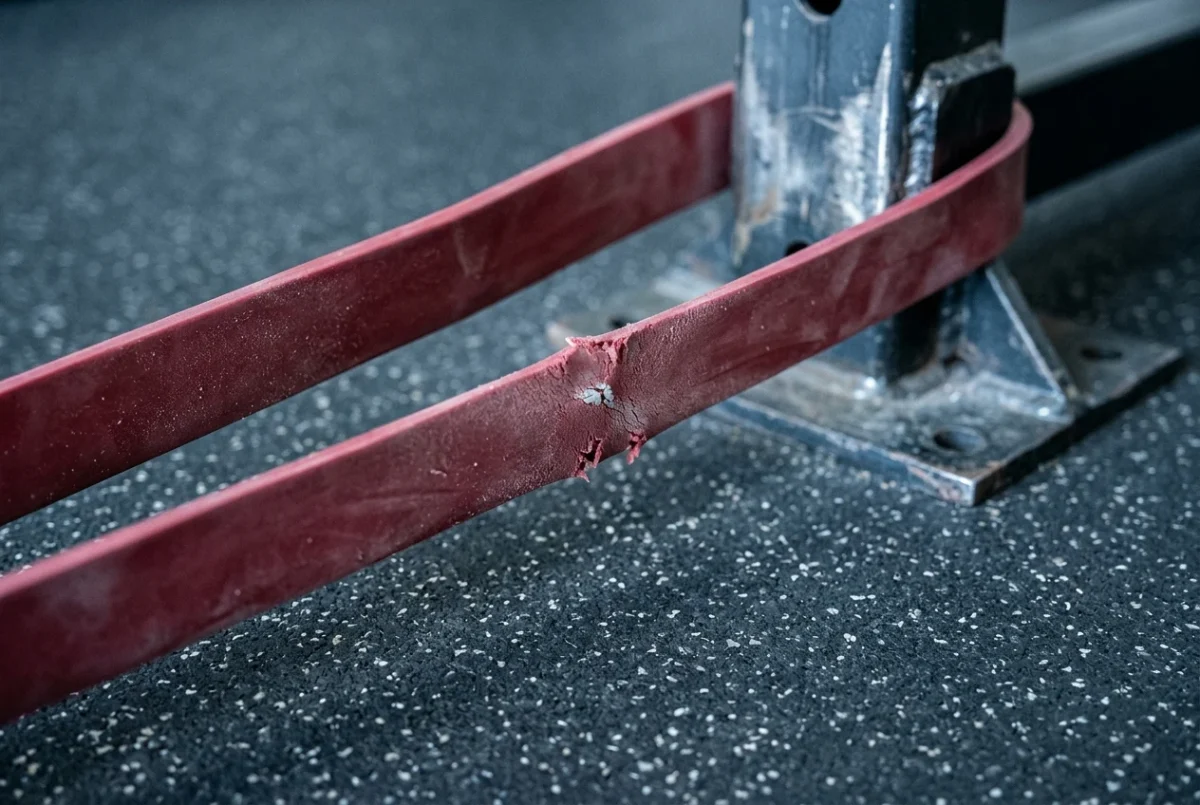
- What does failure cost? A worn-out water bottle costs you a replacement. A snapped band or a failed rack pin can cost you an injury and weeks away from the gym.
The third question carries the most weight. Two items with the same cost per session are not equal if one fails harmlessly and the other fails with a heavy load overhead or a stretched band under tension. Pay for quality where the answer to question three is “badly”.
The test also tells you when not to buy. If you cannot name the session where an item gets used, its cost per session is the full price divided by almost nothing.
Gear where failure costs you: why bands, straps and anything that holds load deserve the better version
Anything that holds a load, anchors a load, or stores tension is a safety item first and a convenience item second. The cheap version of these items is where a saving gets expensive.
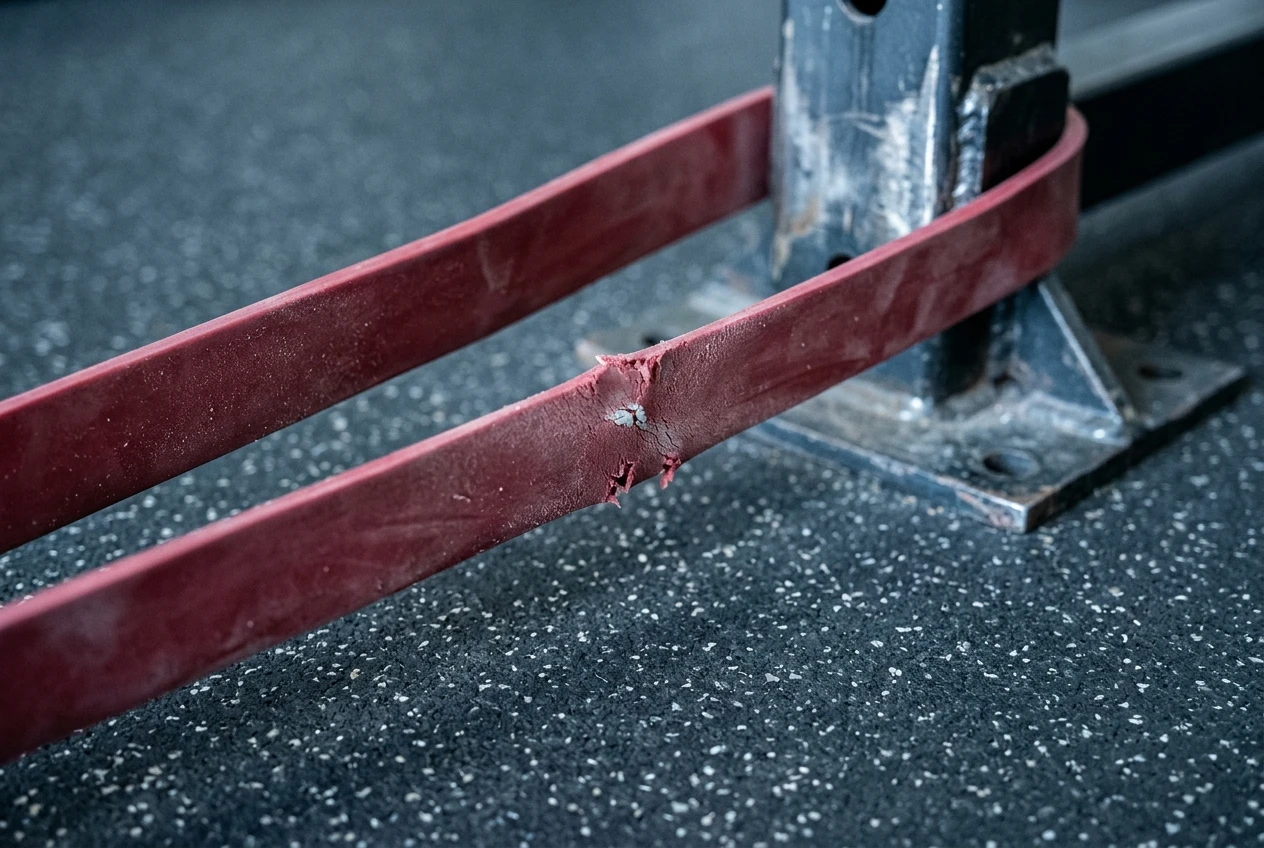
Resistance bands. A latex band stores energy. When it snaps, that energy goes toward the nearest body part, often your face or hands. Bands wear from stretching, sunlight, heat, and nicks from rough surfaces or fingernails, and the damage often shows before the failure does. A reputable maker that publishes a resistance range and stitched or sleeved construction for heavy bands gives you more to go on than an unbranded pack with no information. The guide on which resistance bands are worth buying for a home gym covers what to check and how to spot a band that is about to fail.
Lifting straps. A strap that tears mid-pull leaves the bar in your hands with the grip support gone. Straps take heavy sets, so check the stitching at the loop, the width of the material, and whether it frays at the edges. Strap use also has a training side, covered in the piece on when to use lifting straps and when your grip should do the work.
Rack parts, safeties, collars and benches. Anything between you and a loaded barbell should carry a manufacturer’s stated weight rating. If you cannot find a rating for a bench, safety arm or pair of collars, treat that as a reason to choose a different one. Collars that let a plate slide mid-set unbalance the bar, and a bench that wobbles under load makes pressing harder to control.
Anchors and attachment points. If you use bands, cables or suspension straps, the anchor matters as much as the band. Use one designed for the job and rated for the load.
The better version of these items rarely costs several times more than the cheap one. In most cases you are paying a modest premium for a published rating, better materials and a company that will replace a faulty item. Measured against an injury, that premium is small.
Gear that lasts years: where pro-grade belts, shoes and kettlebells pay for themselves
The second category is gear that does not fail dangerously but wears slowly. Here the pro-grade version wins on cost per session because it survives many more sessions.
Lifting belts
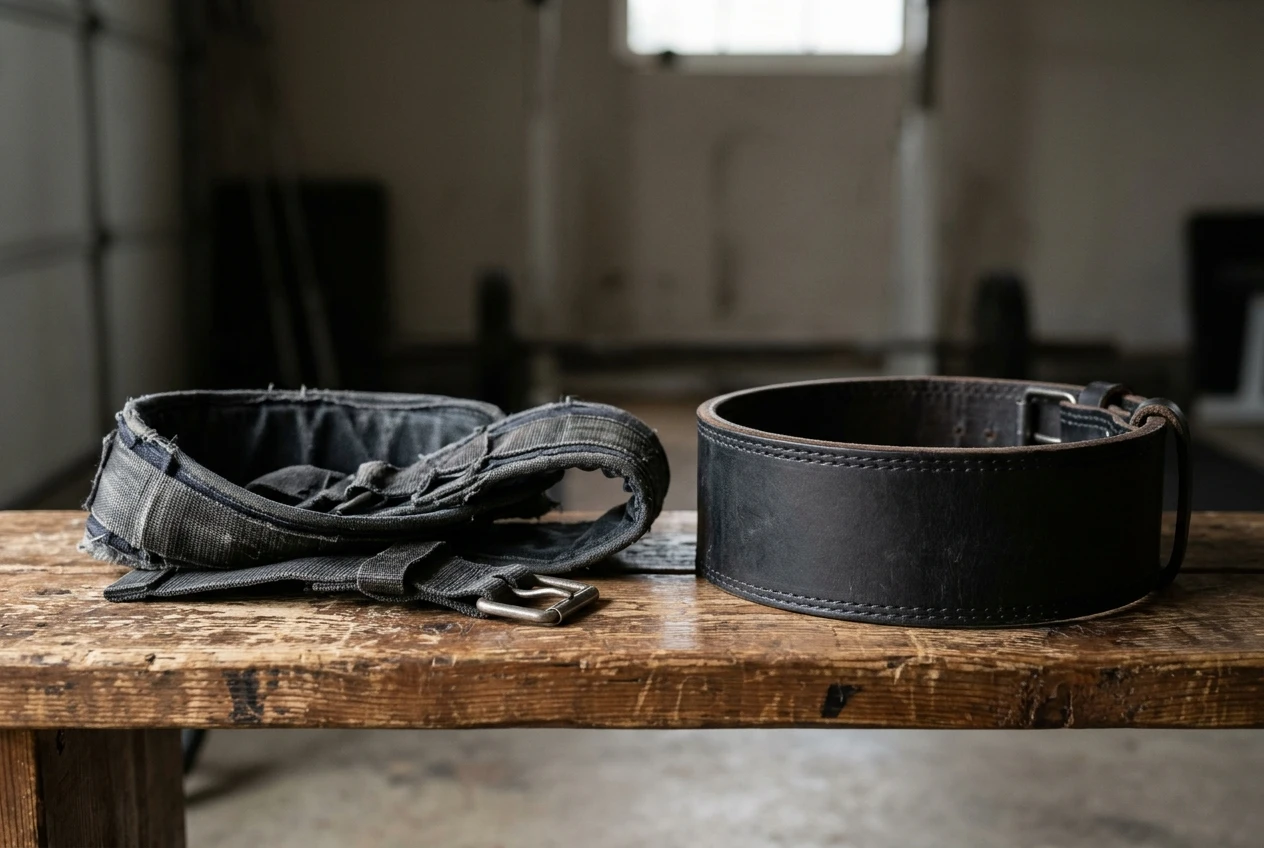
A belt works by giving your trunk something firm to brace against. A belt that is stiff and uniform in thickness does this for as long as you own it. A cheap belt that softens, folds or stretches at the buckle stops giving you that surface. Leather and similar firm materials hold their shape over years of heavy sets if you look after them, and the care guide for lifting shoes, belts and bands explains how each material wears. For what a belt does and does not protect against, see the piece on whether belts, wraps, straps and shoes prevent injury. A belt is worth a premium only if you do heavy sets often enough to use it.
Weightlifting shoes
The value of lifting shoes sits in the sole. A firm, incompressible sole puts your force into the floor, and a raised heel changes squat depth for some lifters. Soft soles compress under heavy loads and lose most of that benefit. Which style fits you depends on your training, and the guide on flat versus raised heel weightlifting shoes covers that decision. If you squat or pull heavy two or three times a week, a good pair worn for years has a low cost per session. If you lift once a week or mostly do kettlebell work, you may do fine with flat-soled shoes you already own.
Kettlebells
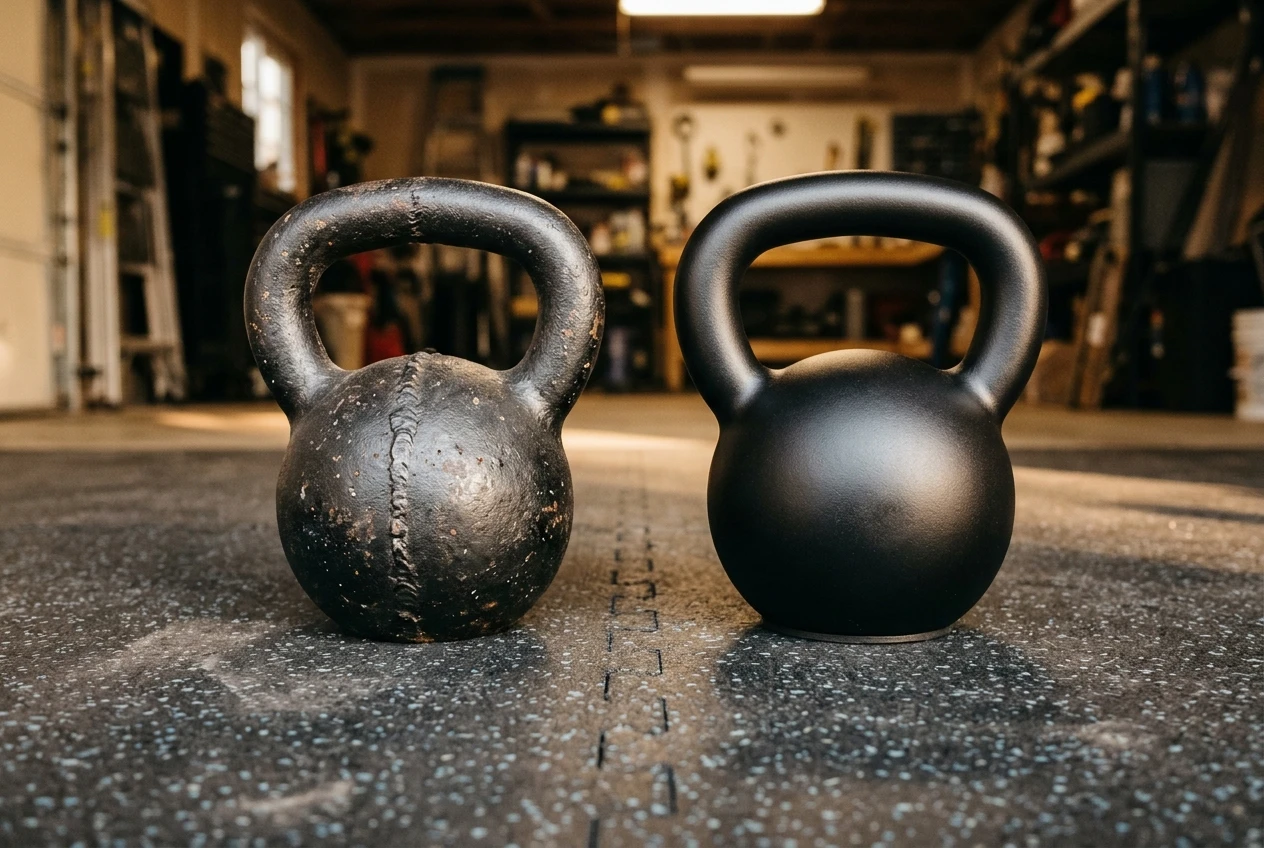
A kettlebell is one of the best-value items in a home gym because the design is simple and it can last many years. Look at the build: a single piece of cast metal, a smooth handle without rough seams, a flat base that sits steady, and a consistent finish. A rough handle tears skin on high-rep swings, and a wobbly base is awkward in presses and renegade rows. Buy the weight you will use, and avoid buying a bell you will outgrow in two months. For how many bells a program really needs and what sizes suit each movement, see why one kettlebell won’t carry you through a program.
Flooring
Flooring protects both your equipment and the floor. If you drop barbells, it also protects your joints from a hard surface. The best material depends on how you lift, and the home gym flooring guide matches materials to training styles. Thin, cheap mats compress permanently under a rack. Dense rubber lasts, so spend more here if you lift heavy and less if you only do kettlebell and bodyweight work.
Gear where generic does the job: the accessories you can buy cheap without losing anything
Some items do not carry load, do not store tension, and do not change how well you train. Their only job is to save you a small inconvenience, and for these the cheap version does the same work.
- Chalk. It is a drying agent. Any block or loose chalk works the same.
- Timers and clocks. A basic interval timer or the one on your phone does everything a branded gym clock does.
- Training log. A cheap notebook and a pen record your sets as well as any app. What matters is that you write the numbers down.
- Towels and gym bag. Any towel dries sweat.
- Water bottle or shaker. Choose by whether it seals and whether you like the shape.
- Foam or yoga mat for floor work. If it only lies under your back during mobility and core work, it carries no load.
- Light loop bands for warm-ups. Because they can snap, inspect them for nicks and replace them on a schedule. They are cheap, but check them before every use.
- Wrist wraps and basic sleeves. These are comfort items for many lifters. If a cheap pair feels fine, it is fine.
The test for this category is simple. If the item broke tomorrow, would you lose training time or only mild convenience? If the answer is convenience, buy the cheap one and keep the savings for the items above.
Supplements are another place where spending adds little, and the article on pricing out lifting gear before you reorder pre-workout works through that comparison.
The hidden cost of buying twice: how the cheap version ends up costing more
Buying a load-bearing item cheaply often means buying it twice, and the second purchase has to be the good one anyway. The total is the cheap price plus the better price, plus whatever the first one cost you in lost training.
The usual pattern runs like this:
- A cheap belt softens within months, so you lose the bracing surface and replace it with the belt you should have bought first.
- A thin pair of shoes compresses under heavy squats, and you buy the proper pair later.
- A pack of bands snaps one by one, and you replace the entire set with a better brand.
- A thin mat crushes under the rack and exposes the floor beneath it.
In each case the cheap item also had a cost per session that you only saw afterward. A 30 belt replaced after a year by a 90 belt cost 120 for what the 90 belt does alone, and the 90 belt lasts several more years.
There is a second cost that does not appear on a receipt: friction. Gear that is awkward, rough or unreliable makes you less likely to train. A kettlebell handle that tears your hands or a band you do not trust gets used less, and unused gear has the worst cost per session of all.
Buying the better version does not mean buying the most expensive one. Past a certain point, extra price buys branding and finish rather than performance. Choose the version with the right rating, materials and construction for how often you train, then stop.
Your upgrade order: a simple ROI ranking built around what you actually train
For a buying order based on necessity, see how to decide what your home gym needs next. The ranking below is different. It orders items by return on spend once you already train, and your own program changes where each one sits.
- Anything that holds or catches load. Safeties, collars, a stable bench, rated anchors. They protect you every session, and failure is the costly kind.
- The main tool you use every session. If you train with kettlebells, this is your bell. If you train with a barbell, it is the bar and plates. Its cost per session is the lowest in the gym because you use it constantly.
- Resistance bands, if you use them for loaded work. Buy rated ones from a known maker and replace them when they show wear.
- Shoes, if you squat or pull heavy. The return rises with how often you do those lifts.
- A belt, if you regularly do heavy sets of squats or deadlifts. Lifters who train lighter or at higher reps get less from it.
- Flooring. It earns its price once you drop weights or load the rack heavily.
- Accessories. Buy cheap and buy last.
Move items up or down based on your training. A kettlebell-only lifter can skip the belt and the shoes and put more into the bells. A barbell lifter who does one squat day a week may rank flooring above a belt. A lifter who uses bands for most of their work should put band quality close to the top.
Making the gear earn its keep: pairing it with a program so it gets used every week
Cost per session only works if the sessions happen. The cheapest way to lower the cost per session of any item is to use it weekly, and a program is what makes that happen. A scheduled session with named exercises gets done more often than a loose plan to train when you can.
Three habits keep gear in use:

- Set the room up so the gear is ready. Leave the kettlebell where you will train, with space cleared and the screen or timer in view. The guide to building your home gym around the TV covers a layout built for following an instructor on screen.
- Pick a program format you will follow. Some lifters stick with a PDF, others with a spreadsheet, others with a guided app. The comparison of PDF, spreadsheet or TV app formats helps you choose.
- Match the weight to the movement. The weight you swing is not the weight you press, and a bell that is wrong for the exercise gets left in the corner. The kettlebell weight guide by exercise and level explains the difference.
Review your gear every few months. Note which items you used every week and which sat unused. Items you used often justify a better version when they wear out, and unused items are the first to leave your shopping list.
If the kettlebell is the piece of gear you plan to use most, see how the Kettlebell Monster programs and the Samsung TV workout app put it to work every session. Affiliate link: I earn a commission if you buy through it, at no extra cost to you.