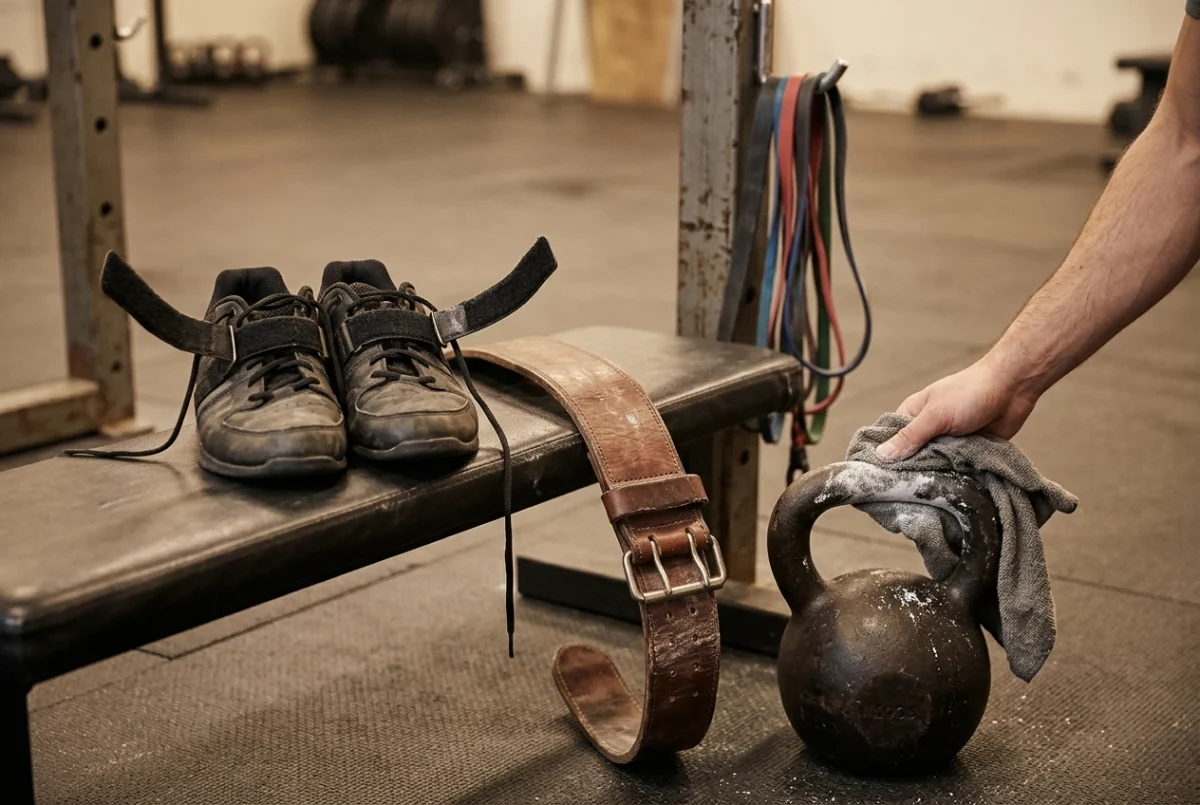
Most lifting gear wears out from the hours it spends in a gym bag, a hot car trunk, or a damp garage, and far less from the lifting itself. A belt can handle years of heavy sets, but it won’t survive being rolled up wet in a bag every day. This guide on how to care for lifting gear is organized by material, because leather, rubber, latex, and cast iron each fail in their own way and need different handling.
Why gear fails from sweat, heat, and sloppy storage long before it fails from lifting
Sweat is salty and slightly acidic. It soaks into shoe linings, belt leather, and strap fabric, and if it dries there without being wiped off, it stiffens and weakens the material over time. Damp gear sealed in a bag also grows bacteria and mildew, which is where most of the smell comes from.
Heat causes the second kind of damage. Adhesives in shoes soften, leather dries and cracks, and latex loses its stretch. A trunk in summer, a radiator, and a sunny windowsill all do this, and none of them looks dangerous to the gear.
Storage causes the third. Bands knotted together, a belt folded over, a kettlebell sitting on a damp floor, and shoes crushed under plates all deform or corrode slowly. Each of these is cheap to avoid, which is why a short routine is enough to extend the life of most gear.
The 60-second routine after every session
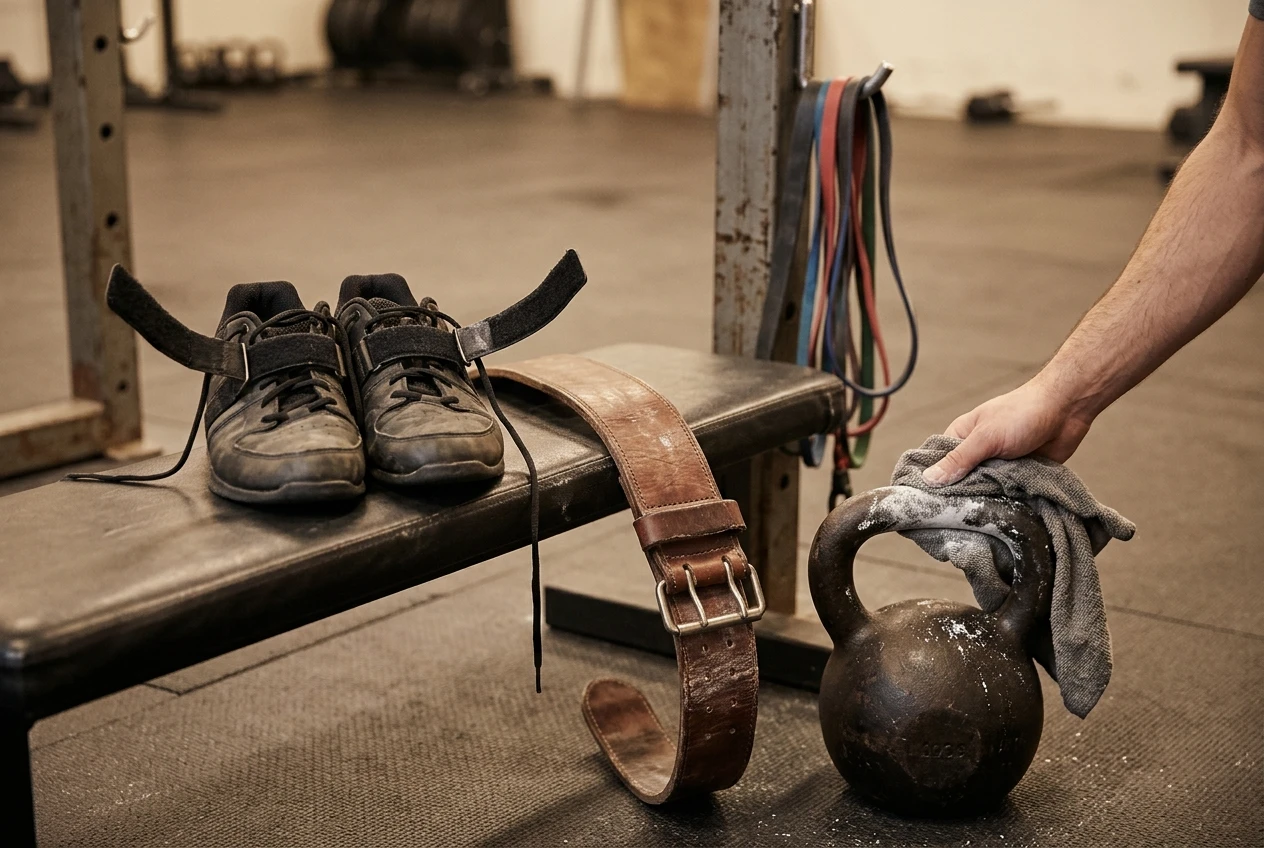
Do this before you zip the bag, while you are still in the gym or just home:
- Shoes: Knock off loose dirt and chalk, wipe the sole with a dry cloth, and loosen the laces and straps so the shoe can air out.
- Belt: Unbuckle or open it fully and lay it flat or hang it. Don’t leave it clasped and curled inside the bag.
- Bands and straps: Shake off chalk, wipe off sweat, and hang them or lay them out loose to dry.
- Kettlebell handle: Wipe it with a dry cloth. Chalk holds moisture against the metal, and sweat is what starts rust.
- Bag: Take everything out when you get home. A bag is for carrying gear, not for storing it.
None of this needs soap or special products. The point is to get moisture off the surfaces and let air circulate before anything dries in place.
Lifting shoes: cleaning the upper, keeping the sole and heel clean and dry, and what to avoid
Check what your upper is made of before you clean it. Synthetic and leather uppers both do well with a cloth dampened in water and a drop of mild soap, wiped gently and then dried at room temperature. Remove the insoles and pull the tongue forward so the inside can dry too. Loosely packed paper inside the shoe helps pull out moisture, as long as you replace it once it is damp.
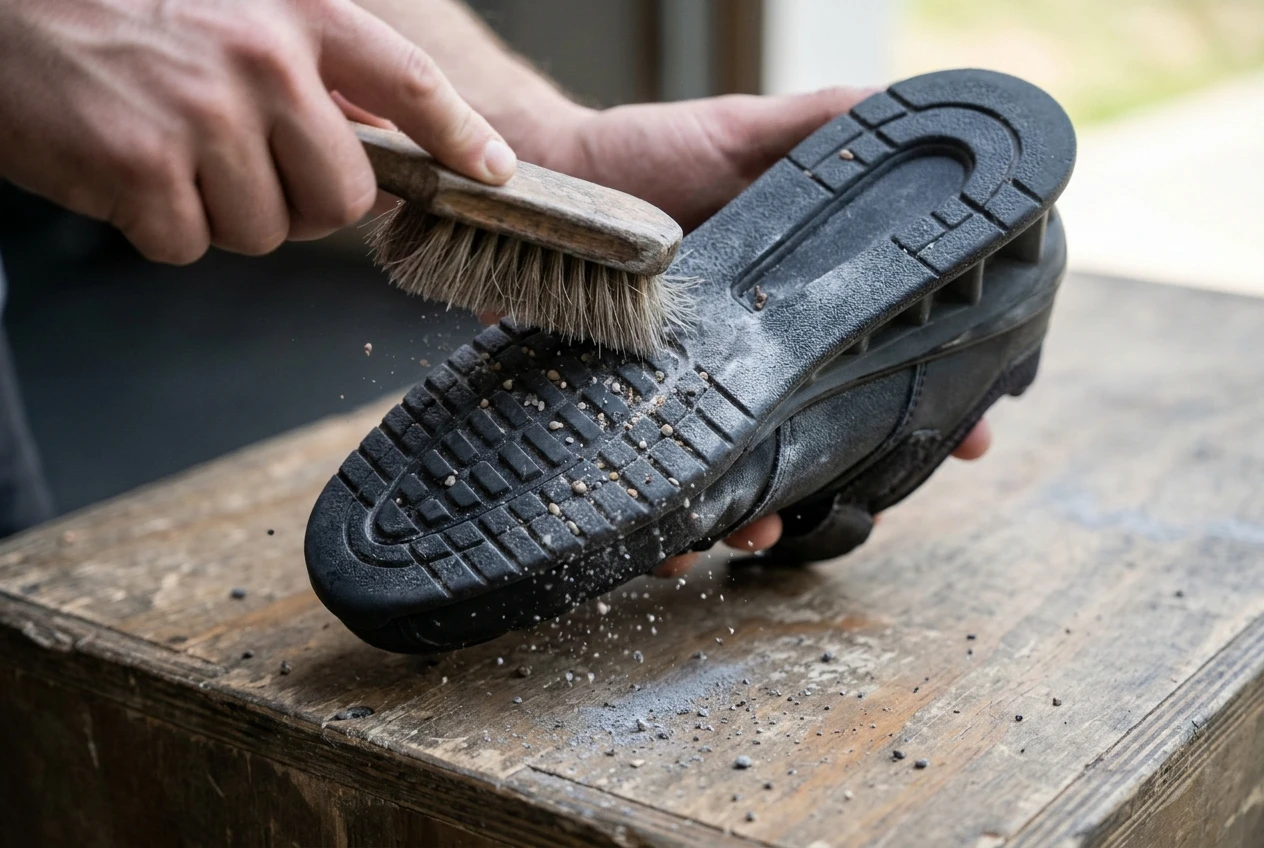
The sole and heel need the most attention, because that is where grip and stability come from. Lift the shoe and look at the tread for pebbles, grit, and gym-floor debris, which can scratch platforms and slip under you on the lift. A dry cloth or a soft brush clears it. If the sole feels slick, a damp cloth removes film and chalk and often restores some traction.
Keep the shoes for lifting. Walking on pavement wears the outsole down faster than the platform ever would, and street grit gets pressed into the tread. Carry them in and change at the rack.
Avoid these:
- Washing machines and dryers. Heat and tumbling break down the glue that holds the sole and heel in place.
- Radiators, hair dryers, and sunny windowsills. These dry leather too fast and can warp a synthetic heel.
- Harsh solvents. They can strip finishes and weaken adhesives.
- Leaving them wet in a closed bag overnight. This is how the lining breaks down.
If a sole is starting to peel at the edge, a cobbler can often reglue it for far less than the price of new shoes. If the heel has cracked, compressed unevenly, or the shoe now tilts when you stand in it, it is time to replace them. Those are structural problems, not cosmetic ones.
Belts: caring for leather versus velcro closures, and what a stretched or cracking belt is telling you
Leather and velcro belts need opposite care, so treat them separately.
Leather belts stiffen up when they dry, which is mostly fine, but over-drying causes cracks. Wipe sweat off the inside after sessions and let the belt dry flat or hanging, away from heat. Once in a while, work a small amount of leather conditioner into the surface, then wipe off the excess. Too much conditioner softens the leather, and a softer belt gives you less to brace against.
Velcro belts fail at the closure. Lint, chalk, hair, and loose threads clog the hook side and the grip weakens. Pick debris out with a comb, stiff brush, or tweezers every few weeks, and fasten the velcro together when you store it so the two sides don’t collect dust or snag other gear.
The belt tells you when something is wrong:
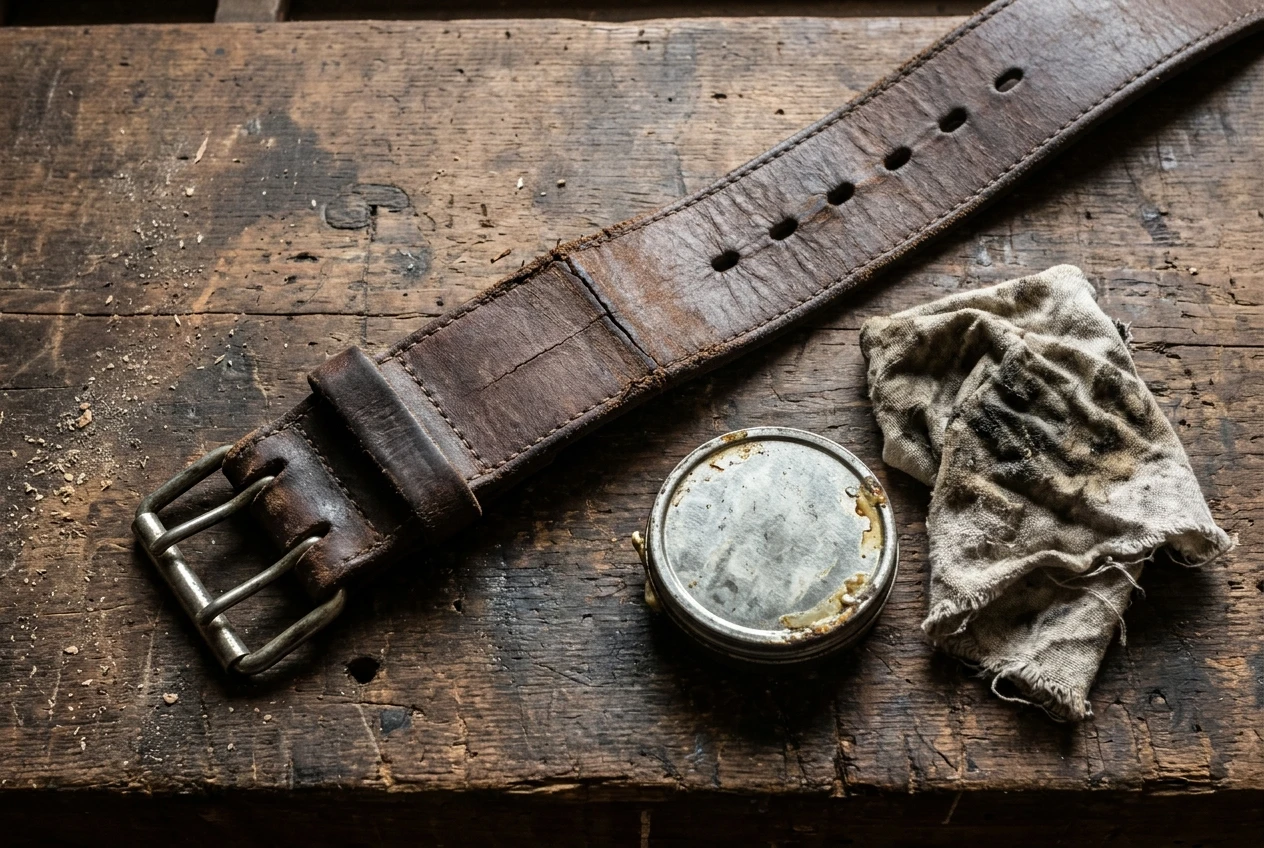
- Prong holes stretching into ovals mean the leather around them is giving way. A belt that is wider than its hole should be is losing its hold.
- Cracks that run along the fold or across the leather’s thickness mean the belt has dried out or been bent beyond what it tolerates.
- A belt that now bends easily has lost the stiffness that made it useful. Compare it with how it felt when new.
- Velcro that creeps open during heavy sets can sometimes be saved by cleaning, but if cleaning doesn’t fix it, replace it.
Surface scuffs and a worn finish are cosmetic and can be ignored. For a deeper look at what a belt does and doesn’t do for you, the guide on whether lifting belts, wraps, straps, and shoes prevent injury covers it.
Bands and straps: keeping latex away from sun, chalk, and sharp edges, and when to retire them
Latex breaks down from ultraviolet light, heat, oils, and abrasion. A band left on a windowsill or in a hot car degrades faster than one kept in a drawer. Skin oils and lotions can also affect the surface, so wipe bands with a damp cloth after use and dry them fully.
Chalk absorbs moisture and is gritty, so shake it off rather than letting it sit in the folds. Store bands loose or hung over a rounded hook. Knots and tight coils create stress points.
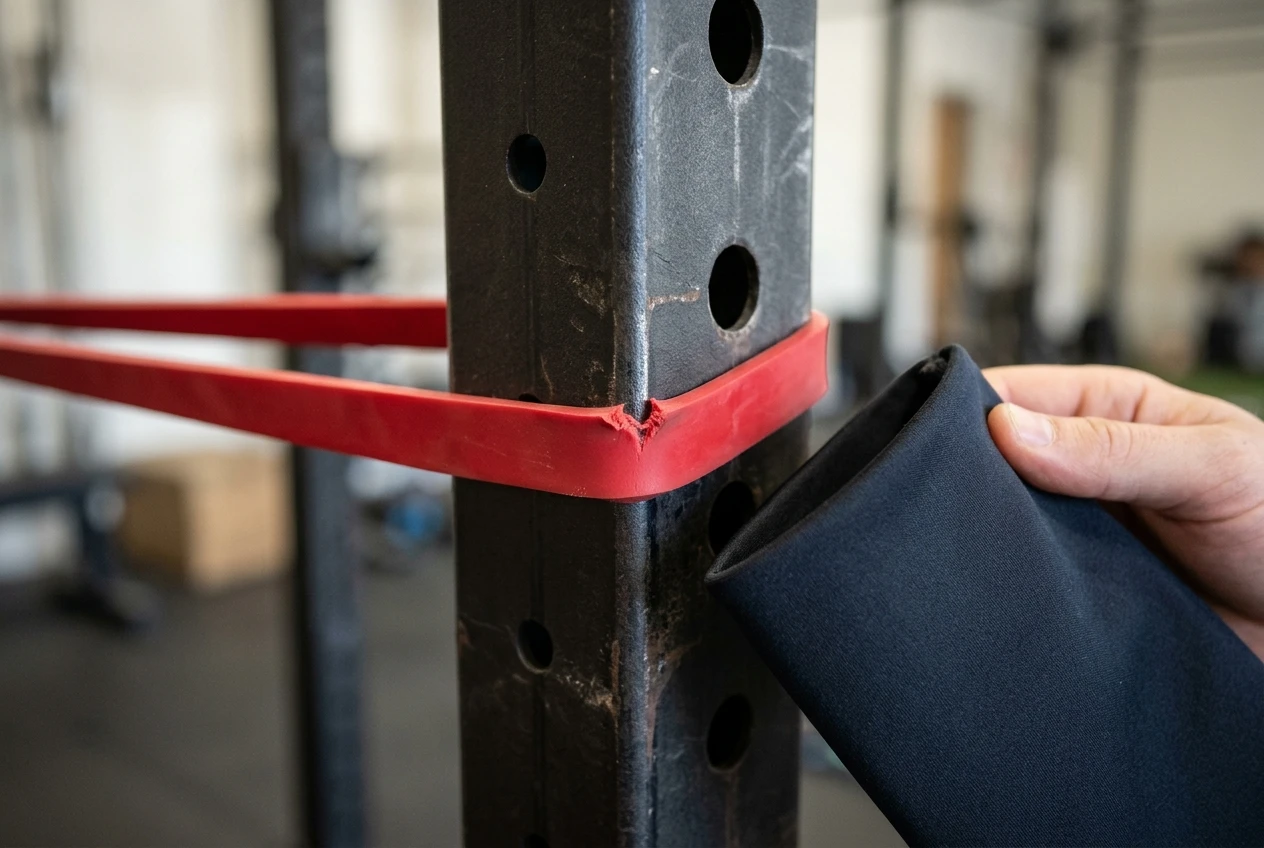
The most common cause of a snapped band is an edge: a rack upright corner, a rough bench frame, or barbell knurling. Anchor bands around smooth surfaces, or use a sleeve or a fabric loop between the band and the edge.
Retire a band when you see:
- Cracks or fine lines on the surface, especially where it stretches most
- Nicks or cuts along the edge
- A sticky or chalky feel that doesn’t wipe off
- Thin spots, or uneven width along its length
Bands can’t be repaired, and tape is not a fix. A latex band that fails under tension can snap back at you, so there’s no sense in extending its life past the first real sign of damage.
Straps are made of cotton or nylon, so they respond to different care. Rinse sweat and chalk out by hand with cool water and mild soap, then hang them to dry. Check the stitching at the loop, where the load concentrates. Fraying there, or webbing that has thinned, means replace them. If you are working out when straps make sense for your sets, the guide on how to build grip strength and still use lifting straps lays out a split between strap days and grip days.
Kettlebells and the rest of the home gym kit: handles, rust, and where to store them
Cast iron rusts when moisture sits on it. A kettlebell kept in a garage or basement, especially one coated in chalk, can show orange spots within weeks in humid conditions. Wipe the handle after use and store the bell off the floor, on a shelf or rack, in the driest spot you have.
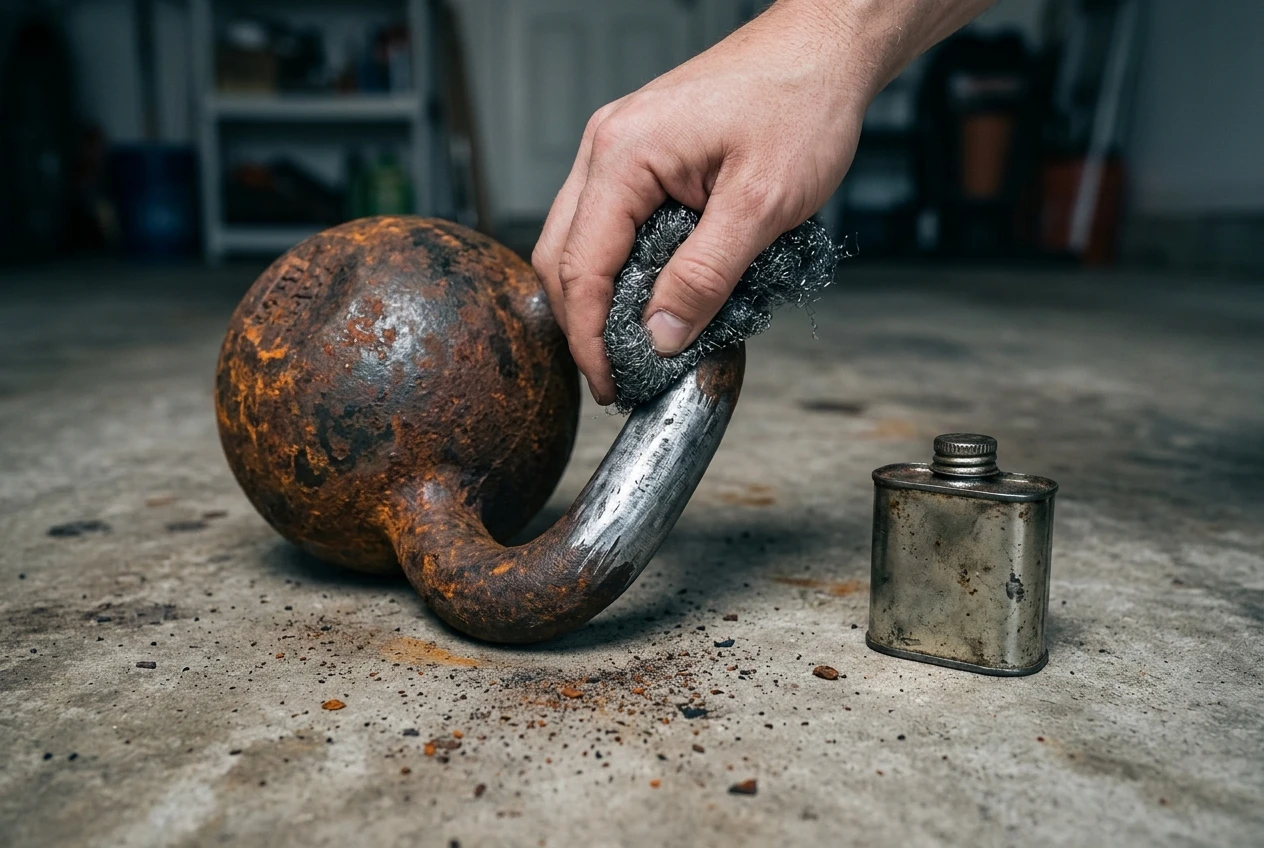
If surface rust appears, rub it with steel wool or a wire brush until the bare metal shows, wipe away the dust, and then apply a thin layer of oil or a light coat of wax. Done early, this takes minutes. Left alone, rust pits the handle and makes it rough on your hands.
Check the handle for burrs and casting seams too. A light pass with fine sandpaper smooths a rough spot, but don’t sand the handle down to a different diameter. If a bell has a crack at the handle joint, stop using it, because there is no safe repair for that.
The same logic covers the other gear around the bells:
- Mats and flooring: Wipe up sweat so it doesn’t pool underneath. The guide on home gym flooring for heavy lifting covers what to put under different loads.
- Collars and clips: Wipe them clean and keep them out of damp areas, as springs and screws rust quickly.
- Storage: Keep bells grouped by weight on a stable base, and don’t stack them where a tipped one can land on your foot or crack your floor.
Repair, rotate, or replace: a simple monthly check and the signs that mean it is time to buy again
Pick one day a month, such as the first of the month, and go through everything for five minutes.
Item Check Fix it Replace it Shoes Sole edges, heel, laces, straps Reglue a peeling sole, replace laces Cracked or uneven heel, torn upper, shoe tilts Leather belt Prong holes, cracks, stiffness Condition lightly, wipe clean Stretched holes, cracks through the leather, soft bending Velcro belt Hook side, closure strength Clean out lint and chalk Opens under load after cleaning Bands Surface, edges, thin spots Nothing Any crack, nick, or sticky surface Straps Stitching, fraying, webbing Wash and dry Frayed stitches or thin webbing Kettlebells Rust, handle, seams Remove rust, oil lightly Cracked handle or joint
Rotating helps only where it makes sense. If you use two pairs of the same kind of shoe, the pair that rests dries out fully between sessions. For bands, rotating through a set spreads wear across several, so one doesn’t take all the stretching.
When a repair costs more than half the price of a new item, or when the problem affects safety or support, replace it. Cosmetic wear should not push you to buy.
If your check turned up a worn band, the guide on which resistance bands are worth buying and how to tell when one is about to fail explains what to look for in a replacement. If your shoes are past saving, flat or raised heel: how to pick your first pair of weightlifting shoes will help you choose the next pair based on what you train.