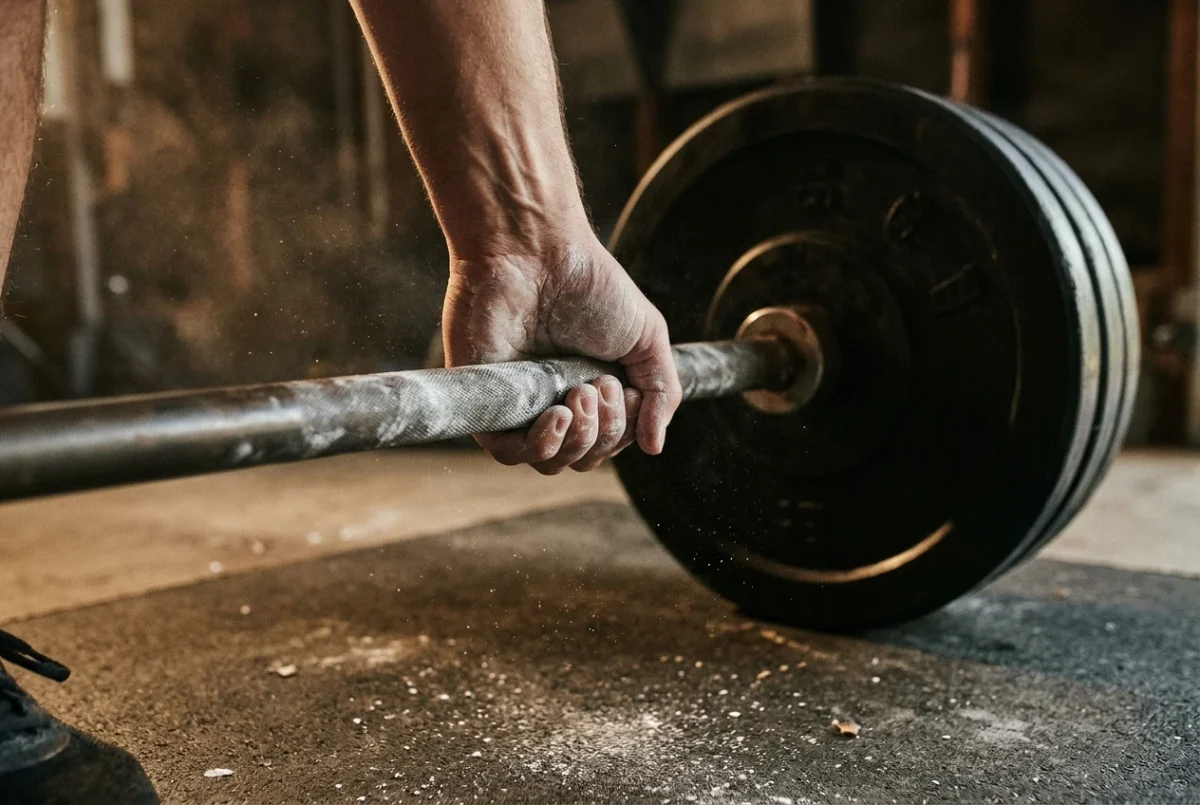
Most lifters who hit a grip limit end up in one of two camps. One group straps up for everything and wonders why their hands never improve. The other chalks up, grinds, and watches their back lifts stall because the bar slips before the lats or hamstrings get a real workout. Both are solving the problem with a single tool.
The better answer is to treat overload and grip development as separate jobs with separate slots in the week. This guide shows how to build grip strength and still use lifting straps, so neither one holds the other back.
Two Different Jobs: Why Overload and Grip Development Shouldn’t Share a Set
Overload means giving your back, hips, and legs enough load and enough reps to adapt. Grip development means giving your fingers, hands, and forearms enough tension, for enough time, to adapt. Those are different tissues with different recovery needs and different ideal rep ranges.
When both jobs share one set, the weaker link decides the outcome. If your grip fails at rep 5 of a set meant to be 10, your back only did half the work you planned. The set trained your grip a little and your back less than intended, and it did neither job well.
Separating the jobs fixes this. On overload sets, remove grip as a limiter so the target muscle works to its own limit. On grip work, load the hands directly with exercises built for that purpose, and put them where they won’t cut into your heavy pulling.
How to Tell If Grip Is Really What Ends Your Sets
Before changing anything, find out what is actually stopping you. Plenty of lifters blame grip when the real limit is the back, and some assume the back is the problem when the hands are quietly capping every set.
Try this on a working weight for rows or Romanian deadlifts:
- Do a set raw to the point where the bar starts slipping or you have to reset your hands.
- Rest three to five minutes.
- Repeat the same weight with straps and take the set to failure or close to it.
If straps give you several more good reps and the target muscle (lats, upper back, hamstrings) is what burns at the end, grip was the limiter. If you get the same reps or one extra, your back was already the limit and straps won’t change much.
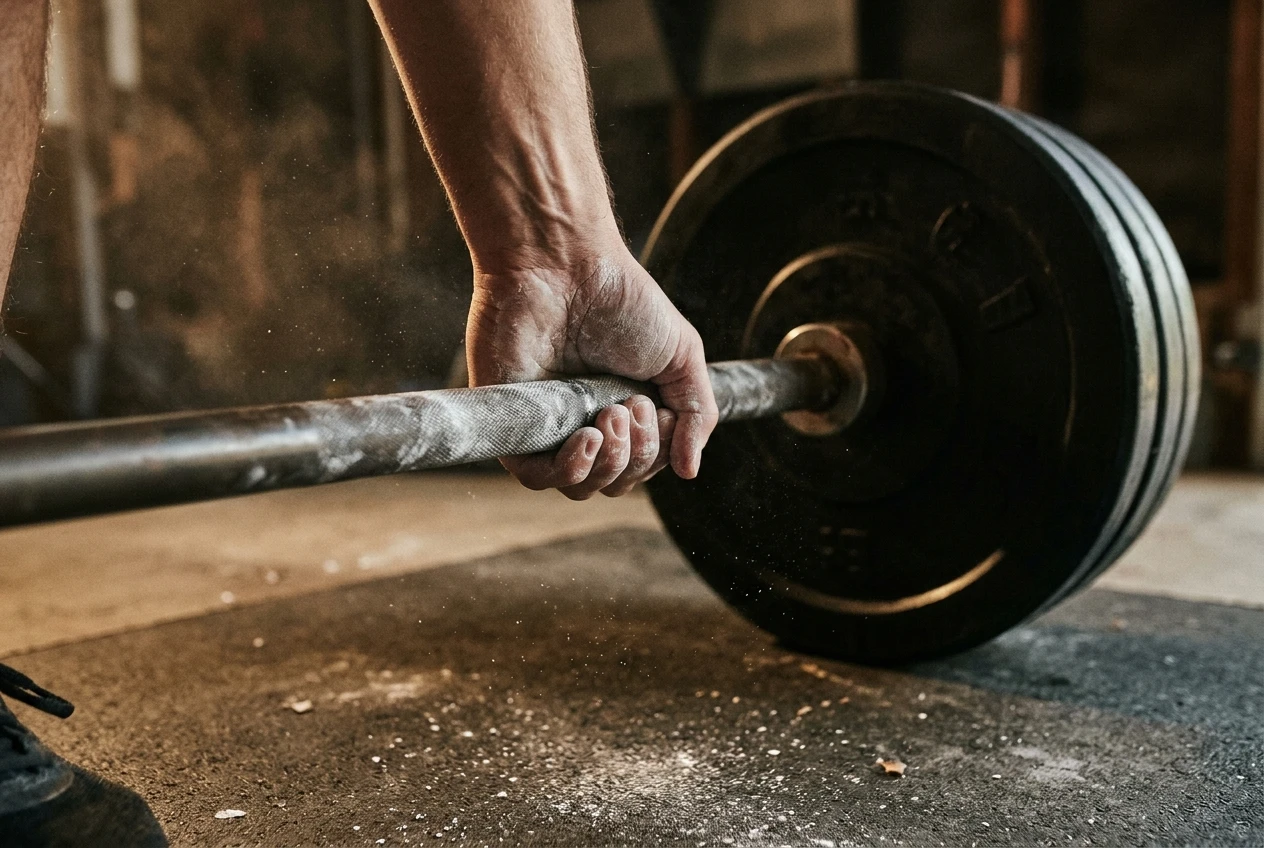
Other signs point the same way:
- The bar rolls toward your fingertips before your form breaks down.
- Your forearms are fried while your back still feels fresh.
- You regularly drop a set at the same rep count no matter how well you slept or ate.
- Your hands open before your legs and hips feel maxed out.
If instead your lower back or hamstrings are what you can’t push any further, the problem is somewhere else, and straps are not the fix.
Where Straps Earn Their Place in a Week
Straps belong wherever your hands would end the set before the muscle you are targeting does. In most programs that means three places.
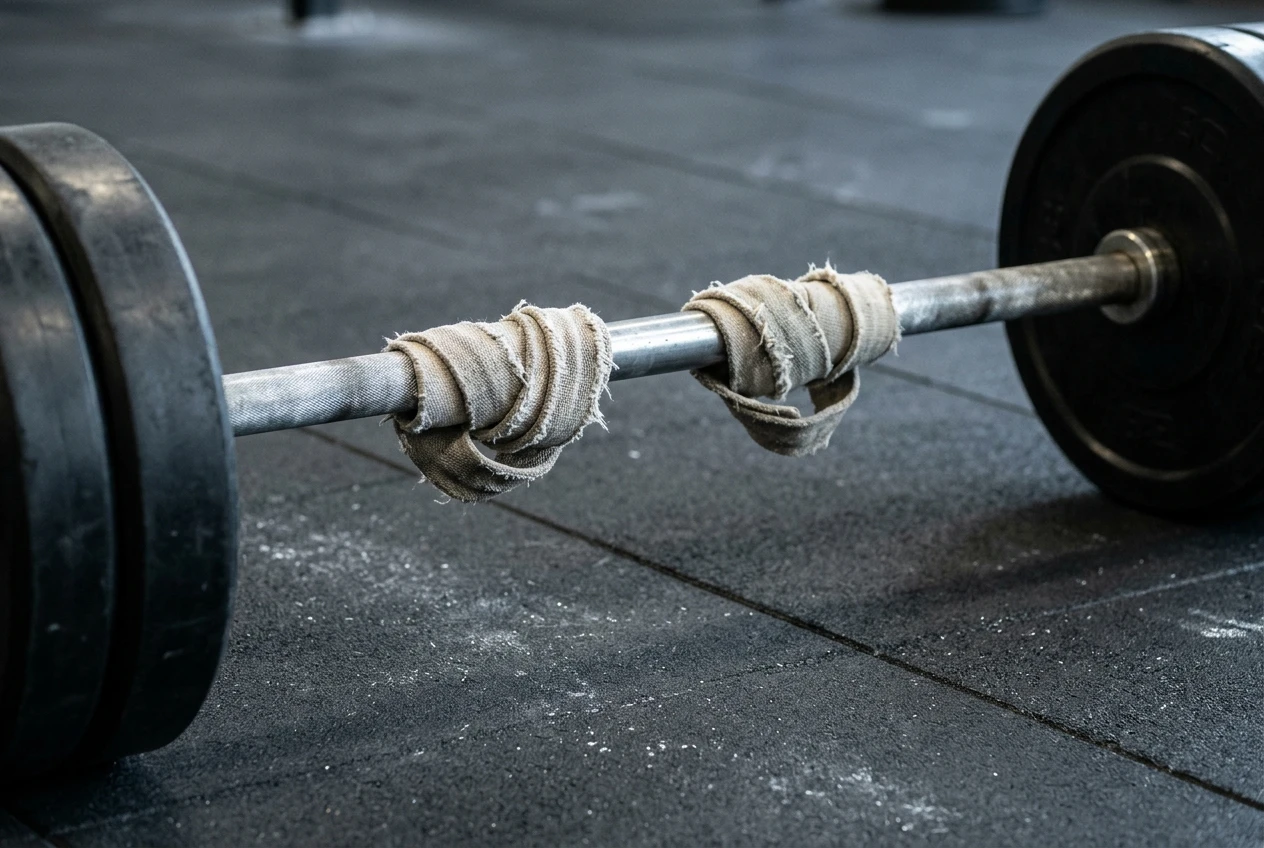
Heavy pulls. On deadlifts and rack pulls, the last heavy sets can exceed what your grip holds, especially if you use a double overhand grip. Strapping the top set lets your back and legs be the limit. For a lift-by-lift breakdown of when to reach for them, see our guide on when to use lifting straps and when your grip should do the work.
High-rep back work. Sets of 10 to 15 on barbell rows, dumbbell rows, lat pulldowns, shrugs, and Romanian deadlifts are where grip tends to give out long before the back does. Strap these sets so the back gets the volume it needs.
Top sets. If your program has one heavy top set followed by lighter back-off sets, strap the top set and any back-offs that your grip would cut short. Straps on these sets are overload tools, and they should be treated that way.
Straps change what limits the set. They don’t make the lift safer on their own, and our piece on what belts, wraps, straps, and shoes protect and what they can’t covers that distinction in detail. Use them for overload and don’t count on them for protection.
Where Raw Grip Stays: Warm-Ups, First Working Sets, and Lighter Pulling Days
Strapping every set trains your grip to do very little. A simple rule keeps your hands in the work: go raw until the grip would end the set before the target muscle does.
In practice:
- Warm-up sets are always raw. They are light enough that your grip handles them, and they give your hands steady, low-stress practice with the bar.
- First working sets stay raw too. Your grip is freshest here, so you get meaningful loading on your hands for free.
- Lighter pulling days stay raw most of the time. If a day is built around moderate weights, technique, or volume you can handle easily, let your hands hold the bar.
Switch to straps when the bar starts slipping on a set that matters for your back. If grip holds through the whole work block, there is no reason to strap at all. If you pull with a mixed grip or a hook grip, those count as raw grip work too, though the same rules about when to switch to straps still apply.
Giving Grip Its Own Slot: Hangs, Carries, Thick-Handle Work, and How Much Fits in a Week
Raw warm-up sets and light days keep your grip busy. Direct grip work is what actually builds it, and it needs a place in the week where it doesn’t compete with heavy pulling.
Dead hangs. Hang from a pull-up bar with a full grip. Start with 2 to 3 sets of 20 to 45 seconds. When you can finish all sets with clean, steady holds, add time or switch to a thicker bar or towel.
Carries. Farmer carries, suitcase carries, and similar loaded walks train your grip under real weight for extended time. Start with 3 to 4 trips of 20 to 40 meters, or 30 to 60 seconds each, with a weight that makes the last few steps hard without making you drop it.
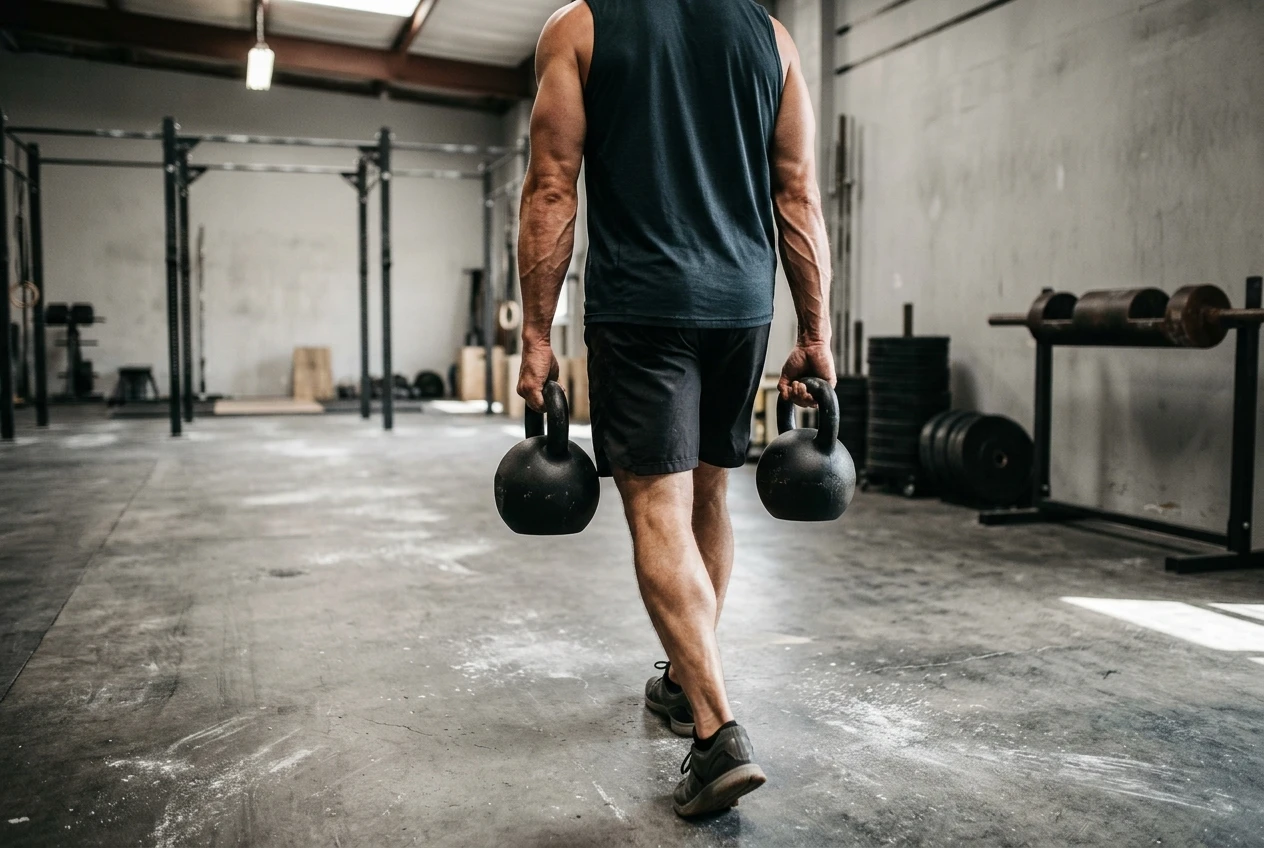
Thick-handle work. Fat grips, a towel wrapped around a handle, or a thick-handled implement force your fingers to work harder to hold the same weight. Use them for holds, rows, or short carries, for 2 to 3 sets.
As a starting point, one or two sessions of carries, one or two of hangs, and one of thick-handle work fit most weeks. Keep the total modest at first. Your forearms and finger tendons recover more slowly than many lifters assume, and grip work piled on top of heavy pulling can leave your hands too tired for the lifts that matter. Those numbers are a starting framework to adjust, not a prescription.
Placement matters as much as volume. Do grip work after your main lifts or on a day that isn’t followed by a heavy pull. Hanging or carrying hard right before deadlifts leaves you with tired hands when you need them most.
Putting It Together: A Sample Week
Here is one way to lay out a week with a heavy pull day, a lighter pull day, and a dedicated grip day. Adjust the days to fit your schedule.
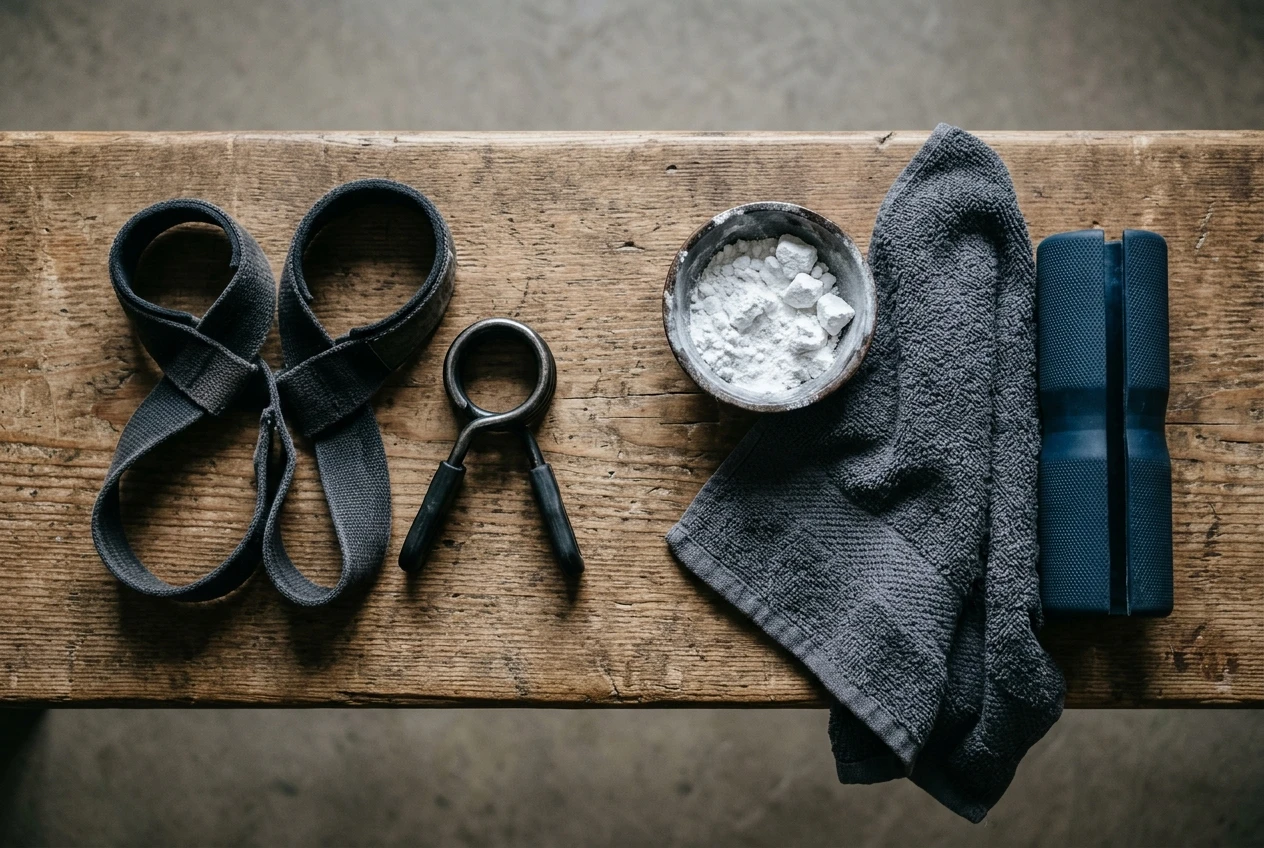
- Monday, heavy deadlift day. Warm-ups and first working sets raw. Strap the top set and any back-offs that your grip would cut short. Follow with strapped barbell rows for 3 sets of 10 to 12.
- Tuesday, upper push and legs. No pulling stress on the hands. Grip rests.
- Wednesday, lighter pull day. Pull-ups or pulldowns, dumbbell rows, and face pulls, all raw unless a set truly stalls on grip. Finish with 2 to 3 sets of dead hangs.
- Thursday, off or easy movement. Let your hands recover.
- Friday, back volume day. Higher-rep rows, shrugs, and Romanian deadlifts, strapped from the first working set where grip would limit the target muscle. Keep warm-ups raw.
- Saturday, grip day. Carries first, then thick-handle holds, then hangs if energy remains. Keep it short and hard rather than long and sloppy.
- Sunday, off.
The strapped work (Monday top sets, Friday volume) goes to the back and legs. The raw work (warm-ups, Wednesday, Saturday) goes to the hands. Neither one is competing for the same set.
Signs Your Split Is Working, and When to Change It
After four to six weeks, a few things should be moving:
- Your raw warm-up and first working sets feel firmer in your hands, or you can handle slightly more weight on them.
- Hang times and carry loads or distances are creeping up.
- Strapped sets end because your back or legs are tired, not because your hands gave out.
- Your heavy pull numbers keep progressing, or at least aren’t slipping.
Change the split when the signals say so:
- Grip numbers stall for four to six weeks. Add a set or a small increase in load to your grip day, or add a second short session of hangs.
- Heavy pulls stall or feel flat. Check whether grip work is too close to your heavy day. Move it later in the week or cut a set or two.
- Elbow or forearm tendons get sore. Reduce grip volume and give the area a few days before building back up.
- Your hands rarely limit a set anymore. You can strap less often, or wait to strap until later sets.
None of this needs to be permanent. As your grip improves, the weight at which you reach for straps rises with it, and the split can shift accordingly.
Fill Your Grip Days With Guided Kettlebell Work
If you want structured sessions to fill your grip days, kettlebell training is a natural fit, since swings, holds, and loaded carries all put sustained tension through your hands. You can look at the guided sessions at kettlebell.monster. Check the program details for carries and holds before buying, so you know the sessions include the grip work you are after.
Affiliate disclosure: I earn a commission if you buy through this link, at no extra cost to you.