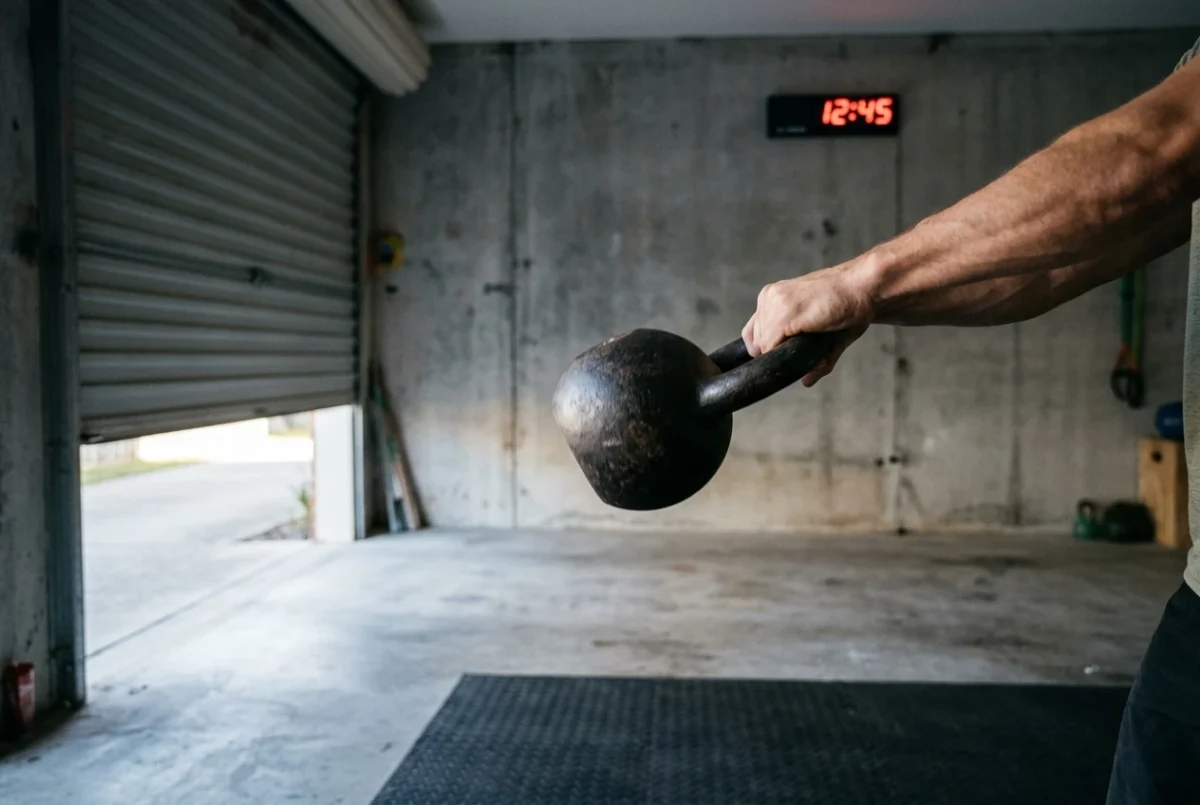
If you want one primary tool for conditioning, the kettlebell vs barbell for conditioning question comes down to the energy system your sport taxes and how each tool behaves when you are breathing hard. Power output is a separate question, and the kettlebell or barbell for power piece covers it. This article covers only conditioning: how much work you can repeat, how your technique holds up under fatigue, and which tool fits the demands of a given sport.
It assumes you already know the basic lifts. You do not need a list of pros and cons. You need a pick, and a rule for when to run both.
What Athletic Conditioning Asks of You, and Why the Tool Changes the Stimulus
Conditioning is your capacity to repeat quality work and recover between efforts. The body supplies that energy in three overlapping ways. The phosphagen system covers very short, maximal efforts of a few seconds. The glycolytic system carries hard efforts lasting from tens of seconds to a couple of minutes. The aerobic system supplies steady work and drives recovery between bursts. Sports differ in how much they lean on each, and your training should lean the same way.
The tool shapes which system you end up training. A kettlebell swing is cyclical: the bell travels in an arc, you hinge and snap, and the next rep starts as the last one ends. That makes it easy to keep moving for long stretches with no pause. A barbell lift is more often a discrete event. You lift, you lower, you reset your grip and breathing, and you go again. The pauses are short, but they are built into the movement.
That difference matters more than the heart rate readout on your watch. Both tools can push your heart rate high when you use large muscle groups through the hips and legs. The useful question is whether you can sustain the effort at the intensity you intended. The kettlebell makes continuous, rest-free work easy to organize. The barbell makes loaded, structured intervals easy to organize and measure.
Where the Kettlebell Wins: Continuous Swing Work, Low Setup Friction, and Short Rest-Free Rounds
The kettlebell’s biggest conditioning advantage is how little stands between you and the work. One bell and a few square feet of floor are enough. There is no rack to set, no plates to load, and no collars to fit. If your plan is a timed round of swings, you pick up the bell and start the timer. People skip sessions that take twenty minutes to prepare, and the kettlebell removes most of that preparation.
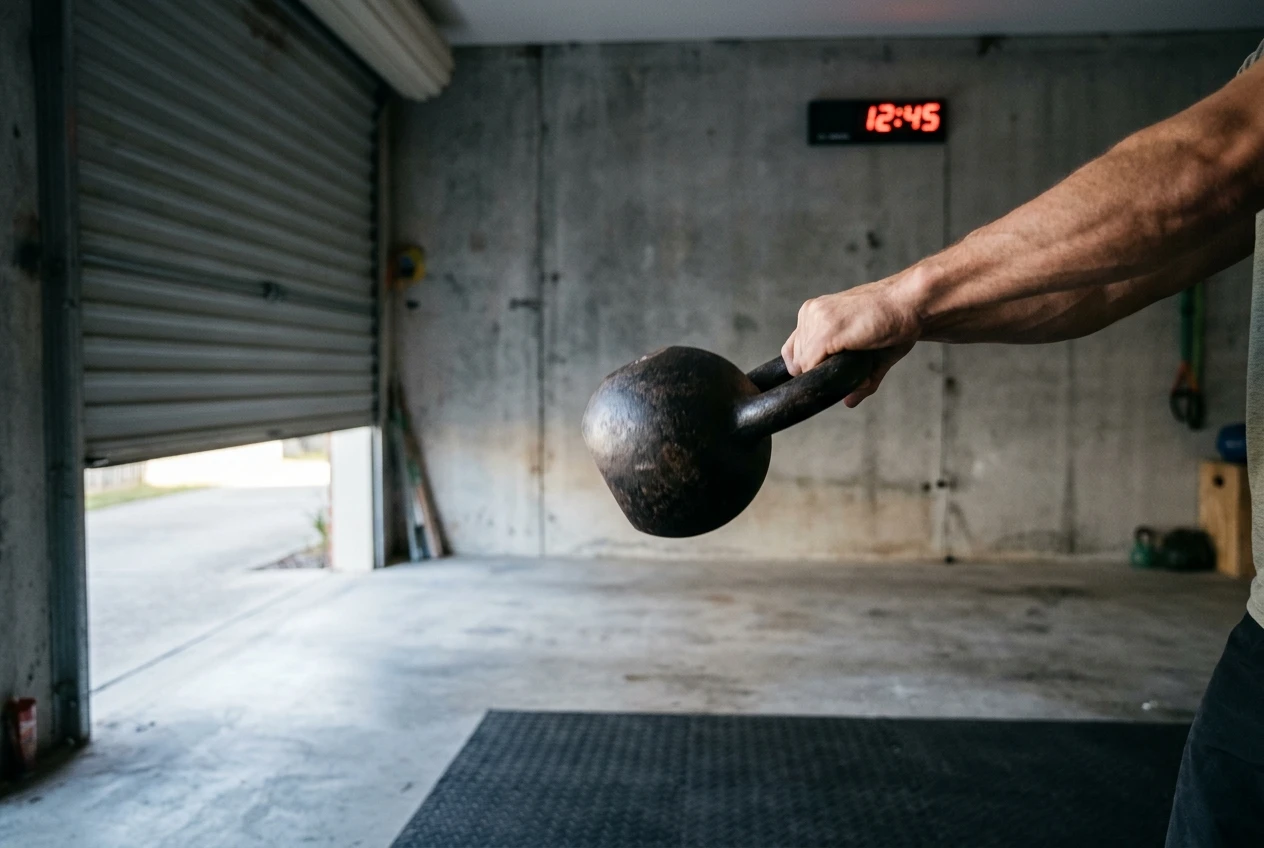
Swings, cleans, and snatches are also the natural movements for rest-free rounds. A simple format is a set number of swings at the start of each minute, resting for whatever is left of the minute. Another is continuous work for a fixed time, swapping between swings and goblet squats without setting the bell down. The movements flow into each other, and that is what makes the stimulus continuous.
The kettlebell has a few other practical strengths for this job:
- Safe parking. When a swing falls apart, you can set the bell down in front of you without a crash.
- Hip-driven effort. The swing loads the hinge pattern, so the big muscles of the posterior chain do the work and the heart rate climbs accordingly.
- Small footprint. You can train in a garage, a living room, or a park.
The weakness is progression. Kettlebells come in fixed sizes with big jumps between them, and you cannot add two and a half kilos to a bell. You measure progress by reps, time, density, or by moving to a heavier bell, which is slower and less precise than adding plates. The bell you choose for conditioning also differs from the one you would press. The kettlebell weight guide by movement and level explains why those two numbers do not match.
Where the Barbell Wins: Loaded Intervals, Complexes, and Progress You Can Measure in Plates
The barbell is better when you want conditioning with a heavy, precise load. Take a fixed weight and perform a small number of reps at the start of every minute for ten or fifteen minutes. The weight stays constant, the rest period shrinks as you tire, and the work gets harder without any change to the bar. That is a loaded interval, and it is easy to set up and easy to repeat next week with a small increase.
Complexes are the other strength. A complex chains several lifts, for example a deadlift, a hang clean, a front squat, and a push press, without putting the bar down. The weight is capped by your weakest movement in the chain, so the bar is often lighter than you would use for any single lift. Even so, a few rounds of a complex will leave you breathless and let you accumulate a lot of total work in a short time.
Plates make progress simple to track. You can add the smallest plate you own, run the same complex, and know you did more work. If you like numbers, the barbell gives you cleaner data than a bell does.
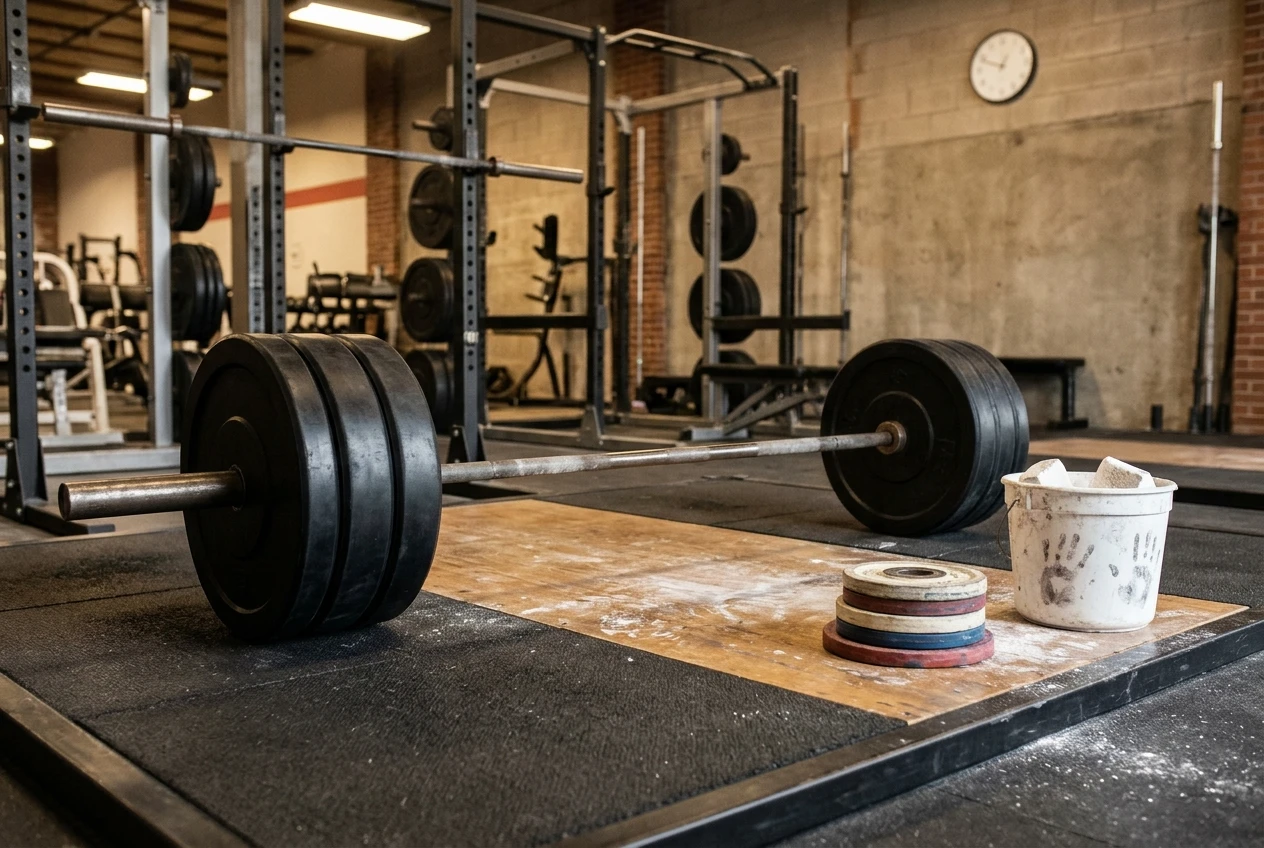
The cost is friction. You need a bar, plates, a place to lift, and ideally flooring and bumper plates in case you drop the bar when tired. If you already train on a barbell split, that setup is in place, and the piece on where kettlebell sessions fit in a barbell split without costing you your squat shows how to schedule conditioning around your heavy days.
What Happens to Your Technique and Your Back When You Are Out of Breath
Fatigue changes how you move, and each tool fails differently.
On a kettlebell, the typical failure is the swing turning into a squat with an arm lift. The hips stop snapping, the bell stays low, and the lower back and shoulders take over. Rounding at the bottom of the hinge also becomes more likely. The good sign is that the failure is visible: the bell stops rising to the same height. When that happens, the set is over.
On a barbell, the failure costs more because the load is heavier and sits in a fixed path. A deadlift pulled from the floor with a rounded back is a poor idea at any time, and fatigue makes it likelier. Cleans are worse: when you are tired, the catch gets sloppy, the elbows drop, and the bar crashes onto the collarbones. Heavy bracing also conflicts with breathing. Holding a braced breath is what you want for a heavy single and the opposite of what you want when you are gasping.
Some rules keep both tools safe:
- Stop at the first form change. Set the weight and the rep count so the last rep looks like the first.
- Choose low-skill movements for high fatigue. Swings, deadlifts, goblet squats, and carries are better than snatches or heavy cleans when you are gassed.
- Shorten the set, not the rest. Smaller sets repeated more often keep technique clean while the total work stays high.
- Keep the barbell light on conditioning days. Conditioning should leave you tired, not unable to train heavy the next day.
On balance, the kettlebell is more forgiving when you are out of breath, because lighter loads and the option to set the bell down reduce the cost of a mistake. The barbell rewards discipline and punishes a lapse.
Pick by Your Sport: Field and Court, Combat, and Strength Sport Athletes
Field and court sports
Soccer, basketball, rugby, and similar sports are repeated bursts of running, jumping, and changing direction, with short recoveries in between. The aerobic system matters because it speeds recovery between bursts, and the glycolytic system matters during the bursts themselves. Kettlebell swing intervals suit this well: short work periods, short rests, hips driving the effort, and little setup. Pick the kettlebell as your conditioning tool and keep your barbell work for strength. If your gym has only a barbell, loaded interval work with deadlifts or cleans is a workable substitute.
Combat sports
Boxing, wrestling, jiu-jitsu, and MMA are organized in rounds with set work periods and brief rests. Kettlebell rounds mirror that format: a timer, continuous work, and a short break. Swings, cleans, and snatches also load the grip and hips, which combat athletes use constantly. The kettlebell is the better primary pick here. Add the barbell for strength days if you want heavier lower-body and pulling work, but keep it away from the days before hard sparring.
Strength sports
Powerlifters and weightlifters already spend their heavy days on the barbell, and conditioning has to coexist with that. For most of them the kettlebell is the better conditioning tool, because swings and carries are low in skill, easy to scale, and separate from the lifts you are trying to peak. The barbell makes sense here only if the conditioning serves the sport directly, for example light technique complexes that build the capacity to repeat clean pulls. The main aim is to keep conditioning from eating the recovery your heavy sessions need.
A Conditioning Week Built on One Tool, and When to Add the Other
A week of conditioning does not need many sessions. Two or three, kept separate from your hardest strength days, is enough for most people. Here are two templates, one per tool. Treat the numbers as starting points and adjust them to your fitness.
Kettlebell week
- Day 1, intervals: Ten swings at the start of every 30 seconds for ten minutes. Rest in whatever time is left.
- Day 2, continuous: Twenty minutes alternating swings and goblet squats at a pace you could hold a conversation through between sets.
- Day 3, short and hard: Eight rounds of 20 seconds of fast swings and 40 seconds of rest.
Barbell week
- Day 1, loaded interval: Three cleans or deadlifts at the start of every minute for ten minutes, with a weight you can move cleanly.
- Day 2, complex: A deadlift, hang clean, front squat, and push press, for five reps each, repeated for four to six rounds with a few minutes of rest between rounds.
- Day 3, density: Choose a simple lift and see how many clean reps you can accumulate in a fixed time, then try to beat the total next week.
For kettlebell sessions, choosing the right bell is part of the plan. Use the kettlebell weight guide by exercise and level to match the size to the movement, because a bell that is right for swings is usually too heavy for presses.
When to run both
Pick one tool and stay with it until it stops being enough. These are the signals to add the second:
- On the kettlebell, add the barbell when the heaviest bell you own no longer challenges your swing, or when you want to measure loaded progress in small increments.
- On the barbell, add the kettlebell when setup keeps you from training, or when your lower back needs a lower-load way to keep conditioning going.
If your sport is combat or field and court, start with the kettlebell. If you are a lifter with a barbell already set up and you want measurable work, start with the barbell. Run both only once the first one has stopped producing progress.
Your Next Step if You Choose the Kettlebell
If the kettlebell fits your sport and your space, the remaining problem is a plan you will follow. kettlebell.monster offers a ready-made conditioning program built around the bell. (Affiliate link: this site earns a commission if you buy through it, at no extra cost to you.)
If you would rather have an instructor on screen than read a spreadsheet, there is also the Samsung Tizen TV workout app, which puts the sessions on your television. (Affiliate link: this site earns a commission if you buy through it, at no extra cost to you.)