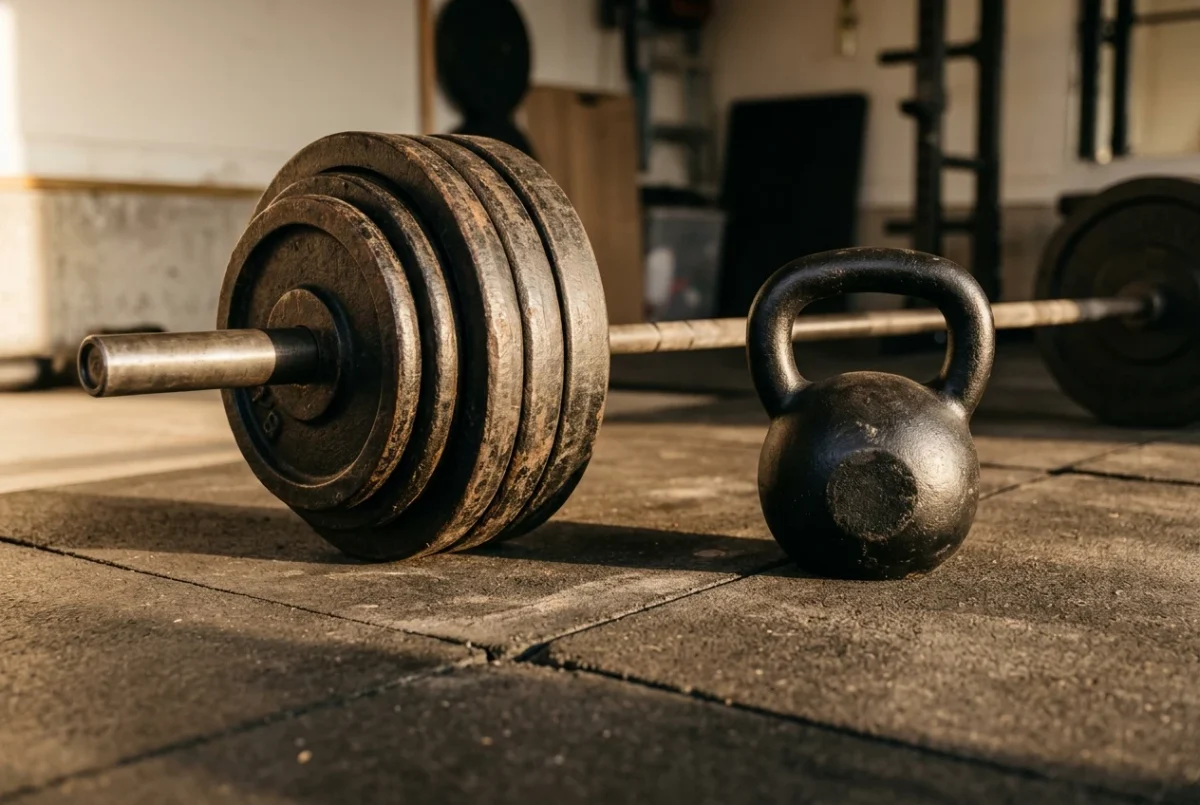
Power is force multiplied by speed. A lifter who moves a heavy load slowly and a lifter who moves a light load fast are each missing one half of that product. The barbell and the kettlebell each make one half easier to train, which is why asking which is better for power has no single answer.
This article compares the two by what they let you do, what they can’t do, and which training goals each one serves. A decision table and a four-week test are included, so you can settle the question with your own numbers.
Power is force times speed, and each tool favors a different half
Force is what you train when you lift heavy loads. Speed is what you train when you move a load as fast as your body can move it. Maximal strength raises the ceiling on force. Ballistic work teaches you to express force quickly, before the movement is over.
A barbell is built for the force half. You can load it in small, exact increments, you can set it down anywhere, and the weight does not change shape as it gets heavier. That makes it the natural tool for squats, deadlifts, presses and the Olympic lifts, where you want the highest load you can control.
A kettlebell is built for the speed half, at least in the movements it does best. The handle sits above the bell, and the center of mass hangs below your grip. In a swing, clean or snatch, the bell travels in an arc and your hips supply nearly all the drive. You are accelerating a moderate load through a big range of motion, again and again, and that rewards a fast hip extension.
Neither tool is limited to its half. You can lift a barbell fast, and you can press a heavy kettlebell slowly. Each tool simply makes one kind of power work cheaper in setup, skill, and risk.
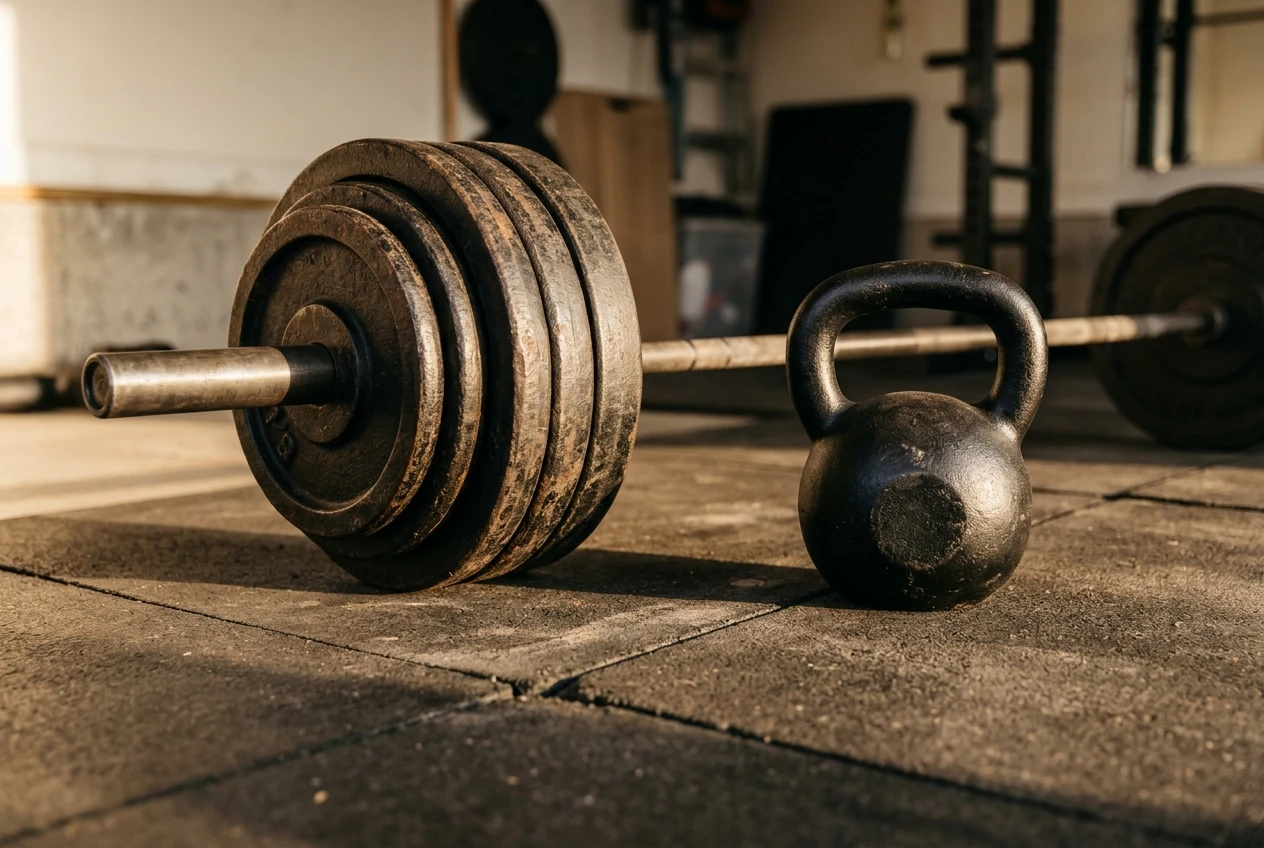
Where the barbell wins: heavy, measurable, easy to progress
The barbell’s biggest advantage is that its load is precise. A 100 kg squat this month and a 102.5 kg squat next month is a real, recorded change, and it is the basis of progressive overload. If you want a method for adding load week to week, this guide on progressive overload covers it.
Several other things make the barbell the better tool for maximal force:
- Load ceiling. Plates keep adding weight long after a kettlebell rack runs out. You are unlikely to outgrow a barbell.
- Stability under heavy load. Both hands share the bar, and the bar sits on your back, shoulders or hands in a fixed position. You can concentrate on pushing hard instead of controlling an object that swings.
- Measurability. Because every plate is a known weight, you can compare sessions, plan blocks and test maxes with confidence. The barbell periodization guide builds on that precision.
- Lower-body strength. Squats and deadlifts load the legs and back heavily, and a stronger base gives you more force to express quickly later.
For the power half of the equation, strength is the foundation. A lifter who can squat very little will usually have a low ceiling for jumping and sprinting, whatever else they do. If your lifts are still climbing, the barbell is where most of the gains will come from.
Where the kettlebell wins: swings, cleans, and snatches for fast hips
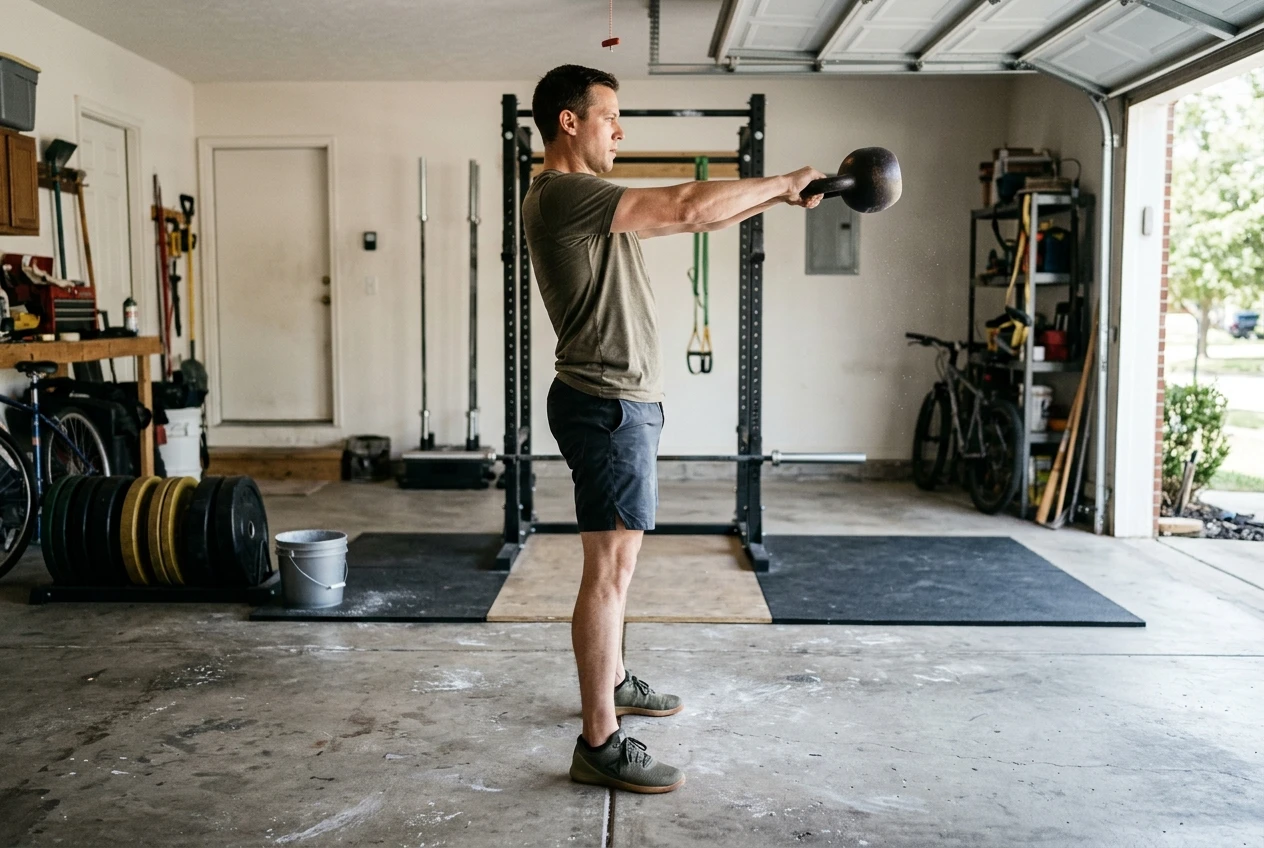
The kettlebell earns its place with ballistic hip work. The swing teaches you to hinge, then snap the hips forward hard enough that the bell floats up without your arms lifting it. Done well, it trains the same hip extension you use in jumping, sprinting and the second pull of a clean.
A few features set it apart from the barbell here:
- Continuous reps. The bell swings back between your legs and straight into the next rep. You can string together long sets of fast hip extensions without resetting the weight, which a barbell makes awkward.
- Low setup cost. You do not need a rack, plates or a platform. One bell and a clear patch of floor is enough for swings.
- Power endurance. Because the loads are moderate and the reps are many, kettlebell sets train your ability to keep producing hard hip drive as you tire. That quality matters in sports and in conditioning work, where one maximal effort is not the whole task.
- A forgiving hinge pattern. The weight in front of you acts as a counterbalance, which helps many lifters learn to push the hips back instead of rounding forward.
Cleans and snatches build on the swing. The clean brings the bell to the rack position at the shoulder, and the snatch takes it overhead in one motion. Both ask you to time the hip drive and then get your hand around the bell smoothly, which develops coordination you can feel in a barbell clean.
What each tool cannot do for you
The barbell’s limits. Barbell power work on the Olympic lifts needs coaching, space, and a platform you can drop the bar on. A heavy barbell is also a poor way to practice dozens of fast hip extensions in a row, because every rep needs to be set up. And a lifter who only grinds heavy singles and triples can leave the speed half of power untrained.
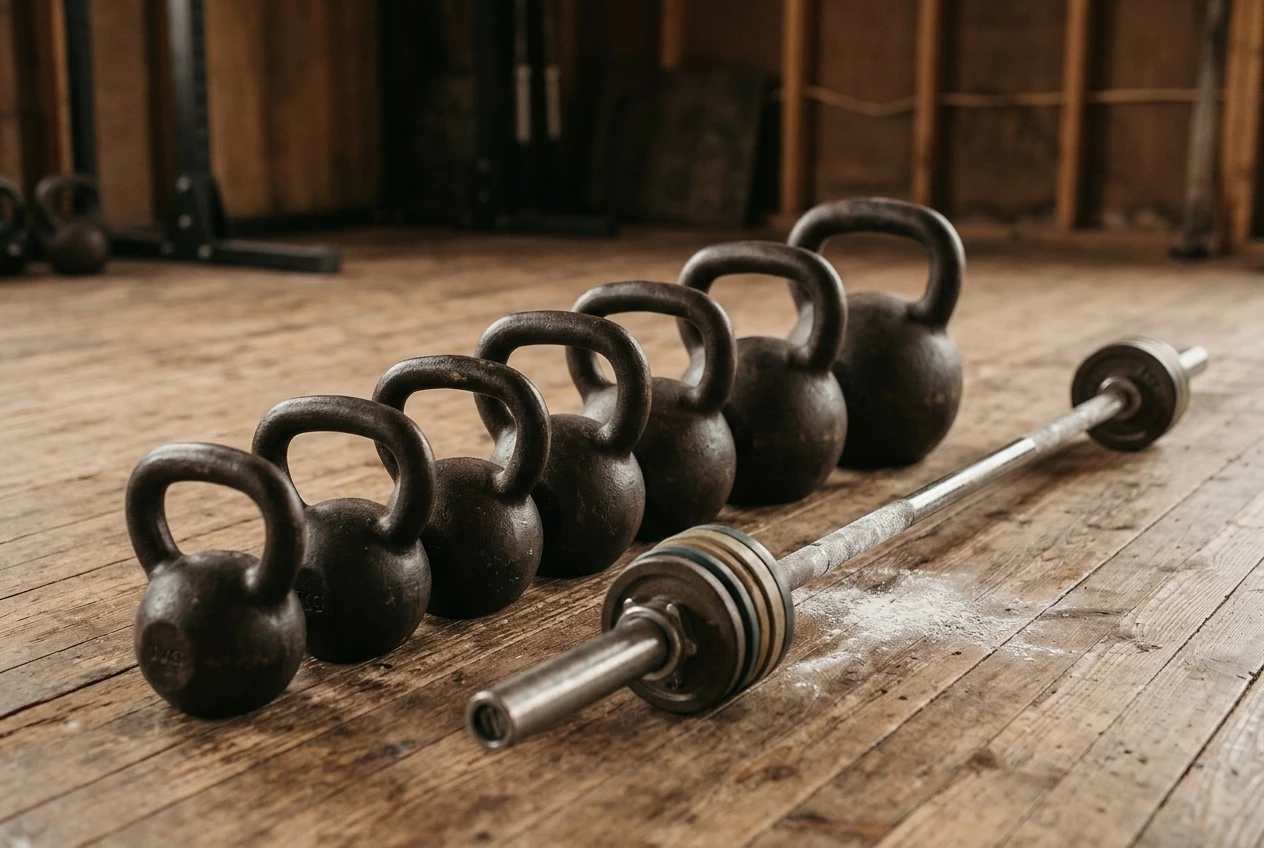
The kettlebell’s limits. Kettlebells come in fixed sizes with jumps of several kilograms between them, so progressing means moving up a whole bell or changing reps, tempo or complexity. A swing with a bell that is too light stops being a power exercise, and a lifter who is already strong can outgrow a moderate bell for the hinge. If you are wondering how many bells you need, the guide on kettlebell weights goes through it.
Grip. Kettlebell swings, cleans and snatches put a lot of work on your grip, and high-rep sets can end because your hands give out before your hips do. The same is true of heavy barbell deadlifts. If grip is the thing stopping a set, this guide on when to use lifting straps explains when to let your grip do the work and when to take it out of the equation.
Skill ceilings. Both tools hide a technical learning curve. A kettlebell snatch can bruise your forearm if the timing is off, and a barbell clean can punish a late elbow turnover. A tool you cannot yet use well will not build power, because you will spend each rep managing the movement instead of driving it.
Match the tool to the goal: a quick decision table by training aim
Use the table to find the tool that matches your main aim. If your goals overlap, pick the one that fits the aim you most want to improve over the next few months.
Training aim Better first choice Why Maximal strength Barbell Precise, heavy loading and easy progression Explosive hips for jumping and sprinting Both, with the kettlebell for fast hinge work The kettlebell trains hip speed, the barbell raises the force you bring to it Power endurance and conditioning under load Kettlebell Continuous swings, cleans and snatches without resetting Measuring progress week to week Barbell Small, exact load increases Limited equipment or floor space Kettlebell One or two bells replace a rack and plates Learning a fast hip hinge Kettlebell The bell counterbalances you and the swing is simple to practice Training with heavy loads on the legs Barbell Higher load ceiling for squats and deadlifts
The goal drives the choice for a simple reason. If the thing that limits you is how much force you can produce, you need heavy, measurable loading. If the thing that limits you is how fast you can apply the force you already have, you need ballistic work with a moderate load. For explosive hips, many lifters end up needing both, because strength and speed feed each other.
If you can only own one: how space, budget, and coaching change the answer
Sometimes the choice is made by your garage, your wallet or your schedule instead of your goals. Here is how those constraints change the answer.
Space. A barbell setup needs a rack or at least a clear area, plates, and floor that can take the weight. If you plan to drop a bar, the floor matters; see the guide to home gym flooring for heavy lifting. A kettlebell fits in a corner. If space is tight, the kettlebell is the practical choice.
Budget. A barbell, plates and a rack together cost more than one or two kettlebells in most cases, and they grow in cost as you add load. A kettlebell costs less to start, but you may need a second or third size later. If you are weighing what to buy next, the guide to essential vs luxury home gym equipment can help you decide.
Coaching. A barbell gives you clear numbers to follow in a written program, so you can progress without a coach in the room. Ballistic kettlebell work depends more on seeing and feeling the movement, and a video or a guided program helps with that. If you train alone, a program you can follow on a screen makes up for the missing coach.
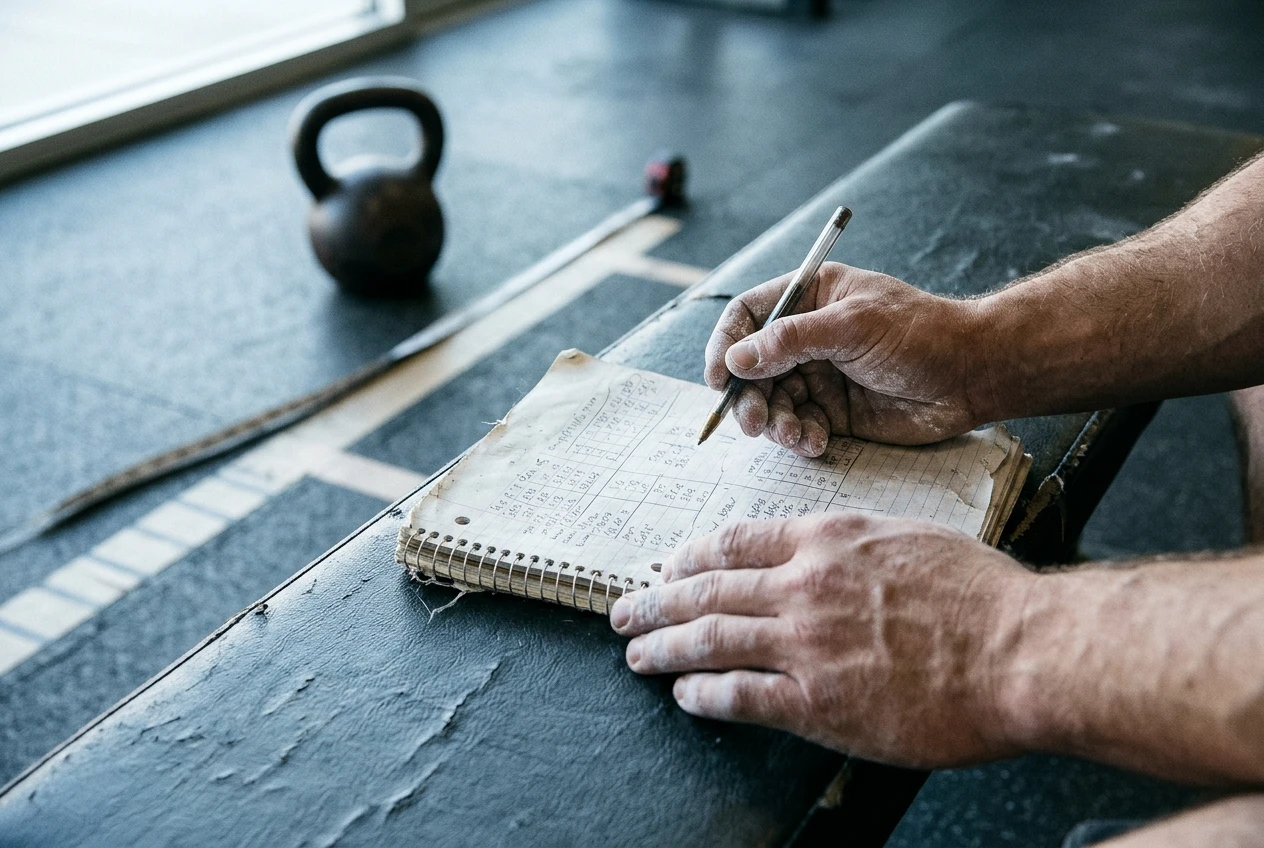
If you want maximal strength and you have the room and money, own the barbell. If your goals are explosive hips, conditioning or small-space training, own the kettlebell. If you want both and can only buy one first, pick the one that matches the half of power you are weaker in.
How to test a tool for four weeks before committing to it
If you are unsure, run a four-week test with the tool you are considering. Keep your current training in place and add the new tool for one primary job, so you can tell what it changed.
- Pick one measure before you start. For explosive hips, use a standing broad jump or a vertical jump. For power endurance, count how many good swings you can do in a fixed time with one bell. For strength, use a top set of a main lift at a fixed number of reps.
- Test it on day one. Write the result down and use the same conditions at the end: the same warm-up, the same surface and the same time of day if you can.
- Weeks one and two: learn the movement. Use a load that lets every rep look the same. For kettlebells, that means a swing where the bell floats and your arms stay loose. For barbells, it means bar speed and positions you can repeat.
- Week three: add difficulty. Add reps, a heavier load or a harder variation. Stop a set when the speed or form drops, because a slow, grinding swing is no longer power work.
- Week four: retest. Repeat your measure from day one and compare. Also note how your joints and grip felt, because a tool that improves the number but leaves you sore in the wrong places may not suit you.
If the number moved and the work felt sustainable, the tool earned its place. If nothing changed, ask whether the load was too light, the skill too new or the measure poorly chosen before you drop it.
Guided kettlebell power work
If you want kettlebell power work laid out for you, the kettlebell.monster program (affiliate link: I may earn a commission if you buy through it) gives you a structured set of sessions to follow. If you prefer to train from the living-room screen, there is also the kettlebell.monster Samsung Tizen TV workout app (affiliate link: I may earn a commission if you buy through it).
Before you buy, check how many bells your program will ask you to use in the guide to kettlebell weights. If you already lift with a barbell and want to add kettlebell work, see where kettlebell sessions fit in a barbell split.