
Most advice on adding kettlebell work to powerlifting asks whether the workouts are good. A better question for a lifter with limited time is what the workouts cost: minutes on the calendar and recovery taken from your squat, bench and deadlift. Every program costs both, and the right choice changes with the phase you are in.

This guide gives you a way to score any Kettlebell Monster program on those two costs and match it to offseason, build, meet prep or peak week. One note on specifics: program names, lengths and session counts are set by the shop and can change, so this article does not list them. Take those numbers from the program page itself. The scoring method works with whatever you find there.
Why a powerlifter should score a program by recovery cost, not just by workout length
A 20-minute session can cost more than a 45-minute one. Time on the clock tells you how much of your day it takes. It does not tell you how much of your next squat or deadlift it takes.
Recovery is the limiting resource for a lifter whose main work is heavy singles, doubles and triples. Your weekly output is capped by how much hard work your body can absorb and still produce a strong top set. Anything you add, whether it is a kettlebell program, another accessory day or a conditioning block, draws from the same budget.
That makes the choice a budget decision. You are not deciding whether kettlebells are good for you. You are deciding whether this program is the best use of the recovery you have left after your barbell work, compared with doing nothing or adding more barbell volume. If you want a refresher on how much total work a lifter can handle, training volume landmarks covers the barbell side of that budget.
The two numbers to check on any Kettlebell Monster program before you press play
Open the program page in the catalog and find two things: the length of a session and the number of sessions per week. Everything below builds on those.
Number one: weekly minutes
Multiply session length by sessions per week. A program with four sessions of 30 minutes costs 120 minutes. Add the minutes you need to set up, warm up and put the bells away. If you train in a garage, that overhead is small. If you move equipment out of a closet, it is not.
Then compare the total to your real free time. If your barbell week already uses most of your available minutes, a program that needs a large share of the remainder will either get skipped or will crowd out sleep.
Number two: recovery cost
This number is not printed on the page, so you score it yourself from what the sessions ask you to do. Read the workout descriptions or watch the preview, and rate each session from 1 to 3:
- 1, low overlap: light or moderate loads, little demand on the legs and lower back, upper body work that is pulling or carrying rather than heavy pressing.
- 2, moderate overlap: meaningful leg or hinge work at moderate effort, or pressing volume that touches the shoulders and triceps you also use for bench.
- 3, high overlap: long sets of swings, snatches, cleans or squats taken close to failure, or high-rep pressing. These load the same hamstrings, glutes, lower back, grip and shoulders that your heavy days depend on.
Rate by what you will actually do. A session built around swings sits higher for a deadlifter than a session of carries and rows, even if both run the same number of minutes.
Then add one more check: how many hours sit between this session and your next heavy barbell day. A score of 3 placed the day before a heavy deadlift costs far more than the same session placed three days earlier.
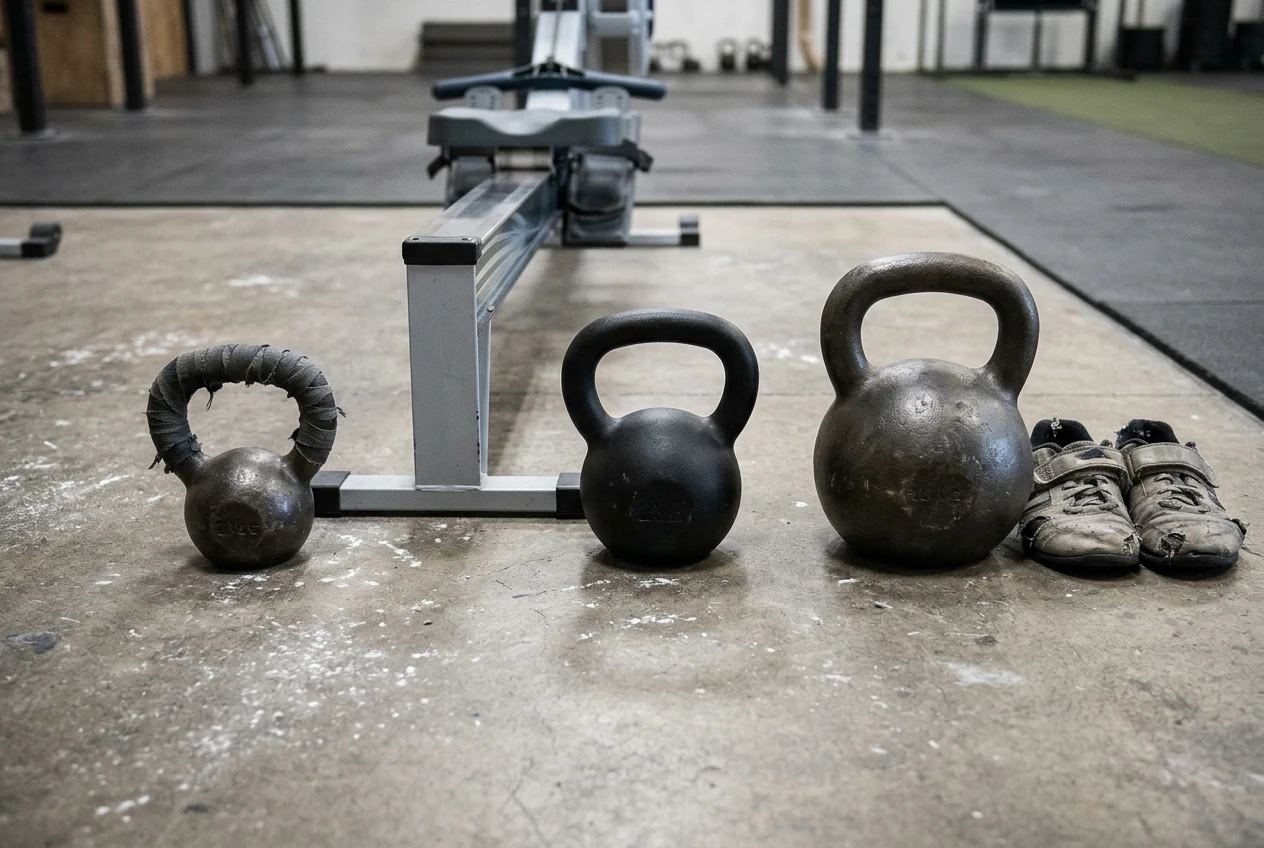
Put the two numbers together:
Program profile Weekly minutes Recovery score Typical fit Short sessions, low overlap Low 1 Meet prep, deload weeks Moderate sessions, mixed overlap Medium 2 Build phase Longer sessions, high overlap High 3 Offseason
The table describes a scoring pattern, not specific programs. Fill it in yourself from each program page.
Offseason: the programs that can take real volume while your barbell work stays easy
The offseason is when you have the most recovery to spend. Barbell work is usually at moderate intensity, with fewer maximal attempts and more room to move around in the week. That is the time to run a program that scores a 2 or 3 on recovery and takes a larger share of your weekly minutes.
Pick the most demanding program that still lets you do your barbell sessions at their planned loads. If a program has several sessions per week, check how they spread across the week. Hard kettlebell days work better on the same day as barbell sessions, or on days that follow a rest day, than on the day before a heavy lift.
Two rules keep the offseason from turning into overload:
- Keep your barbell frequency and total sets where they are for the first two weeks. Add the kettlebell program on top, then judge the result before changing anything else.
- Put the heaviest hinge-and-leg kettlebell sessions at least two days away from your hardest deadlift or squat session.
If you are also building your barbell base in this period, the barbell periodization guide shows how the phases fit around each other, and the kettlebell program should follow the same schedule.
Meet prep: which sessions are safe to keep and which ones to drop
As the meet gets closer, barbell intensity rises and your recovery budget shrinks. The goal changes from adding fitness to protecting the performance you are building. Go through the program session by session and keep or drop each one using the two numbers.
Keep:

- Sessions that score a 1 and are short.
- Carries, rows and other pulling work that does not load the lower back heavily or compete with bench.
- Mobility or trunk-focused sessions that leave you feeling better after than before.
Drop or replace:
- Any session that scores a 3, especially high-rep swings or snatches, which stress the posterior chain and grip that your deadlift needs.
- High-rep overhead or pressing work in the weeks when bench volume or intensity is at its highest.
- Anything that leaves you sore on a heavy barbell day. Soreness on a top-set day is a clear sign the session costs too much.
You do not have to quit the program. Most lifters get more from running one or two of its easier sessions per week than from forcing the whole schedule. If the program lists sessions separately, pick the ones that fit. Check how sessions are structured on the program page before you assume you can pull them apart.
For the scheduling side, where kettlebell sessions fit in a barbell split walks through placing them without costing you squat performance.
Peak week and deload weeks: the lightest option, or skipping kettlebells entirely
In peak week, the aim is to arrive at the platform fresh. Nothing you add can improve your strength in seven days. A kettlebell session can only reduce the freshness you have built.
The two reasonable choices are:
- Skip kettlebell work completely. This is the default for most lifters, and it costs nothing in the strength you already have.
- Run the lightest session available, at an effort well below what you would normally use, early in the week and not near your last heavy training day. Its purpose is to feel loose and keep a routine.
If you cannot tell whether a session is light enough, treat it as too heavy and skip it.
Deload weeks follow similar logic, though they are less strict. A deload exists to dissipate fatigue, so the kettlebell work should also come down. Cut sessions per week, shorten them, or take only the ones that score a 1. If you are unsure when a deload is due, when athletes should deload covers the signs.
Kettlebell program vs another barbell accessory day: when each one wins on time and fatigue
Sometimes the better use of your limited time is not a kettlebell program at all. Compare the two using the same numbers.
A kettlebell program tends to win when:
- You want to add conditioning or general work capacity without extra heavy barbell fatigue.
- You train at home and a guided session on screen removes planning time.
- You want movements such as carries, single-arm work and rotational trunk work that barbell accessories rarely cover.
- Your barbell joints, such as elbows, knees or lower back, need a break from more heavy loading.
Another barbell accessory day tends to win when:
- You have a specific weak point in a lift, such as lockout strength in the bench or the bottom of the squat, and an accessory targets that exact position.
- You are close to a meet and want work that closely resembles your competition lifts.
- You have very little time and a short accessory block gives you the most targeted work per minute.
If your problem is a weak link in a lift, pick the accessory first. The article on choosing accessories for a powerlifting plateau helps you identify the weak link before you spend your recovery on anything else. A kettlebell program fits better when your aim is general fitness, joint variety or time-efficient conditioning rather than fixing a specific lift.
How to run a two-week trial and decide from your own bar speed and soreness
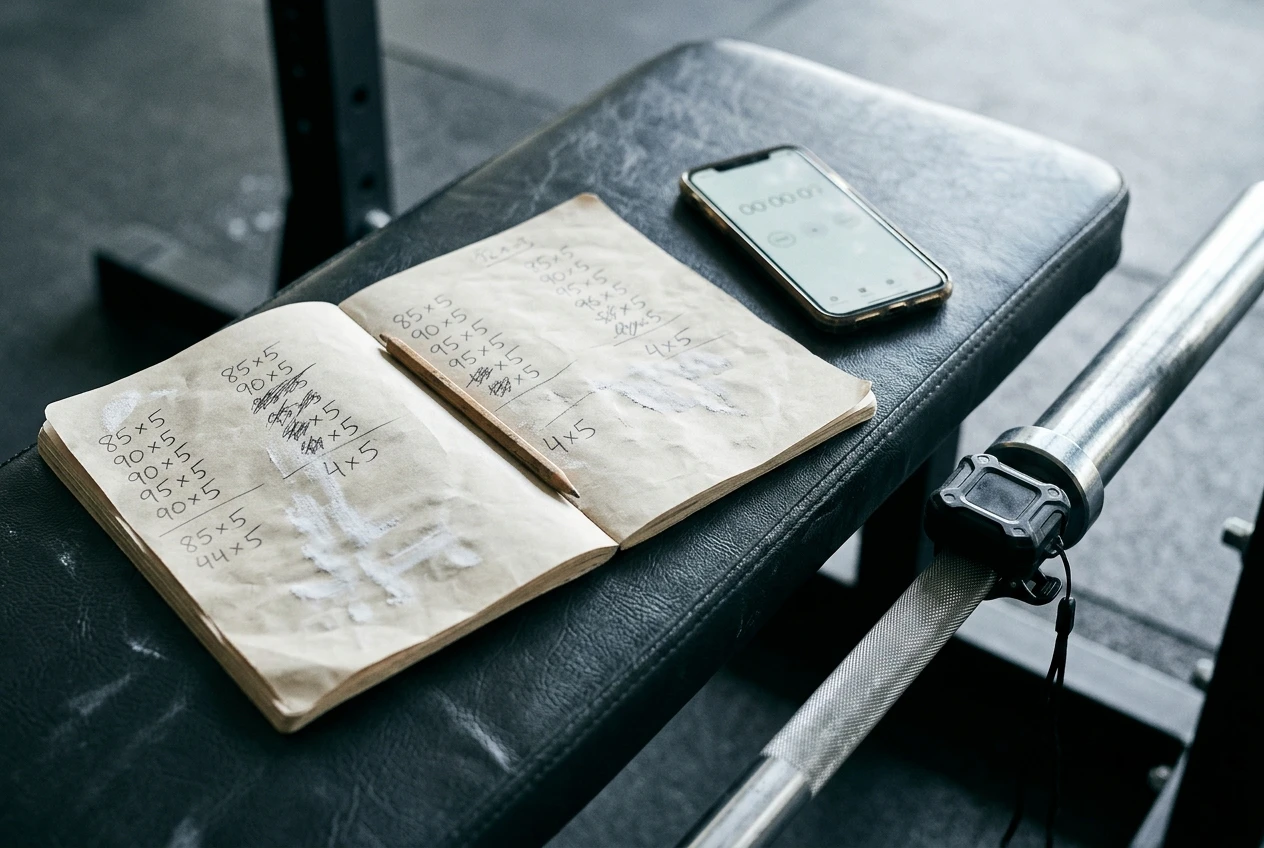
You cannot know a program’s true recovery cost from reading about it. You find out by running it for a short, controlled period and watching how your barbell training responds. Two weeks is long enough to see a pattern without committing to a full block.
Before you start
Record a baseline for one week of normal training:
- Bar speed on your warm-up and working sets, if you use a velocity tracker. If you do not, note how the same warm-up weights feel and how hard your top sets feel on a 1 to 10 effort scale.
- Soreness on the morning of each heavy day, rated 1 to 10.
- Sleep quality and any joint irritation.
During the two weeks
Add the kettlebell program as written, or the sessions you chose. Keep your barbell programming unchanged so that any difference comes from the kettlebell work. Log the same measurements.
How to decide
Compare the trial weeks to your baseline:
- Keep it as is if bar speed and effort ratings stay the same and soreness on heavy days does not rise.
- Reduce it if top sets feel one point harder at the same weight, if warm-up weights feel slower, or if soreness on heavy days is higher. Drop the highest-scoring session first, or move it further from your heavy day.
- Drop it for now if sleep gets worse, a joint becomes irritated, or you start missing barbell reps you would normally make.
Make one change at a time and retest for a week. If you plan to raise your barbell sets as well, do it after the trial, and use how to add sets without wrecking your elbows, knees and lower back as a guide so you do not stack two changes at once.
Match a program to your current phase
Look at the program catalog with your phase in mind, then check the session length, the sessions per week and the content of each session, and score them with the two numbers above. Offseason lifters can look at the larger programs. Lifters in meet prep should look for shorter, lower-overlap sessions, and anyone in peak week can skip this step until after the meet.
You can browse the full list in the Kettlebell Monster program catalog. Affiliate disclosure: this is an affiliate link, so I may earn a commission if you buy through it, at no extra cost to you.
If you train in front of a screen, the shop also has a Kettlebell Monster app for Samsung Tizen TVs, which lets you follow a session on the TV instead of reading a program sheet. Affiliate disclosure: this is also an affiliate link, and the same terms apply. Check the product page for compatibility with your TV model before you buy.