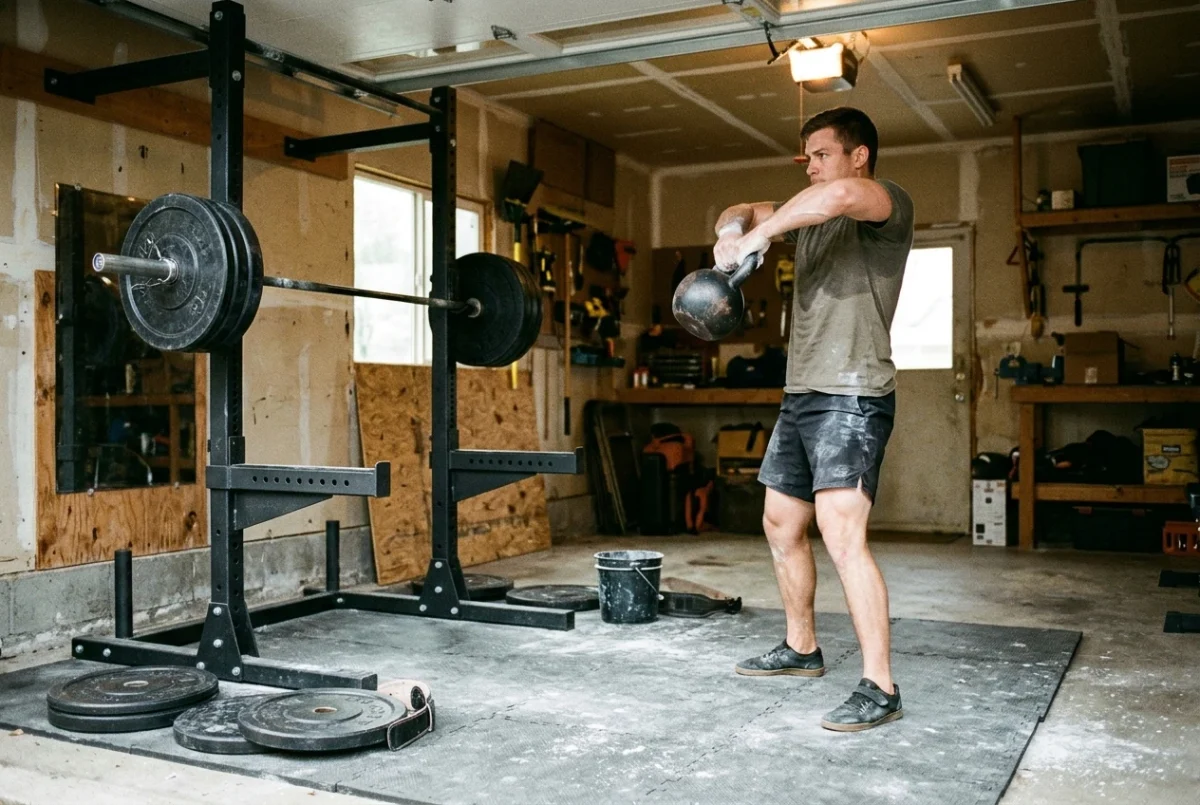
Most advice on kettlebells and powerlifting is about where whole sessions fit in the week. If you already run a split you like, you may not want to move anything. A kettlebell flow can be an add-on inside the sessions you already have, and it works best when it has one clear job. Used that way, a kettlebell flow for powerlifters supports your squat, bench and deadlift instead of competing with them.
If you do want to rearrange whole sessions, where kettlebell sessions go in a powerlifting week covers that. This piece stays inside your current split.
Pick the job before you pick the flow: finisher or recovery
A flow chosen because it looks fun tends to land at a medium-hard effort on a day when you needed either more work or less. Choose the job first. There are two, and they have almost opposite rules.
- Hypertrophy finisher: a flow that adds muscle-building work after your accessories, aimed at the tissue your main lifts leave undertrained. It is meant to be demanding, but only in a narrow way.
- Active recovery: a flow that raises circulation and moves your joints through range at a low effort. It is meant to leave you feeling better than when you started.
A flow that is too hard to be recovery and too sloppy to be a finisher becomes a third hard session. That session draws on the same recovery budget as your heavy days and gives you very little in return. Each job below has its own slot, effort level and stop rule so that doesn’t happen.
The finisher slot: after your last accessory, aimed at what the main lift leaves undertrained
The finisher goes at the very end of the session, after your last accessory. Putting it earlier takes energy from lifts that matter more. Putting it on a day with no lifting makes it a separate session, which is a different decision.
Barbell lifts are good at loading the big prime movers with heavy, low-rep work. They leave some things undertrained relative to how much you need them:
- the upper back and rear delts, which hold your position under a heavy squat and deadlift
- the trunk, especially rotation and anti-rotation
- grip, which tends to give out in minutes of work, not in the reps of a barbell set
- the shoulders’ ability to handle controlled overhead and out-in-front positions at light loads
A good finisher flow picks from that list. Rows, high pulls, halos, windmill-style trunk work and carries fit. A flow built from hard swings and snatches after a heavy squat day mostly adds fatigue to hips and lower back that are already tired.
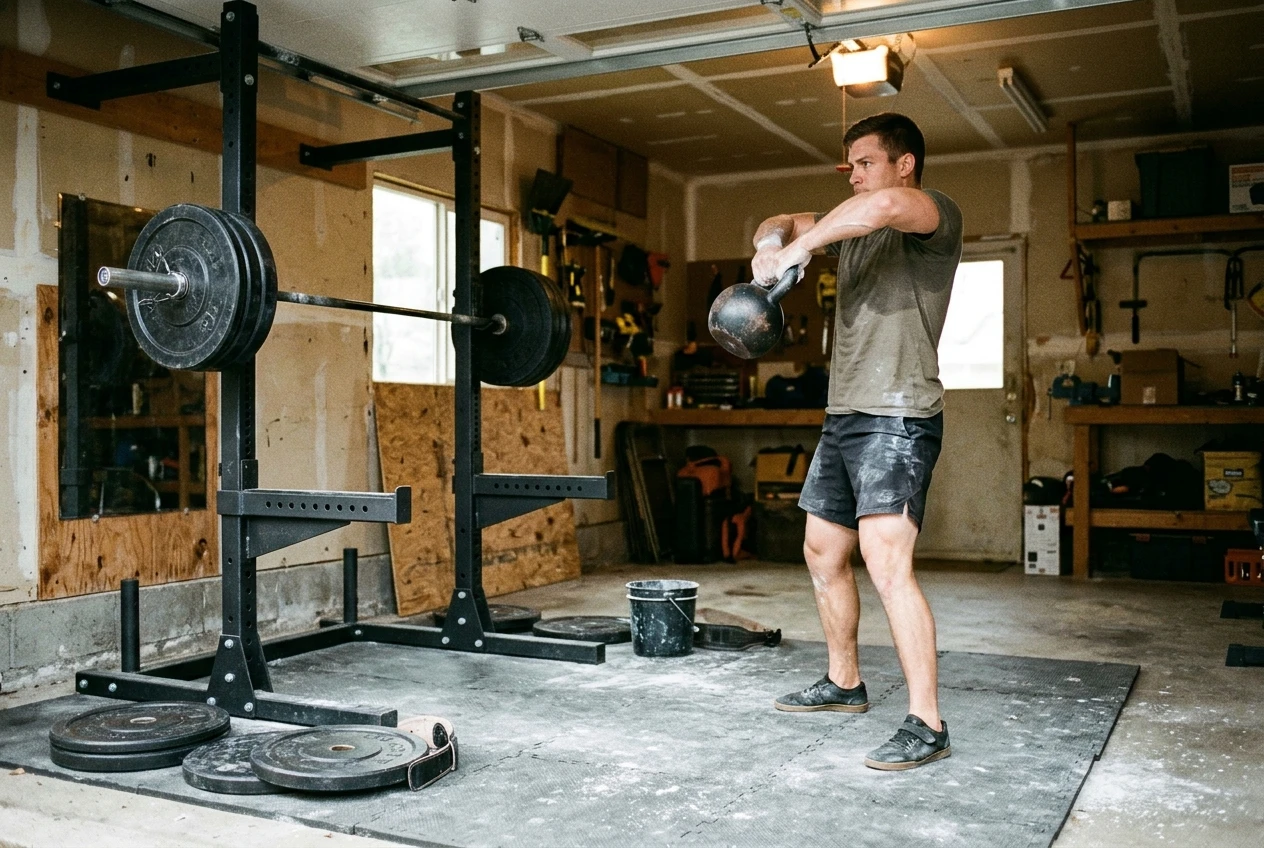
Keep the effort moderate. You should finish a finisher round feeling worked but still able to do another, around 6 to 7 out of 10. The stimulus comes from controlled reps with a steady pace, not from grinding to failure.
Stop rule for the finisher: stop when you complete your planned rounds, or earlier if your position or technique changes. Any one of these means the round is over: your lower back starts doing the work of your hips, your grip opens up between reps, or the bell path gets sloppy. Reps past that point add risk and very little muscle.
If grip is what ends your sets, two related reads cover it: grip strength training for kettlebell work is its own topic with its own block.
The recovery slot: a flow that should leave you feeling better than when you started
The recovery flow goes on a day between heavy sessions, or after a rest day when you feel stiff. It is not an add-on to a hard session. Its whole purpose is to leave you in better shape for the next heavy day.
The test is how you feel at the end. You should finish looser, warmer and a little more awake than you began. If you finish tired or breathing hard, the flow was too hard to count as recovery.

What a recovery flow looks like:
- light bells, or even a bell lighter than your finisher bell
- slow, controlled movement through full range: halos, goblet squat holds, gentle hinges, arm bars, thoracic rotations
- no ballistic work such as heavy swings, snatches or high-rep cleans
- an effort of about 3 to 4 out of 10, where you could hold a conversation or breathe through your nose the whole way
Stop rule for recovery: stop when you feel better, or at around 15 to 20 minutes, whichever comes first. If you notice the pace creeping up or your breathing getting loud, slow down or stop. Going longer than the point where you feel better only adds fatigue.
A sample four-day split with each flow placed on it
This is a common layout: squat, bench, deadlift and a second squat or bench variation day, with rest days between. Adjust it to your own order. The point is where the two jobs sit.
Day | Main work | Flow | Job |
|---|---|---|---|
Monday | Squat, then accessories | Upper back, trunk and grip flow | Finisher |
Tuesday | Bench, then accessories | None | none |
Wednesday | Rest from the bar | Easy mobility flow | Recovery |
Thursday | Deadlift, then accessories | None | none |
Friday | Squat or bench variation, then accessories | Upper back and trunk flow | Finisher |
Saturday | Rest | Optional easy flow | Recovery |
Sunday | Rest | None | none |
A few reasons for these choices:
- Monday’s finisher targets the upper back, trunk and grip. These support the squat without piling more work onto legs that just trained.
- Tuesday and Thursday get no flow. Bench day already stresses the shoulders and triceps, and deadlift day is the most demanding session of the week for many lifters. Adding a finisher to either one is where a third hard session tends to appear.
- Wednesday’s recovery flow sits between bench and deadlift, so you walk into the pull feeling looser.
- Friday’s finisher repeats the pattern from Monday. Keep it lighter than Monday’s if Thursday’s deadlifts left you tired.
- Saturday’s flow is optional. Do it only if you are stiff or heading into Monday’s squat feeling beat up.
That is two finishers and one or two recovery flows in a week. If that feels like too much, start with one of each.
How to dose a flow in rounds and effort, and when to cut it back
Dose a flow in rounds, not in total time, because a round is a fixed unit you can repeat and compare from week to week. A round here means working through your chosen movements once, with a short rest at the end.
Finisher | Recovery | |
|---|---|---|
Rounds | 2 to 4 | 1 to 3 |
Effort | 6 to 7 out of 10 | 3 to 4 out of 10 |
Bell weight | Moderate, one you can control for the full round | Light |
Duration | Roughly 10 to 15 minutes | Up to about 15 to 20 minutes |
Stop when | Planned rounds are done or technique slips | You feel better or time is up |
Start at the low end of rounds for two weeks. Add a round only when you finish the current dose with clean technique and your next heavy session feels normal. Add one thing at a time: a round, or a heavier bell, not both.
Cut back when your heavy days start to suffer. Reduce the finisher by a round, drop the bell weight, or swap a finisher for a recovery flow for a week. If you are in a peaking block or a very heavy phase, drop the finisher entirely and keep only the recovery flow. The barbell work is the priority.
Three signs the flow is costing you your next heavy day
Watch for these across two or more sessions in a row. A single odd day is normal.
- Warm-up weights feel heavy or slow. If the empty bar and your first few ramp sets move worse than usual, you carried fatigue in from the flow or from the day before.
- The same spot is sore or tight going into the lift. Lower back, hamstrings or forearms that are still sore from a flow before a squat or pull day point to the flow overlapping with the muscles the lift needs. If a flow leaves your back aching, match the swing fault to the accessory that trains it before adding more volume.
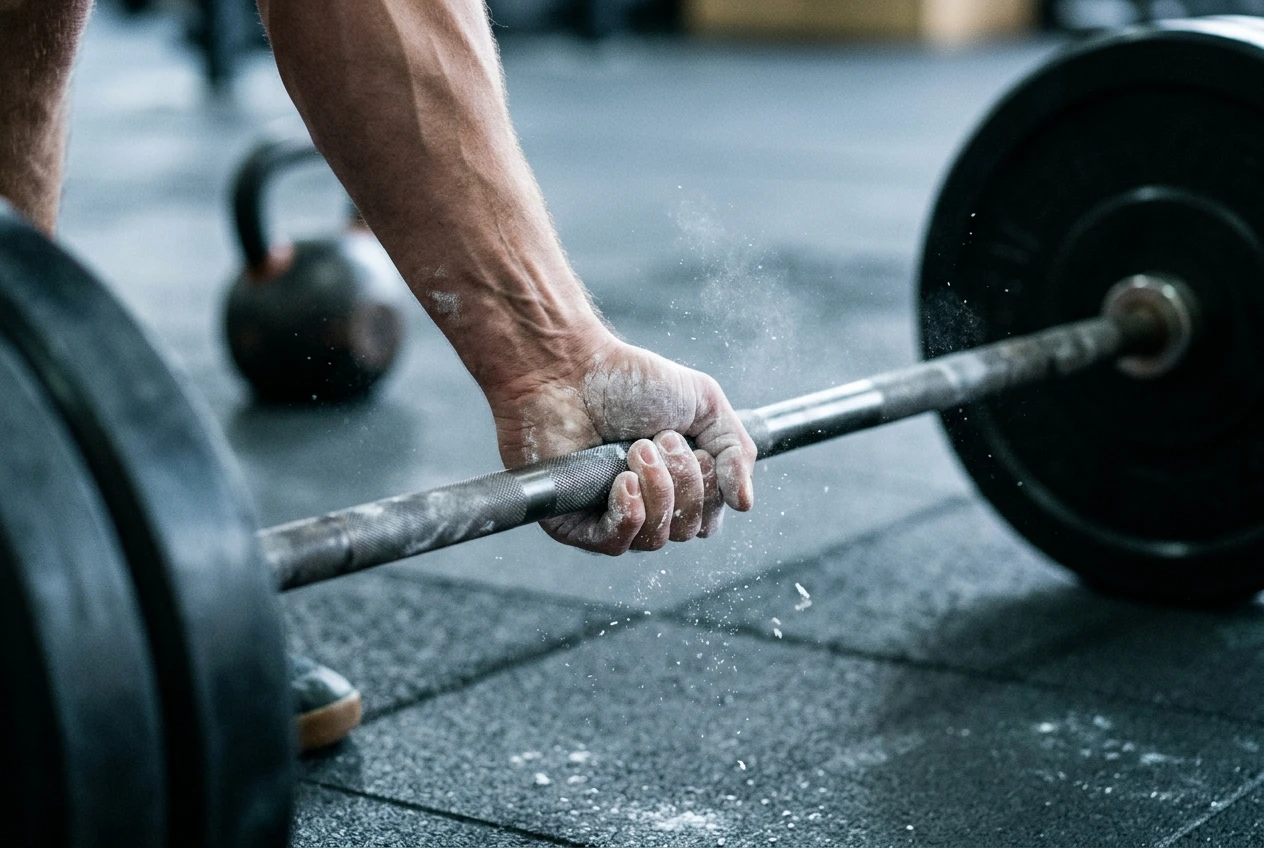
- Your grip gives out early on pulls. If the bar slips on deadlift warm-ups or top sets sooner than usual, flow volume has eaten into grip capacity.
Any one of these means cut a round or swap the job. Two or more together means drop the flow for a week and see whether your heavy days recover.
Following a guided flow so you don’t stop mid-round to plan the next move
Stopping mid-round to decide what comes next is a quiet way a flow goes wrong. The pauses break your rhythm, your effort drifts, and a recovery flow becomes a series of stop-start efforts while a finisher becomes shorter on work. You also spend attention on planning that you needed for your position.
Following a guided flow removes those decisions. You see the next movement as you finish the current one, so the rounds stay continuous and the effort stays where you set it. Setting up a screen where you can see it without twisting is part of this, and where to put the screen covers that setup, but I’ll keep to the main point here: decide the job and the dose before you press start, then let the flow carry the sequence.
If you want a flow to follow rather than build yourself, look at Kettlebell Monster (affiliate link: I may earn a commission if you buy through it), or the Samsung Tizen TV workout app to run it from your home gym screen (affiliate link: I may earn a commission if you buy through it).