Kettlebell flow can help a strength cycle or quietly eat it. The same ten minutes of swings, cleans and presses that clear your legs between heavy days can also leave your first squat warm-up feeling like a working set. The difference is dose, and dose has three adjustable parts.
This article gives you a way to find your own ceiling for flow across a full cycle, so you can learn how to add kettlebell flow to strength training without overtraining. If you still need to decide where flow sits in your week, the two jobs flow can do in a powerlifting split cover that. What follows assumes you already have a slot and want to size the dose.
Flow becomes overtraining when it stops being easy to recover from
Flow earns its place in a strength cycle because it is low in skill demand, continuous, and light enough to do between or after heavy work. Its value is recovery and conditioning. Once it begins to cost you recovery, it has stopped doing the job you added it for.
So the useful definition of too much is practical: flow is too much when it changes how your next heavy session feels. A flow session that leaves you pleasantly warm and loose is fine. One that leaves your hamstrings sore two days later, or your grip fried before deadlifts, is a heavy session in disguise, and you have not programmed or counted it.
Most lifters overdo flow gradually. A session goes well, so the bell gets heavier. The timer gets another few minutes. The rest between rounds shrinks because the session feels easy. Each change is small, and none of them looks like a problem until the barbell numbers stall. That is why the approach below tracks three separate variables and one signal, instead of a single “how hard was that” rating.
The three dials: bell weight, minutes, and rest between rounds
Every flow session is set by three dials. You can raise or lower each one independently, and each one stresses something different.
Dial 1: bell weight
Bell weight controls how much load your hips, lower back, grip and shoulders carry on every rep. A heavier bell raises the cost of each swing, clean and press, and it is the dial most likely to bleed into your barbell work, because it taxes the same posterior chain and the same grip. If your grip is the first thing to go, the three places swing grip can fail are worth reading before you decide what to change.
Dial 2: minutes
Minutes of work set the total volume. Two sessions with the same bell and the same movements are very different if one runs eight minutes and the other twenty. Minutes accumulate fatigue quietly, because no single rep feels hard.
Dial 3: rest between rounds
Rest sets the intensity of the session as a whole. Short rests keep your breathing and heart rate high and push the session toward hard conditioning. Longer rests let you start each round recovered, which keeps the session closer to the easy, restorative end. Shortening rest is the easiest dial to turn without noticing, because you are not adding anything to the bar or the clock.
Pick your starting point for each dial deliberately, and write it down. A session note such as “one bell, 12 minutes, 60 seconds between rounds” gives you something to adjust. “Did some flow” gives you nothing.
The next-day check: what your first warm-up sets should tell you
You need one signal that is cheap, repeatable and tied to the thing you are protecting. Your first warm-up sets on the next heavy day work well, because they are the same weights every cycle, they are light, and your body has no reason to be anything other than fresh for them.

Before you add or change flow, pay attention to how those first sets feel for a couple of weeks. Weigh the empty bar or the first light set, note how it moves, and how your hips, back and grip feel. That is your baseline. Then, once flow is in the week, compare against it.
Look for these on the first warm-up sets:
- The bar feels heavier or slower than the baseline at the same weight.
- Your hips or lower back feel stiff or tight where they are usually loose by the second set.
- Your grip feels tired before any real load is on the bar.
- You need more warm-up sets than usual before the first working weight feels normal.
One flat day does not mean much. Sleep, food and a stressful week all show up here. Two heavy days in a row where the warm-ups feel worse than baseline, after flow sessions in between, is a pattern worth acting on. If you want a warm-up that is tied to the day’s lift, a 10-minute kettlebell warm-up built around today’s lift gives you a consistent routine, which also makes the check easier to read.
Which dial to turn down first, and why the barbell stays untouched
When the check says flow is costing you, turn down one dial, and only one. Then run the next heavy day and check again. If you change bell, minutes and rest together, you fix the problem without learning which dial caused it, and you will repeat the mistake next cycle.
To choose the dial, look at where the tiredness shows up:
- Breathing and general fatigue are the issue: lengthen the rest between rounds. You keep the same bell and the same minutes, and the session becomes easier to recover from.
- Grip, hamstrings or lower back feel tired on heavy days: drop the bell weight. These are the areas a heavier bell loads most directly.
- Everything is a little tired and no single area stands out: cut the minutes. Total volume is the likely culprit.
If nothing stands out, a reasonable default order is rest first, then minutes, then bell weight. Rest is the gentlest change and preserves the movement pattern you are practicing.
The barbell stays where it is because the cycle is built around it. Your heavy days are the reason you are doing flow at all, and they are the measurement you are using. If you cut the lift first, you lose the training you care about and you also lose your ability to tell whether flow was the cause. Flow is the variable you added, so it is the one that gets adjusted. The only time the lift itself changes is when you have already turned all three dials down and the warm-ups still feel off, which points to something other than flow.
How to set flow in the build weeks, the peak weeks, and the deload
Your ceiling is not one number. It moves with the cycle, because your recovery budget moves with it.
Build weeks. Barbell volume is higher and loads are moderate, so recovery is working hard. Keep flow submaximal here: a bell you could comfortably use for more, a modest number of minutes, and generous rest. Flow in the build weeks is mostly for blood flow and movement quality. Which flow patterns suit which stage of a squat cycle is covered in which kettlebell complex belongs in which phase of your squat cycle.
Peak weeks. The barbell is heavy and the stakes are highest, so the barbell’s demand on recovery is at its peak. This is where you are most likely to hit your ceiling. Expect to turn at least one dial down, most often minutes or bell weight, and keep the rest generous. Flow in the peak weeks should leave you feeling better than before you started.
Deload. Barbell stress drops, so this is the week where you have room to use flow for conditioning if you want it. You can lengthen the minutes or shorten the rest, but the deload is meant to let you recover, so stay clear of anything that leaves you sore. A deload that ends with warm-ups feeling better than baseline has done its job.
Signs the flow is the problem and signs it is something else
Not every bad warm-up is flow’s fault. Before you cut anything, work out which it is.
Signs flow is the problem:
- Warm-ups feel worse after flow days and better after days without it.
- The tired area matches what flow loads: grip, hips, lower back.
- The problem appeared or grew when you raised a dial.
- Skipping one flow session improves the next heavy day.
Signs it is something else:
- Poor sleep, low food intake or high stress over the same stretch.
- The barbell programming itself jumped, such as a load increase or a new phase.
- Accessory volume crept up. How much accessory work costs your next main lift is a good way to price that.
- The problem is the same whether or not you did flow that week.
The cleanest test is to skip one flow session before a heavy day and compare the warm-ups. If they feel normal, flow is a plausible cause, and you can start turning dials. If they still feel off, leave the dials alone and look elsewhere.
A sample four-week cycle you can adjust to your own ceiling
This is a starting point, not a prescription. Replace the numbers with whatever your baseline and your warm-up check say. The structure is what matters: dials moving in a planned direction across the cycle, one at a time.
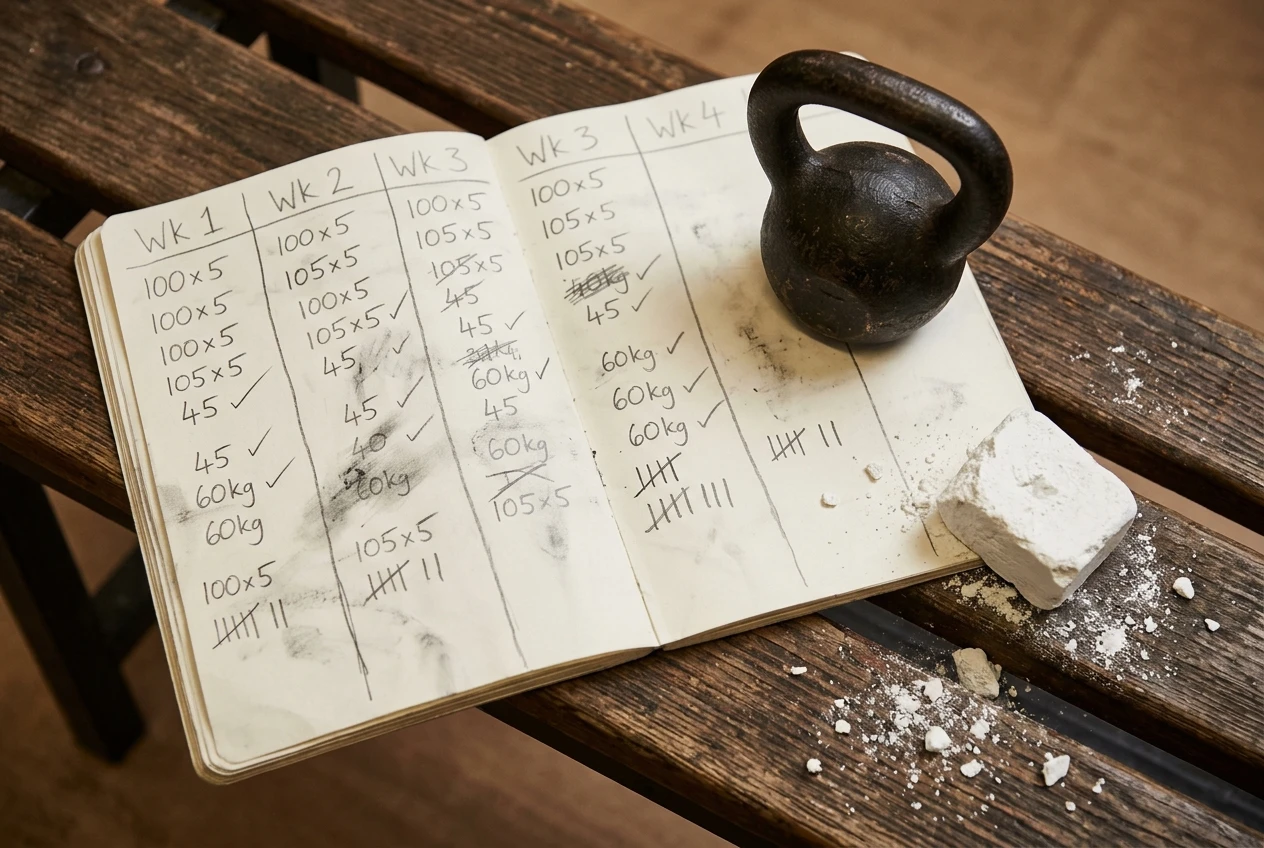
Week 1 (build). One bell you can handle easily. 10 minutes of flow, 60 seconds of rest between rounds. Two sessions, placed away from your heaviest lower-body day.
Week 2 (build). Same bell and rest. Raise minutes to 12. Check the warm-ups on your next heavy day. If they match baseline, keep it. If they are worse, return minutes to 10 before touching anything else.
Week 3 (peak). Hold the bell. Cut minutes back to 8 to 10, and give 75 to 90 seconds of rest between rounds. One session may be enough here. The goal is to arrive at your heaviest sets with warm-ups that feel normal.
Week 4 (deload). Optional extra minutes, with rest kept long. Use this week to see whether you can raise one dial slightly for next cycle: a few more minutes, or a bell one step heavier, never both.
At the end of the cycle, write down where your ceiling sat for each dial: the bell, the minutes and the rest at which warm-ups still matched baseline. That record is your personal ceiling, and next cycle you start from it instead of guessing.
Guided flow sessions without planning the dials
If you would rather follow guided flow sessions than set bell, minutes and rest yourself, kettlebell.monster offers kettlebell workouts you can follow along with (affiliate link: I may earn a commission if you purchase, at no extra cost to you). If you train in front of a TV, there is also a Samsung Tizen TV workout app (affiliate link, same disclosure). You can still use the next-day check from this article to decide how much of a guided session fits into a given week.