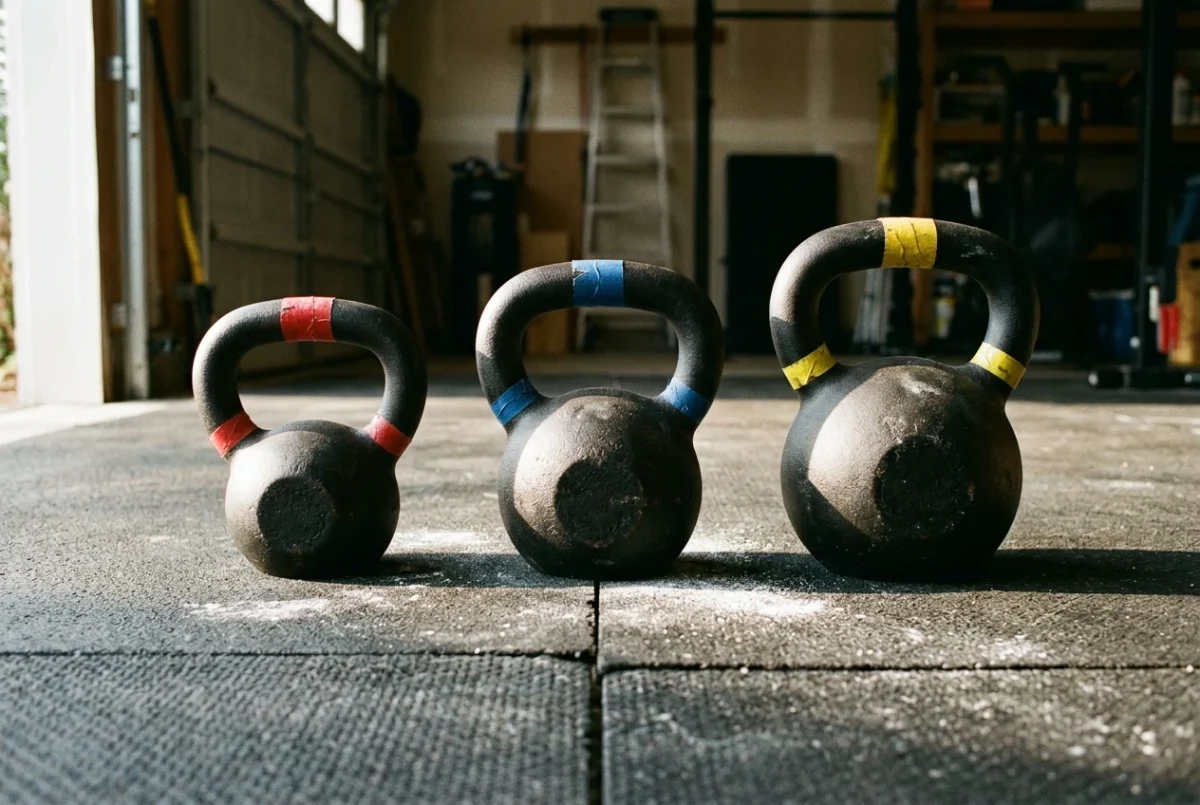
If you already run a squat, bench and deadlift split, the question is not which kettlebell program to pick. It is which day each session goes on. The way to add kettlebell training to a powerlifting program without losing bar performance is to place each session by what it tires, and to put it as far as possible from the heavy lift that uses the same tissue.
This article walks through that method in order: map your lifting days, label your kettlebell sessions, apply a spacing rule, then see the rule applied to a 3-day and a 4-day split.
Start by mapping what each of your lifting days leaves tired
Before a kettlebell session goes anywhere, write down what each heavy day leaves sore or depleted for the next day or two. Use body parts, not lift names. For a standard split, the list looks like this:
- Squat day: quads, glutes, lower back (from bracing under load), upper back.
- Bench day: shoulders (especially the front of the shoulder), triceps, chest.
- Deadlift day: grip, hamstrings, lower back, upper back.
Your own list may differ. If your squat leaves your hamstrings sore, or your bench leaves your elbows achy, add that. Include accessory days too, since a day of rows and curls taxes your grip and elbows even if no heavy barbell lift happens.
Put the list next to a seven-day calendar with your lifting days marked. You will use it in the next two sections.
Label every kettlebell session by what it taxes, not by its name
A session name tells you the theme. It does not tell you which part of your body will be tired afterward. Whichever Kettlebell Monster session you are considering, read through its exercise list and tag it with what those movements load. For most kettlebell work, three labels cover it:
- Grip: swings in higher reps, cleans, snatches, rows, carries, and any movement where the bell is held for a long time. Forearm fatigue builds with time under tension, so long sets matter as much as heavy bells.
- Hamstrings and lower back: swings, cleans, snatches, deadlift variations, and anything that has you hinging repeatedly. High-rep swings load the hamstrings and spinal erectors in a way that looks very much like a deadlift day.
- Shoulders: presses, snatches, get-ups, windmills, and overhead carries. Anything that holds a bell overhead or presses it loads the same joint your bench press uses.
Most sessions carry more than one label. A snatch or clean session usually loads all three, which makes it the hardest kind to place. A session built around swings and goblet squats mostly loads hamstrings, lower back and grip. A session built around presses and get-ups mostly loads shoulders.
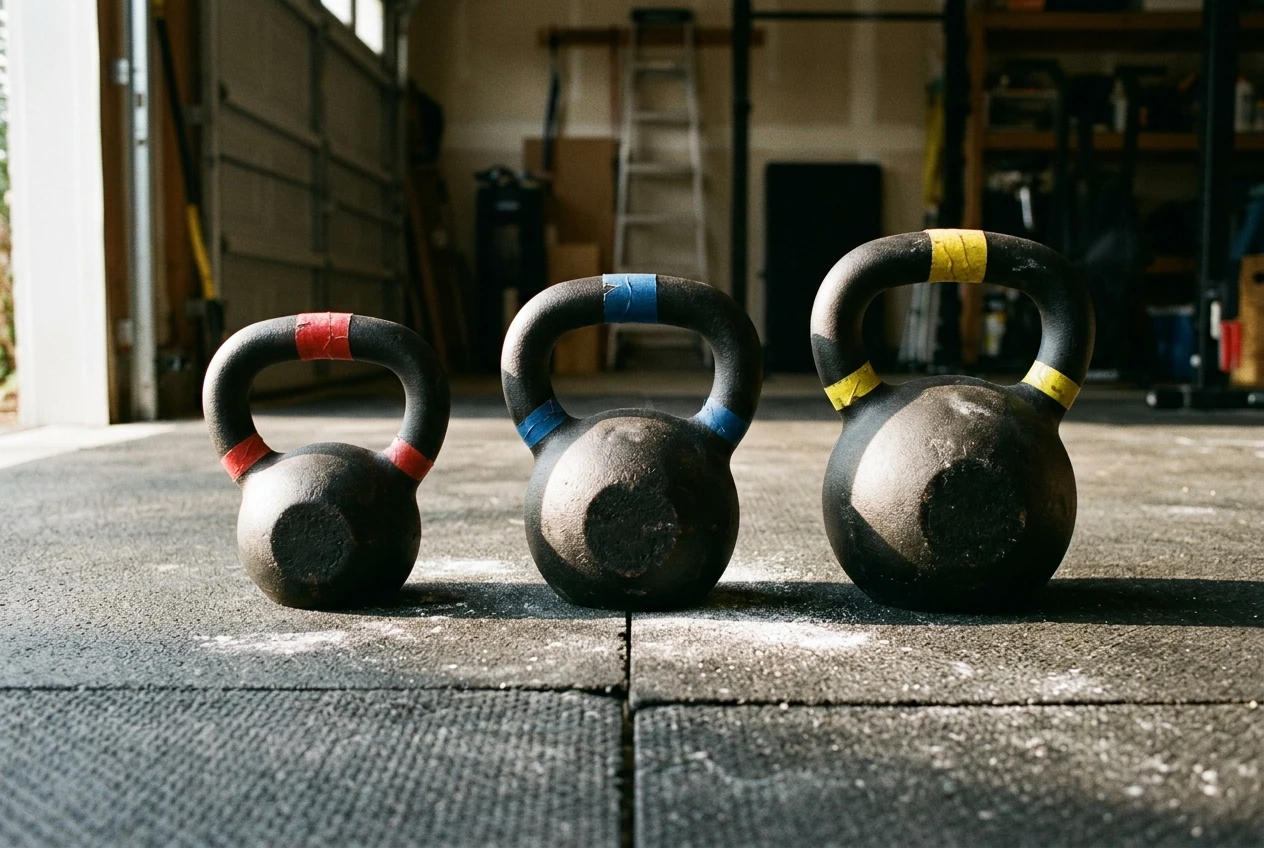
Write the labels beside each session you plan to run, ranking them if you can: “mostly hamstrings and back, some grip” is more useful than a single tag. If a session has three labels at similar weight, treat it as three problems when you place it.
If grip is the label you notice most often, the post on giving kettlebell grip its own block covers how to train it deliberately. Here it is just a tag.
The collision rule: keep like-taxing work two days from the lift it would hurt
The rule is short. A kettlebell session that shares a label with a heavy lift should sit at least two days away from that lift, on both sides when your week allows it.
Here is what that looks like in practice:
- A hamstring and lower-back session should be two or more days after your deadlift day and two or more days before the next one.
- A grip-heavy session follows the same spacing from the deadlift, and from any rowing or heavy pulling day.
- A shoulder session should sit two or more days from your bench day, before and after.
The rule is about the specific tissue, not the whole day. A shoulder-heavy kettlebell session can go on the same day as a deadlift, because deadlifts barely load the shoulders. A hinge-heavy session can go on bench day for the same reason. That is why mapping comes first: it shows you which days are open for which labels.
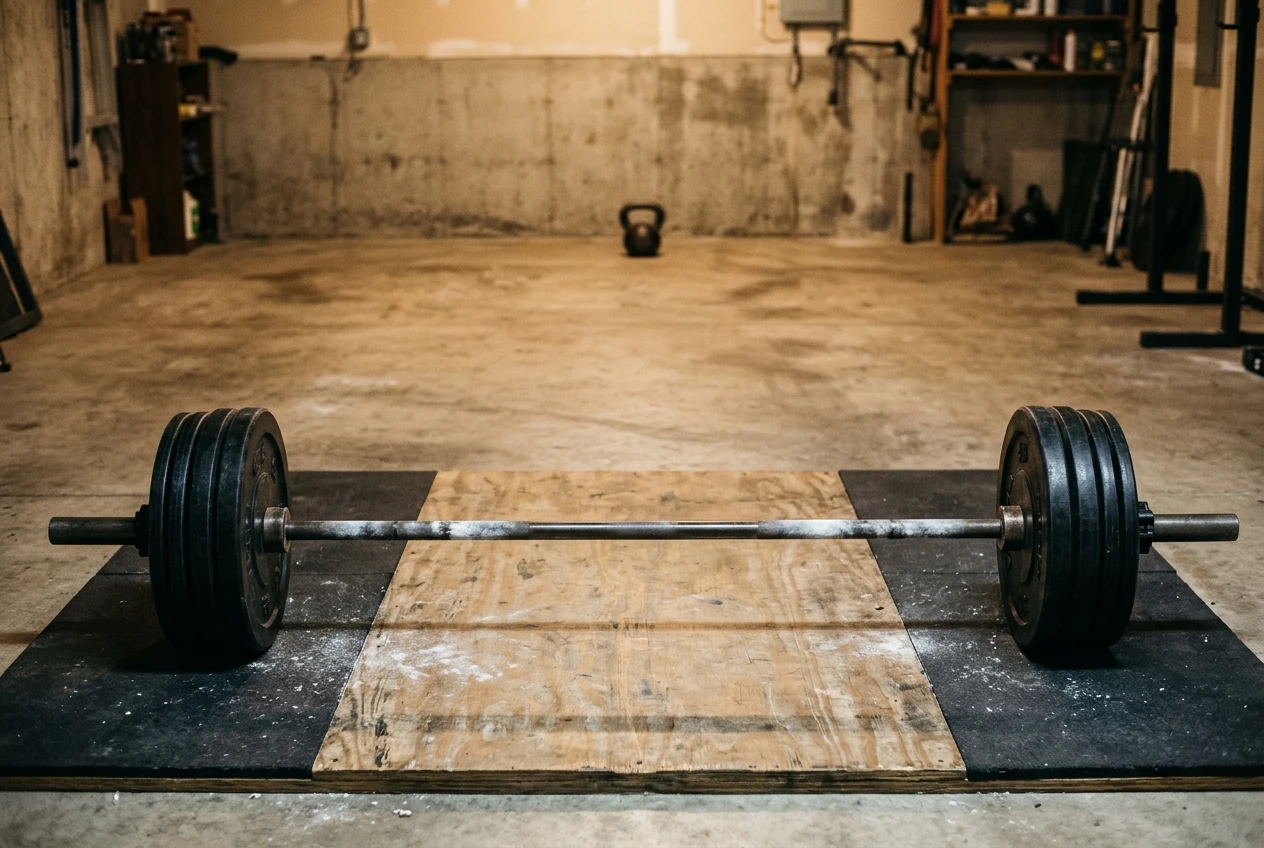
Two cases do not fit cleanly:
- Squat day and hinge sessions overlap in the lower back. Treat squat day as a partial collision. Keep hinge sessions off the day directly after squats when you can, and run them at the light end if you cannot.
- A mixed-label session such as snatches or cleans. Place it by the label that collides with your most important lift, then shorten it or lighten the bell.
Your calendar will not always allow two clear days on both sides. When it does not, give priority to the side after the heavy lift’s recovery and to the side before your heaviest day of the week. That is usually the deadlift for lifters who pull heavy.
A 3-day split with kettlebell sessions placed around it
Take a common three-day layout: squat on Monday, bench on Wednesday, deadlift on Friday. That leaves Tuesday, Thursday, Saturday and Sunday open. Two kettlebell sessions fit as follows.
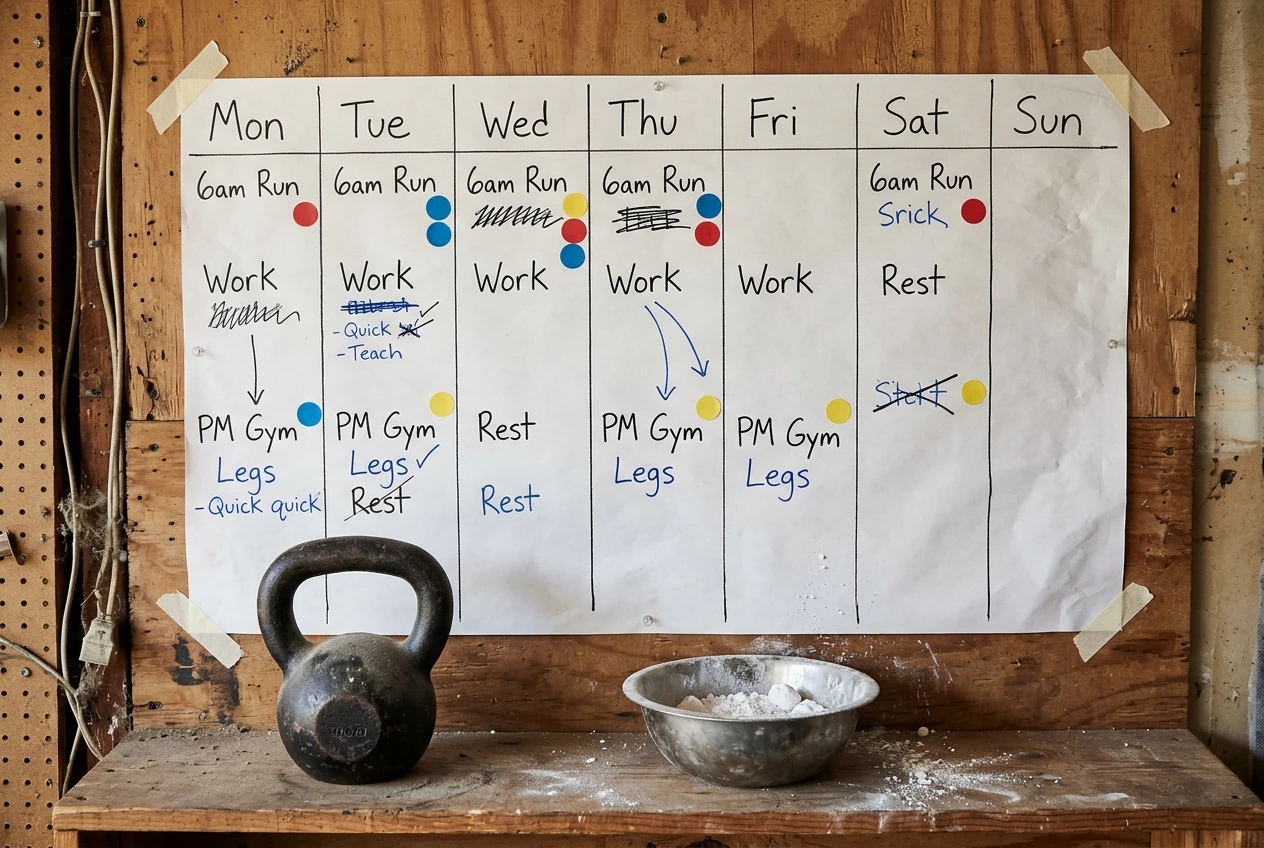
- Monday: squat.
- Tuesday: off.
- Wednesday: bench, then a hamstring, lower-back and grip kettlebell session (hinge-focused, no overhead work). Wednesday is two days before Friday’s deadlift and five days after the previous one, so it meets the rule for the pull. Bench day does not load the hips or grip much.
- Thursday: off.
- Friday: deadlift.
- Saturday: shoulder-focused kettlebell session (presses, get-ups, windmills). Saturday is three days after bench and four days before the next one.
- Sunday: off.
Check the trade-offs. Wednesday’s session lands two days after squats, so the lower back is the shared area. Keep the swings in that session moderate in volume and leave the heavy bell for another week. Saturday’s shoulder session comes the day after deadlifts, but pressing work mostly spares the hamstrings and lower back. The one shared area is grip, so pick pressing work that does not need long holds.
If you only want one kettlebell session in the week, use Wednesday for hinge work or Saturday for shoulder work, depending on which area your heavy lifts leave in better shape.
A 4-day split with kettlebell sessions placed around it
A common four-day version is squat on Monday, bench on Tuesday, deadlift on Thursday, and a lighter squat or accessory day on Saturday. Sunday and Friday and Wednesday remain open, but not all of them are good for kettlebells.
- Monday: squat.
- Tuesday: bench.
- Wednesday: off.
- Thursday: deadlift.
- Friday: off.
- Saturday: squat variation or accessory work, then a hamstring, lower-back and grip kettlebell session if the accessory work is quad-focused. Otherwise place the kettlebell session here and keep the accessory work light. Saturday is two days after deadlift and two days before Monday’s squat, so the pull and the next squat are both protected.
- Sunday: shoulder-focused kettlebell session. Sunday is five days after Tuesday’s bench and two days before the next one.
Saturday and Sunday back to back mean no full rest day on the weekend, so keep both sessions short. If that feels like too much, move the shoulder session to Thursday after the deadlift. It is two days after bench and five days before the next, which satisfies the rule, but you will be pressing on a day when your back and grip are already worked. Run it light on that day.
Do not place a kettlebell session on Wednesday or Friday just because the day is empty. Wednesday is one day after bench, so a shoulder session collides with it. Friday is one day before the Saturday work, which splits your recovery across the week.
What to cut first when a heavy week and a kettlebell week land together
Some weeks the plan collides with itself: a heavy deadlift top set, a test of a new max, or a peak-week block lands in the same week as your full set of kettlebell sessions. The main lifts stay. Cut the kettlebell work in this order:
- The session with the most labels. A mixed session that loads grip, hamstrings and shoulders is likely to collide with something, so it goes first.
- The session nearest to the heavy lift. If a kettlebell session is within a day of your heaviest top set and shares a label with it, skip it or move it two days away.
- Volume inside a session you keep. Cut sets or the heavier bell before you cut the session. A shorter swing set or a lighter press keeps the movement practice while lowering the fatigue.
- Frequency last. If everything else holds, drop to one kettlebell session for the week and keep the one that avoids your heaviest lift’s tissue.
If your work schedule is the reason your week is squeezed, the post on changing the dose, not the kettlebell, when work hours spike covers cutting volume while keeping the habit.
A lift you are about to test is a bad place to experiment. During those weeks, run a kettlebell session only if it does not share a label with the test lift.
How to tell after two weeks whether the placement is working
Give a new layout two full weeks before you judge it. One week can mislead you, because a single poor session might be caused by sleep or food. Two weeks of the same signal is a pattern.
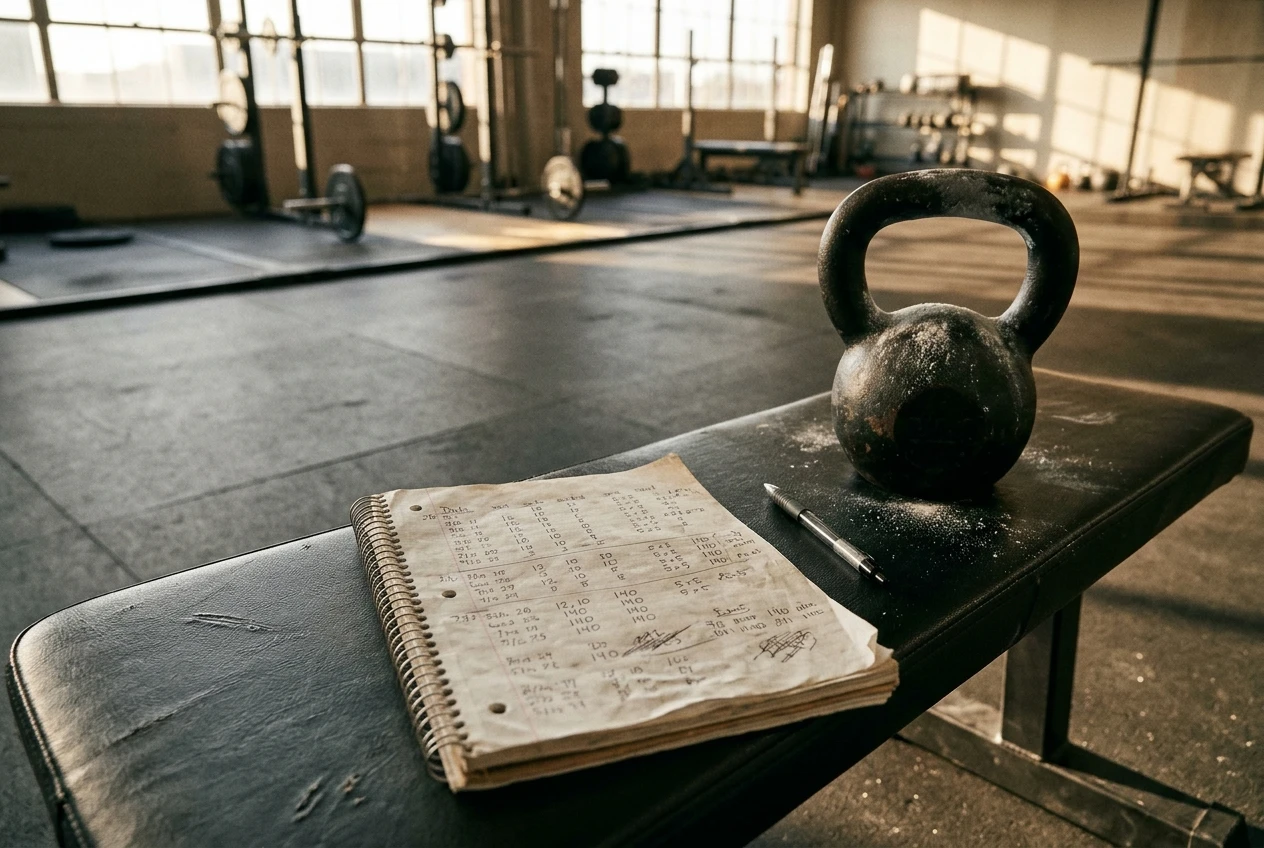
Track these things for each heavy day, and compare them with the two weeks before you added kettlebells:
- Warm-up feel. If the empty bar or your first warm-up sets feel heavier than usual, the previous day’s work has not cleared.
- Top-set effort. Note how hard your top set feels at the same weight (an RPE number works). A rise of a point or more across both weeks points to a collision.
- Grip on deadlift days. If your grip gives out before your back or legs, the grip label is landing too close to the pull.
- Soreness at the start of a heavy session. Soreness that is still there on the day of the lift tells you which label to move.
- Kettlebell session quality. If your swings or presses degrade on the kettlebell day itself, the heavy lift two days before may still be affecting you.
When a signal shows up, change one thing at a time:
- Move the offending session one day further from the heavy lift.
- If you cannot move it, cut its sets by about a third and keep the bell the same.
- If that does not help, swap it for a session with a different label.
If none of the signals show up, the layout works. Keep the week as it is and raise only one thing at a time, either bell weight or sets, so you can tell what changed if a signal returns later.
Where to go next
If you want kettlebell sessions you can slot into your week without building them from scratch, look at Kettlebell Monster and check how its session lengths fit the days you mapped. Affiliate disclosure: I earn a commission if you sign up through this link, at no extra cost to you.