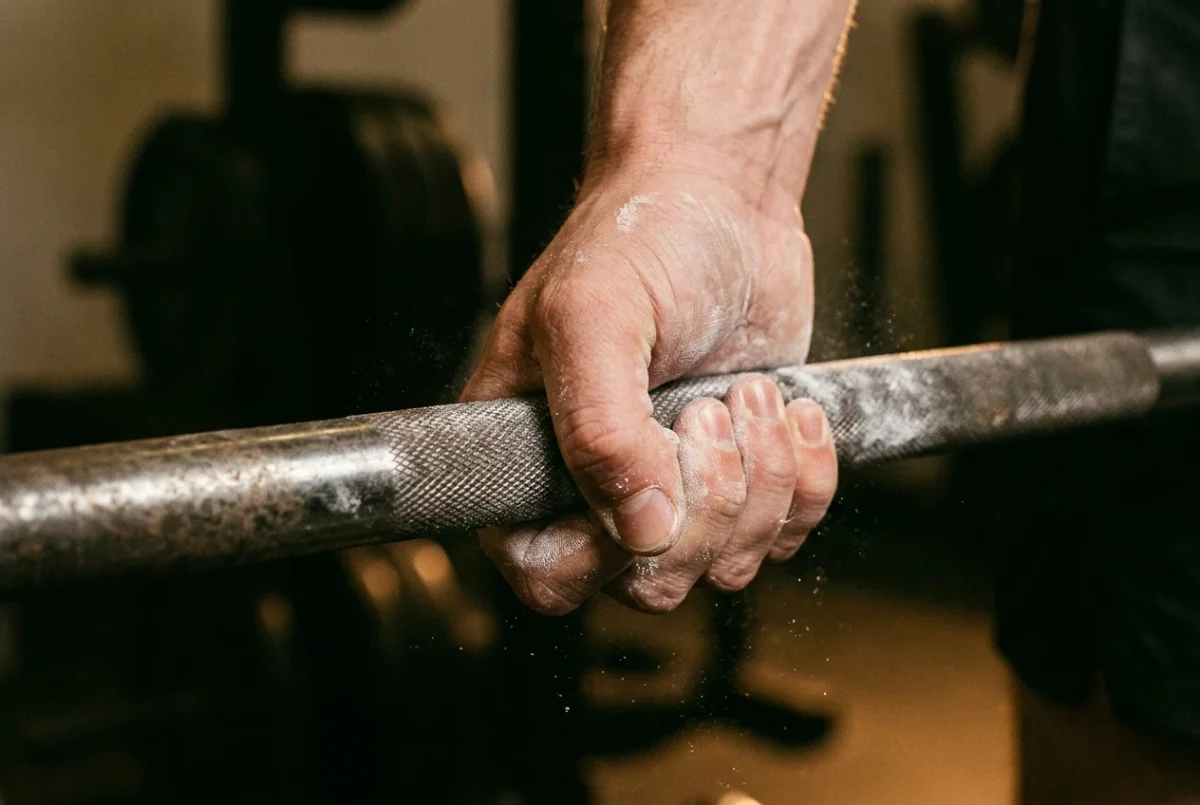
Straps let you hold more than your hands can hold on their own. Used on every set, they also remove most of the work your grip would otherwise do, so it stays where it was while your back and legs keep getting stronger. The answer to when to stop using lifting straps depends on which sets and which lifts you mean, so this plan removes them one set type at a time, in a fixed order, with a pass/fail check before each move.
Why “just go raw” costs you reps and “strap forever” costs you grip
Dropping straps on every set in one week usually makes grip the limit on every pull. A deadlift set that should end because your back is tired ends because the bar rolls out of your fingers. Your working weight drops, your reps drop, and the muscles you are training for get less work than they did the week before.
Strapping every set has the opposite cost. The pulls feel strong because the straps hold the bar, and your forearms and fingers get little stimulus. When you finally pick up a bar without them, the gap between what your back can pull and what your hands can hold is wider than you expected.
Phasing the change keeps both problems small. Your grip gets work on the sets where it is least likely to ruin the session, and the sets that decide your training quality stay strapped until your hands can carry them.
The order is based on grip demand and fatigue:
- Warm-ups are light and early in the session, so your grip is fresh and the load is low.
- Lighter sets come next. Anything clearly below your working weight is a safe place to go raw.
- Working sets are your main sets at the planned weight and reps.
- Top sets come last because they are the heaviest sets, and a missed rep there costs the most.
Three signs your grip is ready for phase one
Most lifters on straps can start phase one sooner than they think, because warm-up weights are far below what their hands can hold. Check these three before you begin:
- Your hands recover between sessions. Your palms are not torn or raw, and your forearms are not so sore that they affect the next pull.
- Your warm-up weights stay in your hands. Pull your usual warm-up sets without straps. If the bar does not slip or force a regrip, this sign passes.
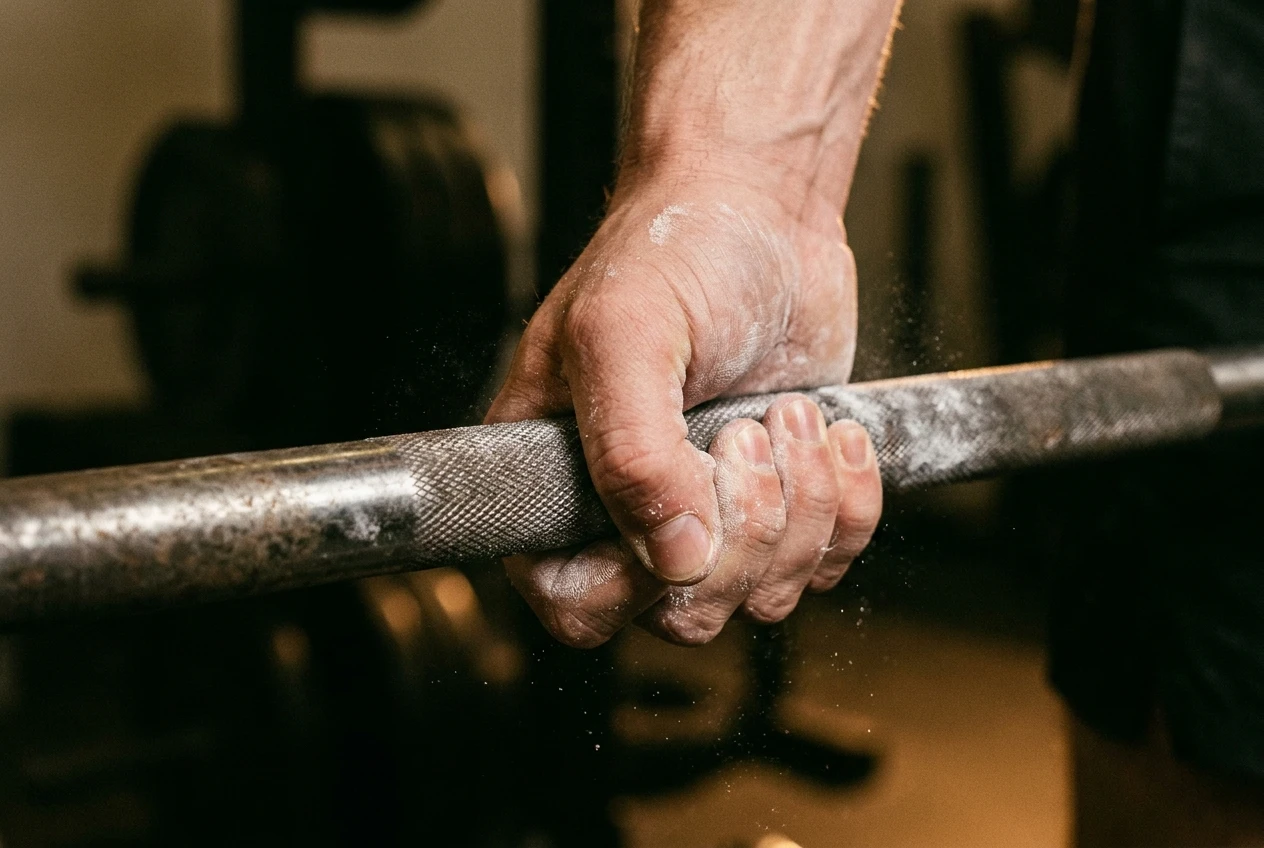
- You can pick a raw grip and keep it. Choose between double overhand, mixed grip and hook grip. Hook grip, with the thumb pinned under the fingers, is uncomfortable for the first few sessions but holds more than double overhand. Mixed grip is common on heavy deadlifts. You need one style you can set up the same way every time.
If one of the three fails, fix that first. Chalk, a few weeks of hook grip practice on warm-ups, or a rest from skin damage is enough in most cases. Phase one costs you almost nothing in training quality, so the bar to start is low.
Phase one: raw warm-ups and lighter sets, straps on the heavy work
In phase one, every warm-up set and every set clearly lighter than your working weight is raw. Straps go on for working sets and top sets, exactly as before. Your heavy work is unchanged, so your numbers should not move.
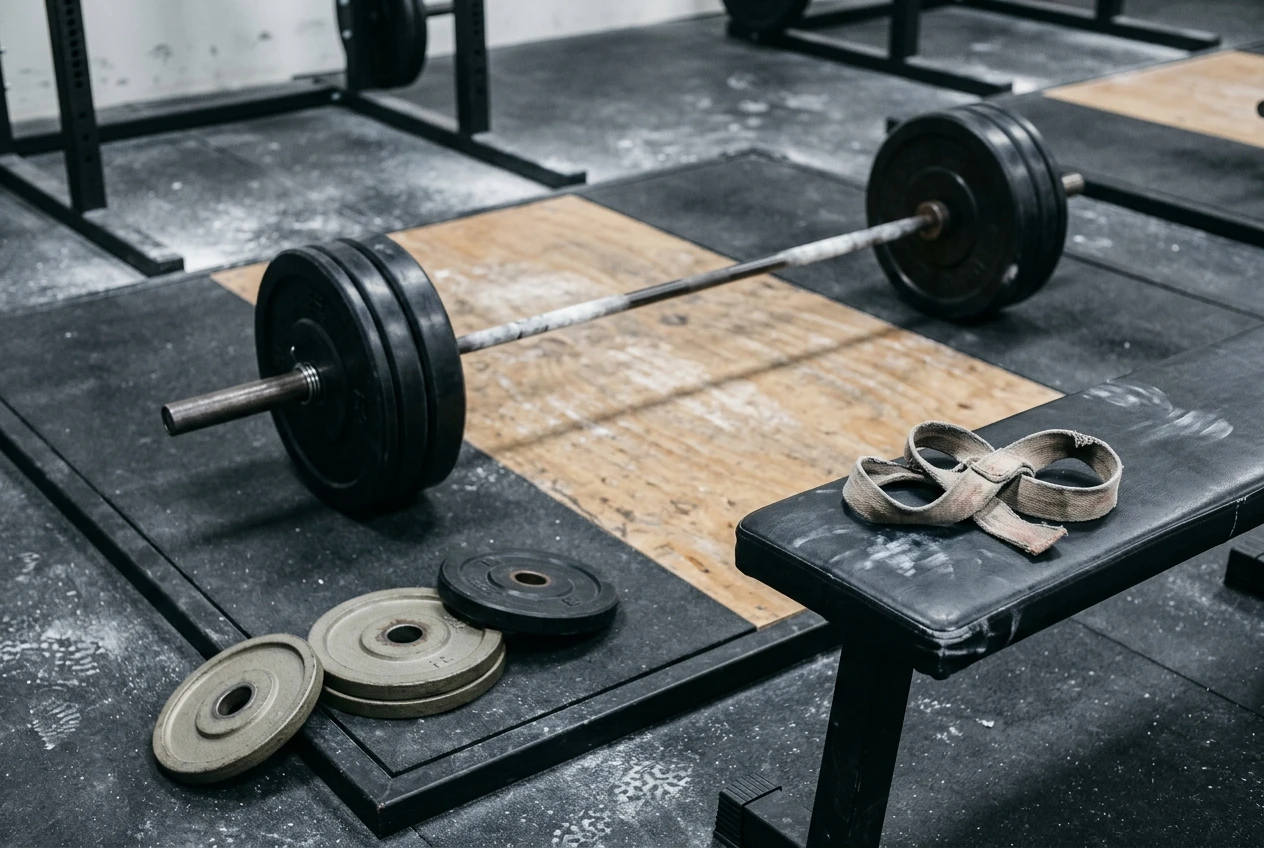
On a deadlift day, that means your first several ramp-up sets are raw, and you put straps on when you reach the weight you plan to train with. On a row day, the lighter rows are raw and the heavy sets are strapped.
Keep the raw sets honest. Use the same grip you intend to use later, set it the same way each time, and do not let the bar roll to the fingertips. If you do the warm-ups with a sloppy grip, you are practicing a grip you will not use.
Pass check to move to phase two: for two consecutive weeks, every raw set is completed without a regrip or a slip, and your strapped working sets are not worse than before. If your working-set reps drop because your hands are tired from the raw warm-ups, you did too many raw sets. Cut the raw sets back to the first few and try again.
Phase two: raw working sets, straps only on top sets and back-offs
Phase two is where grip gets a real stimulus. Your working sets, the main sets at your planned weight, are now raw. Straps stay on for the top set and for any back-off sets that follow it.
Back-offs stay strapped here because they come after your hands have already been loaded by the top set. If you did the top set strapped, they are the sets where fatigue in your grip is highest. Going raw on them is a phase-three task.
Expect your working weight to feel heavier at first. If your plan calls for five sets of five and your hands give out on set four, the plan was too ambitious for this phase. Reduce the number of raw sets and strap the last ones. Add raw sets back as your hands catch up.
Two rules keep this phase from costing you reps:
- A set is raw only if you expect to finish it raw. Do not start a set raw and strap up mid-set.
- If grip ends a raw set before your back or legs do, strap the next set and note it.
Pass check to move to phase three: across two consecutive weeks, your raw working sets match the reps you got strapped at the same weight, with no regrips, and the last rep of each set is limited by your back or legs rather than your hands.
Phase three: raw top sets, and the check for when to stop
Phase three removes straps from the top set, which is the hardest part of the process. Start by going raw on the top set at a weight slightly below your usual top weight, then work up over several weeks to the full weight. Back-offs stay strapped until the top set is stable.
Once your top sets are consistently raw, take straps off the back-offs. Those sets are now the last place you use them, and they should come off last because they are done in the most fatigued state.
Here is the check for whether you can stop using straps on a given lift:
- You complete your top set raw for the planned reps in two consecutive sessions.
- The bar does not slip or force a regrip.
- Bar speed on the last rep is no slower than it was strapped at the same weight.
- Your grip does not leave you unable to do your next accessory exercise.
If all four pass, straps are no longer needed on that lift for those sets. That does not mean straps are retired everywhere, which the next section covers.
Lifts where straps still belong: high-rep pulls, heavy rows and volume days
Passing phase three on the deadlift does not mean every pull should be raw. Straps still have a place when grip is not the quality you are trying to train:
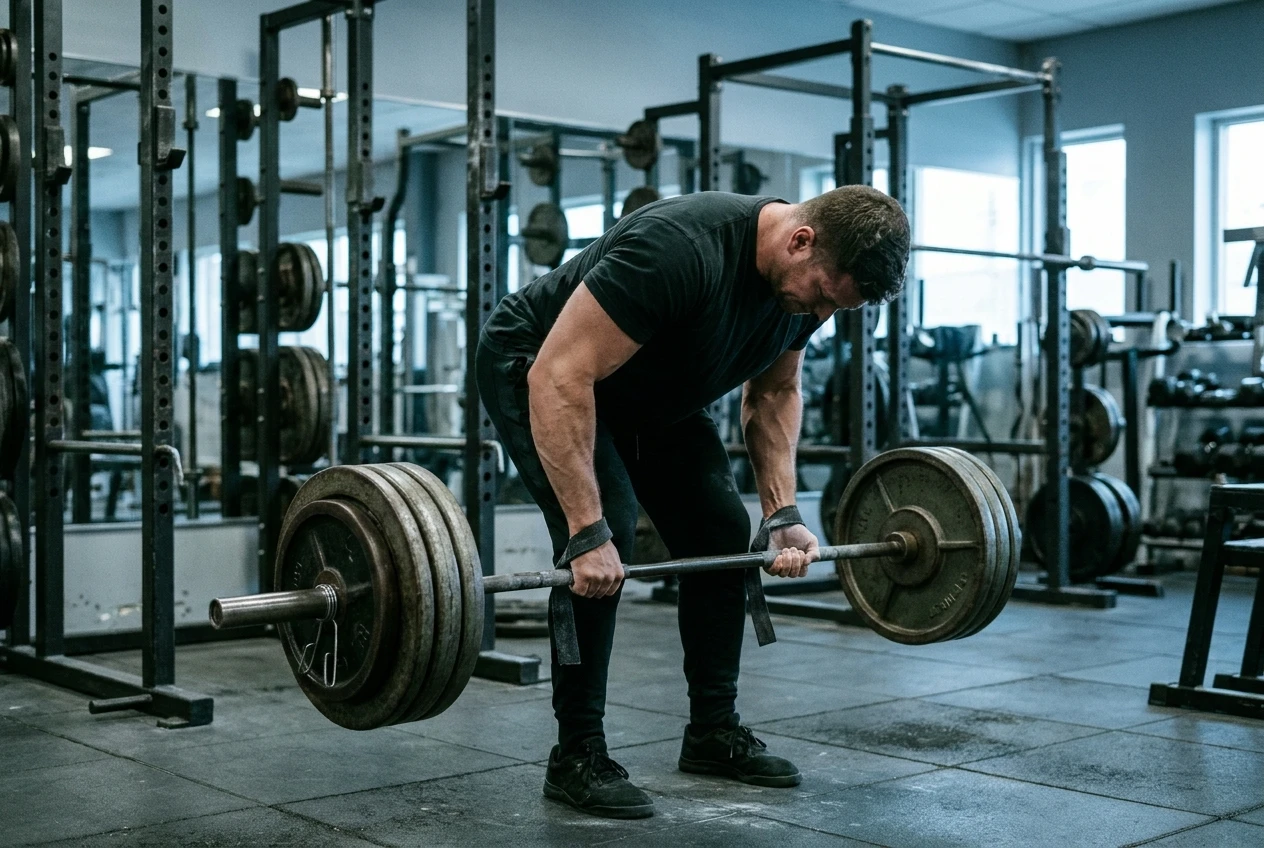
- High-rep pulls. On sets of ten or more, your grip will fail well before your back does. Straps let the target muscles finish the set.
- Heavy rows. If the aim is to load your lats and upper back, strapping stops your hands from capping the weight.
- Volume days. When several pulling exercises stack up in one session, grip fatigue builds across all of them. Strap the later exercises so the session is limited by back training, not by hands that were already used up.
A reasonable rule: if the purpose of a set is grip, go raw. If the purpose is to train your back or hamstrings, strap whenever grip would cut it short. If you compete in a sport that tests a raw deadlift, keep your top sets raw so the competition lift is the one you have practiced. Material matters too, and leather and synthetic straps suit different lifts.
What to train alongside the phases: holds, carries and kettlebell grip work
The phases only change how often your hands are loaded in your main lifts. Extra grip work speeds up how fast you pass each check. Keep it small enough that it does not cut into your pulling:
- Dead hangs from a pull-up bar build the closing strength of your fingers. Use sets you can finish with clean form and stop before your grip fails completely.
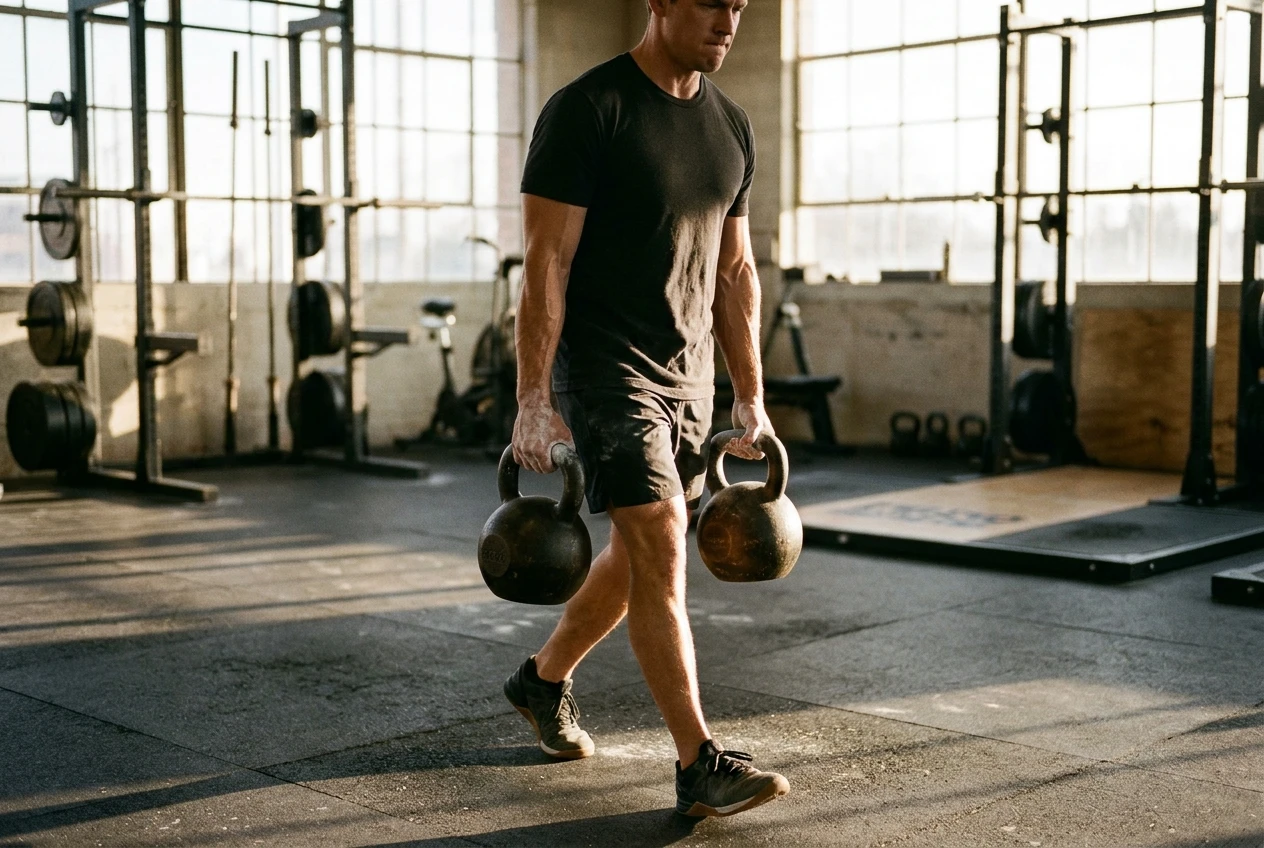
- Farmer carries with heavy dumbbells, trap bar handles or kettlebells train holding a load while moving. They suit the end of a session.
- Suitcase carries use a single weight at one side, which adds trunk work to the grip demand.
- Kettlebell holds and swings load your grip dynamically, because the bell tries to pull out of your hand at the top of every swing.
Put these after your main lifts, not before. If you do holds before deadlifts, you will bring tired hands to the barbell and fail the phase check for the wrong reason. Two short grip sessions a week is enough to start with.
What to do when a phase stalls: stay put, step back or change the dose
A phase will not always pass in two weeks. Use the result of your raw sets to choose between three responses:
Stay put if you are close. If you missed the check by one rep, or by one regrip, repeat the phase for another week or two with the same loading. Hands adapt more slowly than muscles, and a short repeat is often all it takes.
Step back if reps drop or your body complains. If raw sets cost you two or more reps against your strapped numbers, if your skin tears, or if your forearms stay sore into the next session, go back to the previous phase. Moving back is not a failure. It protects the training that matters most.
Change the dose if the phase is right but the volume is wrong. Reduce the number of raw sets rather than abandoning them. Do raw work on one pulling day a week instead of two, or add one more grip session if recovery allows. Often a smaller dose repeated for longer is what gets you through a phase.
Whichever you pick, change one thing at a time and give it two weeks before you decide it did not work.
Run the grip work alongside the phases
The kettlebell grip work above is easier to follow if it is laid out as a block. The article on giving your kettlebell grip its own block covers how to program that work so it runs next to your pulling without taking over your week.
If you would rather follow guided sessions for carries and swings than write them yourself, kettlebell.monster offers guided kettlebell workouts you can follow on screen. Affiliate disclosure: this is an affiliate link, so I may earn a commission if you sign up or buy through it.