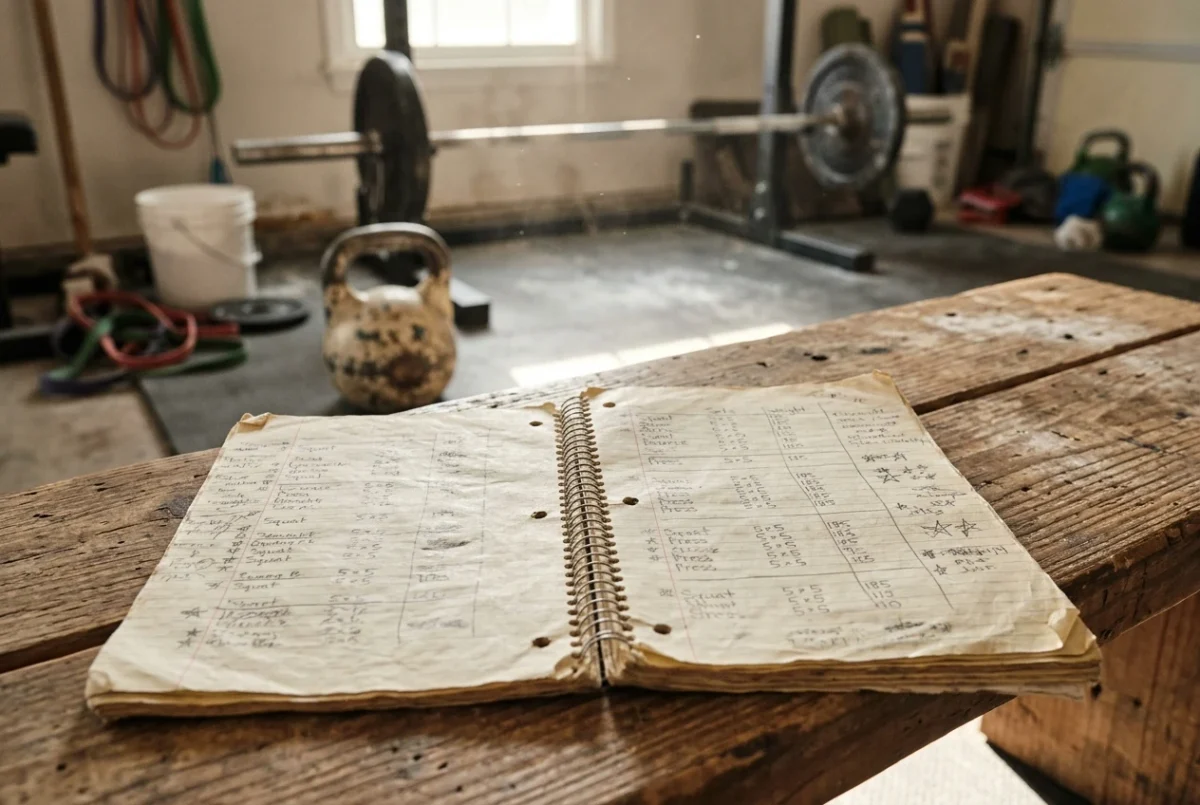
Most gear advice for home lifters starts with the price or the product category. Home gym equipment for longevity starts somewhere else: with the thing that is currently limiting your training. If that limit is a lift that won’t move, you may need heavier or finer-graded loads. If it is a sore elbow, a grip that quits first or sessions you keep skipping, a heavier barbell will make the problem worse.
This article gives you one question to ask before the next purchase, then maps gear to each answer and to how long you have been training. It assumes you have at least a year of steady training and a log you can check.
The two questions behind every gear purchase
The first question is: what is stopping me right now? The second is: for how long has it been stopping me? Together they separate a bad month from a real limit.
There are two possible answers to the first question.
- Recovery limit: you cannot train as often, as comfortably or as consistently as your program asks. Joints complain, grip fails before the working muscles do, or you skip sessions because you dread how you will feel.
- Strength limit: you show up and train well, but one lift has stopped progressing despite adequate sleep, food and effort.
The second question filters out noise. One bad week of sleep produces a stalled lift or a sore shoulder that disappears on its own. A pattern that holds across six to eight weeks of your log is a limit. Buy for the pattern, not the week.
I put the recovery question first for a reason. A recovery limit costs you whole training weeks, and a stalled lift only costs you progress on one movement. If you want to see how those lost weeks add up financially, what a home gym really costs when you count the weeks you can’t train works through it with your own numbers.
Signs your limit is recovery: the patterns that show up in your log before an injury does
Your log usually shows trouble before your body announces it. These are the entries to look for.
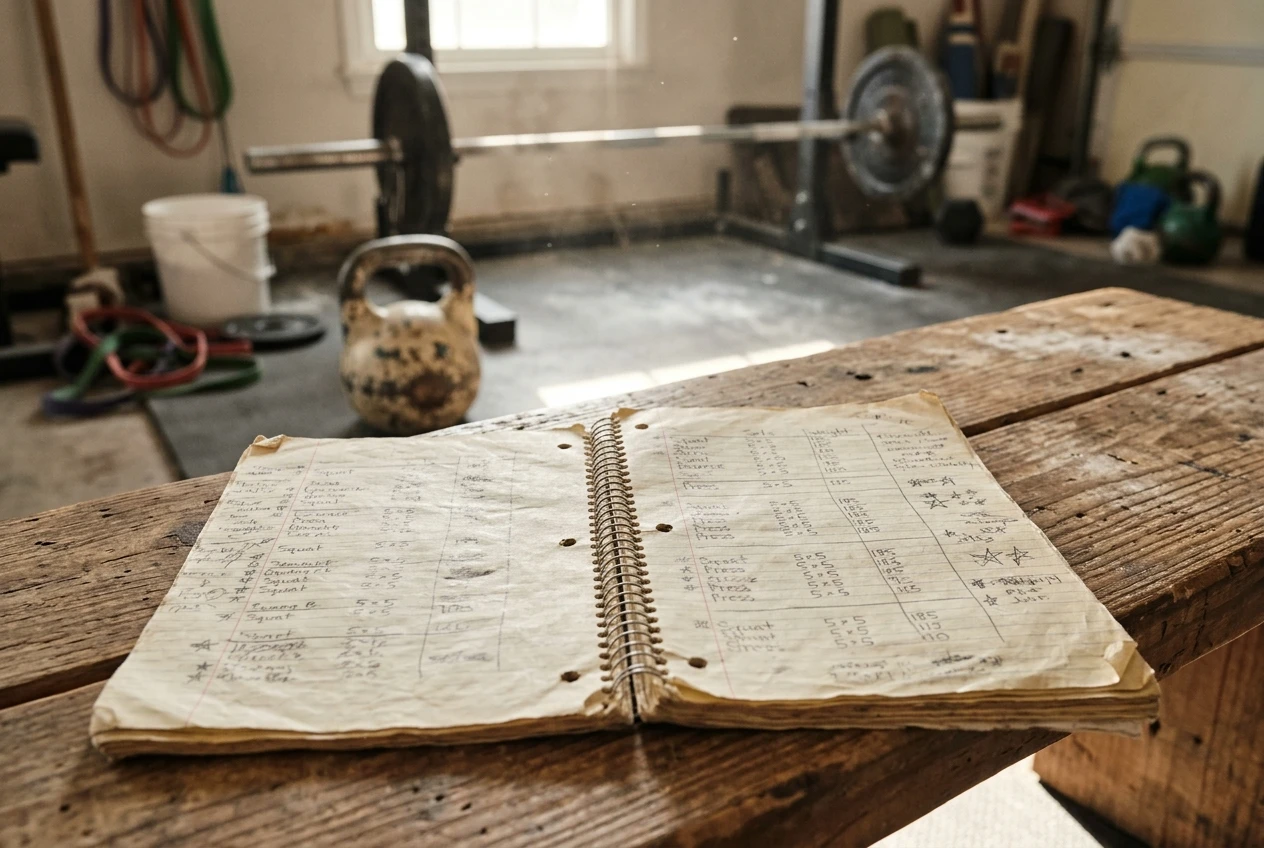
- Skipped or shortened sessions. If you planned four sessions a week and completed three for most of a month, something is making training unattractive or hard. Check what you wrote on those days.
- The same body part appearing in your notes. One note about a tight shoulder means nothing. The same shoulder noted in five of the last ten sessions is a pattern.
- Grip ending sets early. If you stop a deadlift, row or kettlebell swing set because your hands let go while your back and legs still have reps left, grip is limiting the work.
- Reps falling across sets at a fixed weight. Dropping from 8 reps to 5 over three sets, week after week, suggests you are not recovering between sessions or even between sets.
- Warm-ups getting longer. If you need more and more minutes to feel ready to lift, your joints are telling you something about accumulated wear.
None of these says you are injured. They say your current setup is costing you more recovery than it should, and that is exactly the situation where the right purchase pays back in years of training.
Signs your limit is strength: when a stalled lift really does need new equipment
A stalled lift needs equipment only after you have ruled out the cheaper explanations. Check these first: you are completing all planned sessions, your sleep and food have been steady, and you have not changed the lift’s technique or setup. If those hold and the same weight for the same reps has not moved in four or more weeks, you probably have a genuine strength limit.
Then ask whether gear is the cause. Equipment limits strength in two ways.
The jump is too big. If your smallest available increment is a large fraction of what you lift, you cannot add load gradually. This shows up as a lift that stalls, then jumps one session and stalls again for weeks. Smaller increments, such as fractional plates for a barbell or a kettlebell closer in weight to your current one, solve this directly. Before buying a heavier kettlebell, the reps-first test tells you whether you have actually used up the weight you own.
You have run out of weight. If you are completing the top of your rep range with clean form and the heaviest implement you own, there is nothing left to progress with. That is a legitimate reason to buy heavier equipment, and the only one that is purely about strength.
If neither applies, the stall is probably about programming, and no purchase will fix it.
Gear that protects training years: what to consider for grip, feet, joints and warm-ups
If your answer was recovery, the purchase belongs in one of four areas. Match it to the specific entries in your log.
Grip
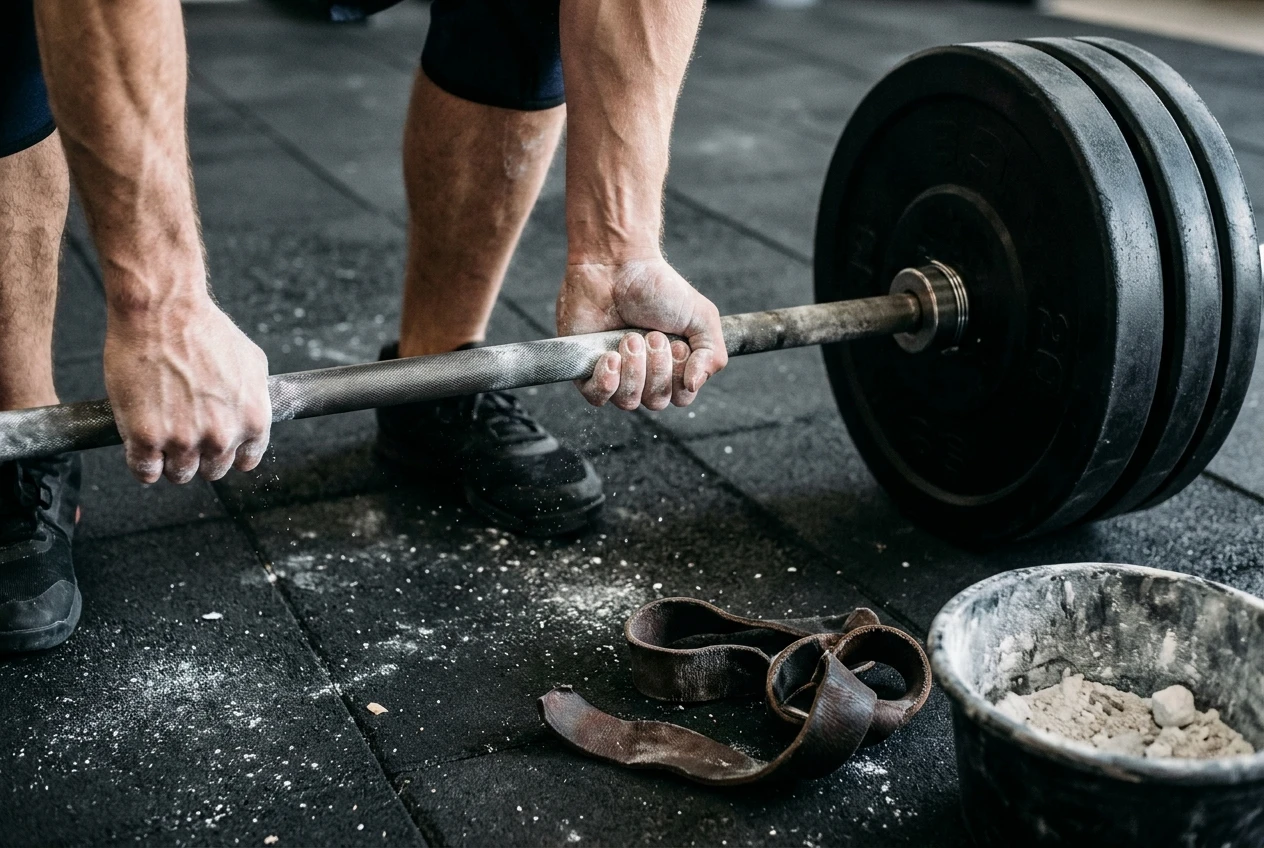
When grip ends sets before the target muscles are worked, you have three options: train grip separately, use chalk, or use straps for some work. Straps let heavy pulling volume go on without grip being the cutoff, but they also reduce grip work, so most lifters keep them for specific sets. Material matters too: the leather vs synthetic straps guide matches each to the lift you actually do. For kettlebell work in particular, lifting straps for kettlebell training covers which movements benefit.
Feet
Your feet are the contact point for every standing lift. If your notes mention knee or ankle discomfort, or an unstable feeling in squats and deadlifts, look at what you stand on. A firm, flat surface helps, and so does a pair of shoes with a stable sole. Lifting shoes have a raised heel that suits some squat styles, while a flat, hard-soled shoe suits deadlifts and kettlebell work. Pick based on the lift that bothers you.
Joints
Joint complaints often come from the setup around the lift. A bench that wobbles, a bar path that forces an awkward angle, or a floor that is too hard for kneeling work can all add up over months. Fix the setup before adding load. Padding, a stable bench and enough space to move without twisting are cheap compared with weeks off.
Warm-ups
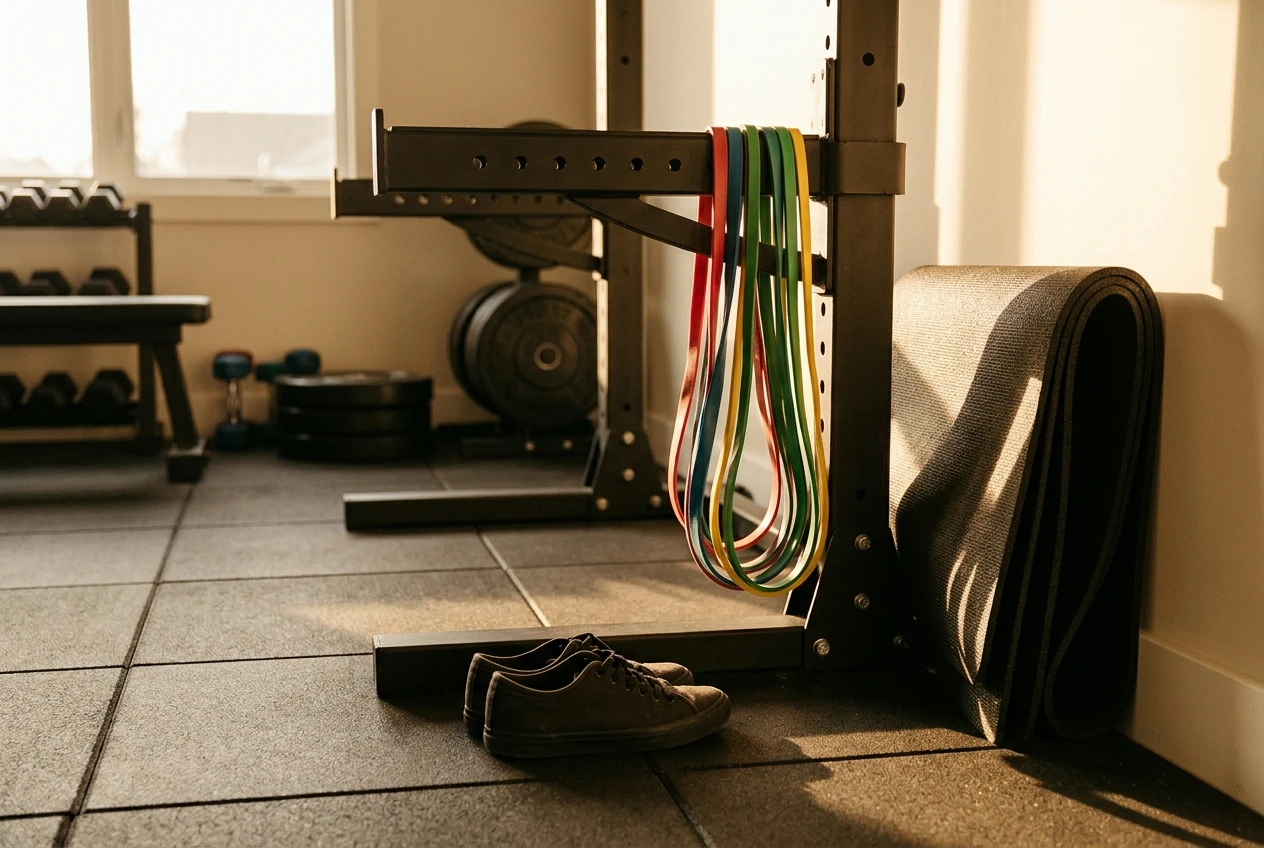
If your warm-ups keep growing, make them faster to start. Resistance bands cost little, take almost no storage space, and let you load shoulders, hips and glutes lightly before the heavy work. They also pair well with a short routine you can do the same way every session, which makes it easy to notice when something feels different.
Gear that raises the ceiling: when heavier loads or a belt actually earn their space
Gear that increases what you can lift is worth buying when your log shows a strength limit and no recovery limit. Two items come up most often.
Heavier loads. Buy them when you have hit the top of your rep range on your heaviest implement with good form, and have done so across at least two consecutive sessions. Buying earlier means the new weight sits unused or gets used with sloppy technique.
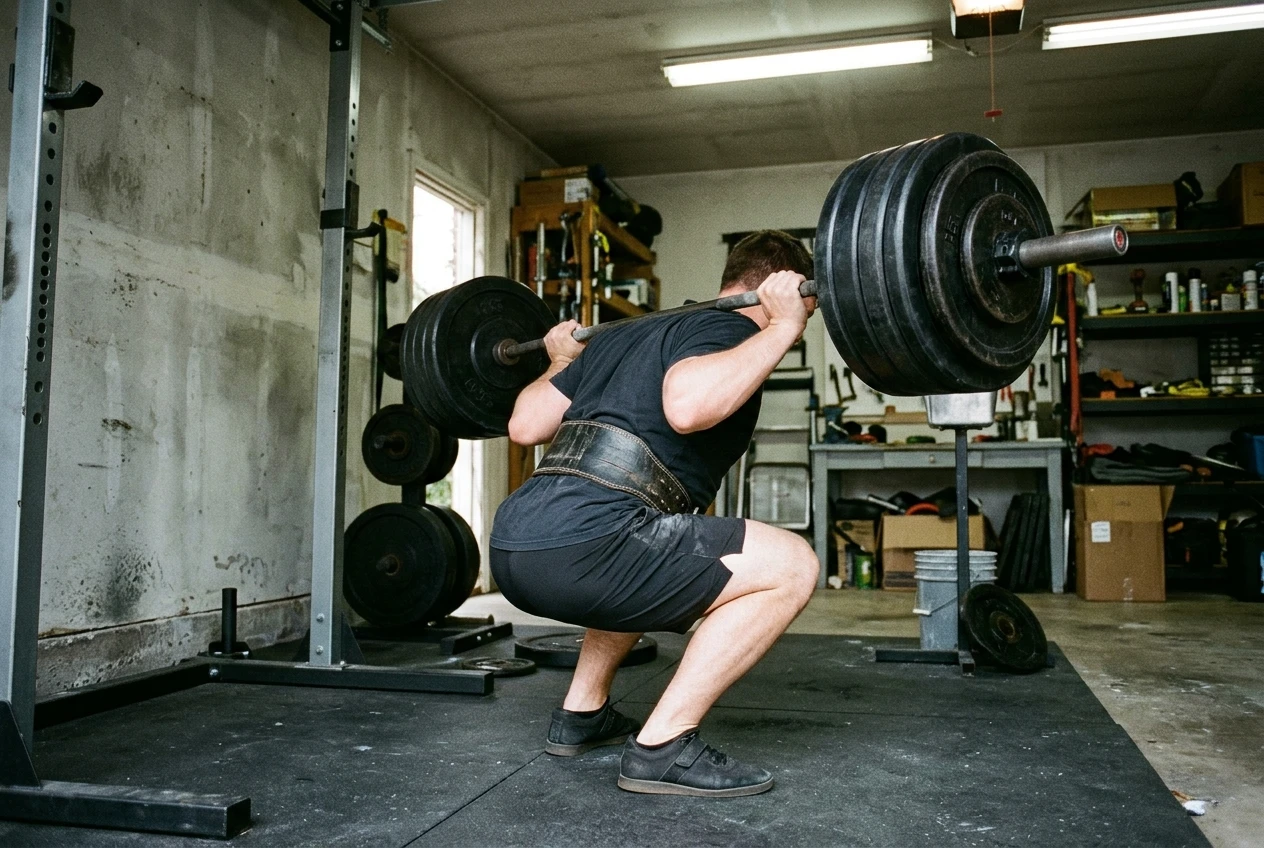
A belt. A belt gives you something to brace against, which can help on heavy squats and deadlifts. It earns space when you are regularly lifting near your limit and have practiced bracing without it. It does not fix a recovery problem, and wearing one for light work gives you very little. Which belt suits you depends on how long you have been training, and the post on the lifting belt you need at 6 months versus 6 years walks through the differences.
In both cases the test is the same: can you point to a log entry showing you ran out of room with what you already own?
How the answer shifts from your first year to your fifth
In the first year, most limits are about technique and consistency. Gear that makes it easier to show up and practice, like a stable bench, decent flooring and a few bands, tends to matter more than heavier loads, because the body adapts quickly and weights you already own stay challenging for a long time.
By the second and third years, progress slows and small increments start to matter. This is when fractional plates or a closer-spaced set of kettlebells make sense, and when grip becomes a common limiter on pulling days.
By year five, the likelier limit is accumulated wear. Joint-friendly setup, warm-up tools and recovery between sessions deserve more of your budget, because the cost of one missed month is higher relative to the small gains available. Lifters at this stage often find that protecting their training weeks produces more total progress than chasing a heavier top set.
These are tendencies, not rules. A lifter who trained inconsistently for three years may still be in first-year territory. Your log is a better guide than the calendar.
A simple purchase test you can run in ten minutes with your own training log
Open your last eight to twelve weeks of training and work through these steps.
- Count sessions. Compare planned sessions with completed ones. If you finished fewer than about four out of five, suspect recovery or scheduling.
- Scan your notes. Mark every mention of pain, tightness, grip failure or unusual fatigue. Group them by body part or cause.
- Check your main lifts. For each, note whether the weight or reps have moved in the last four weeks.
- Name the limit. Write one sentence: “My limit is recovery because…” or “My limit is strength because…”, and finish it with a specific log entry.
- Match the item. Write one more sentence: “This purchase will fix that by…”. If you cannot finish it using something from step 4, wait.
If steps 1 and 2 turn up patterns, buy for recovery first. If both come back clean and step 3 shows a stall with the heaviest implement you own, buy for strength. If everything looks fine, the right purchase is probably none at all.
Where a structured program beats another piece of gear
Some limits that look like gear problems are planning problems. If your sessions are inconsistent, if you add weight whenever you feel good, or if you never schedule an easier week, a new purchase hides the cause for a while without removing it. A written block with set exercises, rep targets and planned progression makes recovery and strength problems visible in your log, which makes the purchase test above much easier to run. If you are deciding whether to follow a program or write your own, this comparison for the next two years is worth reading.
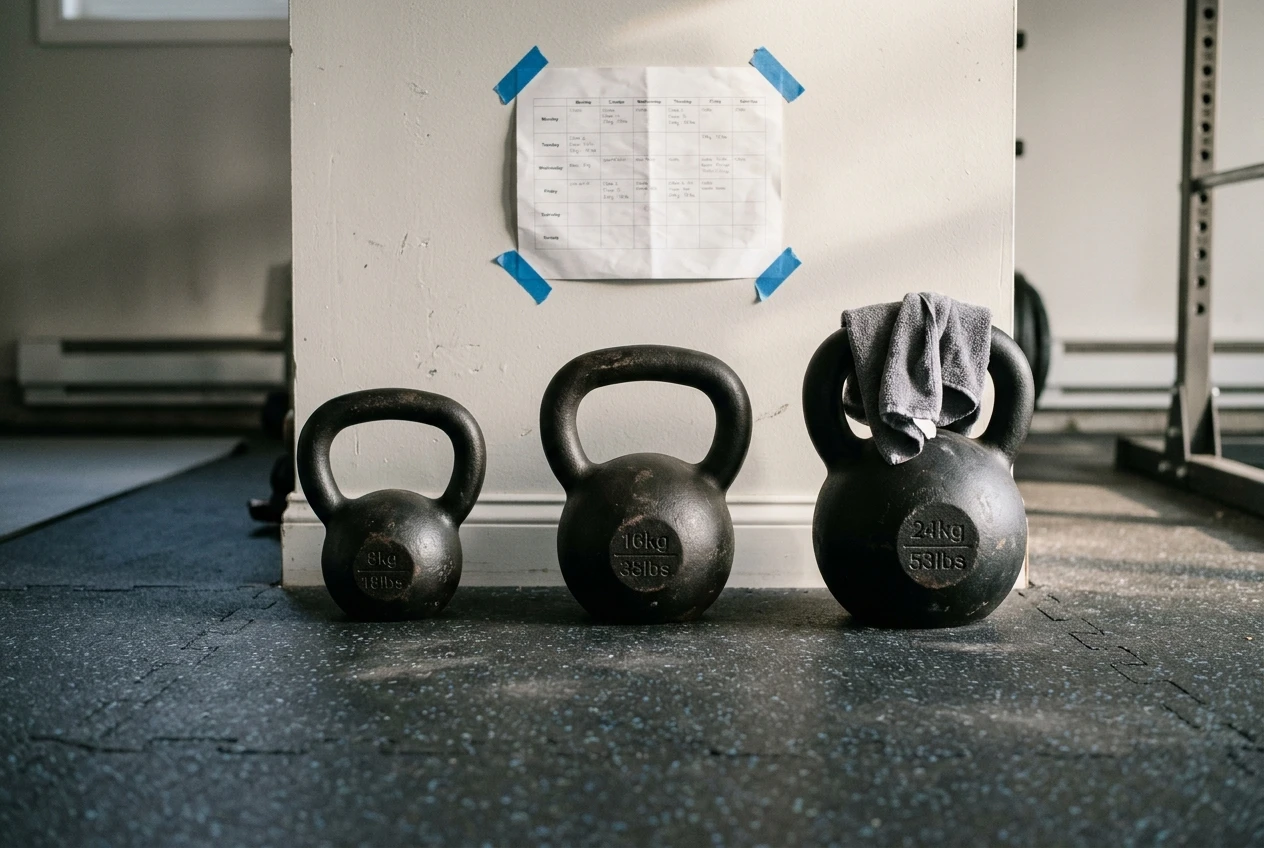
Before buying more, try running a structured block with the gear you already own. Kettlebell Monster offers guided kettlebell training you can follow at home, and a few weeks of consistent logging on a set plan will tell you whether your limit is gear or something else. Affiliate disclosure: I may earn a commission if you purchase through this link.