
If your energy drops mid workout, the point where it lands tells you which part of the session to change. A lifter who goes flat after the first lift has a different problem from one who fades in the last third, and the fixes don’t overlap. This article helps you mark the drop, apply one change matched to it, and keep every programmed set.
Mark where the drop hits: three notes to write in your log next session
Before you change anything, collect three notes for each session. Write them down during training, because after the session you will remember the drop as happening “halfway” even when it didn’t.

- The exact point. Record the lift and the set number where you first thought “this is heavier than it should be” or “I’m flat.” Write “bench, set 3” or “after the second accessory,” not “late.”
- An effort rating at three moments. Score how hard the first working set felt, the set where the drop hit, and the final set, from 1 to 10 at the same load. If the load changed, note that too. You can also note bar speed if you watch it.
- The conditions around it. Record when you last ate and what, what you drank, how long your warm-up took, and roughly how long you rested between sets. A phone note is enough.
After two or three sessions, sort the drop into one of three zones:
- Right after the first lift. The opening lift felt fine, but the next exercise felt like the end of a long day.
- In the middle of the volume work. You were strong through the early sets and faded somewhere in the second or third exercise.
- In the last third. The session was steady until the final stretch, then it fell apart.
If the drop moves around between sessions, with no repeating position, the cause is probably outside the session: sleep, a poor week of eating, or accumulated fatigue. The last section covers that case. If it repeats, you have a diagnosis, and the next three sections each give one fix.
The drop comes right after your first lift: check what your warm-up spent
A drop straight after the first main lift often means the warm-up and the first lift together used more than they needed to. This is easy to miss because the first lift usually feels fine. You are fresh, the weight moves, and the cost shows up one exercise later.
Look at the warm-up in your log for these patterns:
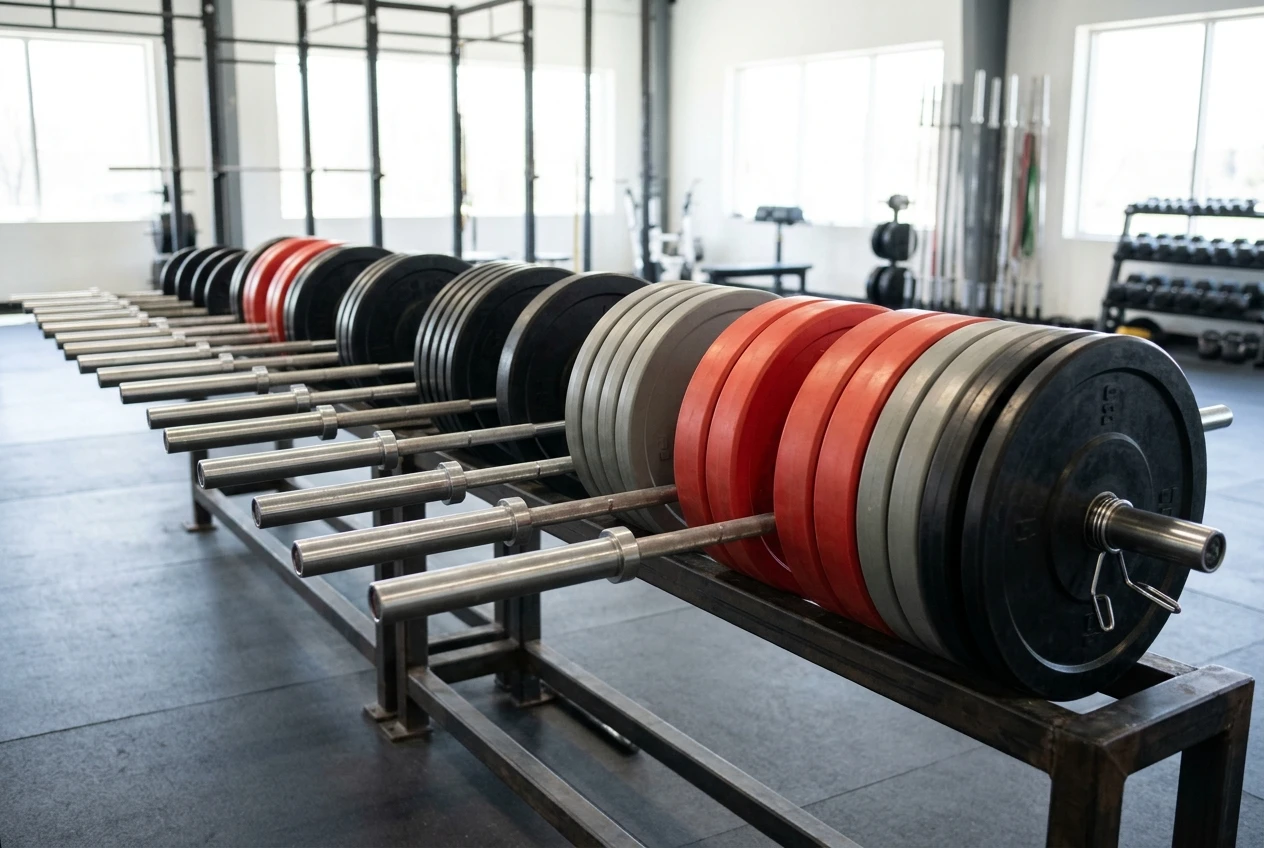
- Ramp sets with too many reps. Five reps at every ramp weight adds up. The lighter sets prepare the groove, and the heavier ramp sets only need a rep or two to rehearse the load.
- Ramp jumps that are too small. Eight or nine warm-up sets to reach a working weight is a lot of work before the work.
- A general warm-up that turns into a workout. Ten minutes on a bike or rower at a pace that leaves you breathing hard is a cost. Stop when you feel warm and loose.
- Mobility and activation circuits stacked on top. Each one may be useful alone, but together they can take more out of you than the first set of the session.
The fix: cut warm-up reps, not working sets
Your programmed working sets stay exactly as written. Only the warm-up changes. A simple way to test it is to hold the ramp to a few sets and let the reps fall as the weight rises. For example, if your top working weight is heavy, you might do a set of five with an empty bar or light load, three with a moderate weight, two with a heavier one, and one single close to the working weight. Those numbers are an illustration to adjust, not a prescription.
Then build the warm-up around the lift you are about to do rather than a generic routine. The piece on a 10-minute kettlebell warm-up built around today’s lift shows how to pick movements that match the session instead of running the same circuit every day.
Check your notes after the change. If the drop moves later or the effort ratings on the second exercise improve, the warm-up was part of the cost.
The drop lands in the middle of the volume work: fix rest timing and lift order
If you are strong early and fade in the second or third exercise, look at how you are spending time between sets and what order the work comes in. A high-volume session is long, and small inefficiencies add up across it.
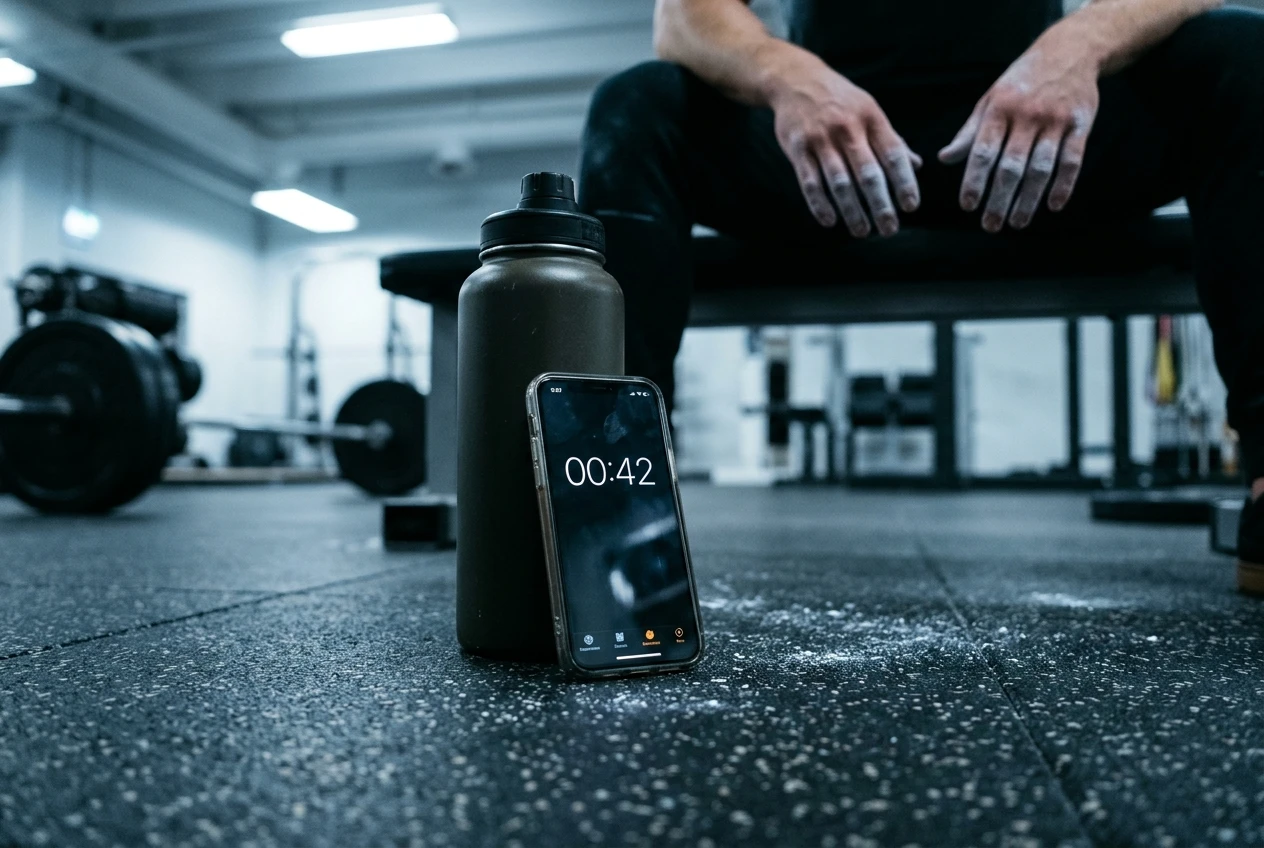
Rest timing
Rest drifts in two directions, and both hurt. In the first half of a session, many lifters rest too little because they feel fresh and want to get moving. By the middle, the sets are heavier on the body and rest creeps up or collapses depending on how the session feels. The result is uneven recovery, so some sets are done under-rested and others after long waits.
Use a timer and decide the rest period before the session, by type of exercise:
- A longer fixed rest for heavy compound lifts.
- A shorter fixed rest for accessories and isolation work.
- The same rest every time for a given type, so the log shows how the sets actually went.
Check the log for rest times shrinking late in the session, which usually means you are rushing to finish, or growing, which usually means you are stalling because you are tired. Either pattern points to the same fix: a timer decides, and you don’t.
This also removes decisions from the session. Every choice about load, rest, or what comes next costs a little attention, and the article on counting the decisions your session forces mid-workout goes through how to cut them. The fewer calls you make halfway through, the less you carry into the last half.
Lift order
If your program fixes the order of the main lifts, leave it alone. If you have freedom within it, two adjustments help:
- Put the lift that matters most in the slot where you are freshest. If a squat or deadlift is the goal of the day, don’t place it after a block of work that taxes the same muscles.
- Put demanding accessories after the main work, and check what they cost. An accessory that hammers your lower back or grip can leave the next lift flat. The article on pricing each accessory by the reps it costs your next main lift gives a way to see whether an accessory is worth the position it holds.
You can also alternate exercises that don’t compete, such as an upper-body movement between lower-body sets, but only if it does not shorten your rest below what the main lift needs. If it does, leave it out.
Pick one of these two changes, not both: either fix the rest times or reorder the work. Otherwise you won’t know which one helped.
The drop arrives in the last third: look at what you ate and drank before and during
A drop that waits until the last third is the pattern most closely tied to fuel and fluids. The first two-thirds of the session run on what you brought with you, and the end is where a shortfall shows. A long, high-volume session makes the shortfall bigger.
Check these things in your log:

- Time since your last meal. A long gap before training leaves less available, and a very large meal right before training can leave you uncomfortable instead of fueled.
- What the last meal contained. A meal with carbohydrate and some protein a few hours before training is a common baseline. A meal with very little carbohydrate may leave you flat when volume is high.
- What you drank. Walk into the session thirsty and the last third will feel worse. Sipping water through the session, rather than one big drink at the end, is easier to sustain.
- Whether you ate or drank anything during the session at all. If your sessions run long, nothing between the first set and the last may be the entire cause.
The fix: one change to fuel, matched to the gap
Make a single change and keep the rest of your eating as it is. Which change depends on what your notes show:
- If the gap since your last meal was long, add a small, easily digested carbohydrate snack closer to the session.
- If you ate nothing during a long session, try sipping a drink that contains carbohydrate during the training.
- If you started the session thirsty, drink water earlier in the day and keep a bottle with you through the session.
Amounts vary a lot between people, body sizes, and session lengths, so start small and read your log rather than copying someone else’s numbers. If you have a medical condition, take medication that affects blood sugar, or have a complicated relationship with food, ask a doctor or a registered dietitian before changing how you eat around training.
Test one change for two sessions, then read your log
Change one thing at a time. If you shorten the warm-up, set a rest timer, and eat a snack in the same week, an improvement tells you nothing about which one worked.
Run the change for two sessions. One session can be a good or bad day for reasons unrelated to what you changed, and two gives you a repeat. Then compare against your earlier notes:
What to compare | What improvement looks like |
|---|---|
Where the drop lands | It moves later in the session or disappears |
Effort rating at the same load | The score for the problem set is lower than before |
Rest times | They stay closer to the plan |
Completed sets | You finish all programmed sets without cutting any |
If the drop moved or shrank, keep the change and leave the rest alone. If nothing changed after two sessions, return to the original setup and try the fix for the next zone, if your notes suggest a second contributor. Many lifters find that the drop has one main cause, and the other adjustments add little.
If you add a second change later, treat it as a new test with its own two sessions.
When the drop is telling you to change the program, not the session
Sometimes the fixes work partway or not at all. If you have tried the matching change for a couple of rounds and these things are also true, the problem is probably the program’s total demand:
- The drop lands at the same point week after week, and it is arriving earlier than it used to.
- Effort ratings for the same loads keep climbing across the block.
- You are sleeping poorly, your joints ache beyond normal soreness, or your motivation to train has dropped.
- Performance is going down on lifts that have nothing to do with the point where the drop lands.
That combination suggests that the volume is more than your recovery can support right now. Cutting sets is then a reasonable answer, and a deload or a lighter week may do more than any tweak inside the session. Recovery between sessions matters as much as what happens inside them, as the article on what your shoulders do between sessions shows for pressing. The same audit works for any lift.
The diagnosis in this article exists so that you only make that call when the evidence supports it, and not because one session felt bad.
If you want a place to log where the drop hits each session, you can try kettlebell.monster. Affiliate disclosure: I may earn a commission if you buy through this link.