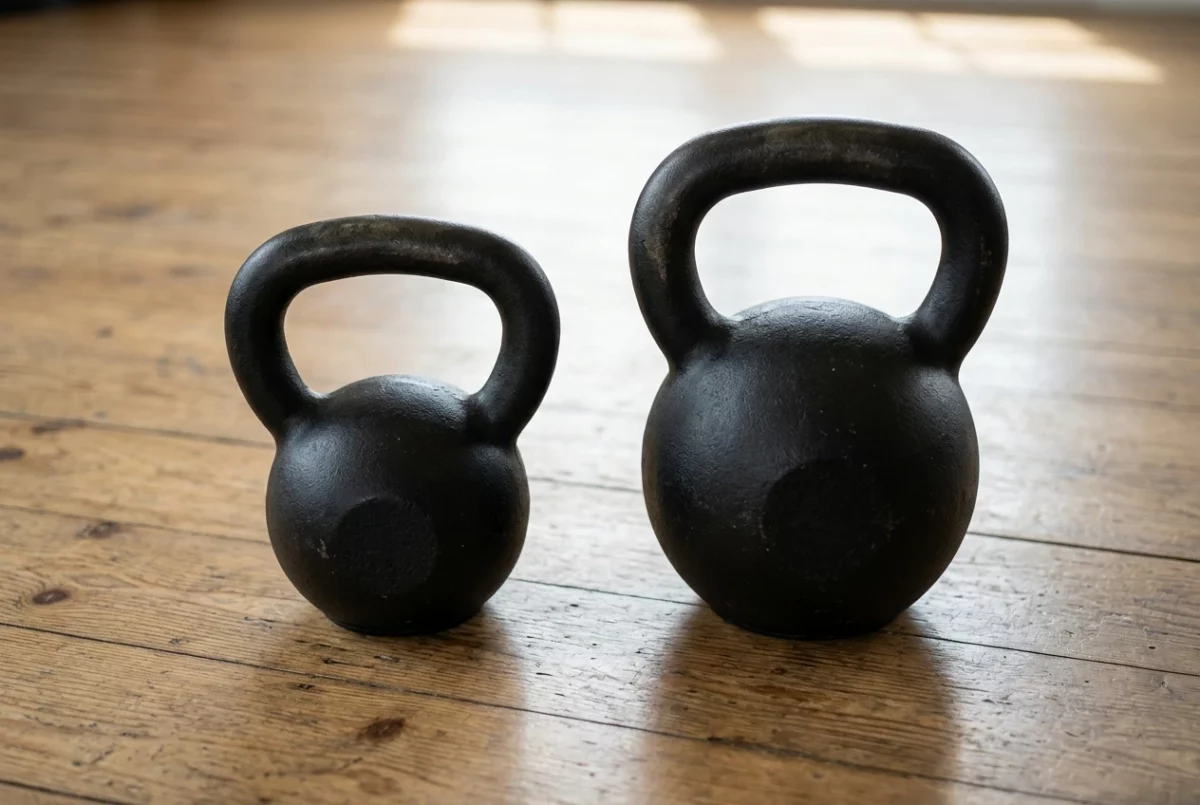
Kettlebells can build real strength, but only if you set them up for it. A bell you can’t progress, a pile of exercises with no order, and a week built around sweating instead of lifting will give you a decent workout and not much more. This article covers what to buy, which lifts to learn first, how to arrange a week, and when to move up, so that kettlebell training for strength has a clear starting point.
What kettlebells can and can’t do for strength
A kettlebell is a good tool for hip power, trunk strength, grip, and the ability to move a heavy object through a full range of motion. The swing trains the hips to extend hard and fast. The goblet squat trains a deep, upright squat. The press makes you stabilize a weight that sits off-center in your hand. Those are useful qualities for anyone, and they carry over to other kinds of lifting.
There are limits. A kettlebell has a fixed weight, and the jump between one bell and the next is large compared with the small plates you can add to a barbell. Most people will also run out of room to load squats and deadlifts with a single bell sooner than they would with a barbell. If your goal is the highest possible one-rep max in a barbell lift, a barbell is the more direct tool.
If your goal is to get noticeably stronger, move well, and train at home with little equipment, kettlebells are a sound choice. Treat them as a strength tool with a ceiling you will hit later, not sooner, if you progress sensibly. Your barbell lifts are covered elsewhere on the site, for example, in the guide to why lifts stall and how to progress again, and the same logic applies here.
Choosing your first bell: the weight question and what to check before you buy
Weight is the question everyone asks first, and there is no single right answer. The bell should be heavy enough that a set of goblet squats takes real effort by the last few reps, yet light enough that your form stays clean on the swing and the press. As a rough range, many beginners end up somewhere between 8 and 16 kg, depending on body size and training history. If you already lift regularly, you will probably sit toward the upper end.
Your bell will be used for different lifts, and each tolerates a different load. You can swing a heavier bell than you can press overhead. Squats sit in the middle. If you buy only one bell, choose one you can press for a few controlled reps, because you will outgrow it more slowly on the swing and squat than on the press.
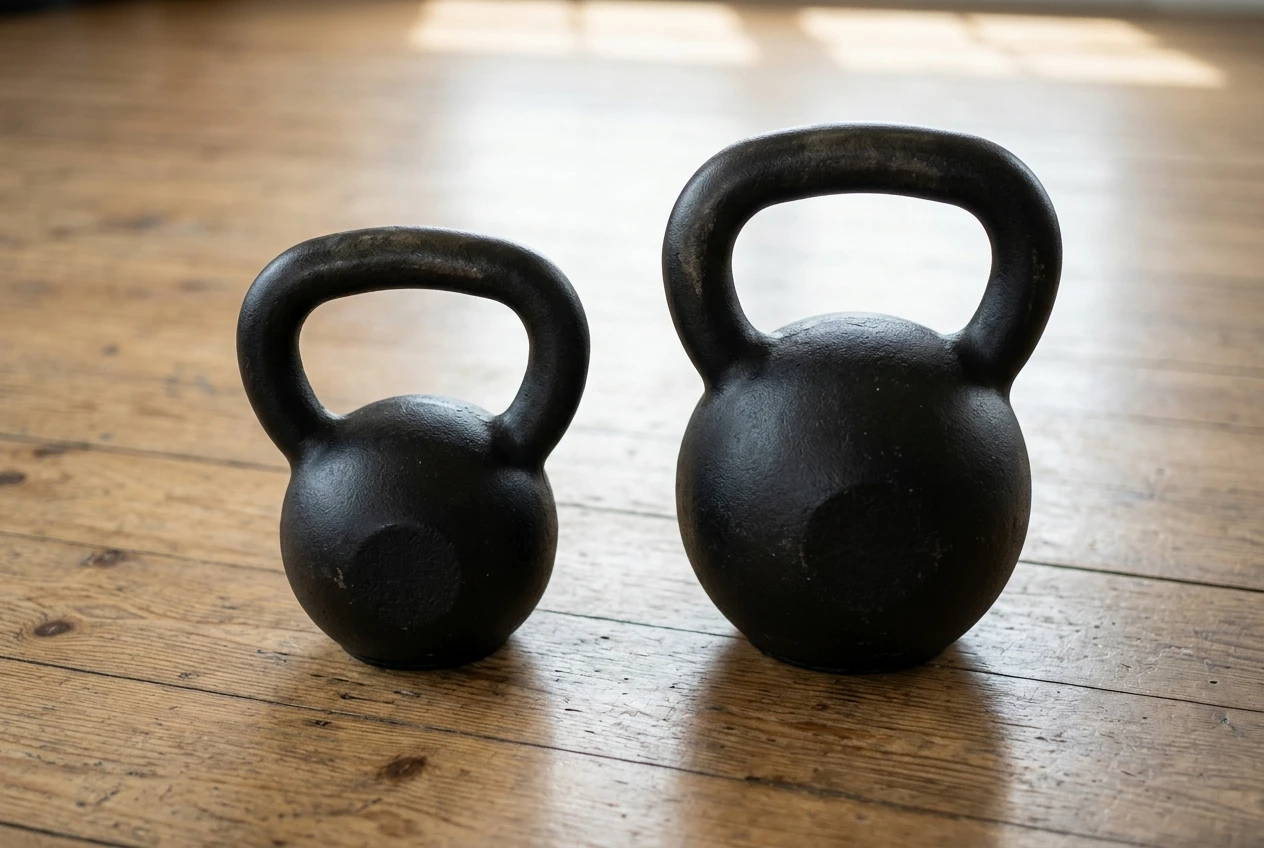
Before you buy, check these things:
- One-piece construction. A bell cast as a single piece has no seam or welded handle to loosen.
- A flat base. The bell should stand upright without wobbling, since you will set it down between sets.
- A smooth handle. Rough coating or sharp casting seams will tear your hands on high-rep swings.
- Handle width. Your hand should sit comfortably on it, and a two-handed swing should fit without your hands crowding each other.
- A clear weight marking. Confirm whether the bell is labeled in kilograms or pounds so you know what you are buying.
If you can afford a second bell, a lighter one for presses and a heavier one for swings and squats covers most of what a beginner needs. A single bell works too, provided you choose with the press in mind.
The first three lifts to learn, and the order to learn them in
A catalogue of dozens of kettlebell exercises is not where a strength lifter should start. Three movements cover a squat, a hinge, and a press, which are the patterns that matter most. The order matters because each one builds on the last.
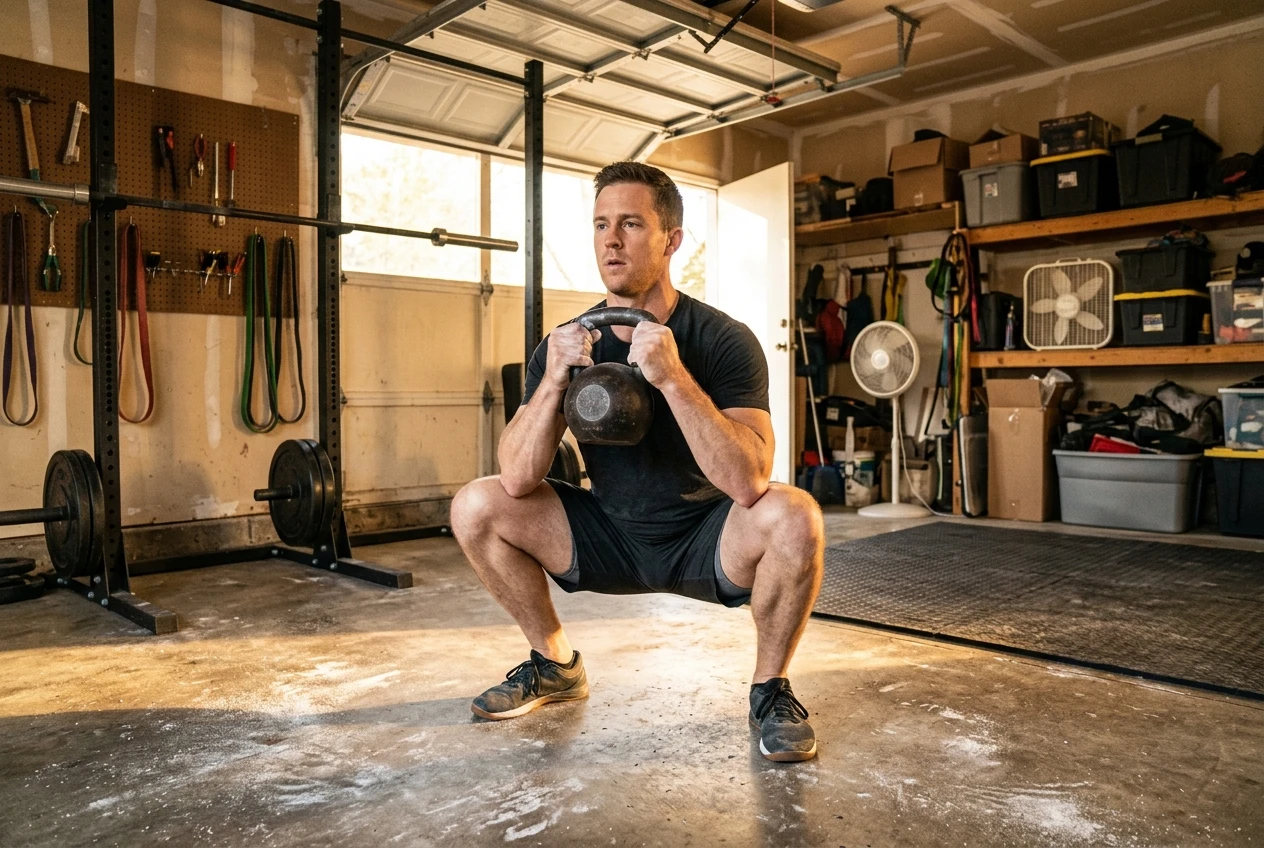
1. The goblet squat
Start here. Holding the bell at your chest makes it easy to stay upright, and the weight in front of you acts as a counterbalance so you can sit into a deep position. It also teaches you to brace your trunk under load, which transfers directly to heavier squatting later. The guide on correct form for the kettlebell squat covers setup and depth in detail, and the same bracing ideas appear in how to brace heavy squats.
2. The kettlebell deadlift, then the swing
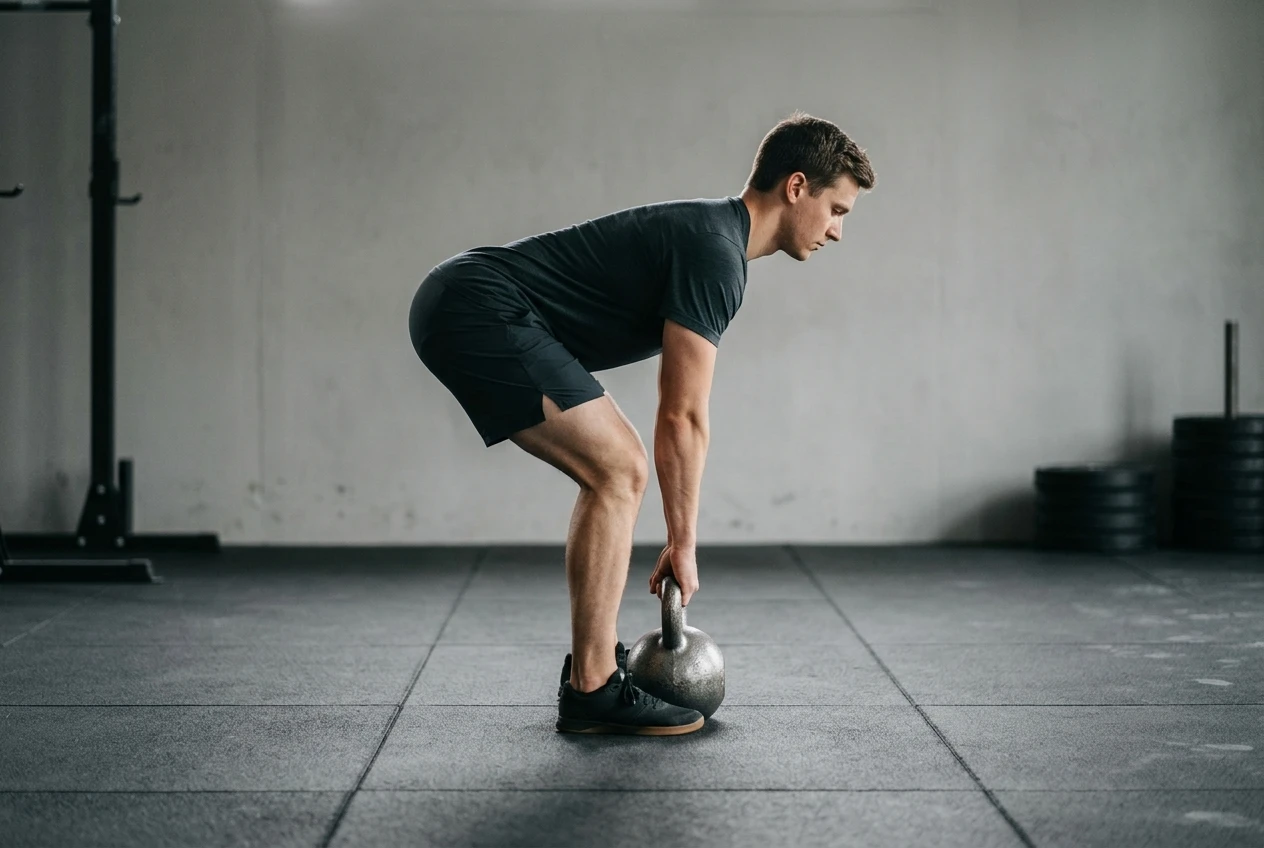
Learn the hinge with the bell on the floor before you try to swing it. In a deadlift, you push your hips back, keep your spine neutral, and stand up by driving through your legs. Once that pattern is solid, the swing adds speed and a snap of the hips. The swing is the lift most people want to rush, and most technique problems come from skipping the hinge. When you are ready for more than the basic version, the guide to kettlebell swing variations and progressions lays out what to try next.
3. The single-arm press
Press last, because it asks the most of your shoulder and your trunk at the same time. A strong rack position and a tight midsection make the press safer and stronger. Learn it with a weight you can control for a handful of clean reps on each side. Pressing the bell out of balance is a common way to strain a shoulder.
For a walkthrough of all three, along with other staples, see the guide to the most essential kettlebell exercises and how to perform them safely.
A simple starter week: sets, reps, and rest for strength, not just conditioning
Kettlebell workouts are often built as timed circuits, which is fine for conditioning but a poor fit for strength. Strength comes from heavy, well-executed sets with enough rest between them to lift well again. That means fewer reps per set and longer breaks than most circuits allow.
Here is a simple layout for three non-consecutive days a week, such as Monday, Wednesday, and Friday. Treat the numbers as a starting point to adjust.
Day A
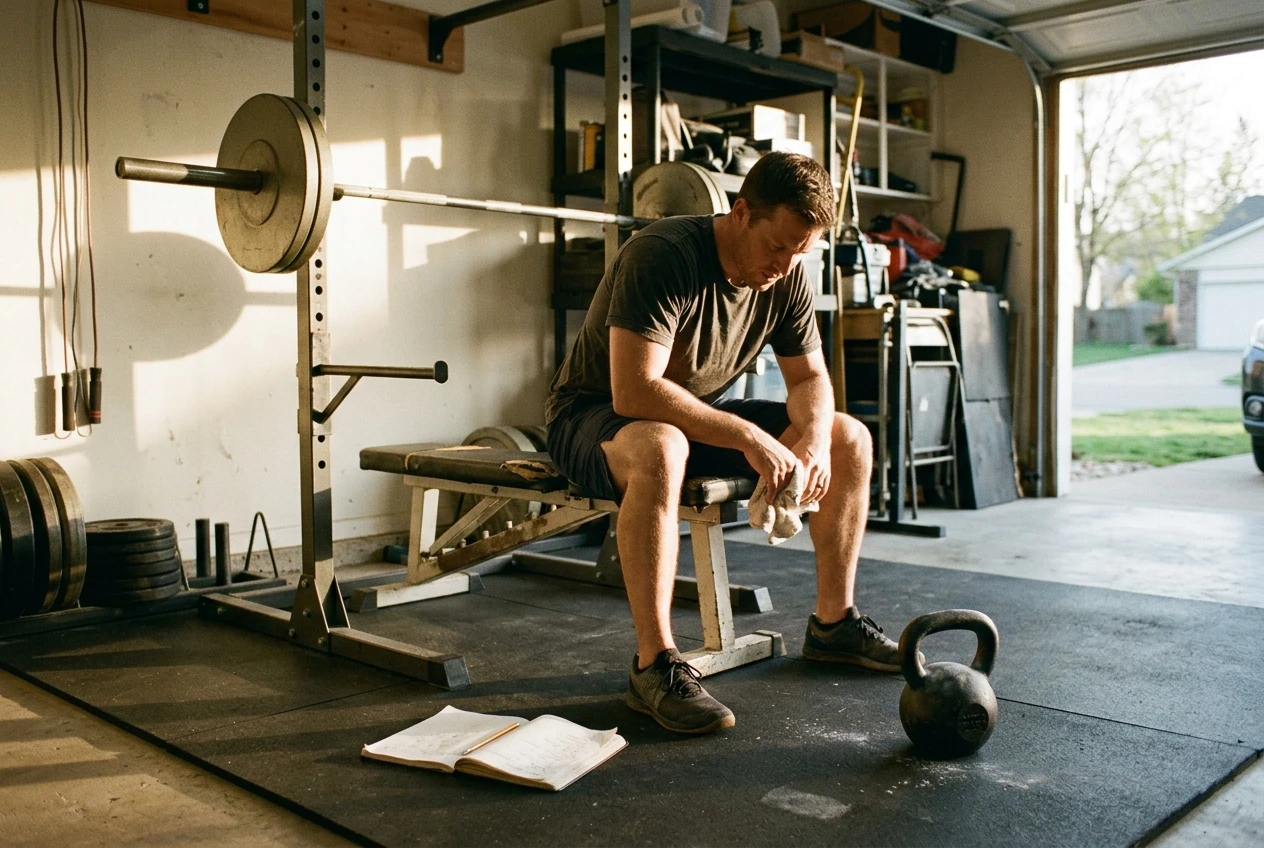
- Goblet squat: 4 sets of 5 reps
- Single-arm press: 3 sets of 5 reps per side
- Kettlebell swing: 6 sets of 8 reps
Day B
- Kettlebell deadlift: 4 sets of 5 reps
- Goblet squat (slower lowering): 3 sets of 6 reps
- Single-arm press: 3 sets of 5 reps per side
Alternate A and B across the week, so you do A, B, A one week and B, A, B the next. Rest for roughly 90 seconds to 3 minutes between the heavier sets of squats, deadlifts, and presses. Swing sets can use shorter rests, since the reps are lower effort per rep and the goal is a crisp hip snap, not exhaustion.
Stop each set when your form starts to slip, not when you are completely spent. A set that ends with a couple of reps still in reserve builds strength and leaves you able to train again in two days. If you want to see how these pieces fit into larger sessions, the guide on building a full-body workout with kettlebell exercises shows more ways to combine them.
Warm up before you load anything. A few minutes of hip and shoulder mobility work, then a lighter set or two of the first lift, is enough for most people.
How to tell it’s time to go heavier, and what to do when you can’t yet
Move up when the current bell stops being a challenge for the work you are doing. A practical rule: if you complete every planned set and rep with clean form, and the last rep of each set feels like you had at least two or three reps left, repeat that in your next session. If it holds in two sessions in a row, the bell is too light for that lift.
Different lifts will hit that point at different times. The swing and the deadlift usually go first, because the legs and hips are stronger than the shoulders. The press will stay on the lighter bell much longer. It is normal to use two bells, and it is normal to have one lift ahead of another.
The harder situation is when the next bell is a big jump, and you are not ready for it. A few ways to keep progressing on the same bell:
- Add reps or sets. Go from 4 sets of 5 to 5 sets of 5, then to 4 sets of 6.
- Slow the lowering phase. Take three seconds to lower into a squat or lower the bell from a press.
- Add a pause. Hold the bottom of a goblet squat for two seconds before you stand.
- Go to one side. Single-arm and single-leg variations make a light bell feel much heavier.
- Shorten the rest. Cut the rest between sets a little, though keep it long enough that your reps stay crisp.
These are all forms of progressive overload, and the site covers them further in the top progressive overload methods. Make one change at a time so you can tell which one is working.
Why a structured program beats winging it, and how to pick one
You can build a decent week from the layout above, and many people do. The weakness is what happens after the first month. Without a plan, it becomes easy to repeat the same session, skip the hard lifts, or add random exercises because they look interesting. A written program takes those decisions away, so you show up and do the work.
A good strength program for kettlebells does several things:
- It tells you what to do on each day, including sets, reps, and rest.
- It progresses over weeks, so you know when to add load or reps.
- It matches your equipment, so you are not asked to use a bell you do not own.
- It is something you will follow. A plan on paper that you ignore does nothing, and a simpler one you complete every week is better.
When you compare programs, look at whether the session structure suits strength (lower reps, real rest) or mostly conditioning (timed rounds, minimal rest). Check what equipment it assumes. Check how it handles progression, and whether you can follow it without constantly stopping to look things up. A program you can follow on a screen in front of you, with the next movement shown as you go, removes a lot of friction on the days you would otherwise skip.
kettlebell. Monster is one option for guided kettlebell workouts, and it is the one this site currently recommends for readers who want to follow a plan instead of building one from scratch.
Where to go next: guided workouts on your TV and the guides that cover each lift in depth
Start with the three lifts, run the starter week for a few weeks, and move up when the signs are there. When you want to deepen your technique on any one lift, the guides on this site go further than this overview can. The essential kettlebell exercises guide covers the basics, the swing variations guide covers the hinge in more depth, and the kettlebell squat form guide covers the squat. For the broader picture of how strength builds and stalls, see why lifts stall and how to progress again.
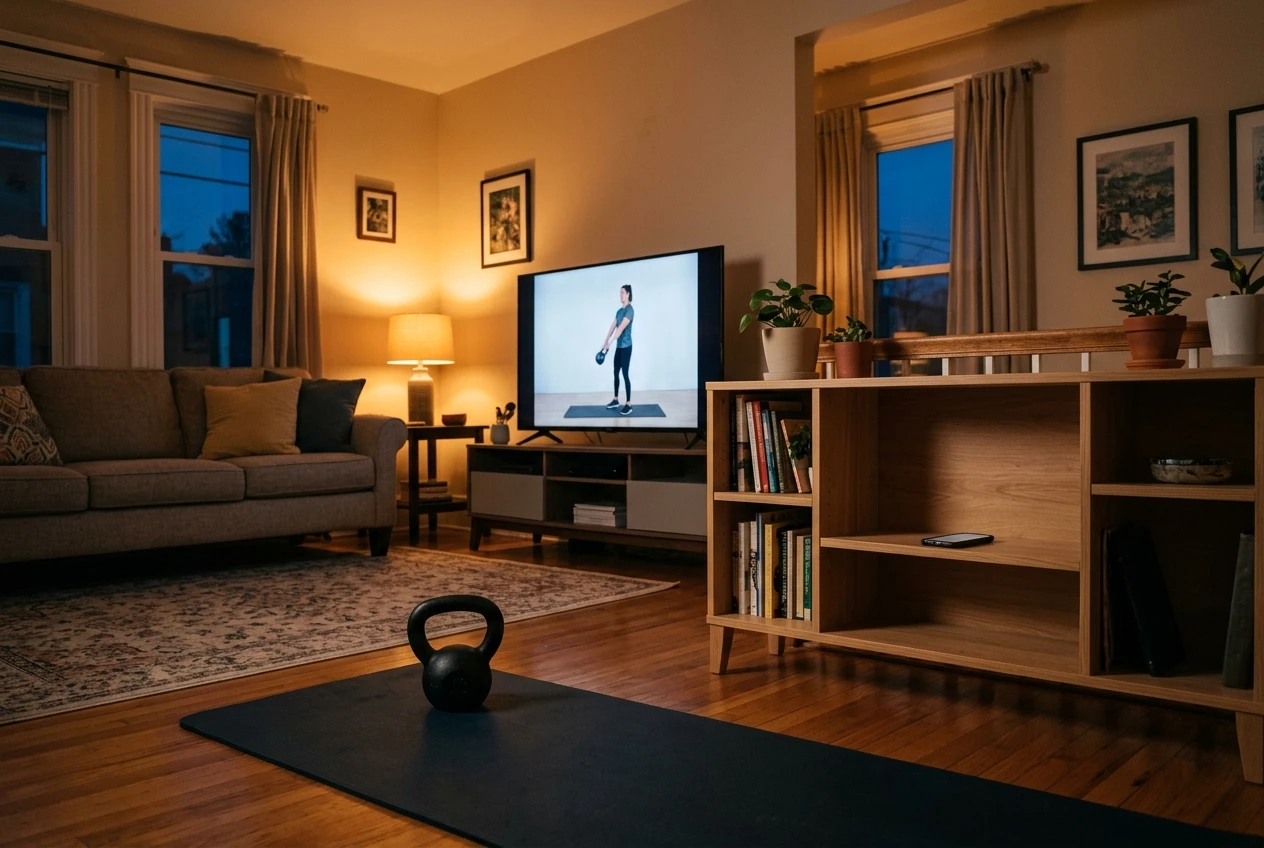
If you prefer to train with a plan on screen, the guided workouts are available through a TV app as well, so you can set the bell down, press play, and follow along without holding your phone.
Ready to stop guessing? Try the guided kettlebell workouts at kettlebell. monster (affiliate link: I may earn a commission if you buy through it), including the Samsung Tizen TV workout app (affiliate link: I may earn a commission if you buy through it), so you can follow a plan on your own screen.