Most nylon vs leather lifting belt comparisons rate a belt on one heavy single. You brace, the belt is tight, the bar moves, and whichever belt felt more rigid wins. That test is fair for a meet, but it says little about a week with several sessions and dozens of working sets.
If you train high volume, the belt spends far more time on your waist than a single ever asks of it. Rate it by how it feels on the last set of a long session and by how it looks after a couple of years of use.
Why a belt that feels great on a top single can wear you down over twenty sets
A top single lasts seconds, and you put the belt on fresh. In a high-volume session you wear it, or put it on and off, across many sets of squats, presses, rows and deadlift variations. Small annoyances that never show up on a single start to matter:
- A rigid edge that presses into your ribs or hip bone every time you hinge.
- A belt that slowly loosens as you sweat and move, so you stop at the rack to re-tighten.
- A closure that is slow to adjust between sets, so you skip adjusting it.
- Heat and moisture building up under a thick band.
Once you stop adjusting the belt or start bracing less well because it digs in, it has stopped doing its job. So the question is which material lets you keep using it correctly from the first working set to the last.
How leather and nylon each support your trunk, and what changes as a session drags on
A belt works by giving your abs something to push against, which raises how much pressure you can build in your trunk. Leather, especially a thick and stiff band, offers a firm wall that does not compress much. Nylon belts are generally softer and more flexible, so they give a little more under the push. How much firmer a given leather belt feels depends on its construction, so compare the specific belts you are considering rather than the materials in the abstract.
Late in a session, two things change. Your bracing gets less crisp as you tire, and a firm wall can help you find the same pressure with less effort. That favors leather on the sets where fatigue is highest and the load is still heavy.
The other change is comfort. A stiff band that felt fine at set three can feel like a restriction by set fifteen, especially on movements where your torso bends and your ribs come close to your hips. A more flexible nylon belt tends to move with you in those positions. You give up some firmness and gain freedom of movement, and which of the two matters more depends on the lift.
Break-in, stiffness and comfort: what each material asks of you in the first weeks
Leather asks for patience. A stiff leather belt usually needs several sessions before it conforms to your body, and during that stretch it may bite at the edges of the band. Many lifters wear it only on their heaviest sets at first, then use it more as it softens. That works, but it means the first weeks of a new leather belt are not a fair test of the belt’s long-term comfort.
Nylon generally needs little or no break-in. It is flexible out of the box, adjusts easily, and you can put it on for a whole session on day one. If you are starting a new block and want a belt that works immediately, that is a real advantage.
Two practical points for the first few weeks:
- Judge a leather belt after it has softened, not on day one.
- Judge a nylon belt on how it holds its shape and tension late in a session, not on how comfortable it is at the start.
What wears out first: edges, stitching, buckle or lever, hook-and-loop closure
Different parts fail on different belts, so check the parts that fail first on the type you are buying.
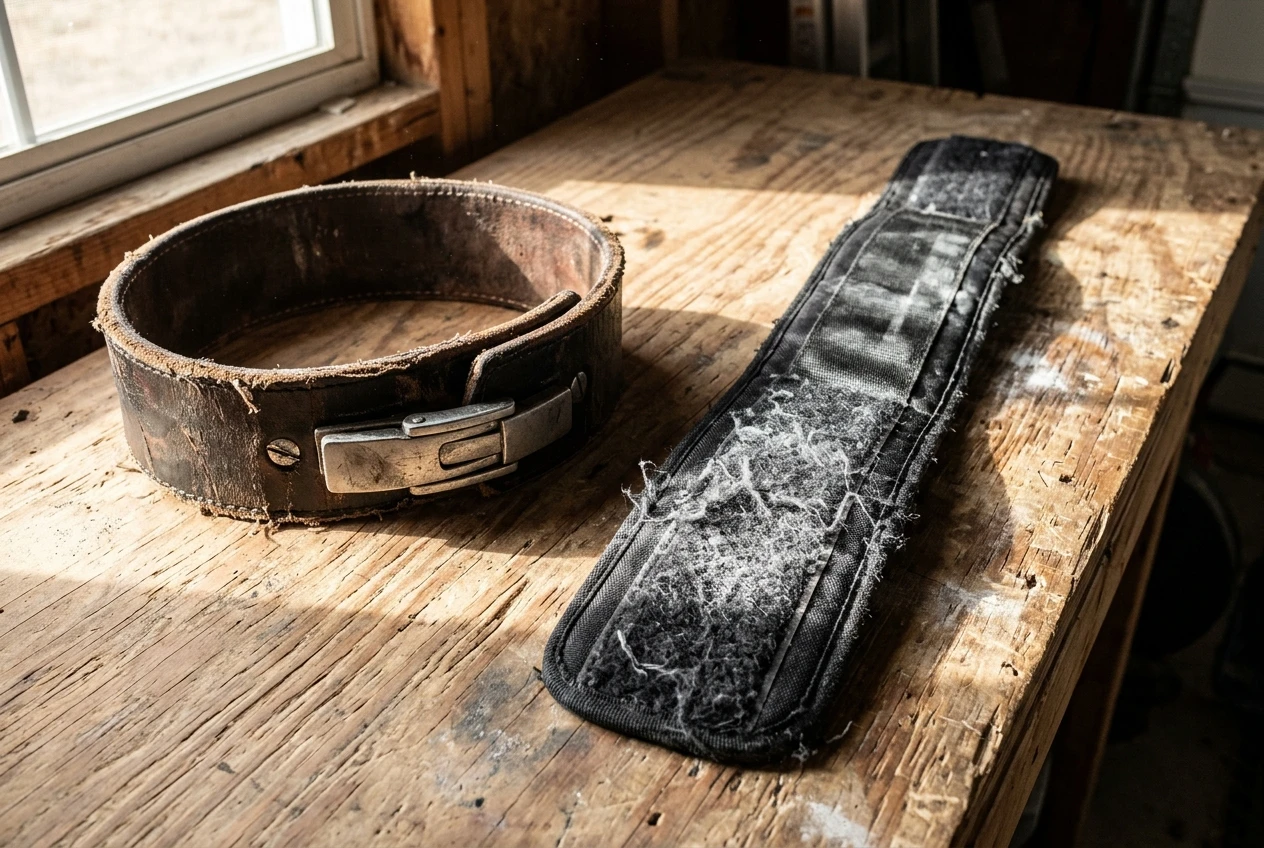
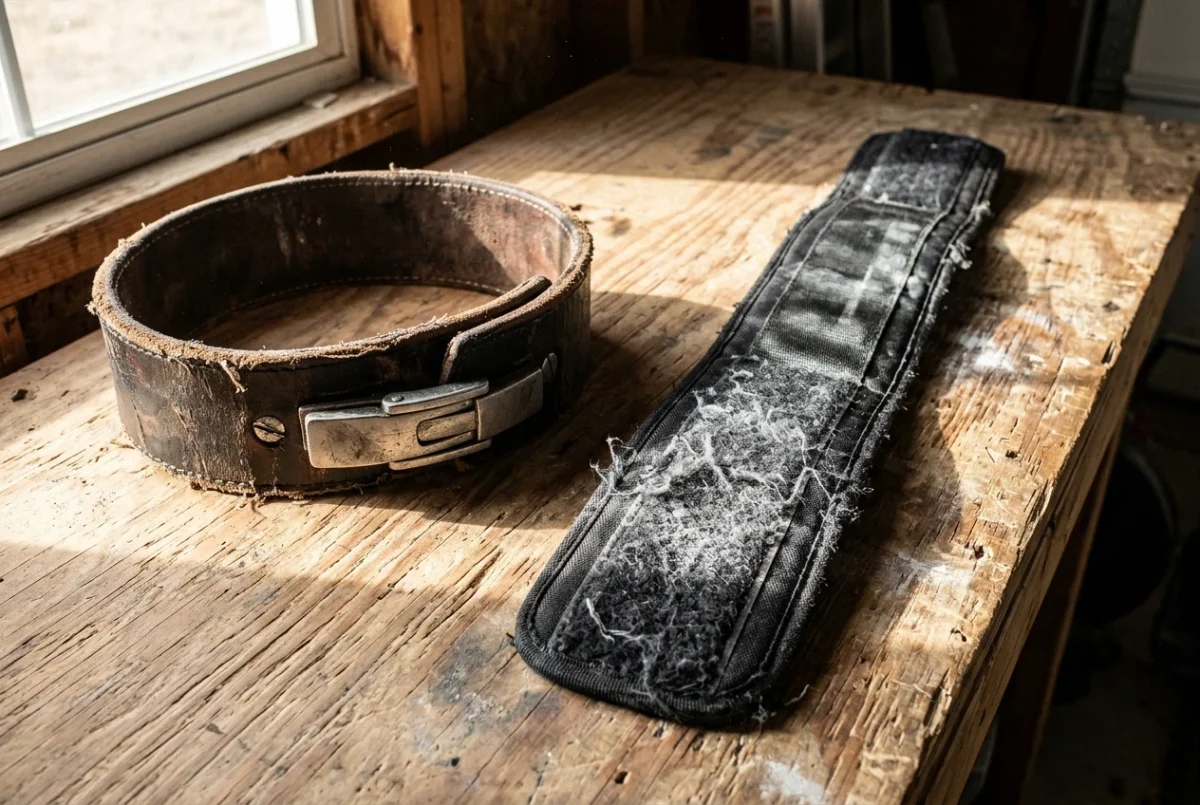
Leather belts. The edges are the first place to look. Repeated flexing and sweat can fray or crack the edge, and a belt that is dry can crack along the folds. Stitching can loosen if the belt is overstretched or if the thread is thin. On a prong belt, the holes can elongate with heavy use. On a lever belt, the lever mechanism and its screws can loosen over time, so check them occasionally.
Nylon belts. The hook-and-loop closure is the common weak point. Lint, chalk and fibers collect in the hooks, and the grip weakens. The edges of the webbing can also fray with time. A belt that cannot hold its tension through a set is a belt that has worn out, however good the rest of it looks.
Hardware on both. Buckles, rollers and D-rings hold up well on most belts, but a cheap one can bend or loosen. Look at them as you would look at any piece of gear that carries load.
In a high-volume week, a closure that is slowly failing is more annoying than one that fails outright. If you notice yourself re-tightening between every set, the closure is no longer working.
Sweat, chalk and storage: the upkeep each material needs if you train often
Frequent training means frequent sweat, and each material handles it differently.
Leather. Wipe it down after sessions, let it dry in open air, and keep it away from radiators and direct heat, which can dry and crack it. Many people condition leather occasionally, but follow the maker’s care instructions for the product you own. Do not leave a damp belt rolled up in a gym bag, because trapped moisture is hard on leather and builds odor.
Nylon. It dries faster and many nylon belts can be washed, though you should check the maker’s instructions, particularly for the closure. Chalk and lint in the hook-and-loop can be picked out with a brush or comb, which restores some grip. Hang the belt to dry rather than leaving it balled up.
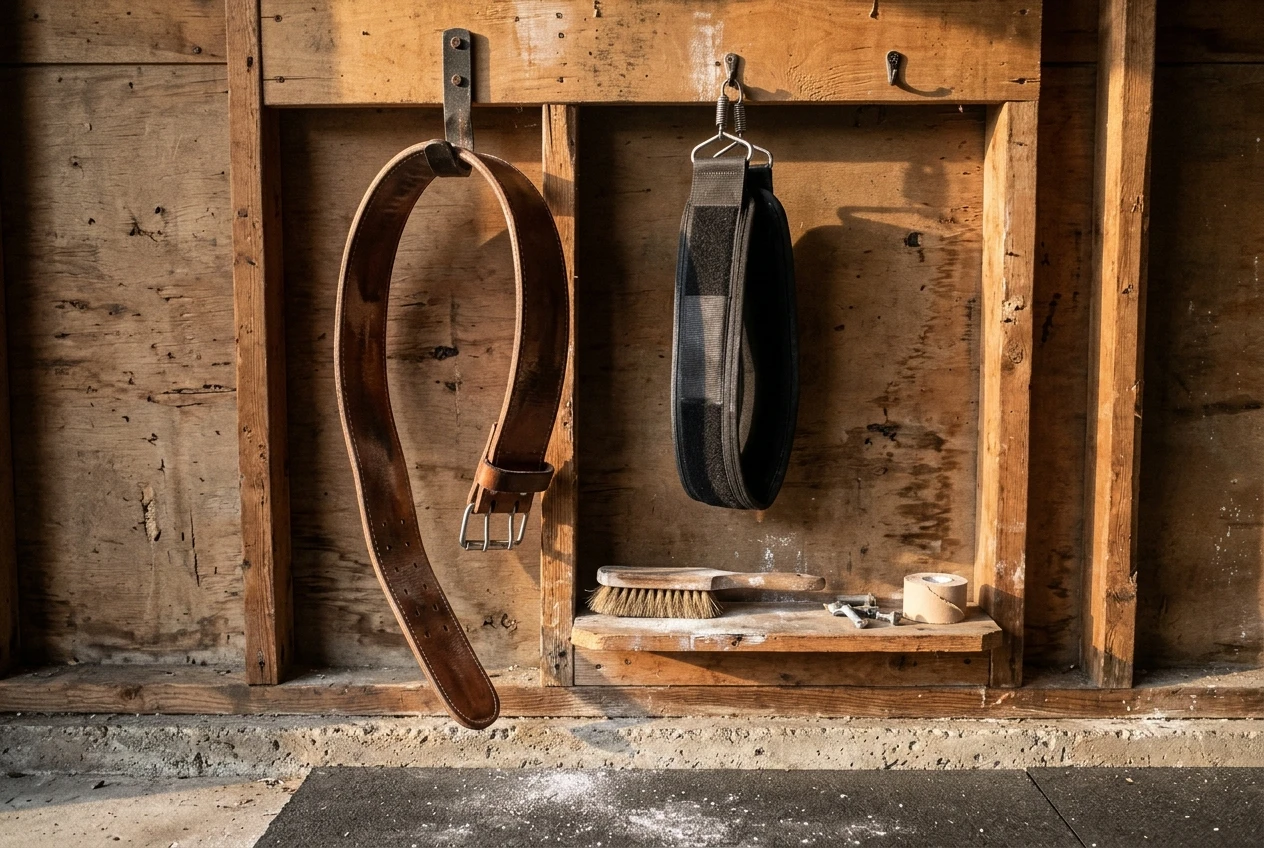
Storage for both. Keep the belt flat or hanging, not folded in a way that creases it. If your gym is a garage or a spare room, a hook on the wall works for either material and lets air reach the belt between sessions.
The same trade-off shows up in lifting straps, where leather and synthetic materials differ in how they wear and how much care they take. The post on leather or synthetic lifting straps goes through that for grip work.
If you train four or five days a week and will not condition a belt, nylon asks less of you. If you will wipe and dry a leather belt after sessions, it can reward the effort with a long working life.
Which lifts and session types in a high-volume week favor which material
Match the material to the demand of each session rather than to the lift’s name.
- Heavy squat or deadlift days with fewer, harder sets. A firm leather belt is the stronger choice, since support at near-maximal loads is the priority and you are not wearing it for long.
- High-rep squat or deadlift volume. If you wear a belt for many sets, a more flexible and breathable nylon belt may let you keep it tightened properly throughout. A leather belt can still work if it has softened and fits well.
- Overhead pressing. Torso position and upward reach matter here, so a belt that does not jab into your ribs when you lift your arms is worth more than extra stiffness.
- Rows and other bent-over work. A belt that moves with your hinge is more comfortable, which usually points to a more flexible band.
- Mixed sessions with many movements. Look for a belt that you can adjust quickly, because you will be changing exercises and tension often.
Which lifts you do most often in a week matters more than which lift you care about most. Count your working sets by type before you choose.
A decision rule: pick by how you train, with a short checklist you can run in the gym
Start with the sets where the belt does the most work. If most of your belted sets are heavy and low in reps, lean toward leather. If most are moderate and high in reps, or you wear the belt through whole sessions, lean toward nylon. If you are unsure, the belt that you will actually keep tightened through every set is the right one.
Run these checks on the belt you own or are considering:
- Set one versus the last set. Does it still feel secure and comfortable after your longest session, or do you loosen it?
- Hinge and reach. Does the edge dig into your ribs or hip in your deepest positions?
- Tension holding. Does it stay tight through a set without you adjusting it?
- Time to adjust. Can you tighten or release it between sets without breaking your rhythm?
- Upkeep. Will you really wipe, dry or clean it on the schedule it needs?
- Wear check. Look at the edges, stitching, closure and hardware. Which has started to go?
If a belt fails two or more of these, it is a poor match for the way you train, whatever its material. Your training age also changes which belt makes sense, and the post on the lifting belt you need at 6 months versus 6 years covers that side of the choice.
Can one belt do it all, or does a two-belt setup make sense?
One belt is enough for many lifters. If you pick the material that matches most of your sets and accept a small compromise on the rest, you get a simpler setup and one belt to care for.
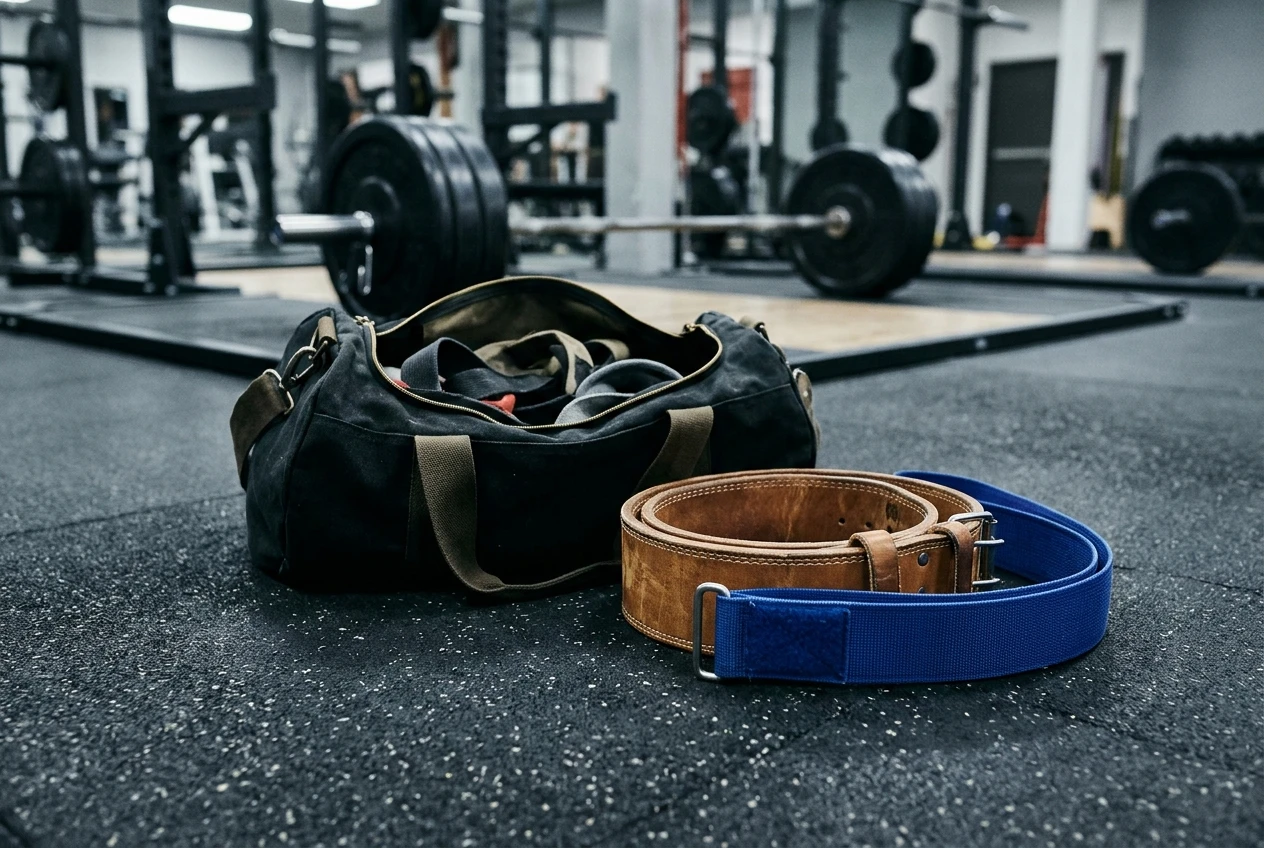
A two-belt setup makes sense when your week has two distinct kinds of work: a few very heavy, low-rep sets, and long sessions of moderate-load volume. A firm leather belt for the first and a flexible nylon belt for the second lets each belt do one job. It also splits the wear between them, so each may last longer. The cost is buying two belts and remembering which one goes with which session.
Material is only part of the choice. Width and closure also decide how a belt fits and feels, and they are covered in the best lifting belt for kettlebell complexes. Check those details against the material before you buy.
If your high-volume weeks also include kettlebell sessions, take a look at kettlebell.monster for guided workouts. This is an affiliate link, so the site may earn a commission if you sign up.