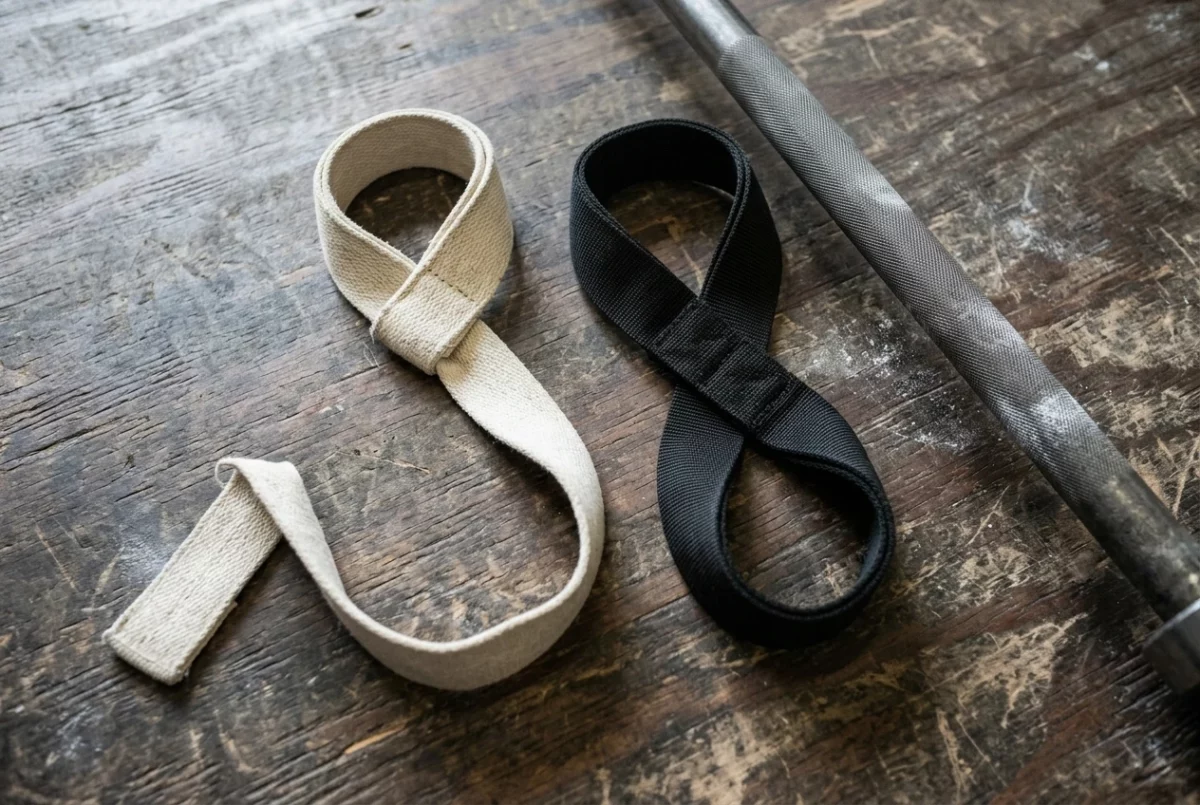
If you have already decided to use straps for heavy deadlifts, the next decision is which kind to buy. The figure 8 straps vs lasso straps question comes down to four things: how fast you can set up, how well the strap holds the bar, how quickly you can get out of it when a pull fails, and how well it fits the way you train. This article goes through each one so you can match a strap to your lifting.
Both types do the same job. They transfer part of the load from your fingers to your wrists and forearms, so grip stops being the weak link before your back and legs are. They differ in how they connect you to the bar, and that connection affects everything else.
Lasso and figure-eight straps in plain terms: how each one attaches to the bar
A lasso strap is a length of material with a loop sewn into one end. You feed the tail through the loop to make an adjustable noose around your wrist, then wrap the tail around the bar and hold it under your hand. The wrap is held in place by tension and by your grip closing over it. Your wrist and the bar are connected by a strap you control with each wrap.
A figure-eight strap is a single piece of material sewn into a closed figure-eight shape, with two loops. One loop goes around your wrist and the other goes around the bar, so the two are linked by a fixed shape rather than a wrap. Because the strap is already a closed shape, there is no tail to wind and no length to adjust once you are in it.
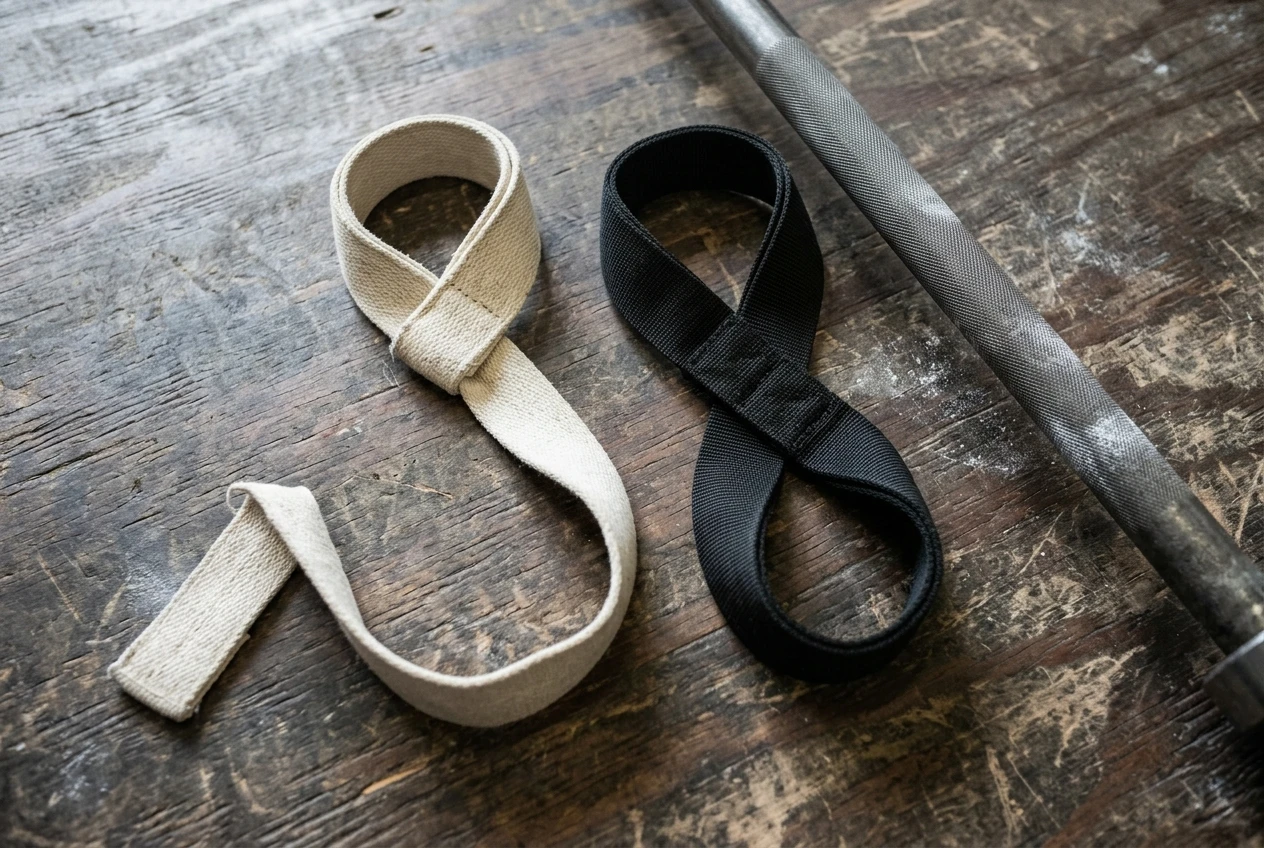
The practical difference follows from that:
- With a lasso, the bar stays attached only as long as the wrap is under tension, and you decide how many turns to take.
- With a figure eight, the bar sits in a closed loop, and the strap stays in place as long as you stay in the loop.
Brands vary in how they design and instruct their versions, so read the instructions that come with your pair and practice with an empty bar before you rely on them.
Setting up each strap, step by step, so you can see where the time and fiddliness go
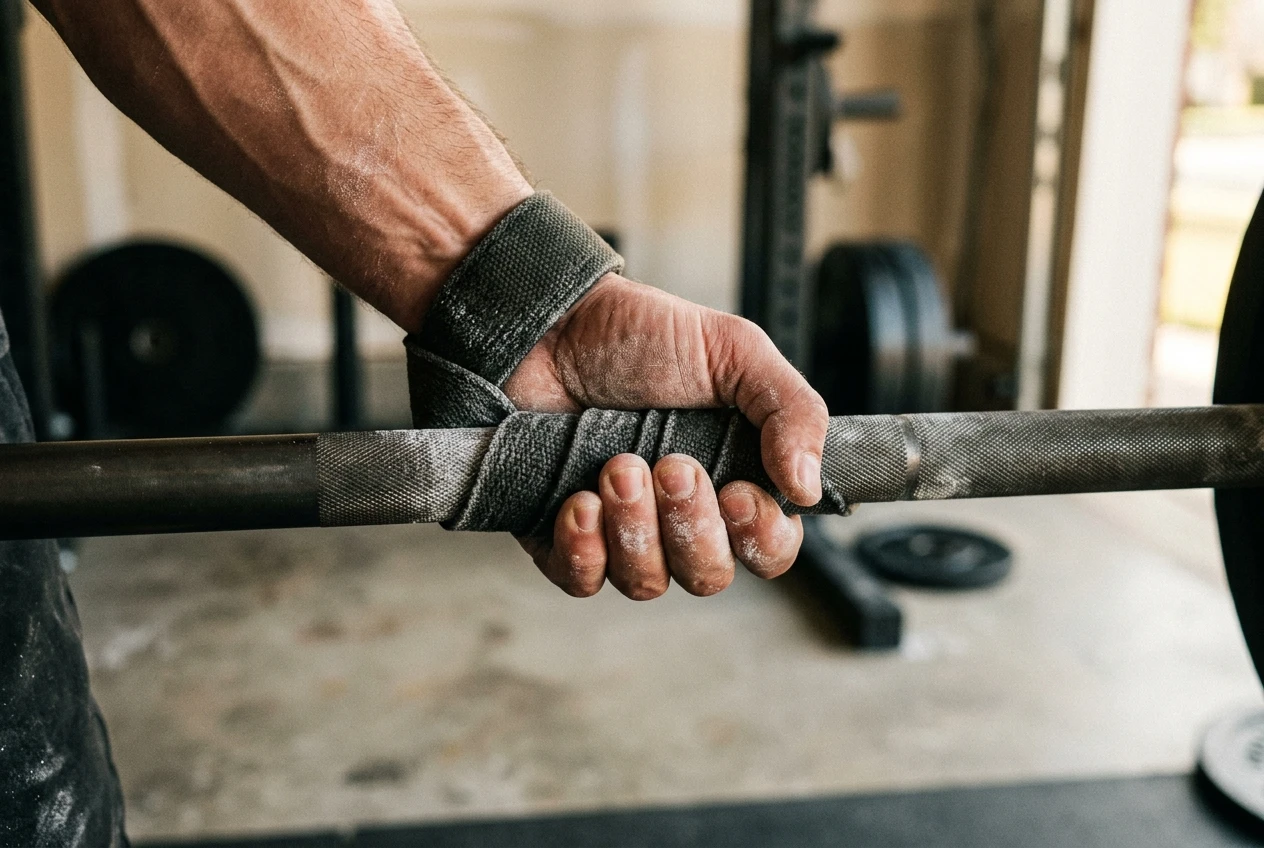
Lasso setup
- Thread the tail through the loop and slide the noose over your hand.
- Tighten it snugly on your wrist, above the wrist bone and below the forearm.
- Place your hand under the bar, bring the tail up and over the bar, and wrap it toward the inside, back toward your thumb side.
- Take one or more turns, keeping the tail flat and tight against the bar, so no slack is left between wraps.
- Close your hand over the wrapped section and the bar together.
Setup is fiddly the first few times, and the fiddly part is the wrap. If the tail twists or slack gets left in the wrap, the strap loosens under load. Many lifters find it takes a few sessions before they do it quickly and the same way every time. You also set up each hand separately, and you do it in the stance you pull from, hunched over a loaded bar.
Figure-eight setup
- Put your hand through the wrist loop.
- Pass the bar through the other loop, as your instructions show.
- Set your grip so the strap sits between your palm and the bar.
- Pull the slack out and lift to put tension on the loop.
There is much less to do, and little room to get the wrap wrong. The fiddly part is different: you need to make sure the loops are the right size for your wrist and the bar diameter, and the first lift can show whether you have the strap seated correctly. If a figure-eight strap is too loose or too long, you cannot tighten it with a wrap. You have to buy another size.
Where the time goes, then: lasso straps cost you time at the bar on every set. Figure-eight straps cost you time once, when you choose the right size. If you move through many sets and several bar types in one session, that difference adds up.
Which one locks the bar in better when the weight gets heavy
A lasso locks the bar in through friction and wrap tension. Each turn adds contact between strap and bar, and the heavier the bar pulls, the more the wrap tightens against it. A well-made wrap can hold very heavy loads, and you control the lock yourself. You can add a turn if the bar is slick or the knurling is shallow, and you can shorten the wrap if you want less hold.
The trade-off is that the lock is only as good as your wrap. A loose first turn, a twisted tail, or a worn strap lets the bar roll in your hand at the point where you need it most.
A figure-eight strap locks the bar in by shape. The bar sits in a closed loop and the loop holds it, and nothing depends on how neatly you wrapped. Many lifters describe this as the more secure feel on a max pull, since once you are set, the bar does not move in the loop. The strap can also stay put on the wrist, which keeps your hand in a consistent position.
The catch is that the lock does not adjust. If the loop is too big for the bar, the bar can shift in it; if it is too small, it can pinch or be awkward to seat. A figure-eight is usually the more consistent hold if the fit is right, and a lasso is the more adjustable hold if you are willing to set it carefully.
For heavy single pulls, where you want the same lock every rep and very little to think about, a well-fitted figure-eight is a reasonable pick. For lifters who change bars, or who want to tune how tight the hold is, a lasso gives more control.
Bailing out and safety: what happens when a pull fails with each type
On a deadlift, a failed pull usually ends with you letting the bar go back to the floor. How easily your hands get out of the strap decides whether that is clean or messy.
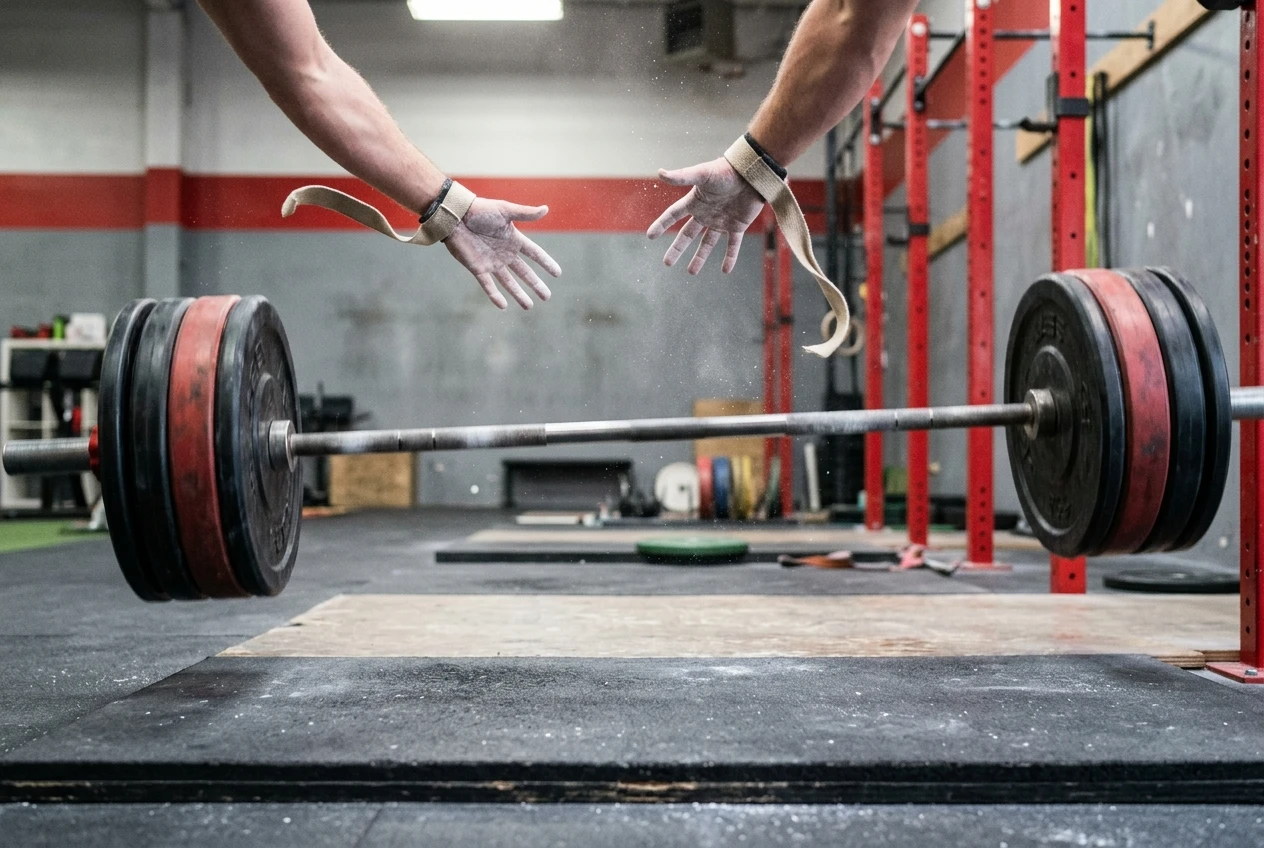
Lasso straps release when you open your hand and the wrap loosens. The tail can unwind as the bar drops, and you can pull your hand back out of the noose. This is the main reason many lifters prefer them for max attempts. They do not release instantly in every case, particularly if the wrap is very tight or your wrist noose is snug, so you need to know how yours behaves.
Figure-eight straps keep your wrist connected to the bar through the loops. Releasing means pulling your hand out of the loop, and if the bar is heavy or your hand is tightly seated, that takes more deliberate effort than opening your fingers. For a conventional deadlift from the floor, where the bar falls only a short distance, many lifters use them with no trouble. The risk grows when the bar can travel further or tip, such as off blocks or in a rack pull, because your wrist stays attached to something that is moving.
Take these steps whichever type you use:
- Practice dropping the bar with light weight until releasing feels automatic.
- Clear the area around the platform and keep your feet out of the bar’s path.
- Do not wrap or loop your hand around the bar in a way that would trap it if the bar rolled.
- If you pull in a rack or from blocks, think carefully about which strap lets you exit fastest.
If bailing out cleanly is your top concern, the lasso has the advantage. That advantage depends on a wrap that releases when you want it to.
Fit, material and stitching: what to check before you buy any pair
Whichever style you choose, the pair has to be built well. These checks apply to both:
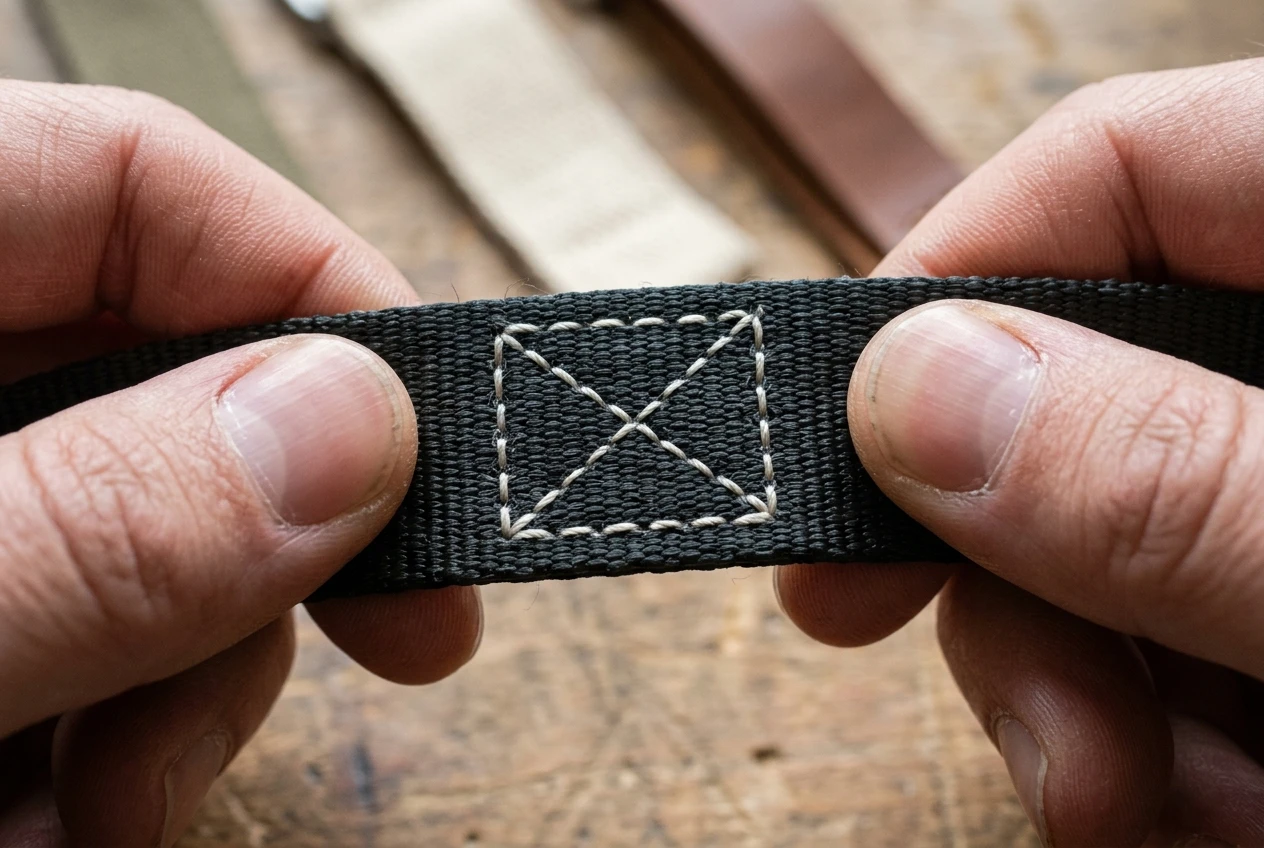
- Stitching. Look at the seams that carry the load, particularly around the loop. Dense, reinforced stitching is a good sign. Loose or single-line stitching at the stress points is a reason to skip the pair.
- Material. Cotton, nylon and leather all get used. Cotton grips the bar well and has some give, nylon is slicker and often lasts longer, and leather is stiff when new and softens with use. Pick the one you find comfortable and that grips the knurling reliably.
- Width and thickness. A wider strap spreads pressure across the wrist and bar. A thin strap can dig in. A thick strap can be hard to wrap on a lasso.
- Length (lasso). The tail must be long enough for several turns around the bar, with some left over. A short tail limits you to one turn.
- Loop size (figure eight). Check that the wrist loop fits your wrist comfortably and that the bar loop suits a standard barbell. A loop that is too tight is hard to enter, and one that is too loose lets the bar move.
- Wrist padding. Some straps have padding at the wrist. This helps if the strap bothers your skin on high-rep or long sessions.
- Care. Straps wear out. Check them regularly for fraying or stretching, and replace a pair that shows it, especially one you rely on for heavy pulls.
Test the pair with an empty bar before you load it, and then work up in small jumps.
Which strap suits which lifter: beginners, home gym lifters, and heavy single pullers
Beginners. The lasso is the usual choice, mainly because it is easy to let go of and easy to adjust. The wrap takes some practice, but an empty bar and light weights are the right place for that. A beginner is also more likely to miss lifts or want to drop the bar, so release matters more than speed.
Home gym lifters. If you train alone, bailing out cleanly matters because nobody else is there. A lasso fits that need. If you use one bar and one setup, though, a well-fitted figure-eight saves time on every set and adds consistency. Think about your setup: a platform with room to drop the bar favors either type, while a tight space makes a clean release more valuable.
Heavy single pullers. Lifters working up to a max with few reps often want the most dependable lock and the least to manage at the bar. A figure-eight is a good fit there, provided the pull is from the floor and you have practiced getting out of it. Others stay with lasso straps because they trust a release they control. Neither is wrong, and your choice depends on which risk you would rather manage.
Lifters who do high-rep or volume work. Setup repeats each set, so the quicker setup of the figure-eight pays off. A lasso is workable if you build the wrap into your routine.
If you are still undecided, a short rule: choose the lasso if clean release and adjustability matter most, and choose the figure-eight if consistency and fast setup matter most.
How to train grip alongside straps so they don’t become a crutch
Straps take load off your hands, so your grip gets less work. Without a plan for that, grip can fall behind the rest of your pulling. A few habits keep it up:
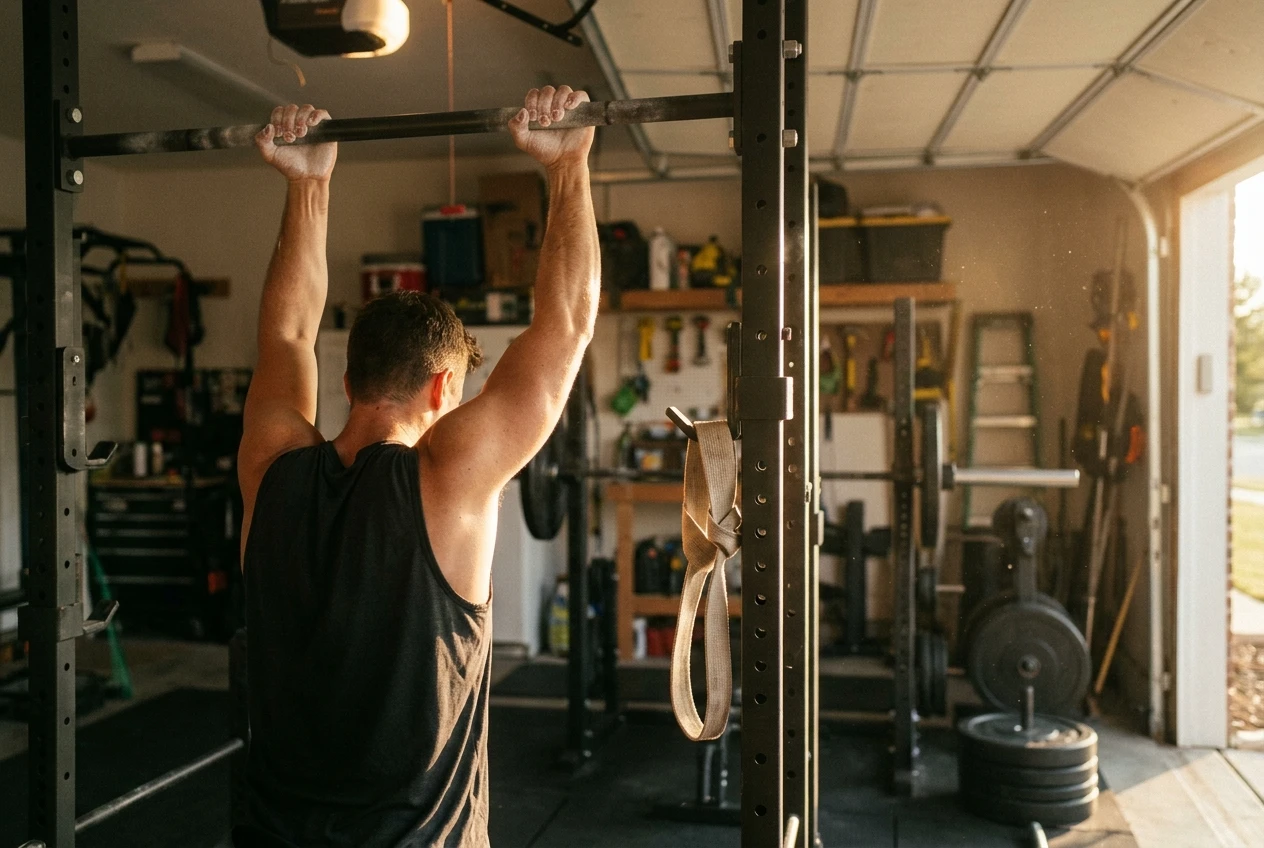
- Use straps on your heaviest sets only. Warm-up sets and lighter work can go without, so your hands still handle real loads.
- Pull double overhand for as long as you can. Switch to straps when the grip would otherwise end the set early, not at the first sign of effort.
- Add direct grip work. Dead hangs from a bar, farmer’s carries and holding the bar at the top of a pull for a few seconds all train the hands without needing a heavy deadlift.
- Try a mixed or hook grip on some work. These grips hold more than double overhand, and they let you train grip with heavy weights.
- Keep records. Note when you used straps and when you did not, so you can see whether your unstrapped numbers are staying level or slipping.
Straps help you train your back and legs harder, and the grip work keeps your hands in step with them.
Once you have chosen, the next piece of gear to look at is a belt. Pair your straps with the right belt: read Lever or Prong Belt for Your Home Gym? How to Choose in 2026.