Bands are useful for powerlifters, but only for specific jobs. Most of the sets sold as the best resistance bands for powerlifting include far more pieces than a squat, bench and deadlift block will ever use. This guide sorts bands by the work they do in an accessory block, so you can buy two or three types and skip the rest.
What bands can and cannot do for a powerlifter
Bands do three things well. They load small muscles that are hard to train heavy, such as the glute medius, rear delts and rotator cuff. They give you a way to train the same movement pattern anywhere, with no plates to load. And they add resistance that rises as the band stretches, which suits some movements, particularly the top half of a hip hinge.
They do not replace the main lifts or the heavy accessories. A band’s resistance changes through the range of motion, and it is hard to measure and hard to raise by small, repeatable amounts. Progressive overload is the reason you train, so that matters. If your goal is a bigger squat, bench or deadlift, the barbell is still where most of the work happens.
Keep these jobs for barbells and dumbbells:
- Heavy rows, such as barbell, chest-supported or one-arm dumbbell rows, where you want to add weight every few weeks.
- Close-grip bench, dips and overhead pressing for triceps and shoulder strength.
- Romanian deadlifts, lunges and split squats with real load for hips and quads.
Use bands for the work around those lifts: warm-ups, higher-rep isolation, shoulder maintenance, and training when you are travelling or have no rack.
The four band types and the accessory job each one fits
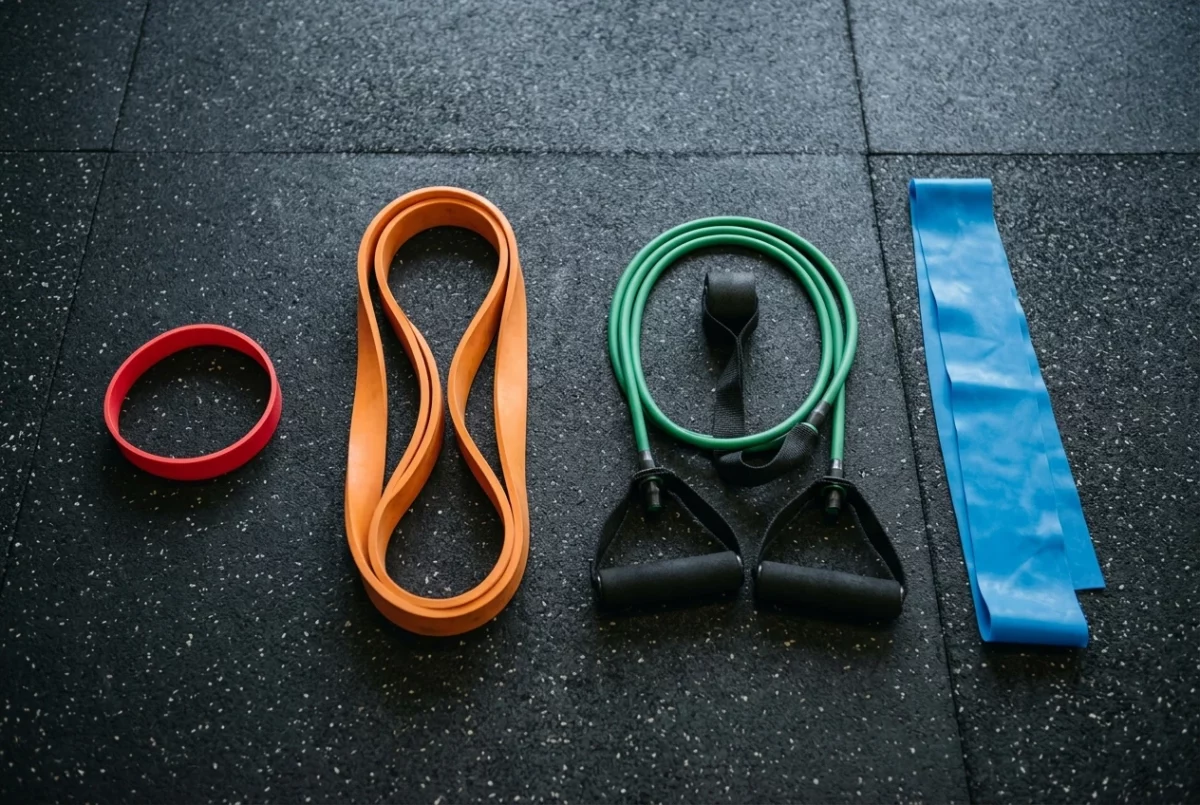
Resistance bands come in four main forms. Each does a different job, and few lifters need all four.
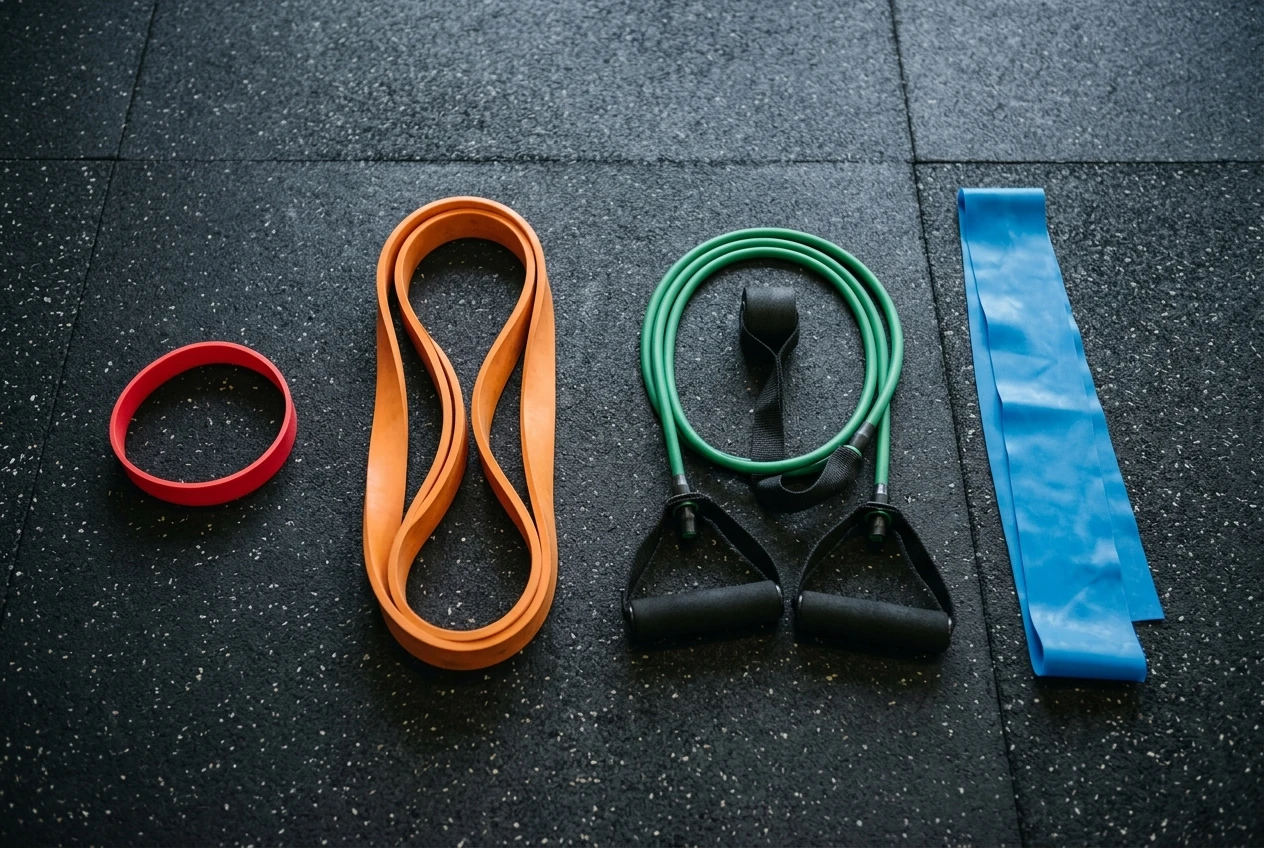
- Mini loop bands. Small, closed circles of flat elastic, worn around the thighs, knees or ankles. They train hip abduction and glute activation.
- Long loop bands. Large, continuous loops, usually thick and flat, sold in several widths. They suit pull-throughs, band-resisted bar work, pull-aparts with heavier tension and assisted pull-ups.
- Tube bands with handles. Round tubing with a handle at each end, often sold with a door anchor. They suit triceps pushdowns, face pulls, rows and straight-arm pulldowns because the handles are easy to grip and the anchor holds the band at a set height.
- Flat therapy bands. Thin strips of elastic with no handles, usually light. They suit shoulder warm-ups, external rotations and band pull-aparts, where you want low resistance and many reps.
If you can only buy one type, tube bands with handles cover the most upper-body accessory work. Mini loops are the cheapest way to cover hips. Long loops are worth adding if you want heavier hinge work or band-resisted bar work.
Bands for squat support: glutes, hips and knee tracking
Squat accessory work with bands mostly means hip abduction and glute work. A mini loop above or below the knees gives your hips something to push against, which makes warm-up sets feel more stable. Banded squats with a light loop are a good way to practise pushing the knees out in line with the toes.
Treat that as a cue, not a fix. A band can teach you what knee tracking feels like, but if your knees cave under a heavy bar, the cause is usually foot position, mobility, or a load that is too heavy for the day. A band will not solve any of those.
Useful squat-day band movements:
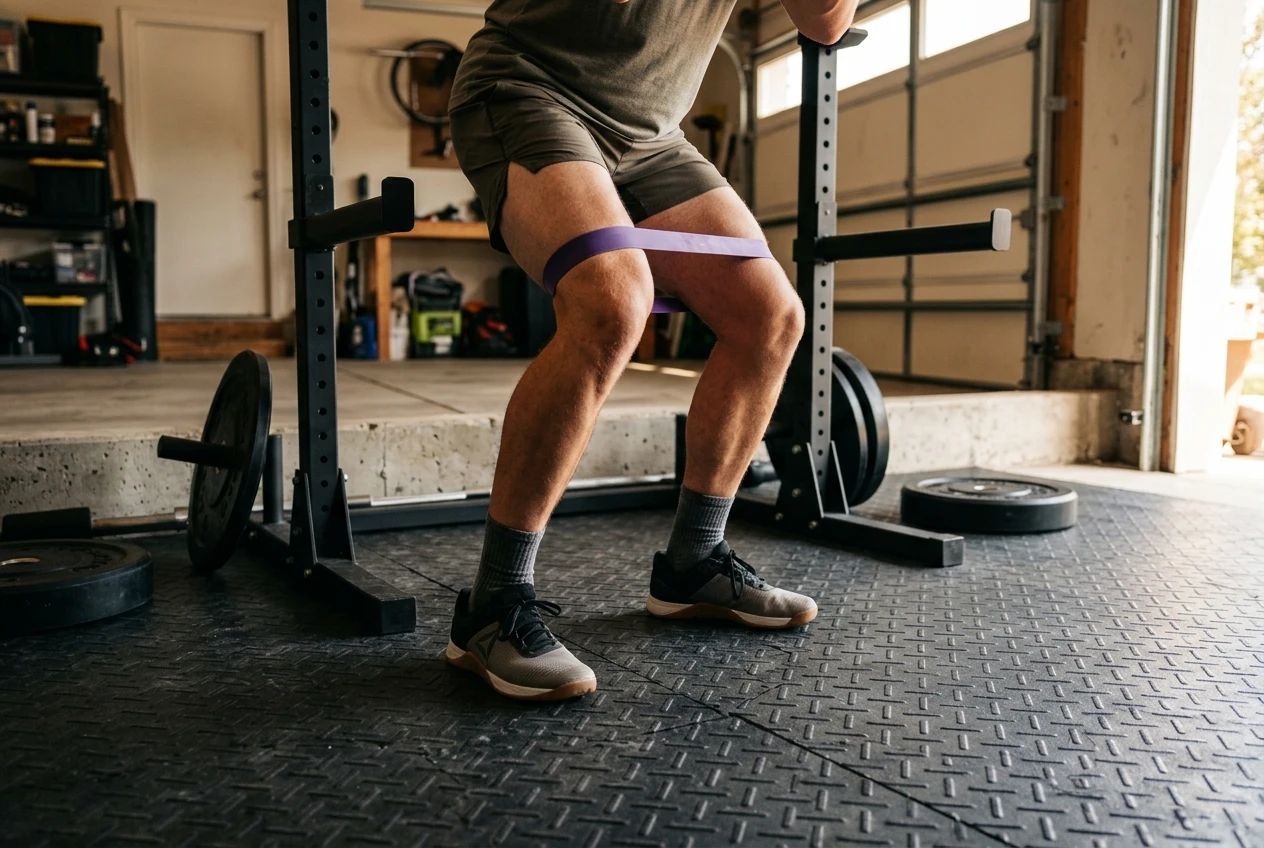
- Lateral band walks with a mini loop around the thighs or just above the knees, for glute medius work.
- Banded glute bridges, with the loop above the knees and a pause at the top.
- Banded hip abduction while seated or lying on your side, higher reps, light tension.
- Long loop pull-throughs, with the band anchored low behind you, to practise the hip hinge and glute lockout.
Do these in the warm-up before squatting or at the end of the session when your legs are tired. A set of 15 to 25 slow reps is enough to feel it. Heavy leg work still belongs to the barbell, with split squats, leg press and Romanian deadlifts for the rest.
Bands for bench support: triceps, rear delts and shoulder health
The bench press asks a lot of the triceps, front delts and chest, and it leaves the upper back and rear shoulder under-trained if you only press. Bands are a good fit for the rear shoulder and triceps work that supports a heavy bench.
Tube bands with handles are the most practical choice here:
- Triceps pushdowns. Anchor the band above head height, keep your elbows pinned and finish with full extension. Band tension is highest at lockout, which is where a bench press often fails.
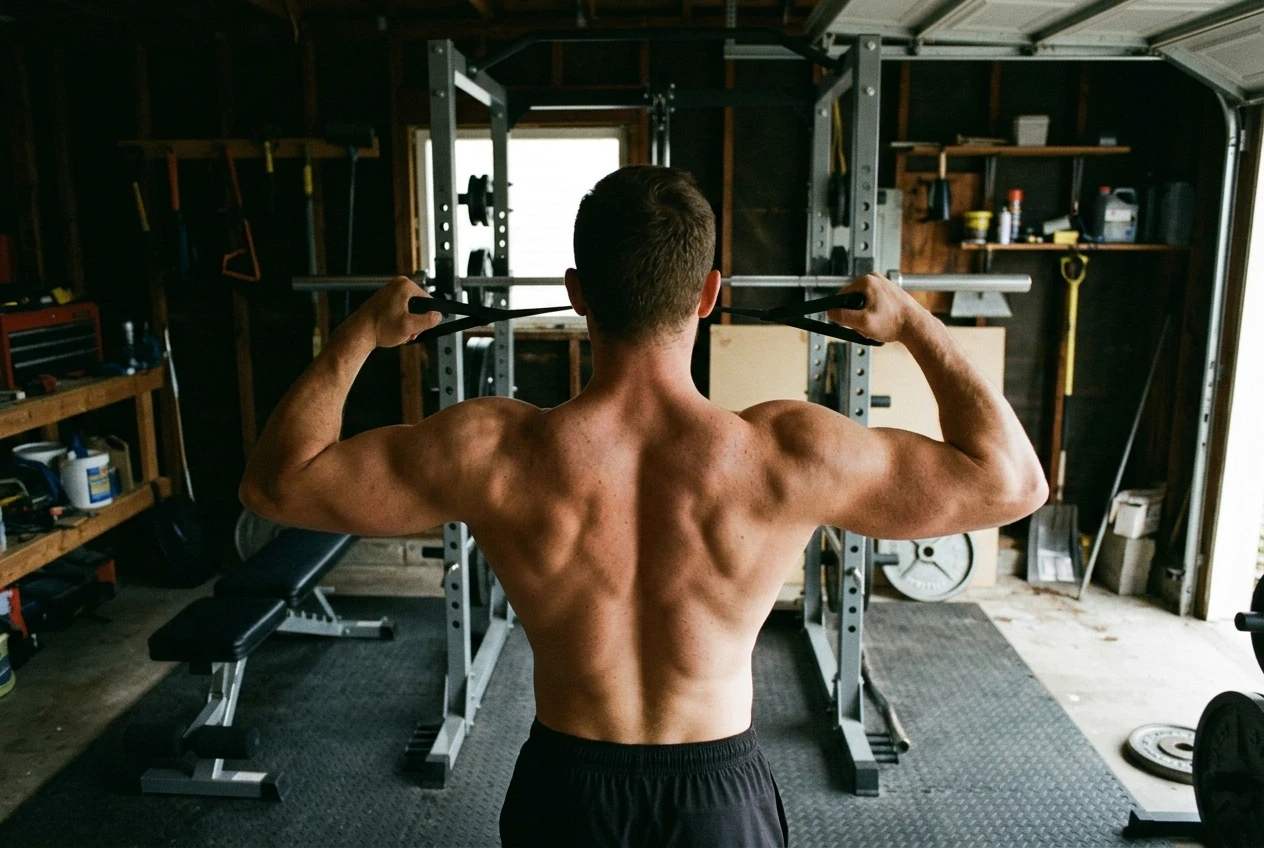
- Face pulls. Anchor at face height, pull toward your forehead and turn your hands outward at the end. This works the rear delts and the muscles between the shoulder blades.
- Band pull-aparts. Hold a flat or light tube band at chest height and pull it apart with straight arms. Done for 20 to 30 reps, they work well as a shoulder warm-up before pressing.
- External rotations. With a flat therapy band and your elbow at your side, rotate the forearm outward slowly. Use the lightest band you have.
For shoulder health, choose light tension and high reps, and stop each set before form breaks down. A heavy band does not make these movements more useful. It makes the bigger muscles take over from the small ones you are trying to train.
Do not replace close-grip bench, dips or dumbbell pressing with banded versions. If your triceps are the weak link in your bench, heavier pressing variations with a barbell or dumbbells will build strength faster than bands can.
Bands for deadlift support: lats, upper back and lockout
A deadlift pull depends on keeping the bar close and the upper back tight, then finishing with the hips. Bands cover two of those jobs well: lat and upper back work, and hip lockout.
For lats and upper back:
- Straight-arm pulldowns. Anchor a tube band overhead, hold the handles with straight arms and sweep them down to your thighs. This teaches you to feel the lats pulling the bar into your body.
- Band rows. Anchor at chest height, sit or stand, and row with a pause at the end. These suit higher-rep sets after your heavy work.
- Band pull-aparts and face pulls. The same movements from bench day also train the upper back, so one set of habits covers both lifts.
For lockout:
- Band pull-throughs. A long loop anchored low behind you, or a tube band looped around a sturdy base, lets you hinge and drive the hips forward against rising tension. This trains hip extension at the top of the pull without loading the lower back much.
- Banded glute bridges and hip thrusts. Tension peaks at the top, where you want the glutes working hardest.
Bands are less useful for the heavy pulling that builds deadlift strength. Barbell rows, dumbbell rows, rack pulls and Romanian deadlifts let you track load and add weight in small increments. Bands are a supplement to that work.
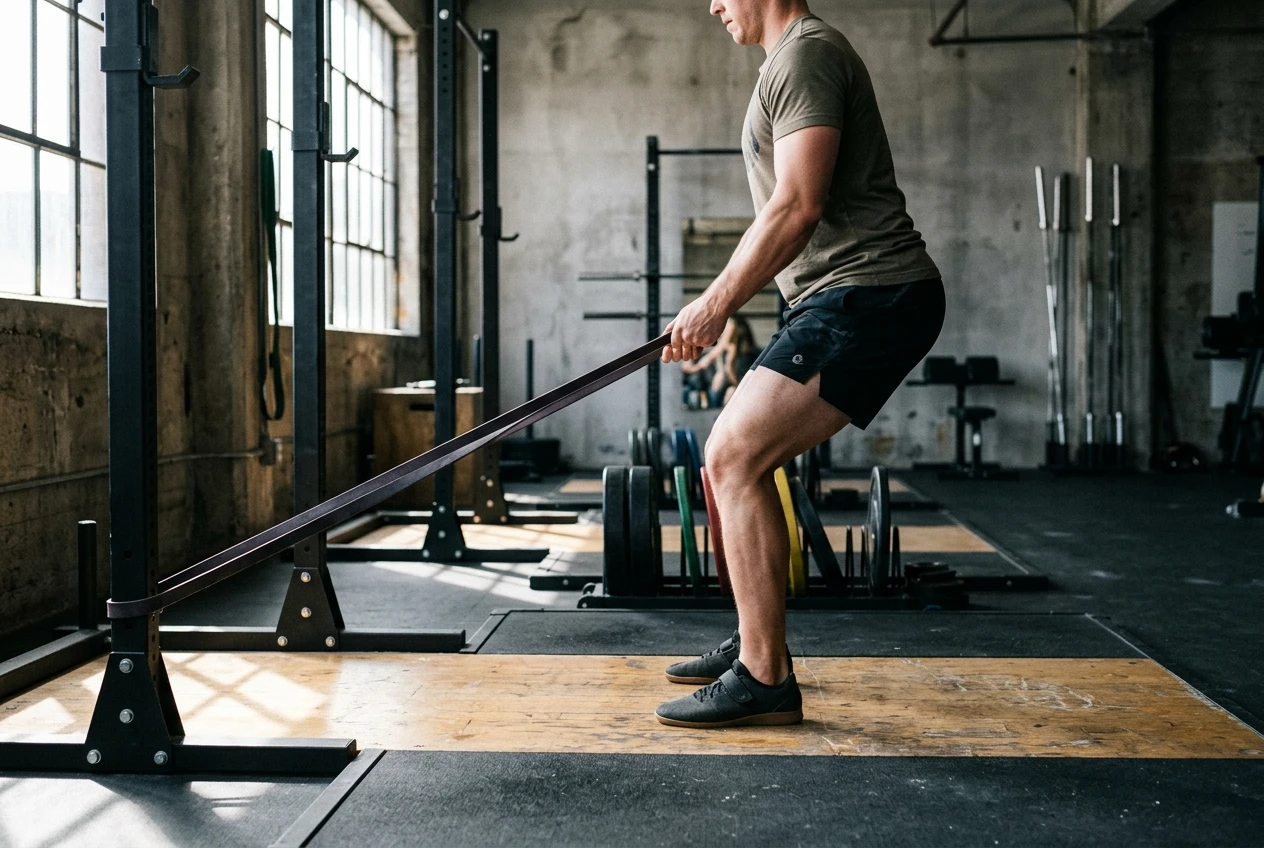
Using bands for explosive work without wrecking your main lifts
Bands also suit light explosive work: fast hip extension, jumps and speed reps that train how quickly you produce force. This work is hard on the nervous system and joints even with light resistance, so it needs a plan.
Some options:
- Banded broad jumps or squat jumps with a mini loop above the knees, for a few low-rep sets with full recovery between them.
- Fast band pull-throughs, driving the hips through with a sharp finish rather than a slow grind.
- Speed-focused hip hinge work, where the lift up is fast and the lowering is controlled.
Keep the volume low. A few sets of three to five reps is plenty, and stop when the reps slow down or lose their crispness. Place explosive work early in a session or on a separate light day, so fatigue does not carry into a heavy squat or deadlift. If your main lifts feel worse the next day, reduce the sets or the tension.
Explosive work done sloppily is not training power, it is just fatigue. Quality of each rep matters more than the number of reps.
How to check a band before you buy
Many bands look the same in a product photo. Check these four things before buying.
Width and thickness. Within a given style of band, a wider or thicker band gives more resistance. Sets usually include several levels, and you will want more than one: light for shoulders and rotator cuff work, heavier for hips and pull-throughs. A single band rarely fits every movement.
Length. For loop bands, the circumference decides what you can do with them. A long loop has to go around a rack upright, your feet or your hips. A mini loop has to sit around your thighs without rolling. For tube bands, check that the length lets you reach your working position from the anchor point.
Anchors. Tube bands need something to attach to. Check whether the set includes a door anchor, and whether your door is sturdy enough to hold it. A rack upright, a heavy post or a squat stand is a more secure anchor. Never anchor to anything that can swing, slide or has a sharp edge.
Wear. Inspect every band before each session. Look for nicks, cracks, thin spots, sticky patches and visible stretching, and replace a band that shows any of them. Rubbing against rough surfaces damages bands faster, and so do heat and sunlight. If you are sensitive to latex, check the material listed before you buy. Store bands out of direct light and away from sharp edges.
Choose a set with clear resistance labels and replaceable parts, such as handles and anchors, so you can replace a single worn piece instead of the whole set.
Where bands sit next to your belt and straps in a small home kit
A small home setup for powerlifting accessory work needs a few items, and each has a different job. A belt supports heavy squats and deadlifts by giving your abs something to brace against. If you are deciding between types, the guide on choosing a lever or prong belt for your home gym covers the differences. Straps take the grip out of heavy pulls so your back and hips can do the work. Bands handle the small-muscle work that those two pieces of gear do not.
A sensible starting kit looks like this:
- One set of mini loop bands for hips and warm-ups.
- One set of tube bands with handles and an anchor for triceps, rear delts and lats.
- Optionally, one long loop band for pull-throughs and explosive hip work.
Skip flat therapy bands unless you have a specific shoulder routine to follow. A light tube band will do most of the same jobs. Spend the money you save on the barbell and dumbbell work that carries your heavy training.
If you want a structured way to add explosive hip work next to your bands, the Kettlebell Monster review covers what the program teaches and whether it fits an accessory block. Affiliate disclosure: this site earns a commission on some products and programs it recommends.