
Searching for a kettlebell monster review usually means one question: is this program worth paying for, and will it work on the screen you actually have? This review answers it by the two things a buyer can weigh before spending anything. The first is how the curriculum is built. The second is whether the Samsung Tizen TV app makes following along better than a phone or laptop.
The program’s own pages are the source for exact contents, prices and device support, so this article does not repeat them from memory. It gives you the criteria to hold those pages against, and a verdict that depends on what you find.
The short verdict: who Kettlebell Monster suits and who should skip it
Kettlebell Monster is worth a serious look if you fit this description:
- You own a kettlebell, or you are about to buy one, and you want a ready-made sequence of workouts instead of building your own.
- You prefer following video to reading a written plan.
- You train at home, and a TV in the room where you train is easier to follow than a phone on a shelf.
- You are a beginner or early intermediate lifter who wants someone else to decide what comes next.
Skip it, or at least wait, if you want to follow a barbell strength plan, if you already write your own kettlebell programming comfortably, or if you do not own a Samsung TV and the TV app is the main reason you were interested. The TV app is a Samsung Tizen app, so it only helps on Samsung sets.
The verdict is conditional because a program like this earns its price on the details: how the weeks are ordered, how it teaches form, and whether the app runs well on your particular TV. The sections below show how to check each one.
What you actually get: how the program is laid out week to week
A video-led kettlebell program should answer four layout questions in plain terms before you pay. Find the answers on the program’s page, and treat any that stay vague as a warning.
How long is the sequence? A defined run of weeks gives you a start and an end. An open-ended library of workouts leaves you to decide what to do each day, which is the problem you are paying to avoid.
How many sessions per week? Check this against your real schedule. A plan that expects five sessions a week fails a person who has three free days. For most people building strength, consistency across a few sessions a week beats an ambitious schedule they abandon in week three. If you want to think through frequency first, the principle is that the number of sessions you can repeat every week matters more than the number that looks best on paper.
How long is each session? Look at the stated length and add warm-up and setup time. A 30-minute workout in practice takes closer to 45 once you have cleared floor space and fetched the bell.
Is there a rest day structure? Kettlebell work is demanding on the grip, the hips and the back of the body. A program that spreads hard days apart is built with recovery in mind.
Also check what comes with the purchase beyond the workout videos. Some programs add a written guide, a progress tracker or a community. Whether any of those matter to you depends on how you like to train, but you should know what is included before you compare prices.
The curriculum up close: movements covered, progression and where it asks the most of you
Kettlebell training rests on a small set of movements, and a curriculum can be judged by how it orders them. The core patterns are:

- The hip hinge and the swing, which train the glutes, hamstrings and back, and which most programs treat as the foundation.
- The goblet squat, a front-loaded squat that teaches depth and an upright torso.
- The clean and the press, which bring the bell to the shoulder and then overhead.
- The Turkish get-up, a slow, multi-stage movement that rewards shoulder stability and patience.
- The snatch, a fast overhead lift that is usually saved for later because it is technical.
A sensible order for a beginner starts with the hinge and the squat, adds the swing once the hinge is reliable, and brings in cleans, presses and get-ups afterward. Snatches belong late in the sequence. When you read the program’s outline, check whether it follows that kind of order. A program that opens with snatches in the first week, for a viewer who has never held a bell, would be a red flag.
How progression should work
A kettlebell does not come in small increments the way a barbell with plates does, so progression has to come from other places. Look for these in the curriculum:
- More repetitions or rounds of the same movement.
- Shorter rests between sets, so the same work takes less time.
- A harder variation, such as moving from two-handed swings to one-handed swings.
- A heavier bell, which usually means you will buy a second one eventually.
If a program shows progression in at least two of these ways, it has a real structure. If every week looks like the last one with a new name, you are buying variety, not progress.
Where it asks the most of you
The demanding points in any kettlebell program are predictable: the first weeks of swing practice, where the hinge has to be learned, and the overhead movements, where shoulder mobility limits what you can do safely. Read the introduction and the early weeks to see how much time the program gives to those. Mistakes in the swing are the most common problem, and a beginner who rushes it tends to squat the movement or lift with the arms. It helps to read about common kettlebell swing mistakes before you start, so you know what to look for in your own reps.
Training with the Samsung Tizen TV app: setup, following along and what changes on a big screen
Tizen is the operating system on Samsung smart TVs, so the Kettlebell Monster TV app is for Samsung owners. A Sony, LG or Fire TV owner cannot use it, and should plan on a phone, laptop or screen mirroring instead.
Before buying, confirm these points on the listing:
- Which TV models and years are supported. Tizen has changed across Samsung model years, and an app built for newer sets may not run on an older one.
- How you get it. Check whether it is installed from the TV’s own app store or set up another way, and whether it is bought separately from the main program.
- Whether it needs an account sign-in on the TV, and how you enter your details with a remote.
What a big screen changes
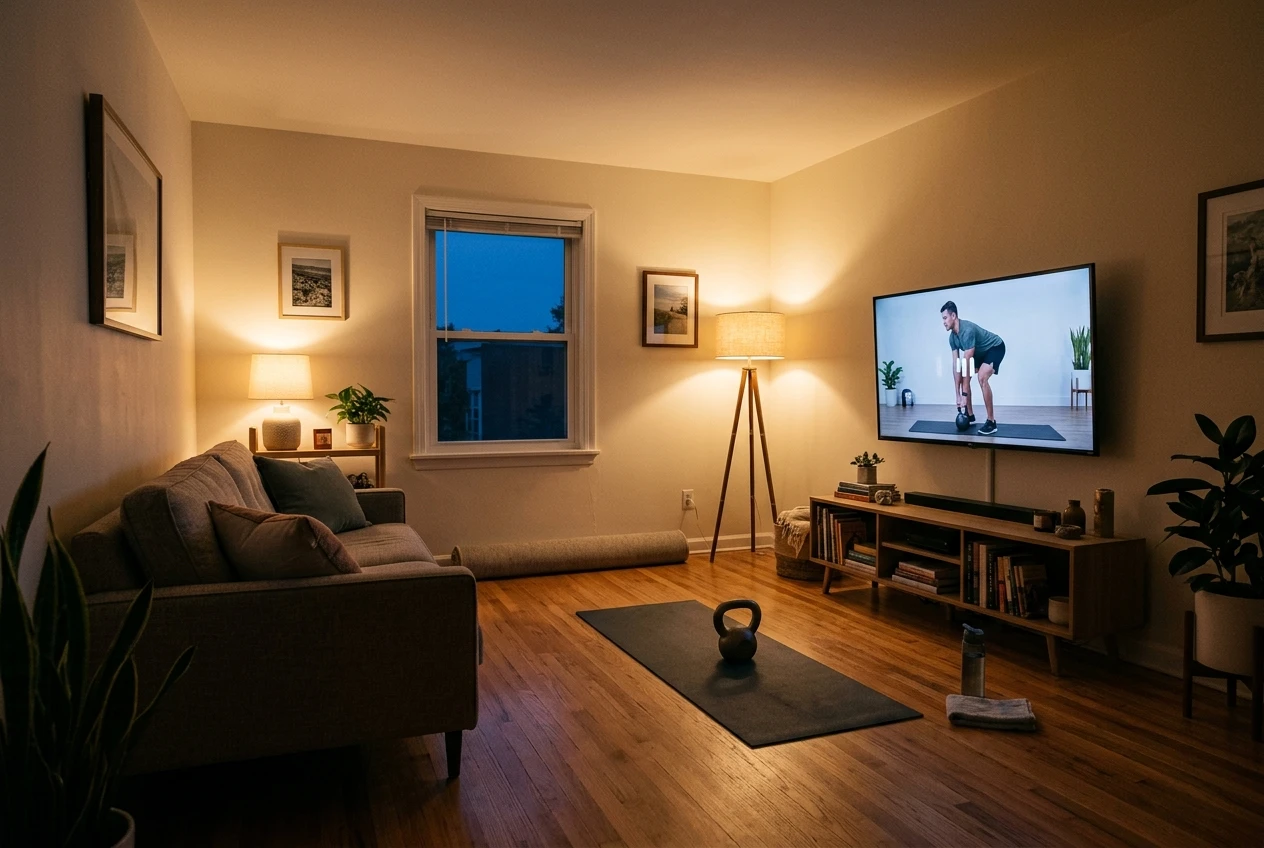
The practical advantages of a TV over a phone are easy to name. Movement demonstrations show at a size where you can see the position of the hips and the back, and you can follow from a few steps away, which a phone propped on a chair does not allow. Your hands stay free to hold the bell, so nothing needs touching mid-set.
There are also things the TV does not solve. Navigating with a remote while out of breath is awkward, so check whether the app lets you pause, resume and skip ahead easily, and whether it remembers where you stopped. Look at whether the video follows the workout in real time or has timers on screen. A workout you can follow without touching the remote is a better workout.
Safety and space
Place your training spot so the bell swings away from the TV, with clear floor on every side. A kettlebell that slips mid-swing travels farther than you expect. Mark out a spot with enough room behind you and keep a few steps between you and the screen. If your living room cannot offer that, the TV app’s advantage disappears.
Where it falls short: gaps, who will outgrow it, and what to check before buying
Every program has limits, and some are built into the format. A recorded video cannot see your form. It shows you a correct swing, and you have to judge whether yours matches. Before paying, look for any way to get feedback, such as a place to submit videos or ask questions. If there is none, plan to film yourself from the side and compare your hinge to the demonstration.
Other gaps to check:
- One bell may limit progression. If the plan expects you to move to heavier or lighter bells over time, the cost of the second bell belongs in your budget.
- Kettlebell work trains certain things well and others less so. Swings and get-ups build hip power, grip and trunk strength. If your goal is a heavy barbell squat, deadlift or bench press number, a kettlebell program is a supplement to that goal and a poor replacement.
- You can outgrow it. Once you can swing, clean and press comfortably and you want to design your own training, a fixed program becomes less useful. Check how long the plan runs and whether it gives you a next step.
- The TV app only helps on Samsung sets. For everyone else the extra value is zero.
Finally, read the refund or guarantee terms yourself, and look for current pricing on the program’s page. Prices and policies change, and no review should be the place you read them.
Kettlebell Monster against a DIY plan: cost of your time, structure and form feedback
A free plan assembled from articles and videos can work. The comparison comes down to three things.
Time. A DIY plan costs hours up front: choosing movements, deciding sets and reps, and working out progression. A paid program turns that into money. If your hours are scarce and the price is reasonable, paying for structure is a fair trade. If you enjoy planning, or you already know how to build a week of training, that time is not a cost to you.
Structure. Free material tends to be scattered. You can find a good swing tutorial and a good get-up tutorial and still not know how to combine them across a week. A program supplies the order. A written plan can supply it too, such as a 12-week strength training structure that sets out what to do and when, and it costs nothing but your attention.
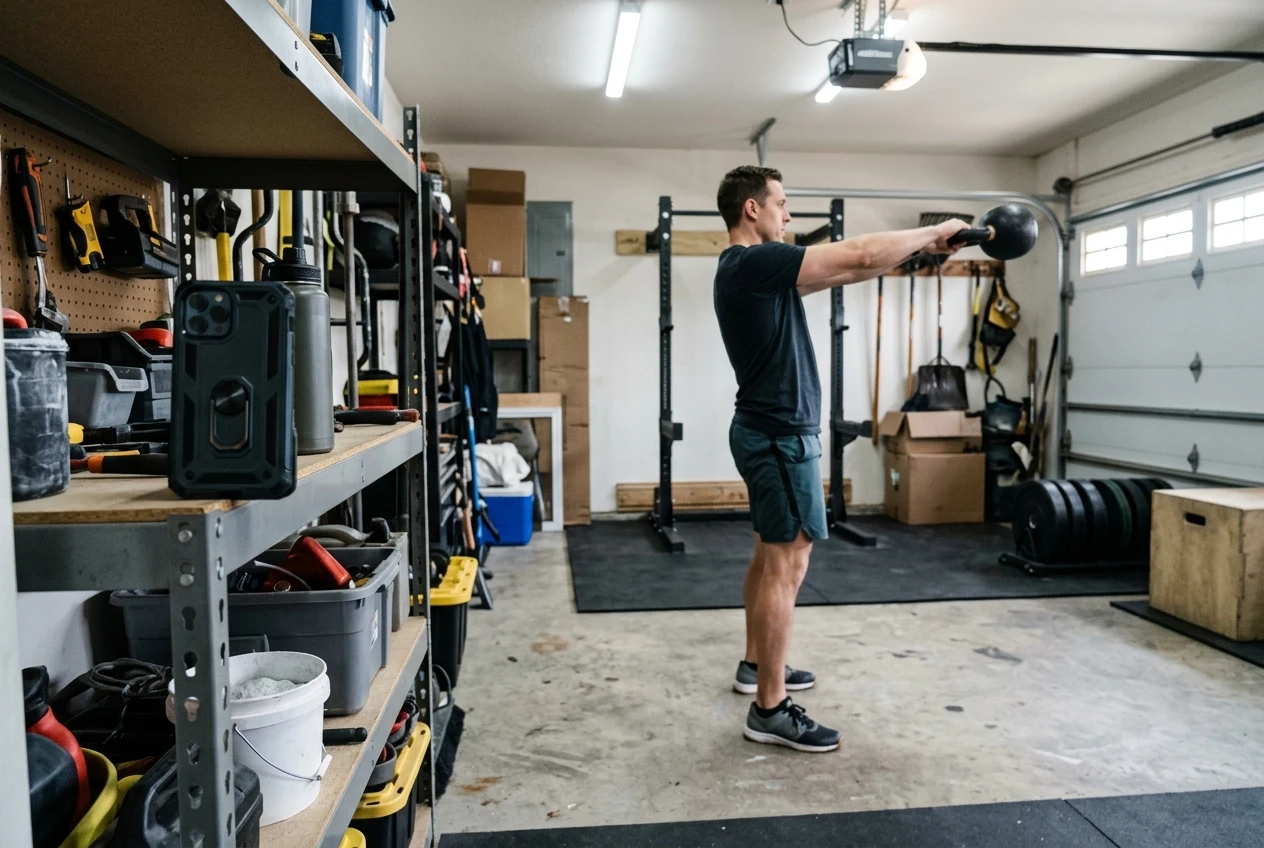
Form feedback. Neither a free video nor a recorded program watches you. Their advantage over a DIY approach is only that the demonstrations are consistent and sequenced, so you learn the movements in a sensible order. If form feedback matters most to you, a few sessions with a coach in person beats both options.
The honest summary: pay for Kettlebell Monster if the structure and the TV format save you effort you would not otherwise spend. Go DIY if you are comfortable planning and your budget is tight.
Before you buy: the kettlebell you need and the form basics to learn first
You need one kettlebell before the program starts, and choosing it well matters more than the program’s price.
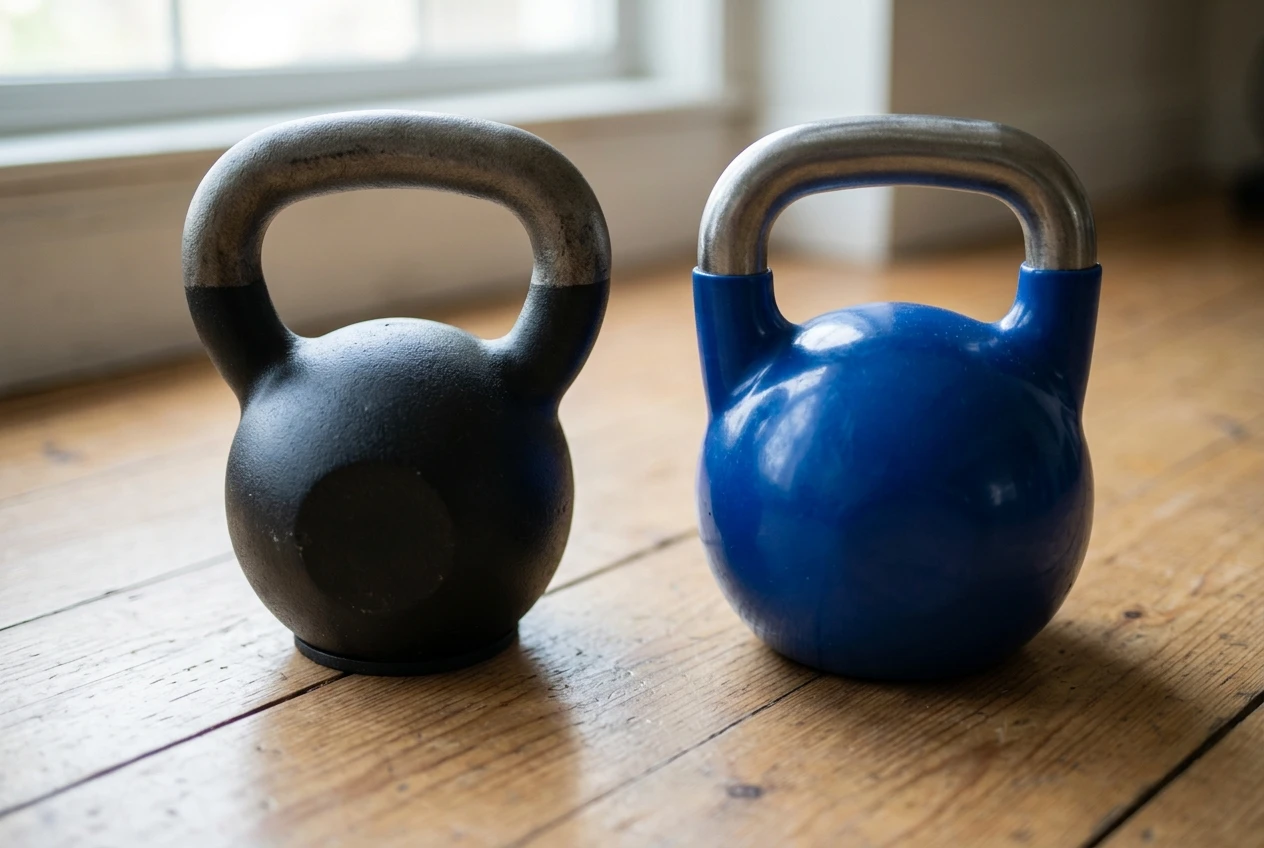
Choose the bell. Many beginners start with a bell in a moderate range, heavy enough that a swing feels like work and light enough that you can control the movement. Pick a weight where you can do clean hinge reps with the bell and still stand tall at the top. A bell with a flat base, a smooth handle and enough handle width for two hands works for almost every movement. Cast iron is durable and holds its shape, while a vinyl-coated bell is gentler on floors. If a store lets you hold the bell first, do so.
Learn the form basics first. Spend a few sessions before you start on these:
- The hip hinge. Push your hips back with a flat spine and soft knees, then stand tall by driving the hips forward. Practice without a bell, then with it.
- The goblet squat. Hold the bell at your chest, keep your torso upright and sit between your hips.
- The swing. The swing is a hinge, not a squat and not an arm lift. The arms hold the bell, and the hips move it.
- Standing tall. At the top of each rep, your glutes squeeze and your ribs stay stacked over your hips, with no leaning back.
If you have never held a bell, the beginner’s route into kettlebell training covers these basics in more detail. Once the hinge and goblet squat feel steady, you are ready to follow a program without fighting your own form.
Ready to decide?
If the verdict fits your goals, check out Kettlebell Monster through the affiliate link and read the curriculum, pricing and terms on the page before you commit. Affiliate disclosure: I earn a commission if you buy through this link.
If you own a Samsung TV, take a look at the Kettlebell Monster Tizen TV app listing and confirm your TV model is supported before you buy. Affiliate disclosure: I earn a commission if you buy through this link.