If you lift at home, home gym flooring protection comes down to one comparison: what it costs to protect the floor, against what it costs to repair the floor and replace the gear that hits it. Nobody can give you that number without your quote, your floor type and your training week. This article gives you the pieces and the arithmetic, so you can run it yourself before you buy anything.
Three ways lifting damages a floor, and which of your exercises cause each one
Lifting damages a floor in three distinct ways. Each one comes from different exercises, and each calls for different protection.
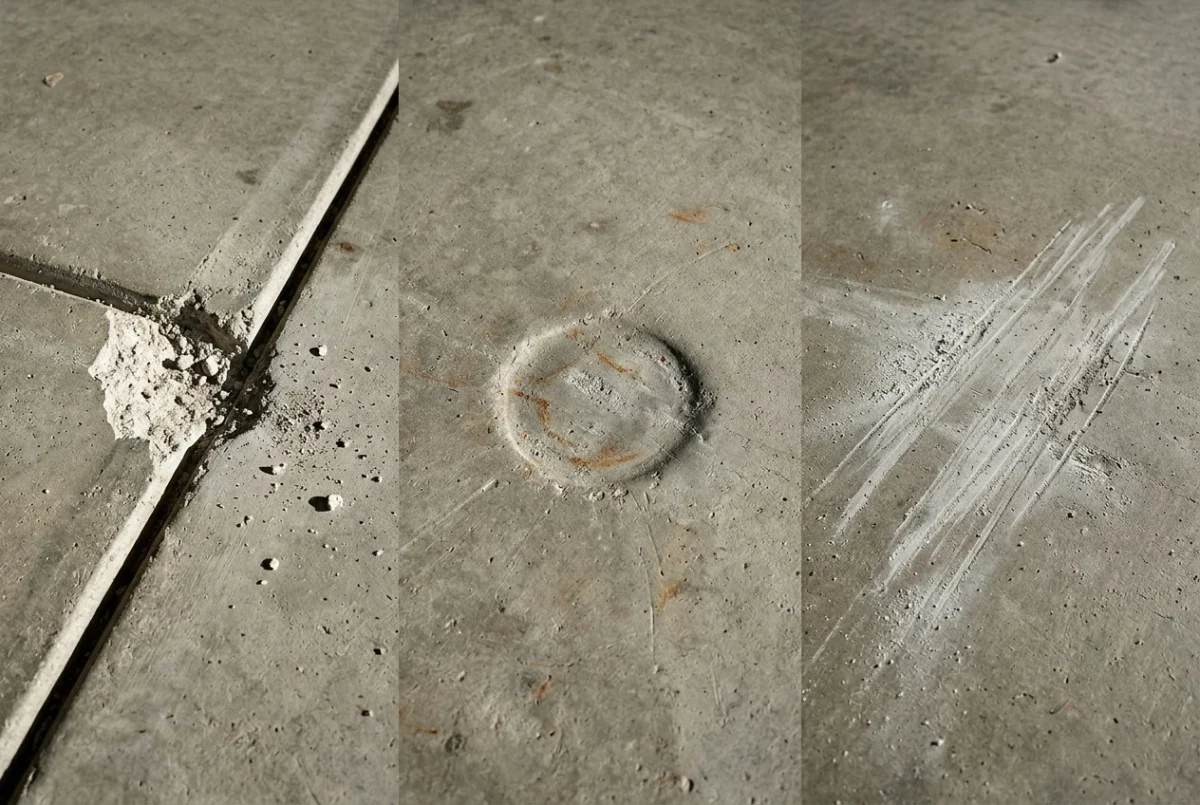
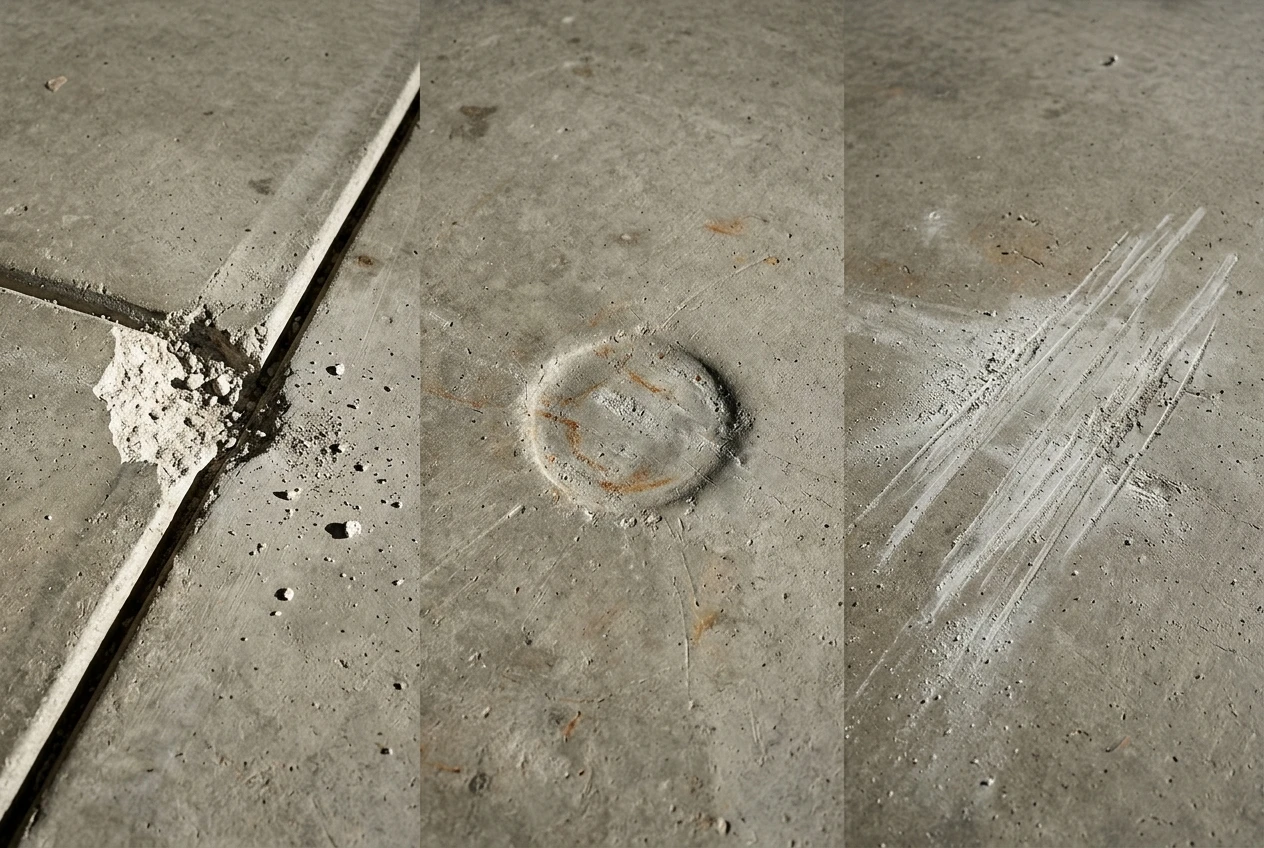
Impact. A weight lands and the floor takes the energy in one spot. Deadlifts dropped from lockout, missed overhead presses, cleans and snatches that crash down, and kettlebells dropped at the end of a swing set all produce it. Impact cracks tile, chips concrete edges, dents wood and splits laminate planks.
Point load. Weight rests on a small contact area for a long time. A squat rack with a loaded bar, a bench with a lifter on it, and a stack of plates on the floor all concentrate force through feet that may be only a few square inches. This leaves indentations in wood and crushed pile in carpet. On a floating laminate floor it can also push planks out of alignment.
Abrasion. Something hard moves across the surface. Dragging a kettlebell to a new spot, sliding a bench, rolling a plate and walking in with grit stuck to your shoes all grind the finish away. Abrasion is the damage lifters notice last, because no single moment causes it.
Write down which of these your own sessions produce. A kettlebell-only routine is mostly impact from set-downs plus abrasion from dragging. A barbell routine adds heavy point loads and drop impacts. Someone doing both has all three.
Your equipment takes the hit too
A hard floor does not absorb a landing, so the energy goes back into whatever landed. That means the floor is only half of what you are protecting.
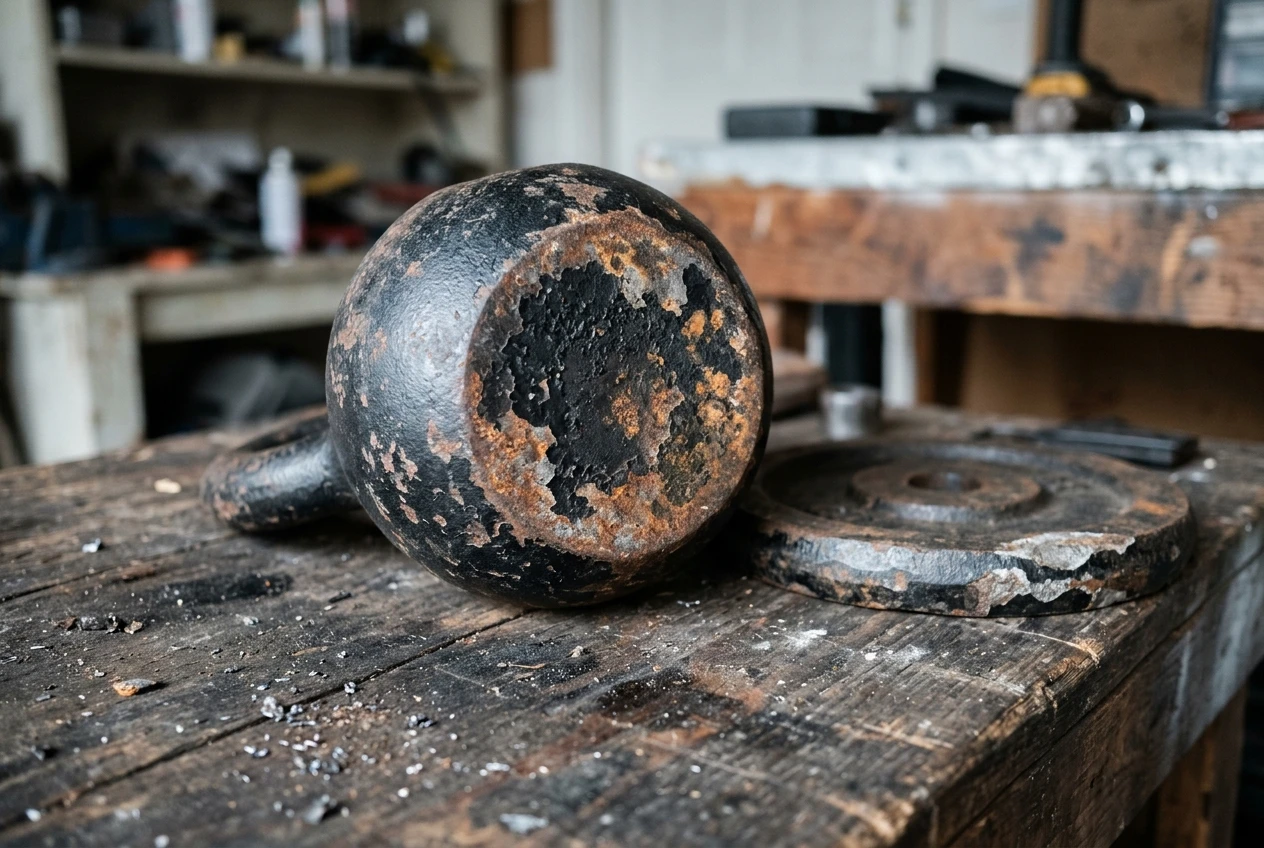
- Kettlebells. Cast iron bells with a painted or powder-coated finish chip where the base meets the floor. The bare metal underneath then rusts, especially in a garage where humidity swings. Repeated hard landings can also leave a base uneven enough that the bell rocks when you set it down.
- Plates. Iron plates chip at the edges when they hit concrete, and they leave their own marks on it. Bumper plates are built to be dropped, but they work as intended only when the floor underneath gives them a consistent surface. Dropping them onto bare concrete still marks the concrete, and the rubber wears.
- Barbells. When a loaded bar drops, the impact travels through the plates into the sleeves and the shaft. Repeated drops on a hard surface are hard on the sleeve ends and on the spin of the sleeves, and they can leave a bar with a slight bend over time. Dropped bars also scar the floor along the whole length of the sleeve.
So when you add up what is at risk, include the replacement cost of every piece you drop or set down regularly, not only the floor.
Concrete, wood, laminate, carpet: what each floor is at risk from
Concrete is the toughest surface for point loads, which is why garages are the default home gym location. Its risks are chipping at edges, surface flaking, and dust and staining from dropped metal. Before laying rubber over it, check for dampness. A mat over a damp slab can trap moisture, so lay a sheet of plastic over a section for a day or two and see whether condensation forms underneath.
Solid wood dents and gouges. Individual marks can be sanded and refinished, but refinishing usually means doing the whole visible run of boards, not one patch, which is why a repair quote runs higher than people expect. Wood floors upstairs also raise a structural question that mats do not answer. If you are unsure how much a spare room floor can carry under a rack, ask someone qualified before loading it.
Laminate has a hard surface layer over a thin core. It chips and cracks on impact, and a gouge cannot be sanded out. Planks that click together can separate if a heavy point load sits on one joint. Replacing a few planks is sometimes possible, but matching an older floor is not always.
Carpet does not break, but it compresses under rack feet, tears from dragged equipment, and gives an unstable surface under a barbell. Carpet padding also moves under load, which affects how stable a squat or press feels. Many lifters lay a firm mat or a plywood section over the carpet in the lifting zone.
Vinyl and ceramic tile belong in the same assessment. Both crack under drops, and tile cracks are rarely fixable without replacing the tile.
Do the repair-versus-protect math with your own quote and your own training week
You need four numbers. All of them are things you can measure or ask for.
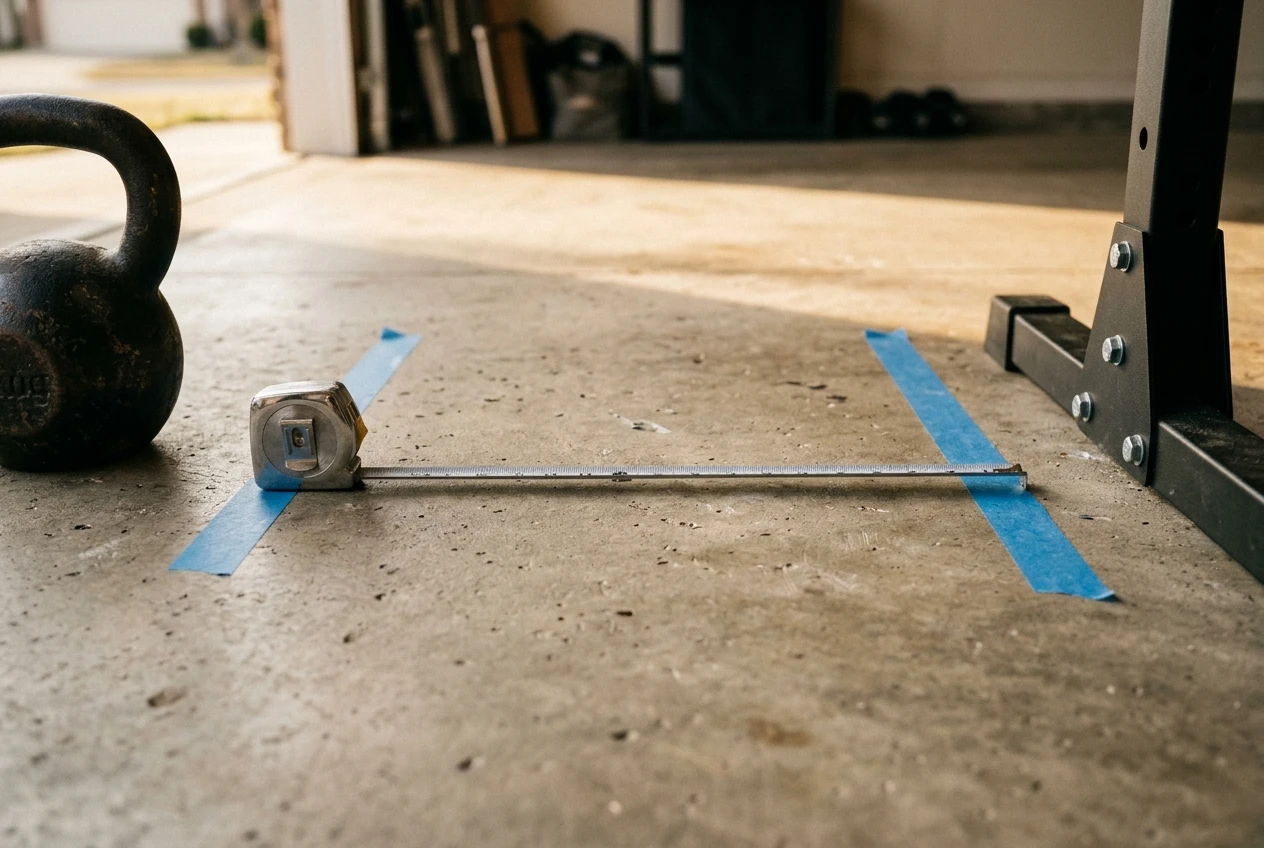
- Lifting footprint. Measure the length and width of the area where weights land, rack feet sit and your feet move. Multiply to get square feet. Include the route you carry bells along, since you will drag or set them down on it.
- Repair quote. Ask a flooring contractor or installer to quote repair or replacement for that same area. For concrete, ask about patching and resurfacing. For wood, ask about refinishing. Ask what labor and moving furniture would add. A written quote beats a guess.
- Protection cost. Price mats, tiles or a platform to cover that same footprint, including delivery. Add anything you would need under rack feet.
- Gear at risk. Add the replacement cost of the kettlebells, plates and bar you drop or set down on the floor.
Next, count the impacts in your week. Tally the sets that end with a drop or a hard set-down, then multiply by 52 for a yearly count. A person who lowers every deadlift under control and swings one kettlebell lands in a different place from someone who drops bumper plates after every top set.
Now compare. If the protection cost is lower than the repair quote, protection wins on the floor alone, before counting the gear. If the protection cost is higher than the repair quote, look at the gear. Many lifters find that the floor alone is close and the gear tips the decision.
Two points affect how you read the result. Floor damage is a one-time bill that arrives whenever the damage becomes unacceptable, while mats are a purchase that can move with you. Mats also change how the gym sounds, which matters in a shared building. If you want to see how flooring fits into the rest of your spending, what a home gym really costs when you count the weeks you can’t train covers the full picture.
Match the protection to the lift
Different lifts need different protection, so a single mat across the whole room is rarely the best use of money.
Kettlebell set-downs. The bell lands on a small area, repeatedly. A firm rubber mat or interlocking rubber tile under the landing spot prevents chipping of both floor and bell. Choose a firm surface. A very soft one makes the bell wobble when you set it down and can feel unstable under a swing stance. Put the mat where you swing and where you park the bells.
Deadlift drops. A drop is the heaviest impact in a home gym. Bumper plates are the first line of defense because they are designed for the landing. Under them, you want a surface that spreads the force over a large area, such as a layered mat setup or a built platform. Controlled lowering reduces how much you need from the floor, though it does not eliminate drop risk on a failed lift.
Rack feet and bench legs. These are point loads. Rubber under each foot keeps them from sliding and protects against abrasion, but a larger load on a delicate floor needs spreading, for example with a sheet of plywood under the rack footprint. On wood or laminate, a firm sheet distributes the load better than small pads at each foot.
Dragging and carrying. Lift equipment rather than dragging it. If you must slide it, put a mat or a towel under it. A mat laid along the walking route handles both grit and drags.
Rented space or a house you plan to sell
Renting changes the numbers because the damage bill is not paid by the floor’s owner. Check your lease for what it says about floor damage and deposit deductions. A landlord can charge repair or replacement for the damaged area, and that can mean more than the visible mark. Take dated photographs of the floor before you set up, and cover the whole route from the door to your lifting area.
For a renter, mats have a second advantage: they leave with you. Money spent on flooring protection stays yours, while money lost on a deposit does not.
If you plan to sell the house, think of floor damage as a cost that appears at sale time. Dented wood, cracked tile or stained garage concrete can come up in a buyer’s inspection or in price negotiation. Protection now avoids repair later. Mats also come up, so the sale-time cost is only whatever your lifting did beneath them.
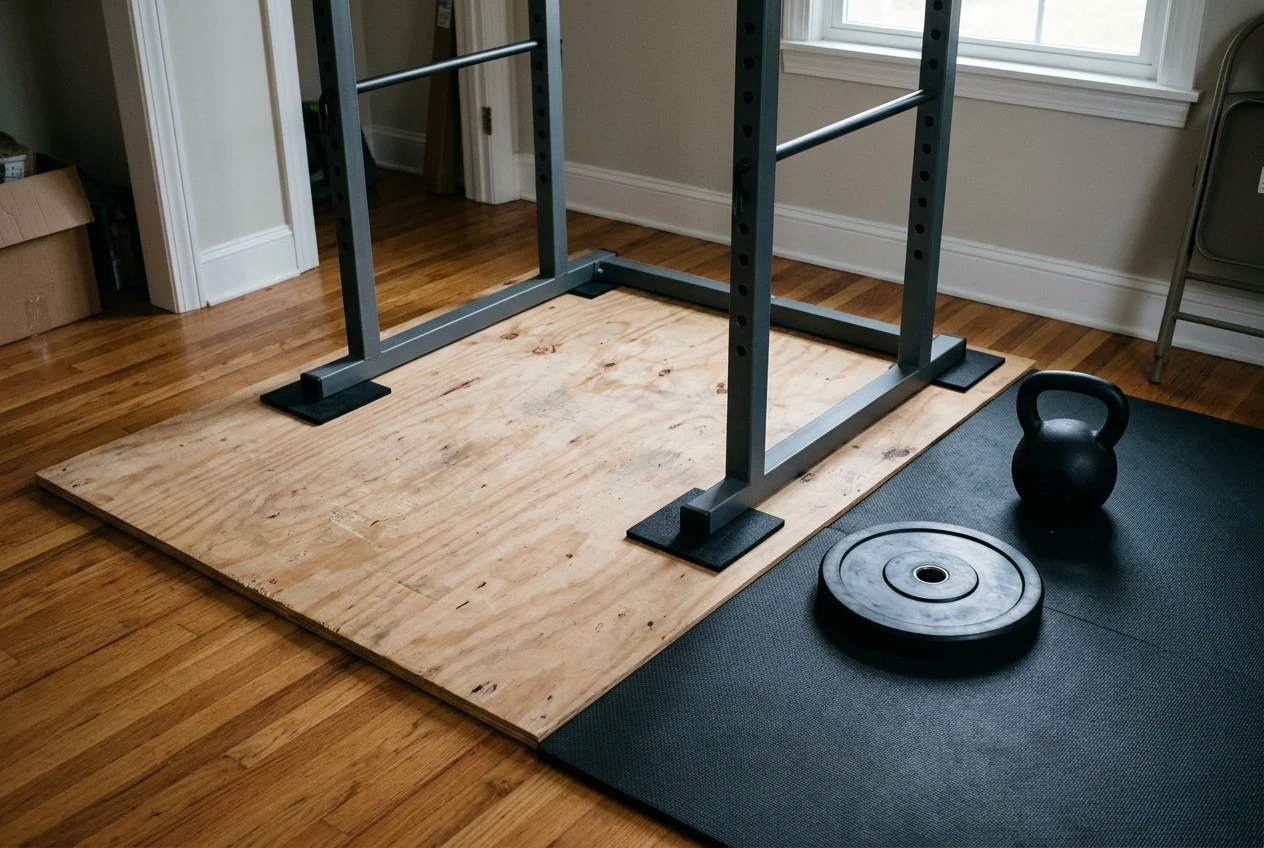
If you plan to stay for years, the cost-benefit tilts toward how long the damage will bother you. A garage slab with chipped edges may be acceptable to you, while a hardwood living area probably is not.
A floor-protection order of operations
Buy in this order, and stop when your own math says the next step is not worth it.
- The landing zone. Cover the spot where weights hit the floor first. That is where the impact is concentrated and where both floor and gear suffer.
- Under the rack and bench. Add point-load protection once you have a rack or bench that stays in one place. Use a spreader sheet if the floor is wood or laminate.
- The route. Cover the path you carry equipment along if it crosses a floor you care about.
- A platform. Build or buy one when you are doing drops of heavy barbell lifts regularly.
- Full coverage. Wall-to-wall rubber is the last item. It improves comfort and appearance, and it is rarely what protects the floor from the damage that matters.
What can wait: matching colors, edge ramps, and coverage in areas where nothing is ever set down. If you are planning purchases in a sequence over several years, a five-year home gym plan where every upgrade has to be earned shows how to rank spending against the rest of your setup.
Once the floor is covered
If you train with kettlebells on your newly protected floor, you can add guided programming to the same space. kettlebell.monster offers kettlebell programs for home training. This is an affiliate link, so I may earn a commission if you buy through it.
If you would like a coach on screen while you train, there is also a Samsung Tizen TV app from the same source. It is only an option for people who want to follow along on a TV, and it is also an affiliate link that may earn me a commission.