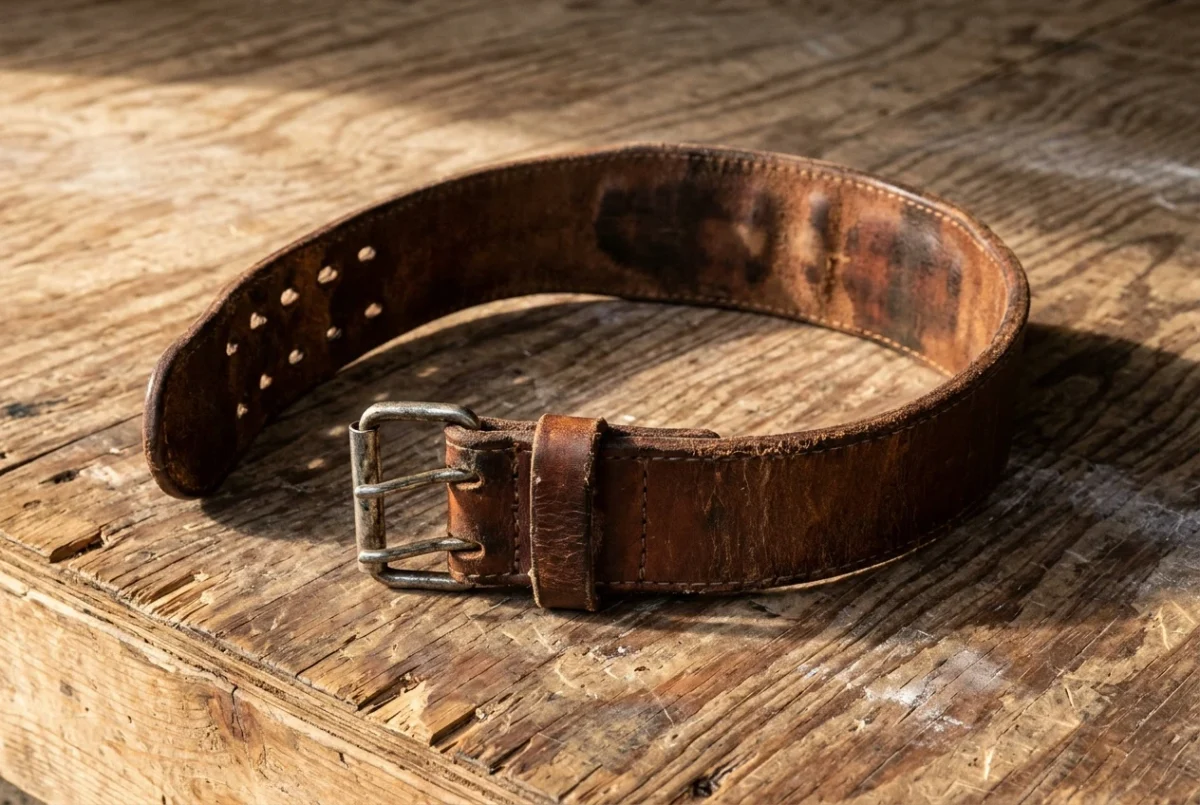
Most lifting belts are bought twice. A lifter picks a cheap one, finds out in a year or two that it has stretched, curled or stopped gripping, and buys the one they should have bought first. In a home gym, with nobody at a commercial facility handing out loaner belts or telling you what to look for, the only protection against that is knowing what a belt is made of and how it is put together.
This article ranks belts by material and construction rather than by brand, and judges each on how it holds up under years of use. If you want the belt with the lowest cost per year, the comparison on leather vs nylon lifting belt durability below is the one to read before you open a product page.
Why material decides how long a belt lasts, not the brand name
A belt does one job: it stays rigid and stays closed while you push your abdomen against it. Everything that makes a belt fail is a way of losing rigidity or losing the closure. The material sets how fast rigidity fades, and the hardware and stitching set how reliably the belt stays shut.
Brand names tell you very little about either. Two companies can sell a belt with the same name on the product page and different layers inside. A well-known name on a thin, bonded-leather belt will wear out before an unknown name on a thick, single-piece one. Looking at what the belt is made of, how thick it is, and how the buckle attaches gives you more information than the logo does.
Four things decide durability:
- The body material: thick leather, suede-lined leather, or woven nylon with a velcro closure.
- The closure: prong, lever, or roller buckle, or velcro.
- The attachment: stitching, rivets, screws, and how the edges are finished.
- Your conditions: sweat, humidity, how often you train, and how you store the belt.
The sections below take each in turn, starting with the materials that tend to last the longest.
Thick leather and suede: what wear looks like after years of heavy use
A thick leather belt is stiff when new. That stiffness is the point, and it is also why the first weeks can be uncomfortable: the belt digs into your ribs and hips until it softens at the points where your body bends it. This is the break-in, and a belt that never needs one is usually too thin or too flexible to give much support in the first place.
After years of heavy use, a good leather belt typically shows wear in predictable places:
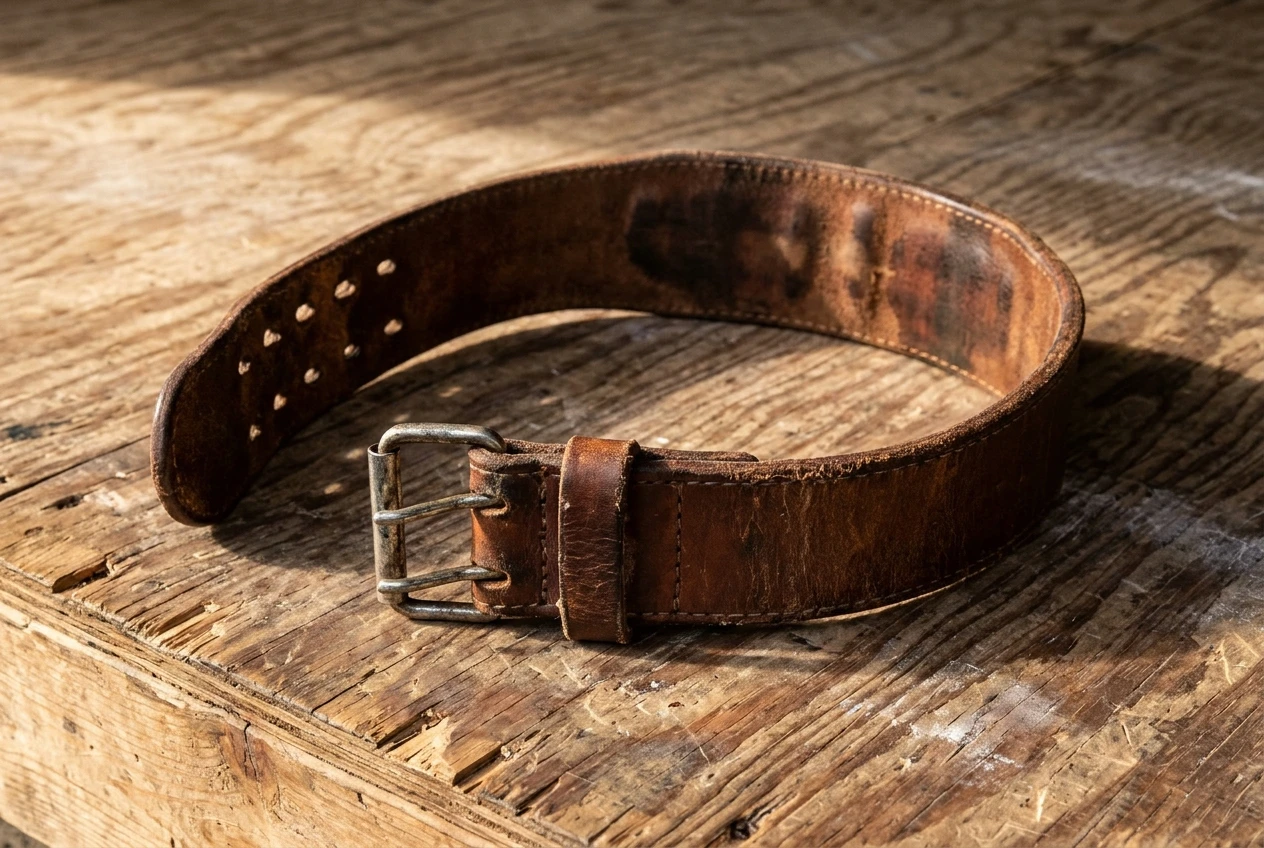
- A permanent curve where it wraps around your torso. This is normal and does not hurt support. The belt takes on your shape.
- Darkened, polished patches along the inside where it rubs against your shirt or skin.
- Stretched or slightly elongated holes in the prong section, at the notches you use most.
- Surface creasing at the points where the belt bends hardest, usually just behind the buckle.
The failure to watch for is different. If leather is allowed to dry out, it can crack along those crease lines. Cracks that run deep rather than staying on the surface mean the belt is losing structure. Layered leather that starts to separate at the edge is another sign that the belt is near the end of its life.
Where suede fits
Suede is leather with a napped, brushed surface, usually on the inside of the belt. The practical difference is grip and comfort: the soft surface sticks to your shirt and skin so the belt stays in place, and it tends to be gentler on your torso during break-in. Suede-lined belts are often a little easier to wear in than smooth-finish leather.
The trade-off is that suede holds sweat. A suede inner face absorbs moisture and takes longer to dry, which matters in a humid garage. It also shows wear differently: the nap flattens and darkens where it rubs. That is cosmetic. The structure underneath is what counts, so judge a suede belt by the thickness and construction of the leather, not by how fresh the surface looks.
What “leather” on a product page may mean
The word “leather” alone covers a wide range. Full-grain or single-piece leather generally lasts longer than layered or bonded material, which is scraps of leather pressed together. If the page does not say what kind of leather it is, or only says “genuine leather,” treat that as a gap in information rather than a good sign. Belts that are proud of their construction usually describe it.
Nylon and velcro belts: where they hold up and where they fail first
A nylon belt with a velcro closure is lighter, more flexible, and needs no break-in. It is also much easier to adjust, since the velcro lets you set any tightness rather than being limited to the holes. For general lifting, those are real advantages.
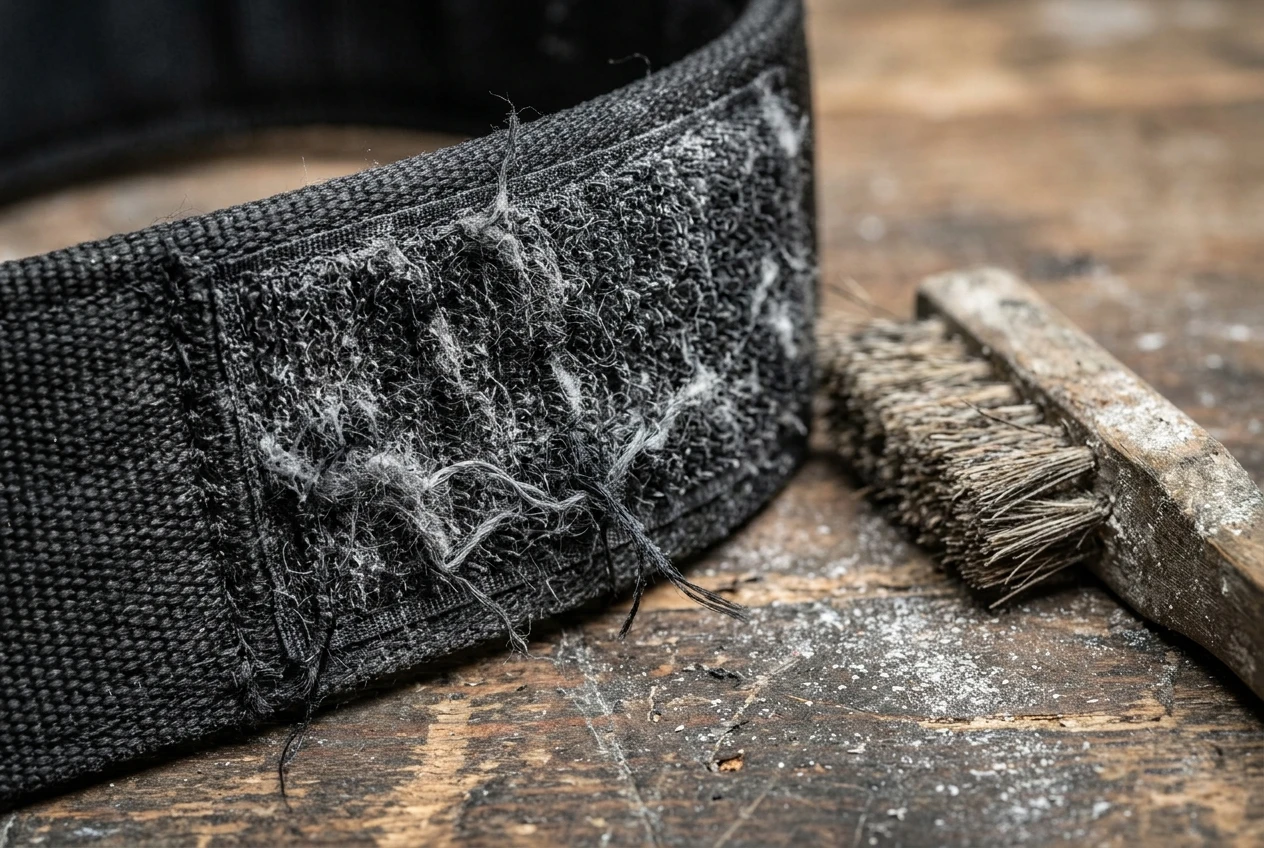
The woven nylon itself is usually durable. The part that fails first is the closure. Velcro works by tiny hooks catching tiny loops, and over time sweat, chalk, lint and loose fibers clog the hooks. The grip weakens gradually, and it matters most at exactly the moment you need it, when you are bracing hard under load. A velcro belt that peels open mid-set is a hazard, not a nuisance.
Other places nylon belts tend to wear out:
- The edges can fray where the stitching meets the webbing, particularly if the edge is cut and not sealed or folded over.
- The stiffening insert, if there is one, can bend or compress over time. If it kinks, the belt loses its support.
- The loops and sewn tabs that hold the velcro strap can pull out of their stitching.
You can extend the life of a velcro closure by brushing out the hooks and loops, and by closing the belt fully when you store it so the surfaces do not collect debris. Even so, a velcro closure has a shorter useful life than a metal buckle under heavy use. If you load the belt hard and often, expect to replace it sooner than a leather belt.
Nylon makes the most sense when the belt is a secondary tool: moderate loads, varied exercises, and occasional use where comfort and quick adjustment matter more than maximum rigidity.
Prong, lever, or roller buckle: the part that actually breaks
Many belts that look worn out are fine in the body and failing in the buckle. The buckle takes the load of every heavy rep, and it is attached to the belt by a small number of points. That makes it the weak link more often than the material.
Prong buckle. The prong passes through a hole and the belt tension holds it. It is simple, adjustable between holes, and easy to swap. Its weakness is the holes: with heavy use they can stretch or tear, and the prong can bend or wear at the pivot. A prong belt is also slower to put on and take off between sets.
Lever buckle. A lever clamps the belt closed with a flip of the arm. It is fast and holds consistently tight, which is why many lifters like it for heavy work. The weak points are the screws or bolts that fix the lever to the belt, and the fixed tightness: changing the setting usually means unscrewing the lever and moving it to a different hole with a tool. Look for hardware that is bolted through the belt rather than lightly riveted. Screws can loosen over time, so a quick check with a screwdriver every so often is worth the minute it takes.
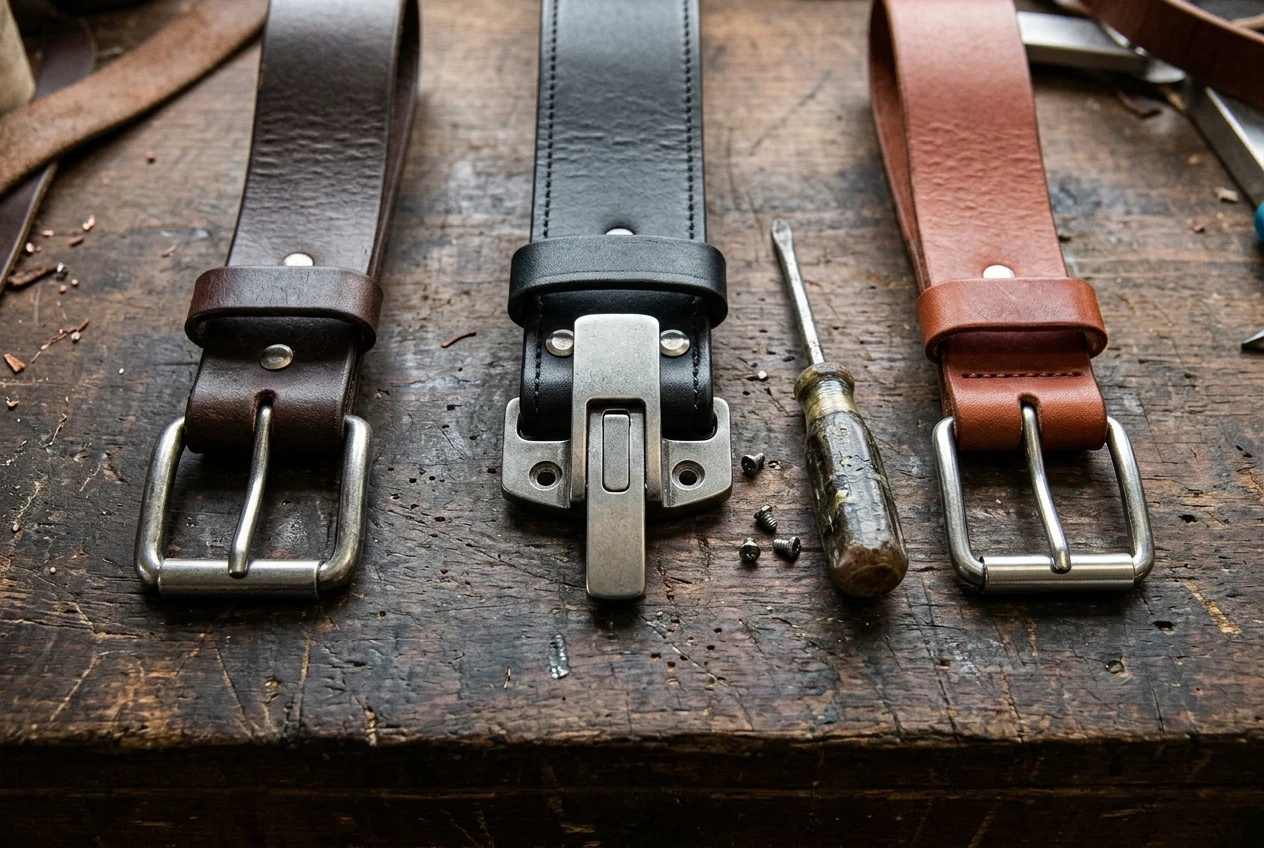
Roller buckle. This design uses a roller bar to feed the belt through, so you can fine-tune the tightness without a lever and without the hole limits of a prong. The moving parts can collect dirt and rust if neglected, so wipe them down.
For durability, the practical rule is to look at how the buckle is attached, not just what it looks like. Hardware that is bolted or heavily stitched at several points should outlast hardware held on by one or two small rivets. If a belt is otherwise excellent and only the buckle fails, a repair or replacement of the hardware may cost far less than a new belt, which is one more reason to prefer buckles that attach with removable screws.
How to judge stitching, edge finish, and width from the product page before you buy
You cannot touch the belt before you buy it, but product pages and photos give you more to go on than most people use. Look for these specifics.
Stitching. Check whether there are multiple rows of stitching where the belt folds around the buckle, and whether the thread looks heavy and even. Single, thin rows in a high-stress spot are a risk. Stitching and riveting together is generally stronger than either alone.
Edge finish. Edges that are sanded smooth, rounded, and sealed or burnished are less likely to fray, peel or dig into your skin. Raw, unfinished edges can fray on nylon and flake or split on leather. Close-up photos of the edge are worth zooming in on.
Thickness and layers. Look for a stated thickness and a description of whether the leather is a single piece or layered. A belt that gives the thickness and the material in plain terms is easier to trust than one that does not. If you plan to compete in a federation, check its rulebook for belt width and thickness limits before buying, since the rules differ between organizations.
Width. A belt that is the same width all the way around gives you a consistent surface to brace against. Some belts taper toward the front, which is more comfortable for some lifters and less supportive for others. Measure your own torso, from the bottom of the ribcage to the top of the hip, and check that the belt width fits in that gap without jamming into either.
Sizing range. Belts that fit at the end of their adjustment range are more likely to wear out early, because the buckle sits at the edge of its holes or the velcro has little overlap. Pick a size that lands you in the middle of the range.
Return and warranty terms. A stated warranty on stitching and hardware tells you something about what the maker expects. Read what it covers before relying on it.
Humid garages and sweaty sessions: caring for your belt so it keeps its shape
Home gyms tend to be garages, basements or sheds, and those spaces collect moisture. Moisture and sweat do more damage to a belt than the lifting does.
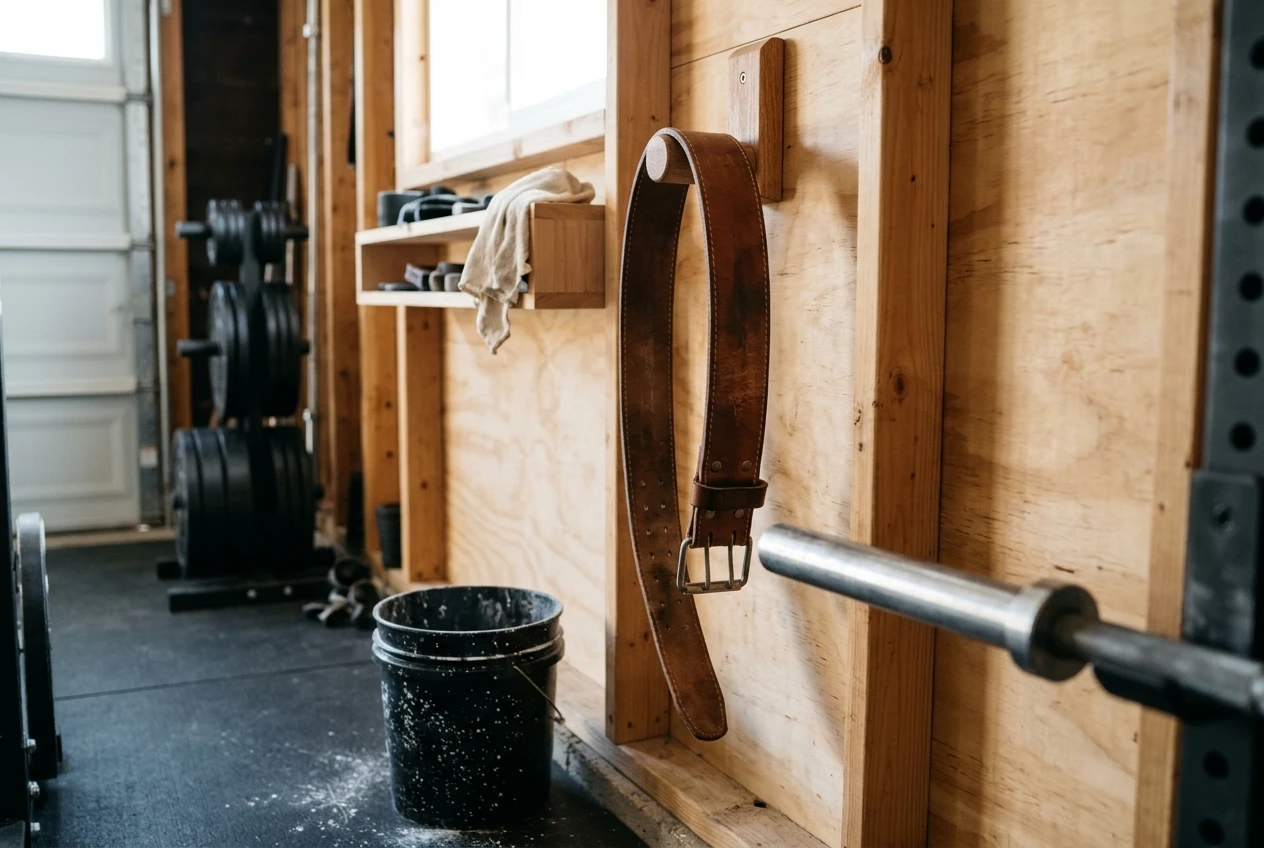
For leather and suede:
- Wipe the inside of the belt after sessions and let it dry in open air before storing it.
- Store it flat or hung, not crushed under plates or left on a concrete floor that sweats in damp weather.
- Keep it away from direct heat and from a hot car, which dries leather out and can warp it.
- Condition leather sparingly, following the maker’s instructions. Too much conditioner can soften the belt and reduce its rigidity, which defeats the purpose.
- Check for mildew in humid months. A musty smell or white or green spots mean the belt has been stored damp.
For nylon and velcro:
- Brush the hook side of the velcro to clear lint and fibers.
- Wash according to the care label and air dry completely. Do not put it in a hot dryer unless the label allows it.
- Fasten the velcro fully when storing so the hooks stay clean.
For metal hardware:
- Wipe sweat from buckles and levers, since salt and moisture promote rust.
- Check that screws and bolts are tight now and then.
- A small amount of lubricant on moving parts such as a roller can keep them turning, but keep it off the belt body.
A belt that is dried, stored flat and checked occasionally will hold its shape for far longer than one that is thrown on the garage floor after every session.
Cost per year of use: when paying more for a belt is worth it
The price on the page is not the cost of the belt. The cost is the price divided by the number of years you use it, plus the cost of any replacement you buy along the way.
A simple way to run the comparison: take the price of each belt you are considering and divide it by the years you realistically expect it to last under your training. If a belt costs twice as much as another and lasts more than twice as long, it is the cheaper one per year. If it costs twice as much and lasts about the same, it is not. You will not know the exact lifespan in advance, but the construction details above tell you which belt is likely to last longer.
Paying more tends to make sense when:
- You lift heavy and often, so the belt is under load most weeks.
- The extra cost buys thicker, single-piece leather or sturdier hardware, not a different logo.
- The buckle is attached with replaceable screws, so a failed part does not mean a failed belt.
- You plan to keep training for years, so the cost spreads across a long period.
Paying more tends not to make sense when you use a belt only occasionally, when the higher price is mostly branding, or when you are still deciding whether belts suit your training at all. In those cases a modest belt with sound basic construction is a reasonable starting point.
The same reasoning applies to the rest of your equipment. If you are weighing which pieces of gear repay a higher price and which do not, the pro-grade or generic gear breakdown goes through that question across a home gym.
Match the belt to your training: heavy barbell work versus kettlebell and general lifting
The most durable belt is not always the right belt. A belt that is too stiff for your movements will sit unused in the corner, and its cost per year of use will be high however long it lasts.
Heavy barbell squats and deadlifts. These lifts load the torso heavily and let you brace against a rigid belt. Thick leather or suede with a lever or sturdy prong buckle is the usual choice, because it holds rigidity and closes reliably under heavy load. Expect a break-in period and plan for it.
Kettlebell training and general lifting. Many kettlebell movements, such as swings, cleans and presses, involve a lot of hip and torso movement, and a very stiff belt can get in the way. A more flexible belt, such as nylon with velcro or a thinner, softer leather, is often more comfortable. Because these belts see lighter, more varied use, the shorter life of a velcro closure matters less.
Mixed training. If you do both, one thick belt for your heaviest barbell days and no belt for everything else is a common arrangement. A belt does not need to be on for every set. Using it only for your heaviest work also reduces wear and extends its life.
A belt supports your bracing; it does not replace it. If you have a medical condition such as high blood pressure, ask a doctor before training with a belt, since bracing against one raises pressure in the abdomen.
Pick the belt, then the program
A belt is most useful when you know when to put it on. Heavy sets call for it, warm-ups and lighter work usually do not, and a program that spells that out takes away the guesswork. To pair your belt with a plan, see the kettlebell.monster programs.
Affiliate disclosure: I may earn a commission if you buy through this link, at no extra cost to you.