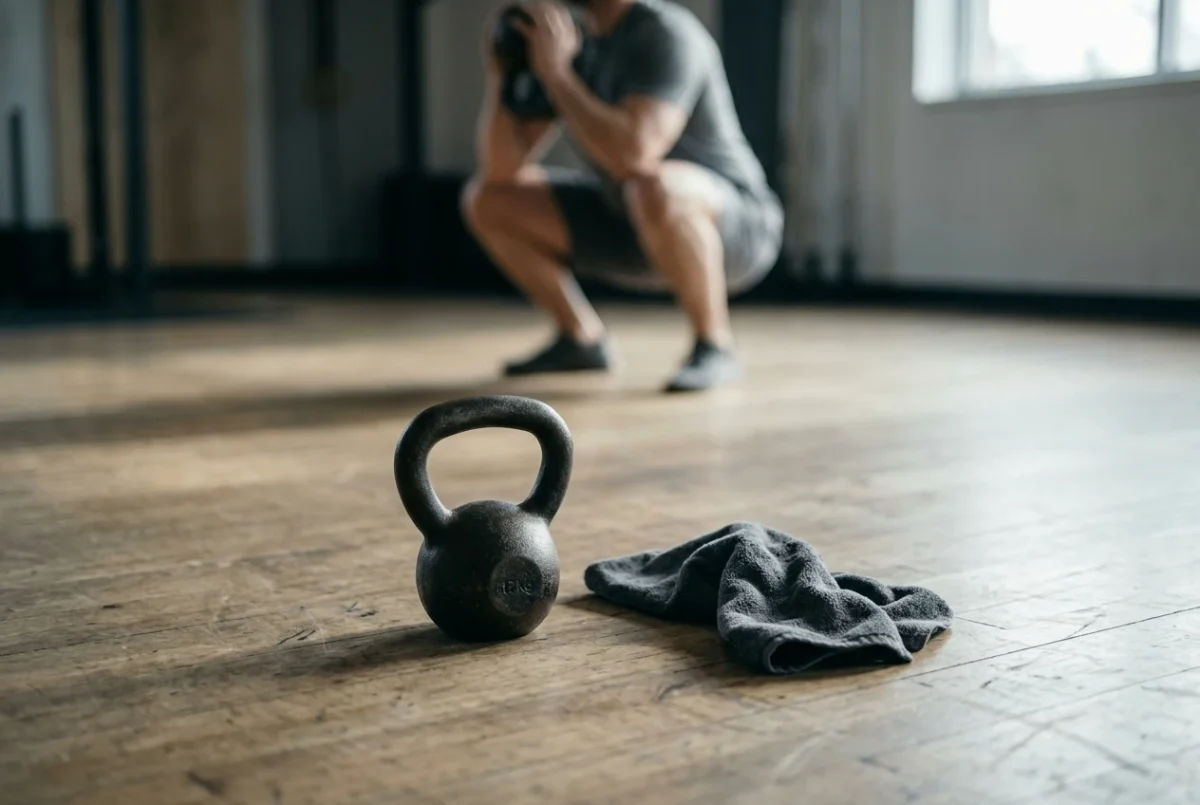
A recovery flow is a short, light kettlebell session for the days between heavy lifts. Its job is to loosen what the last session left stiff, and it has to leave your legs and shoulders fresh enough for the next main lift. The five moves below take about 15 to 20 minutes, and the stop rule is what keeps them that short.
The five-move recovery flow: order, bell weight, tempo and rounds
Do the moves in this order, from the top of the body down and then into a carry:
- Halo: 5 slow circles each direction, bell held upside down at chest height. This opens the shoulders and upper back.
- Goblet squat with a pause: 5 reps, with a 3-second hold in the bottom position. Use the hold to push your knees out gently with your elbows.
- Slow Romanian deadlift: 6 reps, 3 seconds lowering, a soft stand-up. Stop the bell at mid-shin, or higher if your hamstrings run out of range.
- Swap slot: one move chosen by what your last heavy lift left stiff (next section). The default is the arm bar.
- Suitcase carry: 20 slow steps per side, standing tall, ribs stacked over hips.
Bell weight. Pick a bell you could comfortably press or squat for 15 or more clean reps. If you have to think about the weight on any move, it is too heavy for this session. The right bell often looks embarrassingly light next to your working numbers, and that is correct. The flow is meant to move joints through range, so it should not produce any training stimulus.
Tempo. Move slowly enough to feel the end of each range. Lowering takes about three seconds. Nothing is ballistic, so there are no swings, snatches or cleans. Breathe through your nose. If you cannot, you are going too fast or the bell is too heavy.
Rounds. Do two rounds with about 30 seconds between moves, and walk around instead of sitting. A third round is allowed only if the first two felt like nothing. Your next heavy day is what pays for any extra work you add here.
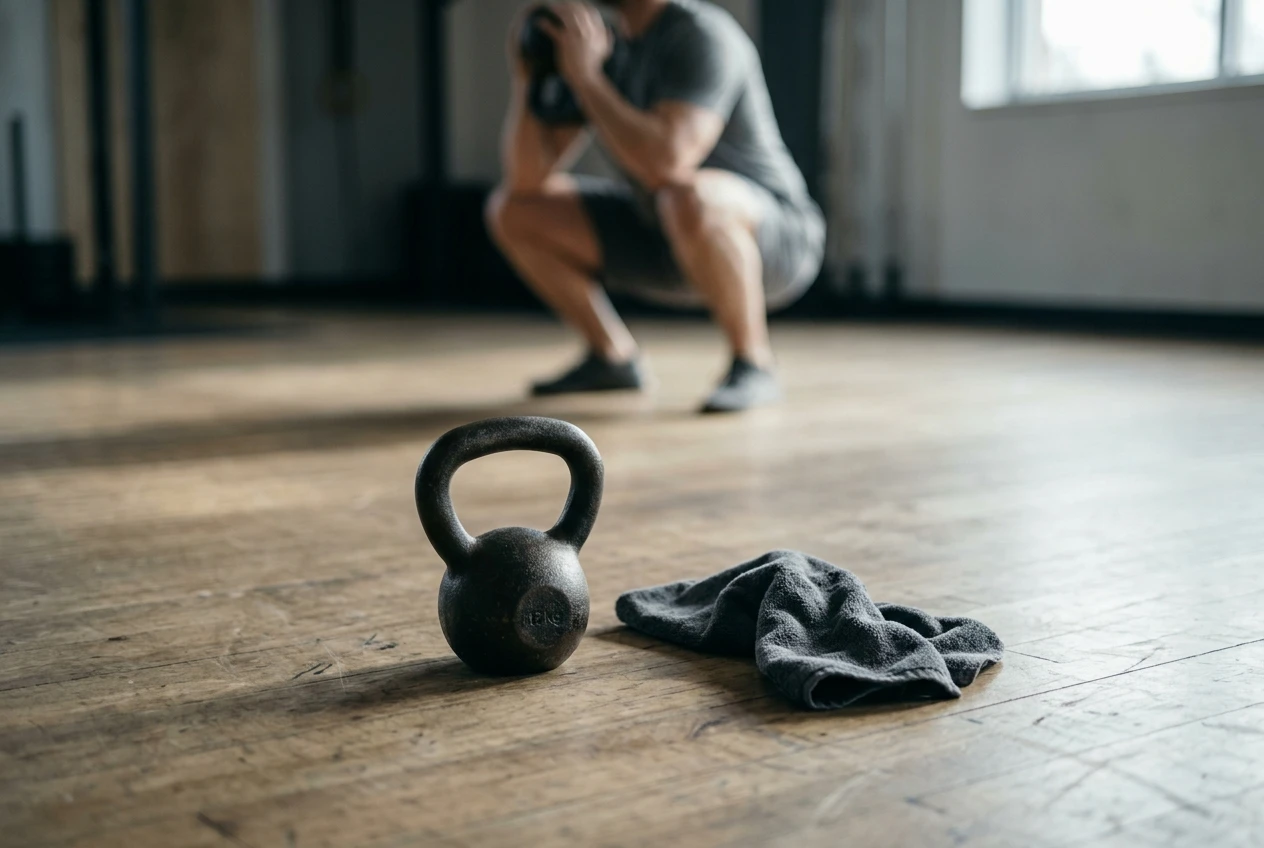
Swap one move by what your last heavy lift left stiff
Move 4 is the only part of the flow that changes. Look at what your most recent heavy session left tight, and pick the matching option.
- After squats (hips, adductors, ankles stiff): Cossack squat to the side, 4 reps per side, holding the bell at your chest. Sit into one hip while the other leg stays long and the heel stays down if your range allows.
- After deadlifts (hamstrings, glutes, lower back stiff): single-leg Romanian deadlift with a touch-down, 5 per side, bell in the opposite hand. This adds a second hinge to the session, so cut move 3 to 5 reps.
- After pressing (shoulders, lats, upper back stiff): the arm bar. Lie on your back with the bell held vertically over one shoulder, roll slightly toward the bell side, and hold for 3 to 5 breaths per side.
If the stiffness is in more than one place, fix the one that will interfere with your next main lift. A stiff overhead position matters more before a press day than stiff hips do. If your press has stalled and you suspect what happens between sessions is the cause, your overhead press stalls on the days you don’t press covers how to audit your shoulders on the days off.
The stop rule: end the flow now, not after one more round
A recovery flow turns into a workout one reasonable-looking extra round at a time. Decide in advance what ends the session, because mid-session you will always be able to justify a little more.
End the flow immediately, skipping the rest of the round, if any of these happen:

- You are out of breath. If you cannot breathe through your nose between moves, the session has become conditioning.
- You are sweating hard. Light warmth is normal. Sweat running down your face means the pace is too high.
- A move got harder than the one before it. The same bell on the same move should feel the same or easier by round two. If it feels harder, you are accumulating fatigue.
- Your grip burns on the carry. Burning grip means the carry is training you now.
- You want to pick up a heavier bell. The urge to add load is the signal that the session has drifted toward training.
- A joint gives sharp or pinching pain. Skip that move and do not replace it with something harder.
Also set a hard cap before you start. Two rounds and 20 minutes is a reasonable ceiling. When you reach it, put the bell down even if you feel good, because feeling good is the point of a recovery session and a reason to stop.
Why a recovery flow is not the finisher flow, and where it sits on the week
A finisher comes at the end of a heavy session, when you are already fatigued and warm, and its job is to add work. A recovery flow runs on its own day between heavy sessions and has the opposite job: subtract stiffness without adding fatigue. The two use different bells, different tempos and different stop conditions. The split between them is covered in two jobs for a kettlebell flow in a powerlifting split, so this article stays with the recovery side.
On the week, the flow belongs on the day after your hardest lower-body or full-body session, or on any off day when you notice stiffness. A four-day block usually leaves a couple of those days. Put the flow where it fits and leave the other days as true rest. Doing it every off day is not required, and if you are carrying fatigue into your main lifts, fewer sessions may help more than better ones.
Avoid the flow late on the day before a heavy lift if it has ever left you flat. Earlier in the day, with a long gap before you train, is safer. If you are not sure how a session affects you, do it first on a day that is two days clear of a heavy lift and use the next section to find out.
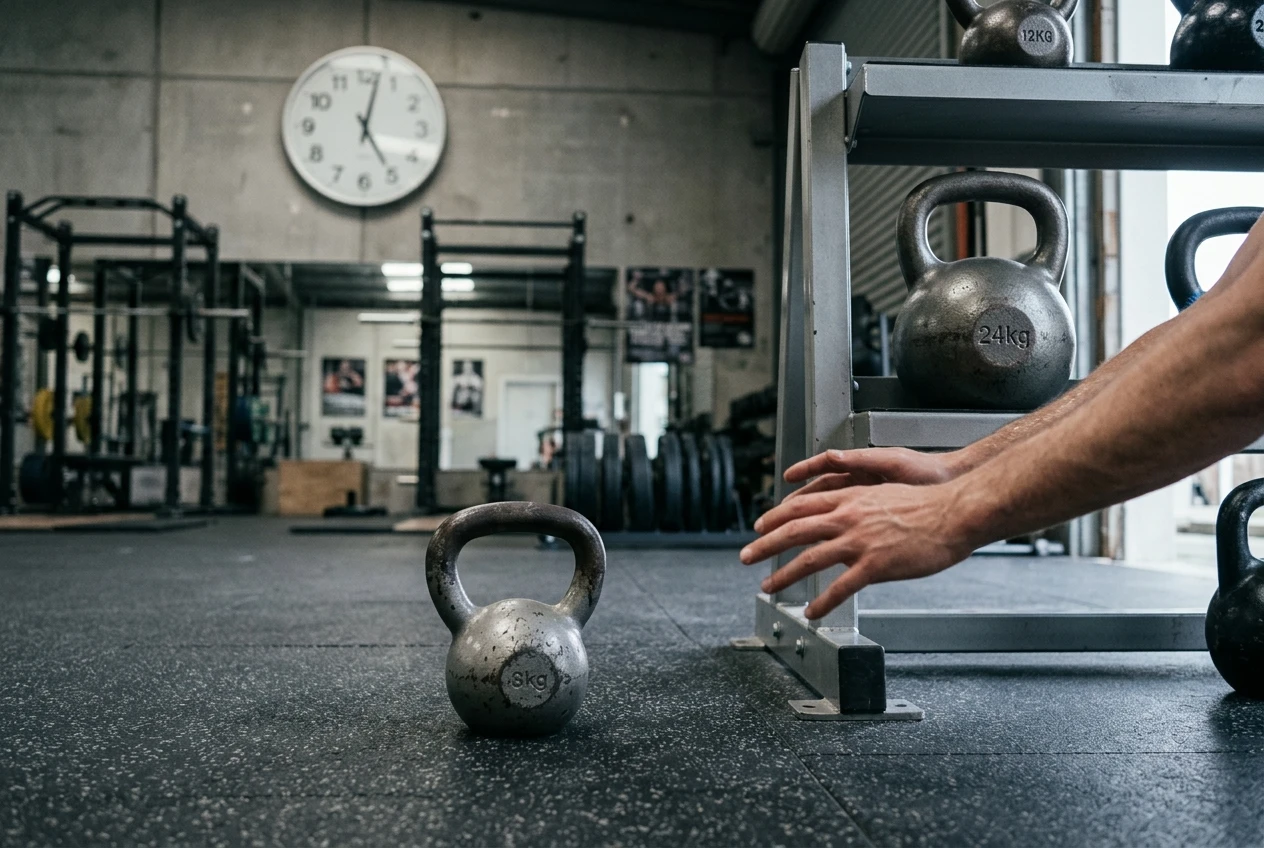
The next-session check: did the flow help your first warm-up sets?
You will not feel the result of a recovery flow during the flow itself. The evidence shows up in your first warm-up sets at the next heavy session. Look at three things:
- Range without a fight. With the empty bar or your first light set, do you reach your usual squat depth, hinge position or overhead lockout without having to ease into it?
- Number of warm-up sets before it feels normal. If you usually need four sets before the bar feels right and today it took two, that is a useful signal.
- Joint feel. Are knees, hips, shoulders or lower back quiet, or do they let you know about themselves on every rep?
Write one line after warm-ups: “loose,” “normal” or “stiff, heavy.” A few sessions of notes will tell you whether the flow is helping, doing nothing or costing you. If you want a structure for those warm-up sets, a 10-minute kettlebell warm-up built around today’s lift gives a lift-specific sequence.
Judge the flow only by those warm-ups. How good your legs felt that evening says very little about how the next session will go.
What to change when the flow leaves you more tired than before
If your next-session notes keep saying “stiff, heavy,” or you feel drained after the flow itself, the session is too big. Reduce it in this order, changing one thing at a time so you can see which change worked:
- Cut to one round. This is the largest reduction and the quickest to test.
- Drop one bell size or lower the load. A lighter bell often matters more than fewer reps.
- Slow the tempo further. A 4-second lowering with a longer pause costs little and often loosens more.
- Remove the carry. Carries load the trunk and grip more than they look like they do.
- Move the session further from your next heavy lift. If you have been doing the flow the day before a heavy day, shift it back a day.
- Replace the flow with a walk. If nothing above helps, your recovery is limited by something other than mobility, such as sleep, food or total weekly volume.
If the flow only feels tiring on the days after your heaviest sessions, that is a signal that the block itself is demanding a lot, and the flow should stay at its smallest version on those days.
Running the flow from a screen so you are not planning mid-session
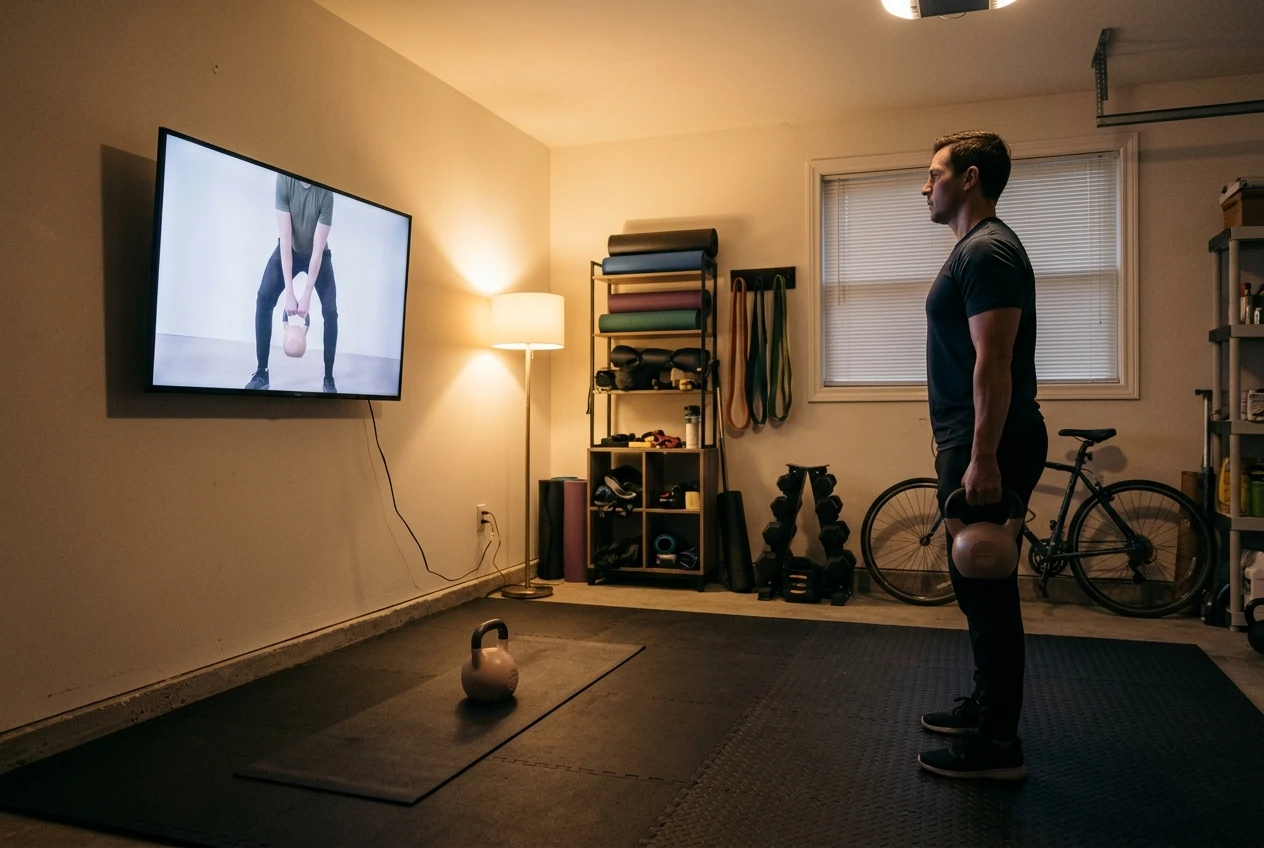
Planning in the middle of a recovery session is how it grows. When you have to decide what comes next, you tend to choose something more interesting and harder. Having the moves, order and rest set in advance removes those choices, which makes the stop rule easier to follow.
You can do that with a card taped to the wall or a note on your phone. A screen has one advantage: it can keep time for you and show the next move without you handling a device with chalky or sweaty hands. For choosing between formats, count the decisions your session forces mid-workout compares a training app against a paper program.
If you would rather follow a set flow than plan one on the day, try the flows in kettlebell.monster (affiliate link: I may earn a commission if you buy through it). You can also run them on a big screen with the Samsung Tizen TV workout app (affiliate link: I may earn a commission if you buy through it). Whichever flow you pick, keep the bell light and hold yourself to the stop rule above.