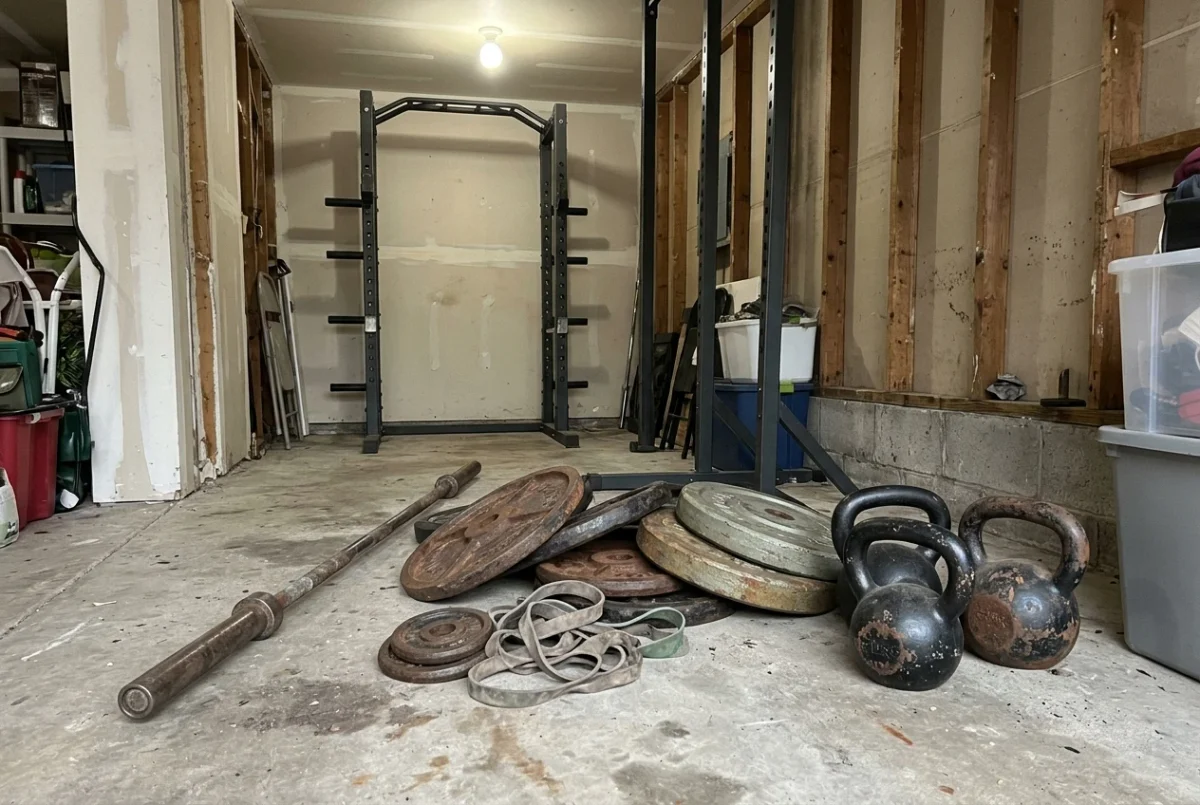
A home gym that grows with you is one where each purchase answers a specific limit in your training, and the piece it replaces keeps working in a different role. Most home gyms grow another way. Gear arrives when money is free or a sale appears, and the older pieces drift into a corner. This article treats the gym as a set of jobs that need doing, with equipment assigned to each one.
Why a home gym that only adds gear turns into a pile, not a system
A pile is a collection of equipment where nobody could say when each piece was last used or what it is for. A system is a collection where every piece has a named job in a named lift or session. The difference shows up in floor space first, then in money, because a gym with overlapping pieces has paid for the same capability twice.
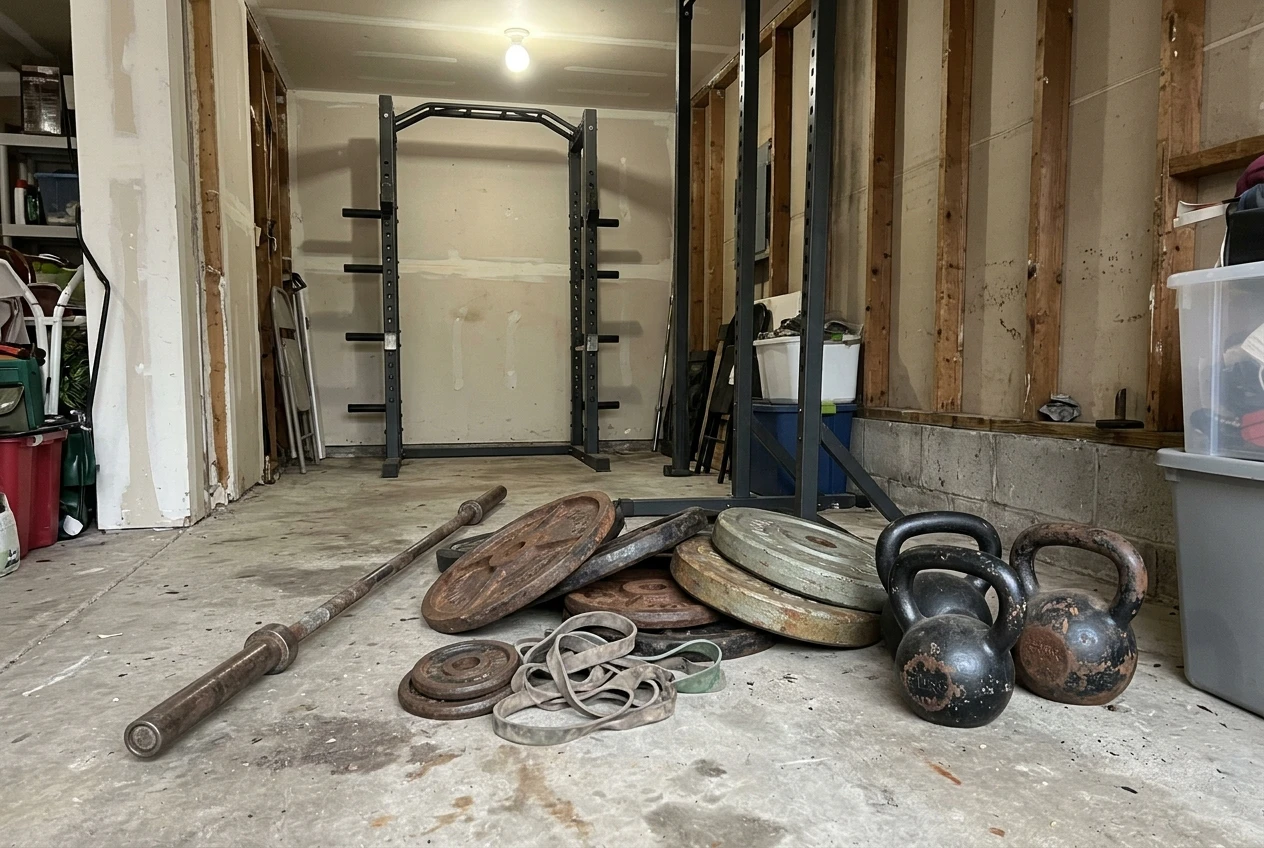
Buying without a trigger causes most of the overlap. If the reason for a purchase is “I might need it” or “it was discounted,” nothing in your training tells you whether the piece fits. If the reason is “my squat top set now needs more than my current setup can safely hold,” the purchase is already defined: it has to fix that problem, and anything that doesn’t is the wrong item.
A schedule of what to buy and when is a separate question, and the five-year home gym plan covers it. This piece covers what comes before each purchase (a written trigger) and what comes after it (a new job for the piece you replaced).
Write down the ceiling for each lift before you shop
A ceiling is the point where progress on a lift stops, and the first task is to find out whether your equipment or your training caused it. Only equipment ceilings justify spending money. Training ceilings are fixed with programming, technique work or recovery, and those cost nothing.
For each main lift you do at home, write three lines:
- The last working weight and rep range you can complete with good form.
- What ended the set. Was it muscle fatigue, a technique breakdown, a grip failure, a safety concern, or the equipment itself running out of room or range?
- What would have changed the outcome. If the answer is a different programming choice, the ceiling is a training ceiling. If the answer is a piece of gear that does not exist in your gym yet, it is an equipment ceiling.
Here are some examples of what real equipment ceilings look like. The plates you own no longer fit on the bar sleeve for the load you need. The uprights on your squat stand are too low or too wobbly for the weight you are racking. The heaviest kettlebell you own has become too light for the swing or press rep range you are training. In each case you can point to a physical limit that stops the lift, and that limit names the item to shop for.
Heavy sets that end because your grip gave out are more ambiguous. A grip that fails first might call for straps, or for dedicated grip work, or for a change in how you set up the pull. Write down which one by checking whether the grip fails early in the set or only on the last reps. Until you know, you do not have a trigger.
Write the ceilings somewhere you will see them when you open a shopping tab. The list also tells you what you do not need. If no lift is currently stopped by equipment, nothing needs buying.
Give every piece a main job now and a second job later
Before you buy the replacement, decide what the old piece will do afterward. This is the step that stops a gym from becoming a pile, because a piece with a second job does not need to be sold at a loss, and nothing is bought twice for the same purpose.
A main job is what the piece does in your heaviest or most important work. A second job is a lower-intensity role the piece can take once something stronger or more suitable takes over the main job. Some patterns work well because the lighter or older piece is better suited to the lighter task:
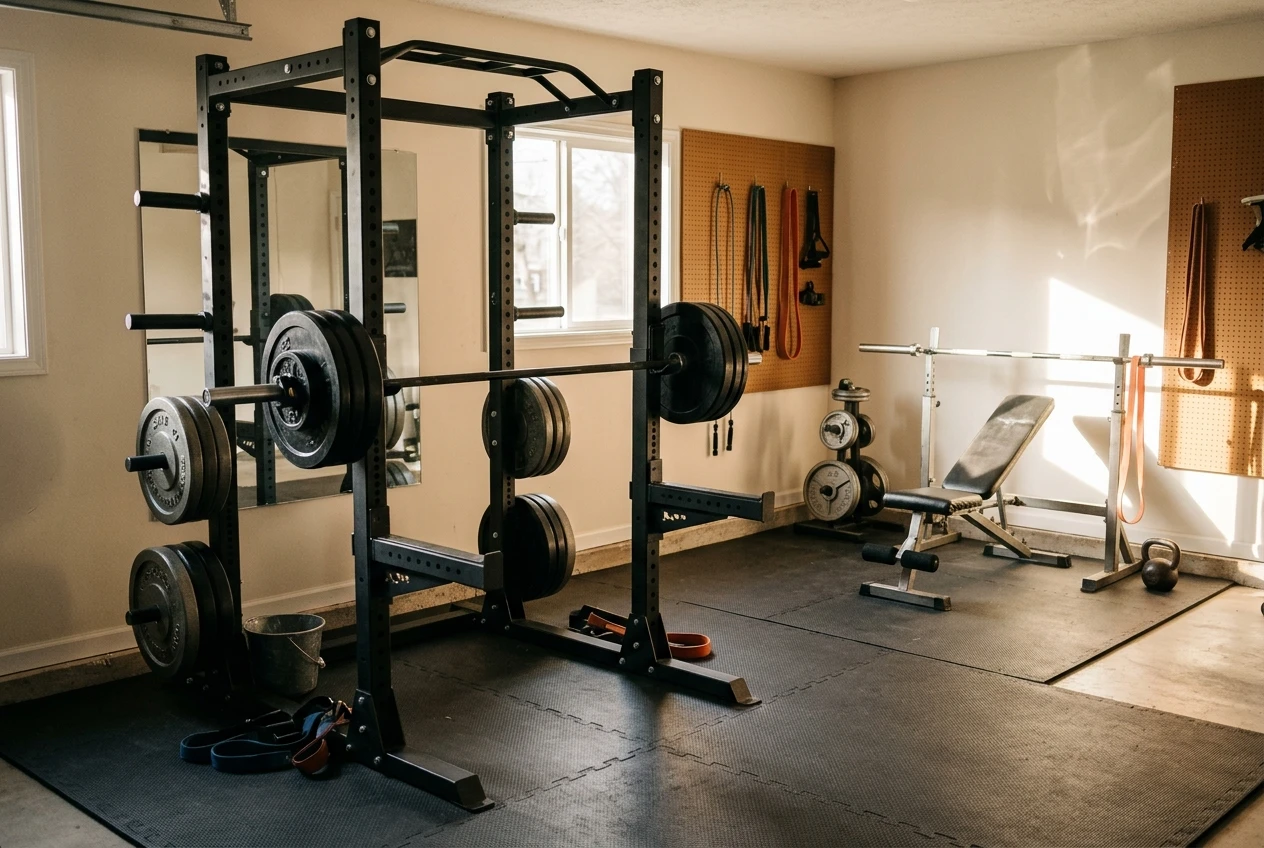
- A lighter kettlebell that stops being your pressing or swinging bell can move to warm-ups, goblet squats, halos and get-up practice.
- Smaller plates that no longer matter for your top sets stay useful for warm-up ramps and small jumps between heavy attempts.
- A lighter resistance band that no longer challenges your pull-aparts can prepare your shoulders before pressing.
- An older bench or stand can serve as a station for accessory work, so your main rack stays free during heavy sessions.
Not every piece has a sensible second job. If you cannot name one, that is useful information: either sell it before it takes up space, or reconsider whether the replacement is worth the price difference.
Warm-ups are the easiest second job to assign. A kettlebell warm-up built around today’s lift uses bells that are far lighter than your working loads, which means the bells you outgrew for training are the right weight for it.
The kettlebell layer: how your bells stay useful as barbell numbers climb
Kettlebells are the clearest case of a piece that changes role instead of retiring. A bell that was your working weight for swings or presses becomes a warm-up tool when you buy a heavier one, and the heavier bell becomes the main tool while the older one takes on the finisher or the lighter practice work.
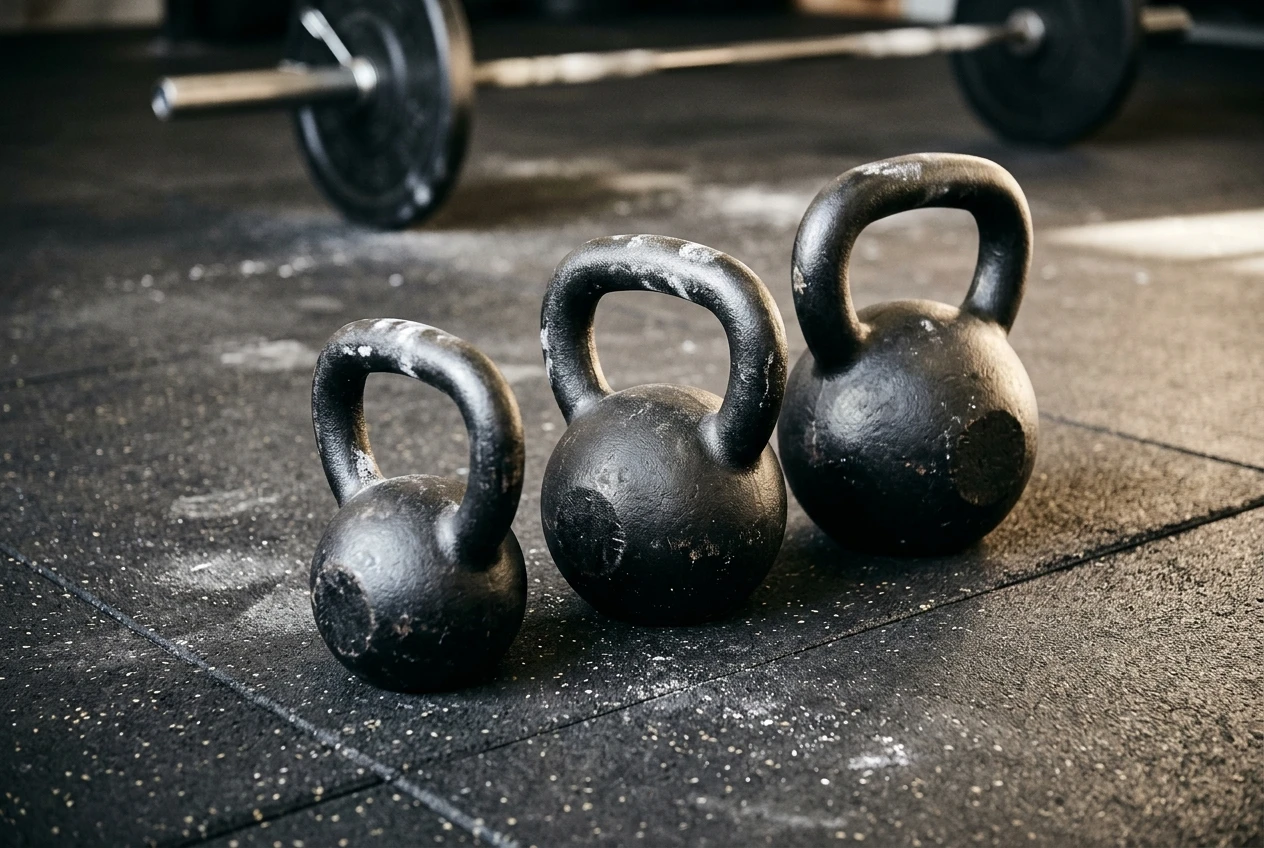
Because barbell strength tends to climb faster than what a single kettlebell can challenge, the bells you own end up spread across several roles. A rough way to lay it out:
- Heaviest bell: the main job is the heavy swing, clean or carry work that needs real load. It gets used when you are fresh.
- Middle bell: the main job is higher-volume work, such as swing density sets or presses. As you buy a heavier bell, this one becomes the accessory and finisher weight.
- Lightest bell: warm-ups, mobility drills, technique rehearsal and the early rounds of a flow.
When you buy the next bell, it is worth checking that it fills a gap in this layout. A bell only slightly heavier than your current one may not change what you can do, while one that creates a clear step in weight gives each lighter bell a distinct role.
Kettlebell work also fits around barbell training without displacing it. A kettlebell flow can serve two jobs in a powerlifting split: a finisher after accessories and a lower-intensity session between heavy days. Your lighter bells are well suited to the second of those, since the point is to move without adding fatigue to your next heavy session.
Check that the new piece fits what you already own before you buy it
A purchase that solves the trigger can still fail on fit. Before you pay, check the new piece against the rest of the gym on five points:
- Space. Measure the area it will occupy and the area you need around it to use it. A bar needs clear room on both sides for loading and for a failed rep.
- Compatibility. Check that plates fit the sleeve diameter, collars fit the bar, and attachments fit the rack’s hole size and spacing. Specifications differ between makers, so read the product page rather than assuming.
- Load path. If the piece raises the weight you can lift, check that everything it touches, including the floor, bench and rack, is rated or built for that load.
- Overlap. Ask which piece it makes redundant, and what that piece’s second job will be. If the answer is “nothing,” the purchase may be duplicating something you have.
- Surface. Heavier loads and more dropped weights increase the wear on your floor. The home gym flooring piece shows how to work out what that wear costs you.
Price matters at this stage too, but in terms of how long the piece will do its job. A cheaper item that you will replace soon creates a second purchase for the same trigger. Weighing the minutes cheap gear costs you against the price of better gear is a more reliable way to compare than looking at the sticker price alone.
Keep an upgrade log that ties each purchase to a lift trigger
A log makes the system visible. After a few purchases you can see whether each one solved what it was bought for, and you have a record of what every piece is now doing. A simple log needs only a handful of fields per entry:

- Date and item bought.
- The lift and the ceiling that triggered it. Copy the wording from your ceiling notes.
- The piece it replaced and that piece’s new job.
- A review date, a few weeks after purchase, when you check whether the ceiling moved.
- Outcome. Did the lift progress? If not, was the cause something other than the equipment?
An example entry, using a made-up case: “Squat top set: safeties on the old stand bent under a missed rep and I stopped trusting them. Bought a sturdier rack. Old stand moves to the accessory corner for split squats and pin work. Review in four weeks.”
The review column is the one that saves the most money. If the lift did not improve after the purchase, the ceiling was probably not about equipment, and that is worth knowing before you spend on the next item. The log also lets you catch a pattern: if several entries end with “no change,” your shopping decisions may be coming from impatience rather than from your training.
When the right upgrade is no purchase at all
Sometimes the ceiling you wrote down turns out not to be a gear problem. Checking this first is the cheapest upgrade available, and it protects the budget for the times gear really is the limit.
Common cases where nothing needs buying:
- A stalled press that may be a range or control problem. Testing for each before you buy mobility gear is covered in the guide to a stalled overhead press. The test costs a few minutes and may point to a drill instead of a product.
- A top set that fails at the same rep each week. Adjusting the rep scheme, adding a back-off set or taking an extra rest day may move it.
- A kettlebell that feels too light. Slowing the tempo, adding pauses, changing to single-arm work or extending the set time all increase the difficulty with the bell you already own.
- A cramped gym. Reorganizing so that the second-job pieces sit away from the main lifting area often fixes the problem without a larger room or a new storage unit.
When you do decide that nothing needs buying, write that decision in the log with the date. It builds a record that supports the next time your gut says a purchase is due, and shows how many of the past urges turned out to be programming problems.
A gym built this way ends up with fewer pieces than one built by impulse, and each of them has a role you can state. The next purchase waits for a ceiling you have written down, and the piece it replaces goes on to do lighter work.
If kettlebells are part of your gym, see the kettlebell.monster programs for ways to keep the bells you own working as your barbell strength grows. Affiliate link: I may earn a commission if you buy through it, at no extra cost to you.