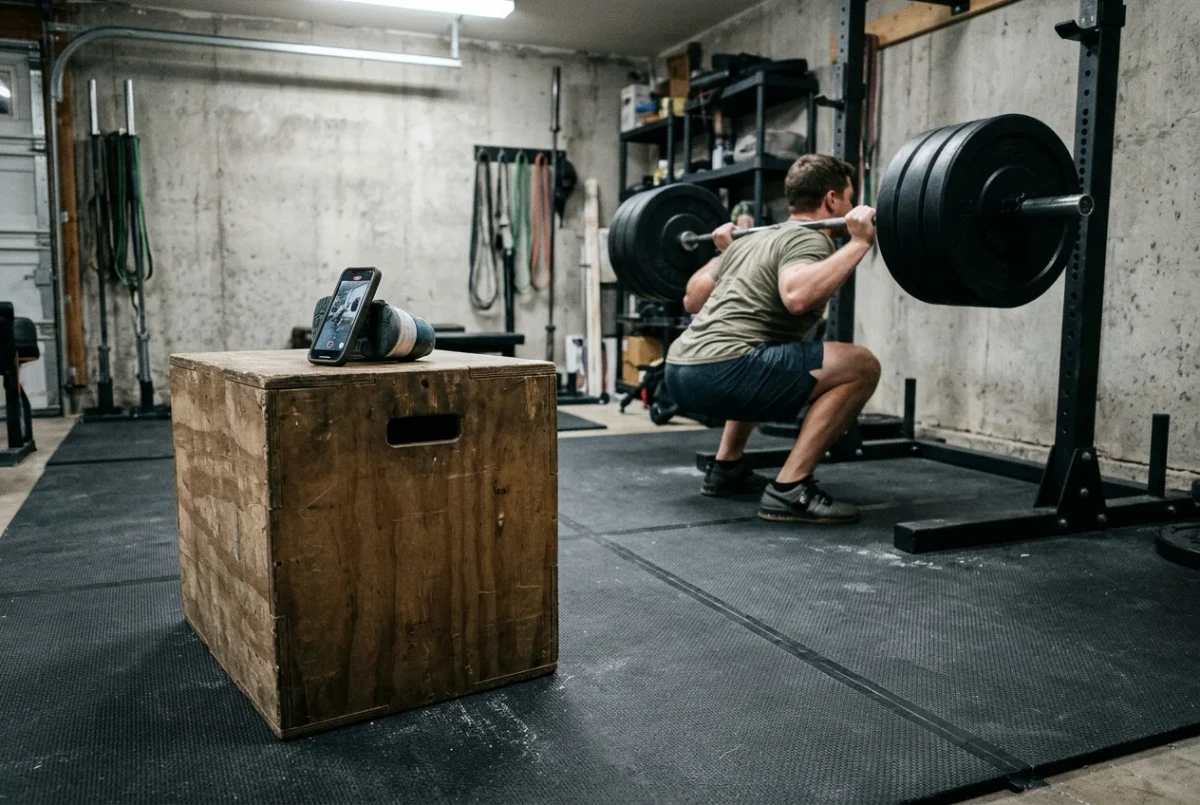
Most advice for a lower back that gives out before the legs does comes down to “brace harder” or “do more core work.” Both can be right, and both can be wrong, because three different problems produce the same complaint. The lower back can quit because your position changed, because your trunk stopped holding pressure, or because the spine has taken more heavy loading than it has recovered from. Each one needs a different change to your programming.
This article gives you a way to sort your own lower back limit into one of those three types, then shows which heavy squat volume to trim and which kettlebell accessory to put in its place. If your lower back is holding back heavy squats, the fix is rarely to stop squatting. It is usually to move some of the spinal loading somewhere else.
Which Part of Your Back Is Actually Ending the Set? Three Ways It Gives Out
The three types look like this from the lifter’s side:
- Position loss: your torso angle changes as the set goes on. The chest drops, the hips rise first out of the bottom, and the lower back ends up doing work the legs should be doing.
- Bracing loss: your position looks fine, but the trunk stops holding pressure. The ribs flare, the belly goes soft, and the back takes on the load it was supposed to share with the abdominal wall.
- Spinal fatigue: the reps look the same from first to last, but the back is tired or sore before you start, or stays sore for days. The cause is the weekly total of heavy loading, not any one set.
Most lifters can feel which one it is if they pay attention, but memory is unreliable in the middle of a hard set. Video is more reliable, and it costs nothing.
The Set-by-Set Check: Film Your Last Three Reps and Compare Them to Your First
Prop your phone about hip height, side-on, with the whole bar path and your full body in frame. Film a normal working set that usually ends with your back complaining. Do not change your weight or rep target for the test. Then watch rep one next to the last three reps, ideally on the same screen.
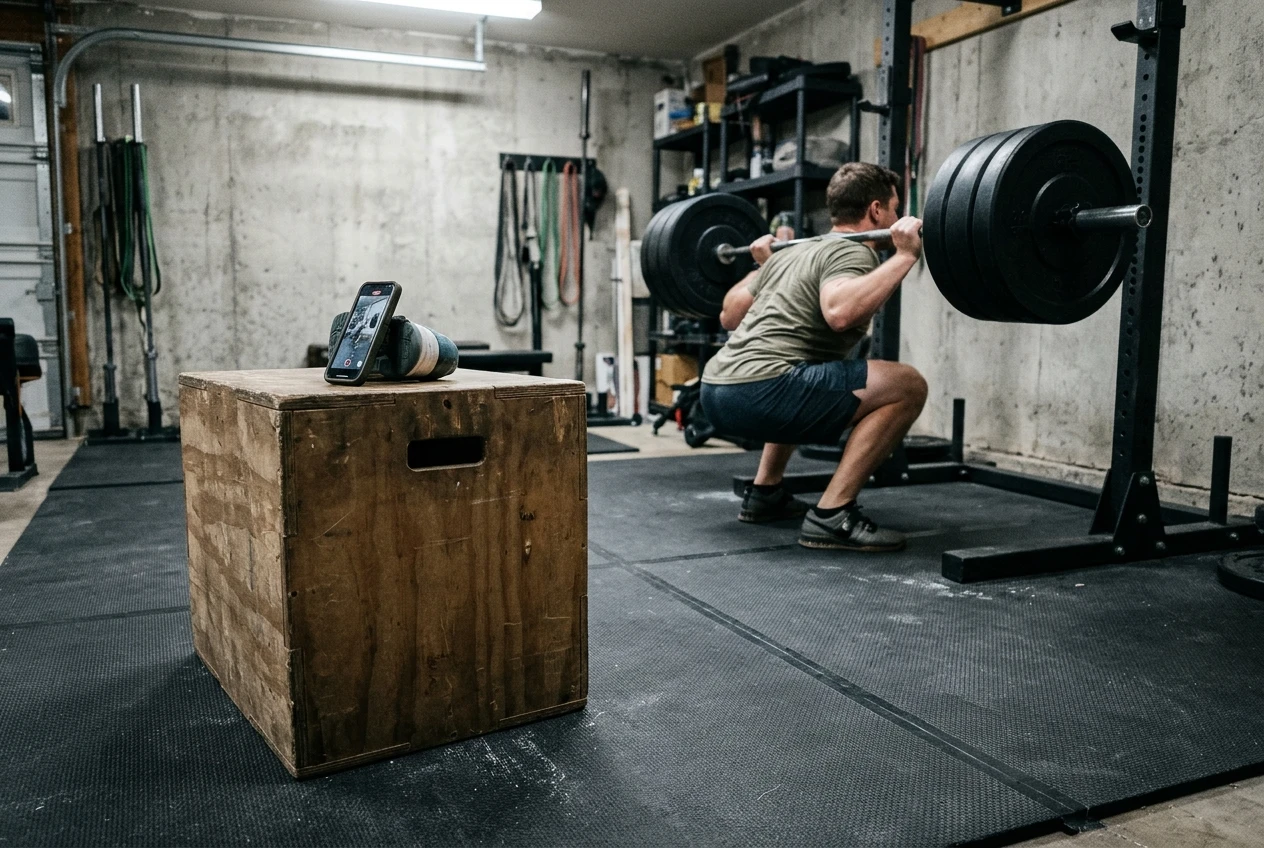
Look at four things:
- Torso angle at the bottom. Draw a line along your back. Does it lean further forward on the last reps than on the first?
- Hips versus chest on the way up. If the hips rise first and the chest follows late, the squat is turning into a good morning.
- Ribs and belly. Look for the ribcage lifting and flaring at the top of the rep, or the midsection visibly softening between reps.
- Bar path. Drifting forward of the midfoot means the back is leveraging against the load.
Then add a note about timing. Did the back complain during the set, in the hours after, or the next morning, and did it start complaining before the first rep on a later day in the week?
Sort what you saw:
- The angle changed, and the hips shot up: position loss.
- The angle held, but the ribs flared, or the trunk went soft: bracing loss.
- Rep one and the last rep look nearly identical, but the back is stiff or sore across the week: spinal fatigue.
Some lifters will see a mix. Pick the one that shows up earliest in the set and treat that first.
Position Loss: When the Torso Folds Forward and What to Cut First
Position loss means the legs or upper back could not keep the torso where it started, so the lower back picked up the slack. The back is reporting a problem somewhere else in the chain: quads that tire before the hips do, an upper back that cannot keep the bar over the midfoot, or a set simply taken a rep or two past the point where the position holds.
What to cut first: the reps after the position breaks. In the video, find the rep where the torso angle first changed. If that is rep four of a set of six, the last two reps were more of a back exercise than a squat. Stop heavy sets one or two reps before that point. Trim the back-off sets next, since they are usually done more tired and at a worse angle than the top set.
What to put in its place: movements that make you stay upright under load and train the quads without a heavy bar on the spine.
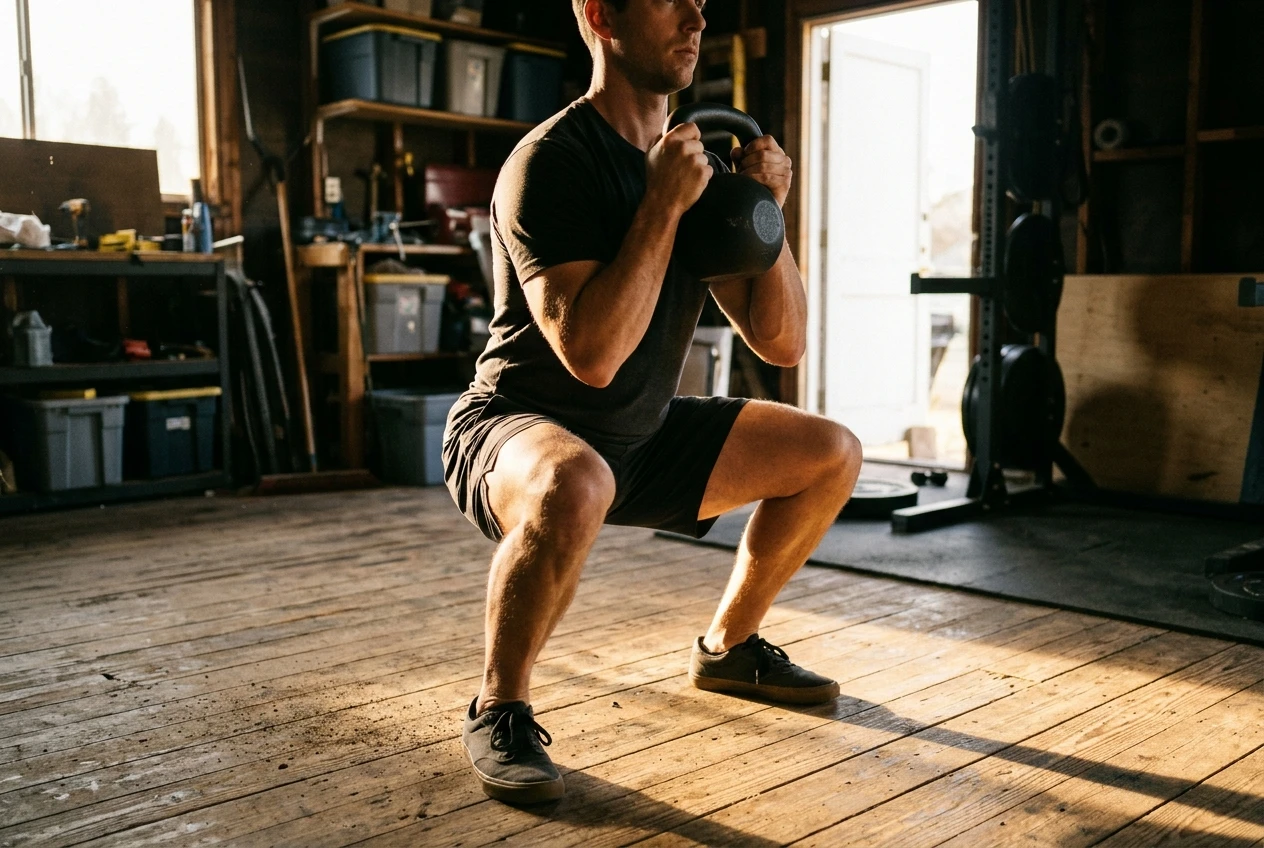
- Goblet squat with a pause. Hold the kettlebell at your chest and pause at the bottom for two to three seconds. The weight in front acts as a counterbalance, so the torso stays tall. If you cannot hold an upright torso in the pause, the load is too heavy for this purpose.
- Double kettlebell front-rack squat. Two bells racked at the shoulders demand an upright trunk and a braced midsection, and the total load is usually well below what you squat with a bar.
Do these for sets of 6 to 10, stopping when the torso angle starts to change, the same rule you now apply to the barbell.
Bracing Loss: When the Trunk Goes Soft Under the Bar and What Trains It Instead
Bracing loss shows up as a trunk that cannot keep pressure throughout the whole rep. The ribs rise toward the ceiling, the lower back arches at the top, and the belly relaxes between reps. Position may look acceptable on video for several reps, while the trunk is quietly giving up.
What to cut first: long, continuous sets. A set of eight or ten heavy reps asks for a brace that has to be re-established on every rep, and that gets harder as breathing speeds up. Shorten the sets to the reps where the brace holds, and rest long enough between them that you can take a full breath and set up properly again. A set of three that stays tight is worth more than a set of six that does not.
What to put in its place: loaded carries, which make the trunk resist movement while you keep breathing.
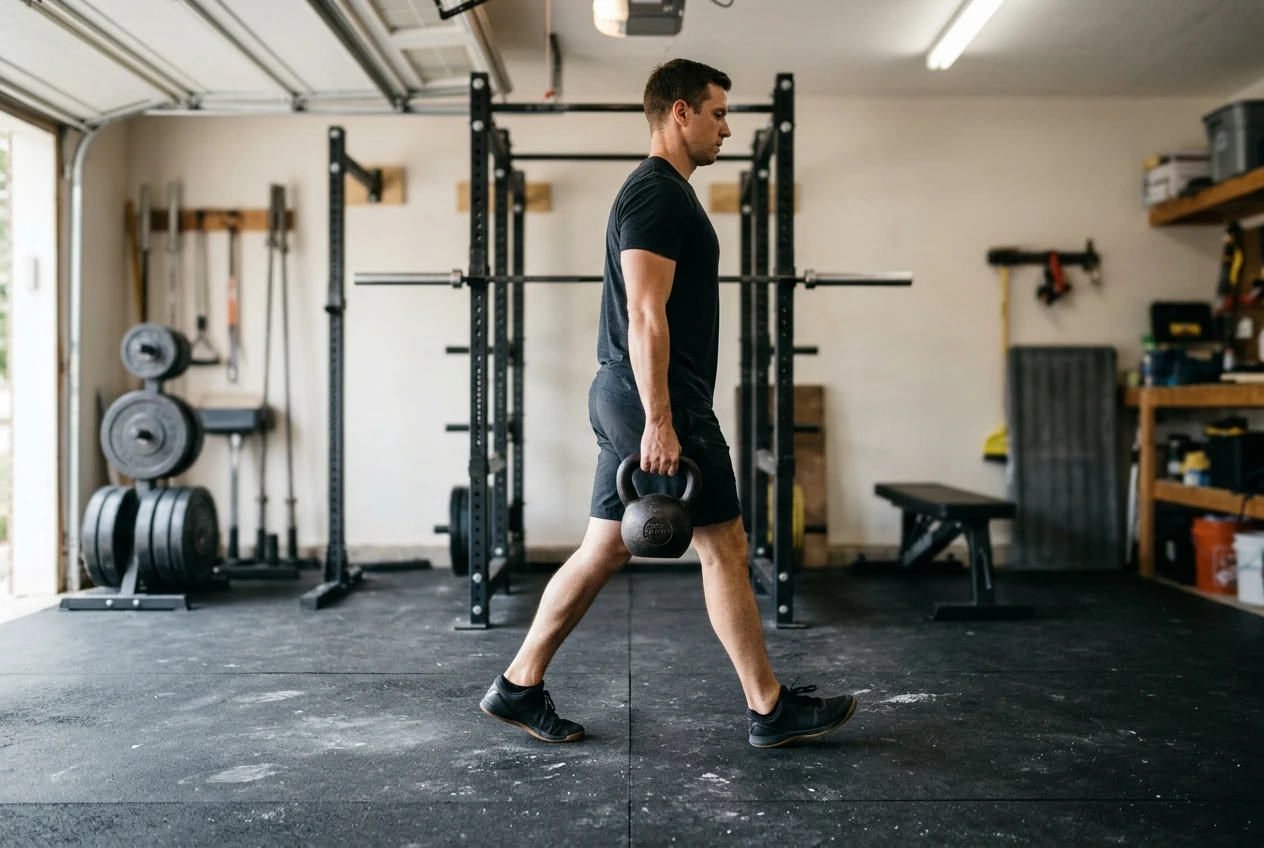
- Suitcase carry. Hold one kettlebell at your side and walk without leaning toward it. The trunk has to resist side bend, which trains the muscles that hold the spine steady under a barbell.
- Offset front-rack carry. Hold one kettlebell racked at the shoulder and walk tall. The trunk resists both side bend and rotation, and the ribs stay down because the rack punishes flaring.
- Two-bell farmer carry. This is the simplest option and adds load without a technical demand. Walk with ribs down and breathe steadily.
Walk for 20 to 40 meters per set, keeping your torso still. Stop the set when you start leaning, or the ribs start lifting, since carrying a bell while sloppy trains the same fault you came here to fix.
Spinal Fatigue: When Too Much Heavy Loading Piles Up Across the Week
Spinal fatigue is the quietest of the three. Every rep looks fine on video, and the brace holds, but the back is stiff when you wake up, or it feels tired on the warm-up set of a later session. The back is not failing at one moment. It is being asked to recover from more heavy axial loading than the week allows, and squats are only part of that. Deadlifts, good mornings, heavy rows, and any other lift that puts load through the spine all count.
What to cut first: the least useful heavy spinal-loaded volume in the week, not necessarily squat volume. Look at everything that loads the spine and ask which sets add the least. Often, it is the back-off sets after a heavy top set, or a second heavy day, that repeat a movement pattern you have already trained. Keep the top set that drives progress and trim what surrounds it.
What to put in its place: work that trains the legs hard with little compressive load on the spine.
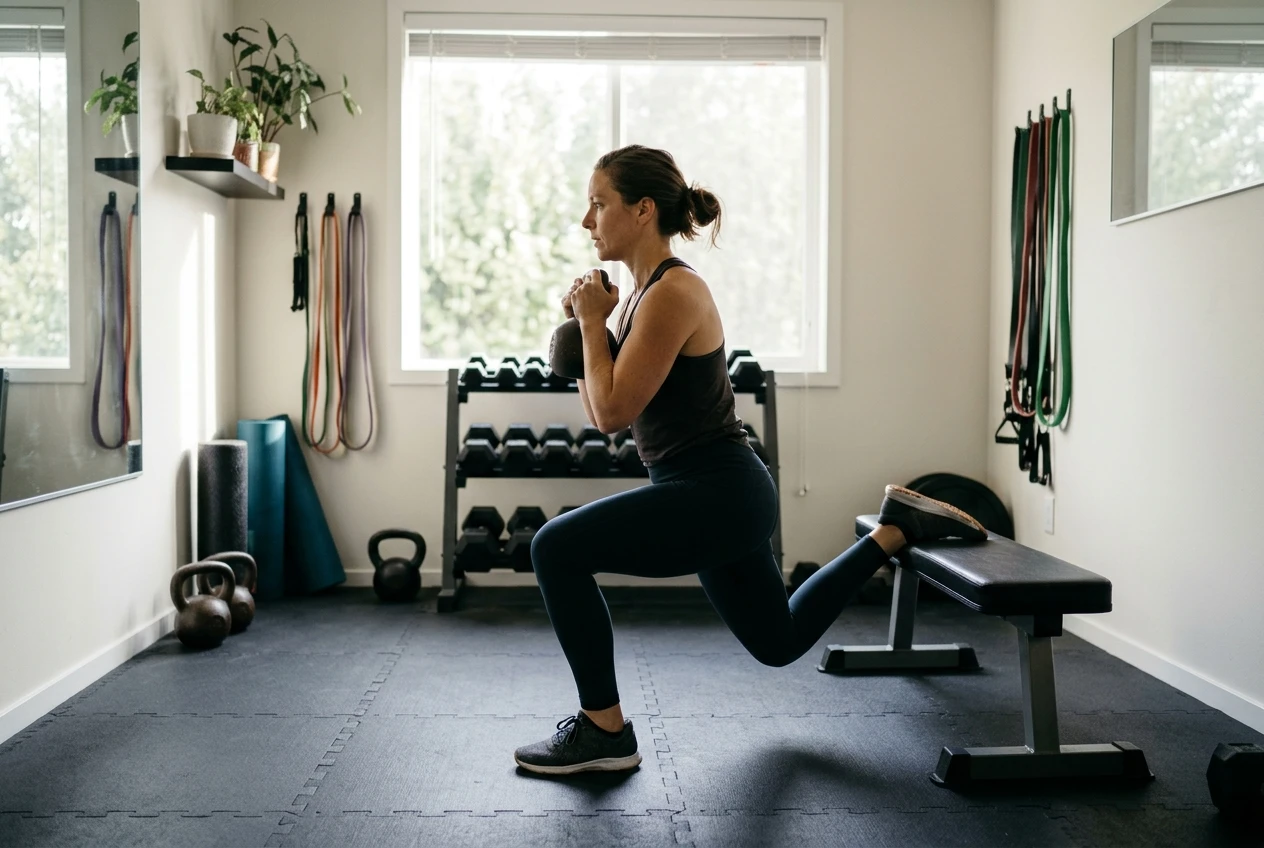
- Goblet squats for sets of 8 to 12. The load sits in front of the body, and the weight is naturally limited.
- Kettlebell rear-foot-elevated split squats. Hold a bell in one hand or both. Single-leg work trains the quads and glutes with a fraction of the barbell’s load.
- Single-leg kettlebell Romanian deadlift. It trains the hamstrings and glutes with a light bell, and balance limits the weight, which protects the back.
Swapping Heavy Volume for Kettlebell Accessories: Which Movement Replaces Which Set
The swap works only if the kettlebell work replaces heavy sets. Stacking it on top of an unchanged squat week adds fatigue instead of removing it.
Your type | Heavy volume to trim | Kettlebell replacement |
|---|---|---|
Position loss | Reps after the torso angle changes; back-off sets | Paused goblet squat; double front-rack squat |
Bracing loss | Long continuous sets; short rests | Suitcase carry; offset front-rack carry; farmer carry |
Spinal fatigue | The least useful heavy spinal-loaded sets in the week | Goblet squat for higher reps; rear-foot-elevated split squat; single-leg RDL |
Take out a set, put in a set. If you trim two back-off sets, add two sets of the matching kettlebell movement, not four.
Kettlebell swings are a different case. They load the hips and back in a way that can bring on the same ache you are trying to remove, so they do not belong in this swap until your swing is clean. If your back already complains after swings, match your swing fault to the accessory movement that trains it before adding any.
Placement matters as much as selection. Putting kettlebell sessions right before a heavy squat day can recreate the fatigue you are trying to remove. Where kettlebell sessions go in a powerlifting week covers how to space them away from your heavy days.
How to Tell the Swap Is Working Before Your Next Heavy Day, and When to Get It Looked At
You do not need to wait for a new one-rep max to know whether the swap helped. Check these before the next heavy session:
- Position loss: film the same working set again. Is the torso angle on the last rep closer to the first rep than it was?
- Bracing loss: Do the ribs stay down through the last rep, and can you take a full breath between reps without losing the brace?
- Spinal fatigue: Is your back less stiff on waking, and does it feel like the first warm-up set is easier on the lower back than before?
If the answers are yes, keep the swap through the next block and nudge the heavy volume back up a little at a time. If nothing changes after a couple of weeks, go back to the video and re-sort: you may have been treating the wrong type, or two types at once.
Some symptoms are outside what any accessory can fix. See a doctor or physical therapist if you have:
- sharp pain, especially pain that stops you mid-rep
- pain that does not settle within a day or two of resting
- pain at night or at rest
- pain that travels down a leg
- numbness or tingling in the leg or foot
- back pain that began after a specific moment, such as a pop or a missed rep
None of these is a programming problem, and a kettlebell will not fix it. The three-type check is for the ordinary ache or fade that comes from heavy training, and it is not a way to work around an injury.
Where to Go From Here
If you would like guided kettlebell accessory work for this swap, you can look at the kettlebell. monster (affiliate link: I may earn a commission if you buy, at no extra cost to you). If you would rather follow a coach on screen while you do the carries and squats, there is also the Kettlebell Monster Samsung TV app (also an affiliate link, with the same disclosure).