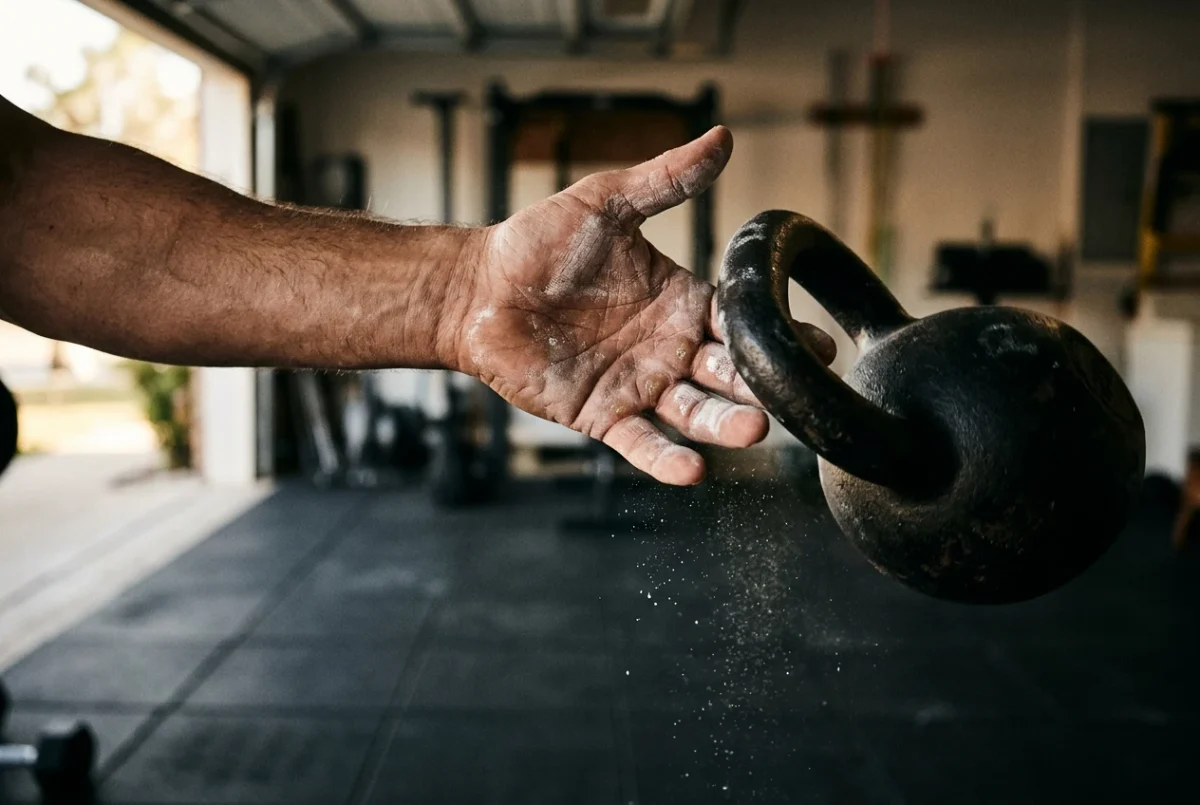
Most kettlebell lifters treat grip as a side effect. You swing, clean, snatch and carry, and your hands get stronger as a by-product. That works until the day your hands quit at rep 14 of a set your hips could finish twice. From then on, your hands set the ceiling on your whole program, and extra work at the end of the session won’t raise it.
Grip strength training for kettlebell lifters works better when it gets its own block, with its own goal and its own way of being measured. This article covers how to spot the problem, what the block looks like, and how to tell whether it worked.
How to tell if your hands are ending the set instead of the muscles you meant to train
A set is over when you can’t continue with acceptable form. The question is what made you stop. Run through these signs after your next hard session:
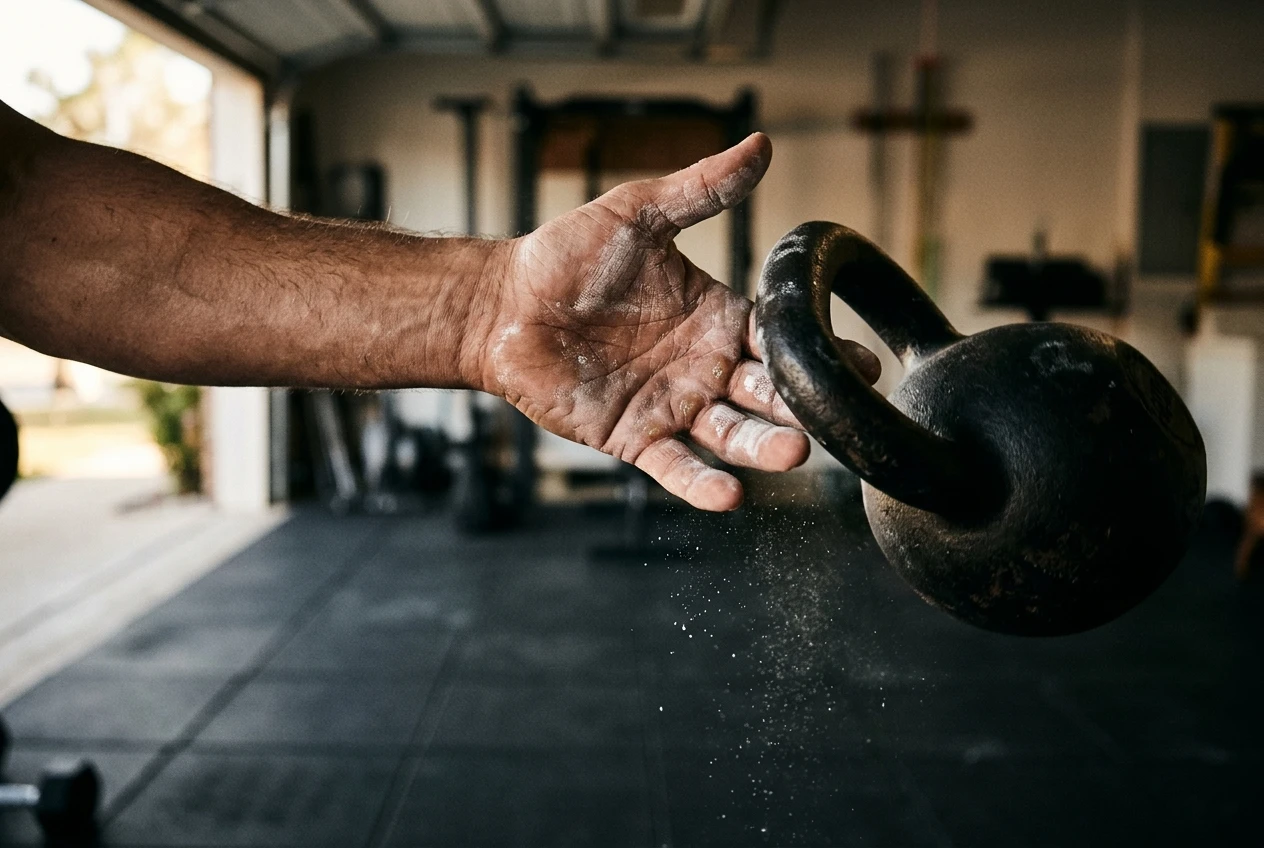
- The bell slips or you re-grip mid-set. In swings, the handle shifts in your palm at the top. In carries, you shorten the walk and set the bell down early.
- Your forearms burn or cramp before your glutes and hamstrings do. If your legs and hips feel fresh while your forearms are done, your hands set the limit.
- You stop with reps left in the tank. Ask yourself honestly whether you could have done five more swings if the handle weren’t a problem. If the answer is yes, the target muscles were not the limit.
- Your rep counts stall while your legs and back keep recovering fine. Soreness and general fatigue are normal, but a set that ends early week after week at the same point points at one weak spot.
- Your hands are the first thing you think about when you rack the bell. Most people can tell what ended the set once they pay attention.
One distinction matters here. If the skin on your palm tears or blisters, you have a hand-care problem, and a grip block won’t fix it. Grip strength is about muscle in the forearm and fingers. Torn skin is about friction, callus management and handle fit.
If two or three of the signs above sound familiar, your grip is limiting the work you came to do.
Why a few finishing hang holds don’t fix a grip bottleneck
The usual fix is to add a couple of dead hangs or a farmer carry at the end of the session. It feels productive, and it rarely changes anything, for three reasons.
First, your hands are already tired. After heavy swings and cleans, the muscles that close your fingers have been working for the whole session. A hang hold done in that state measures how much fatigue you carry, and it gives your hands little reason to get stronger.
Second, the dose is too small. A single hang to failure at the end of a workout is a few seconds of real stimulus per week. Strength in any muscle comes from repeated hard sets over weeks, and the forearms are no different.
Third, there is no target. When grip work is whatever you have left over, you never find out whether it helps. You can’t tell if your hands improved, so you can’t tell whether to push harder, change the drill or leave it alone.
A dedicated block fixes all three. The work happens when your hands are fresh enough to be challenged, it is large enough to matter, and it has a number you can check.
What a dedicated grip block looks like inside a kettlebell training week
A grip block is short. It does not need its own long session, and it should not eat time you need for the lifts themselves. A workable structure is two or three slots per week of about 10 to 15 minutes each.
Placement matters more than length. Three options, in order of preference:
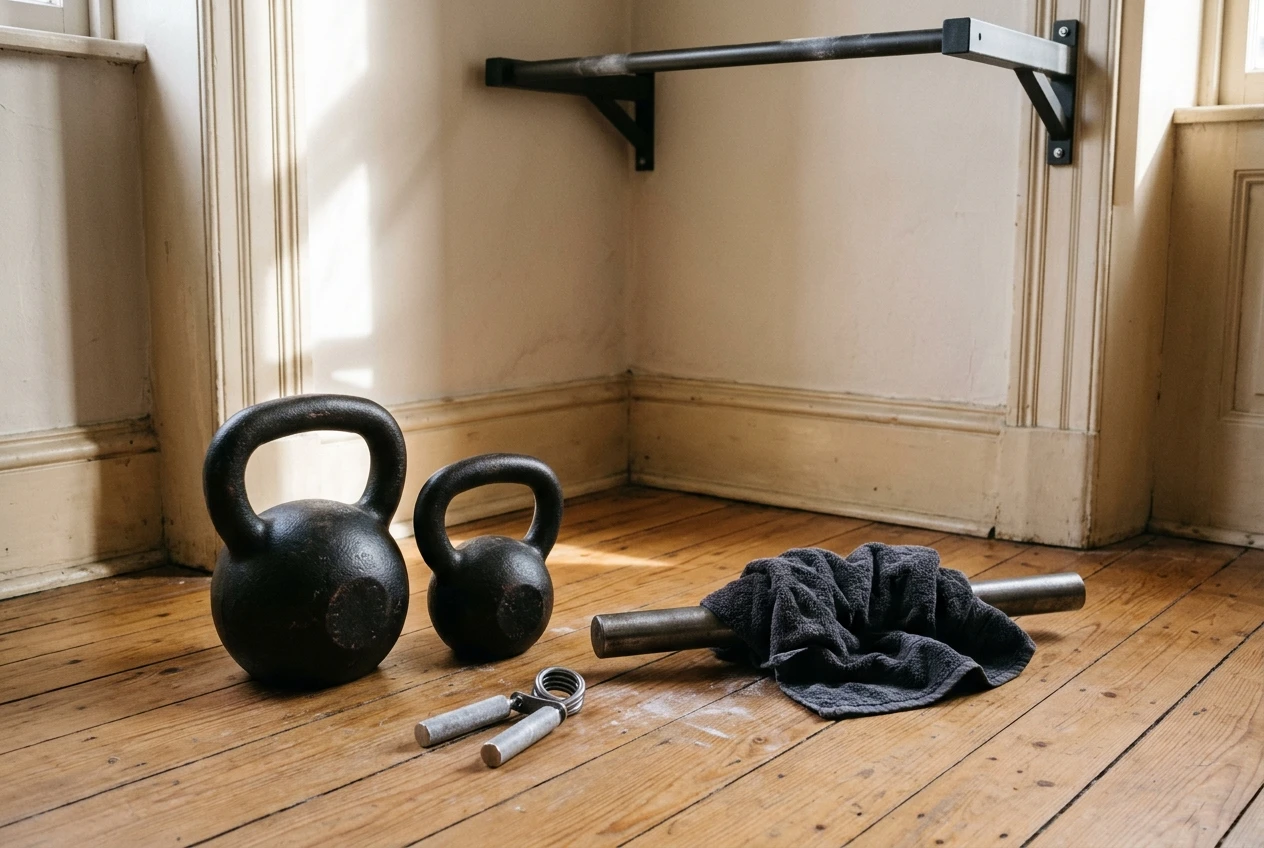
- A separate short session. On a day with no swings or cleans, do the grip work alone, or after a low-hand-demand workout such as squats or presses.
- The start of a session where the main work is easy on the hands. Do the grip work right after your warm-up, then lift.
- After a lighter kettlebell day. If you must attach it to a swing or snatch day, make sure the main session was not a hard grip day and that the block sits at the end of a session that left your hands with something in reserve.
Avoid putting the heavy grip work right before a high-rep swing or snatch session. You would be pre-tiring the exact muscles that cap your sets, and your swing numbers will drop for reasons unrelated to your hips.
Here is one way a week could look, assuming three kettlebell sessions:
- Day 1: Swings and goblet squats. No grip block.
- Day 2: Grip block alone (10 to 15 minutes), plus any easy mobility work.
- Day 3: Cleans, presses and carries, grip block first if the session is light on volume.
- Day 4: Rest.
- Day 5: Snatches or heavy swings. No grip block.
- Day 6 or 7: Optional second grip slot, kept short.
Give the block a goal in a sentence, such as “add reps to my unbroken swing set with the same bell” or “carry my bell for a longer distance with the same rest.” A goal like that tells you which drills to pick.
Match the drill to the way your grip fails: crushing, holding or hanging on through swings
Grip is not one quality. Three different failures call for three different drills, and picking the wrong one wastes the block.
Crushing: the bell feels too thick or heavy to squeeze
If you can barely close your hand around a handle or a heavy implement, you have a crushing problem. Useful drills include:
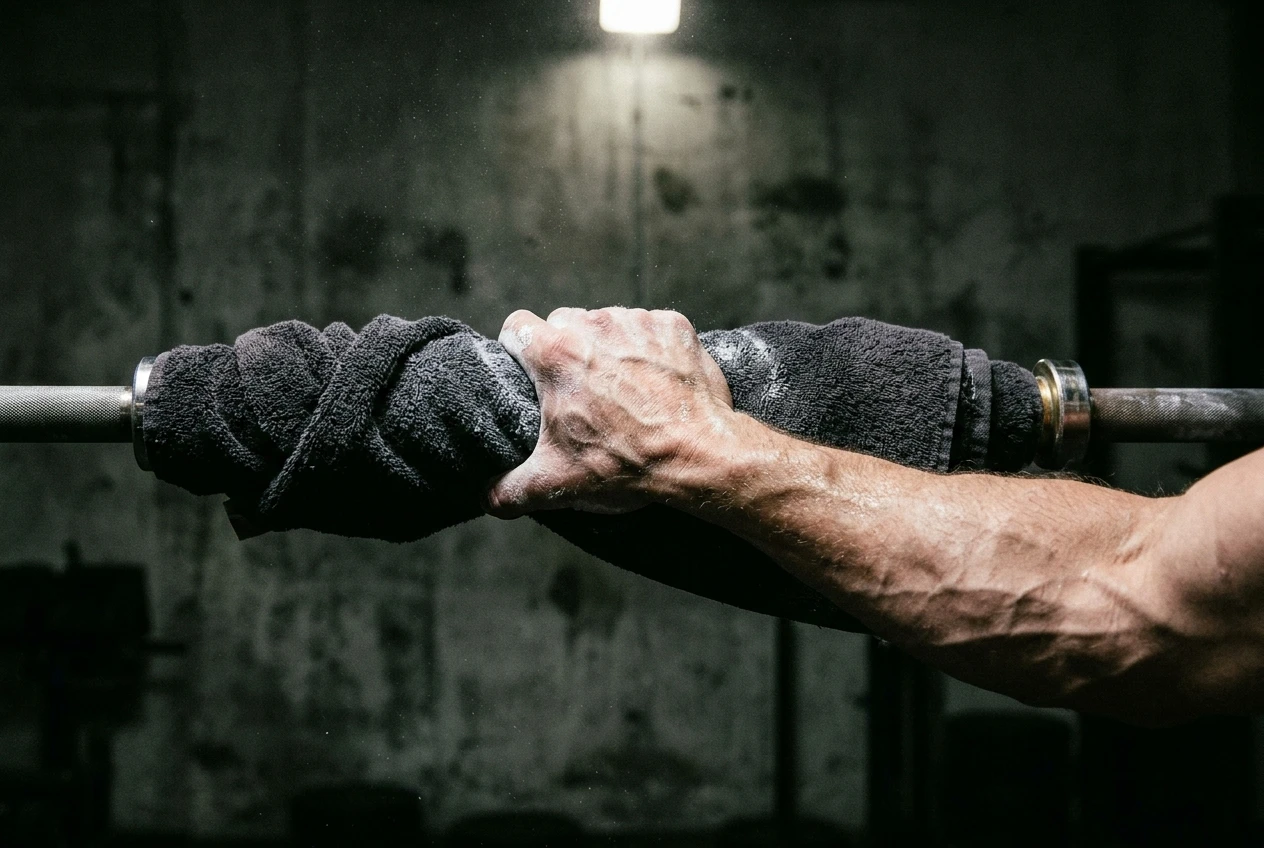
- Thick-handle holds or squeezes using a towel wrapped around a handle or bar.
- Hand grippers, if you have one, for low-rep hard squeezes.
- Heavy single-hand kettlebell holds in a deadlift position, with a fixed hold time.
Keep reps low and effort high. Crushing strength builds from short, hard efforts, and long sets turn it into endurance work.
Holding: your hands open up during carries and long holds
If the bell drops during a carry or a rack hold, you have a holding problem, which is about time under tension. Useful drills:
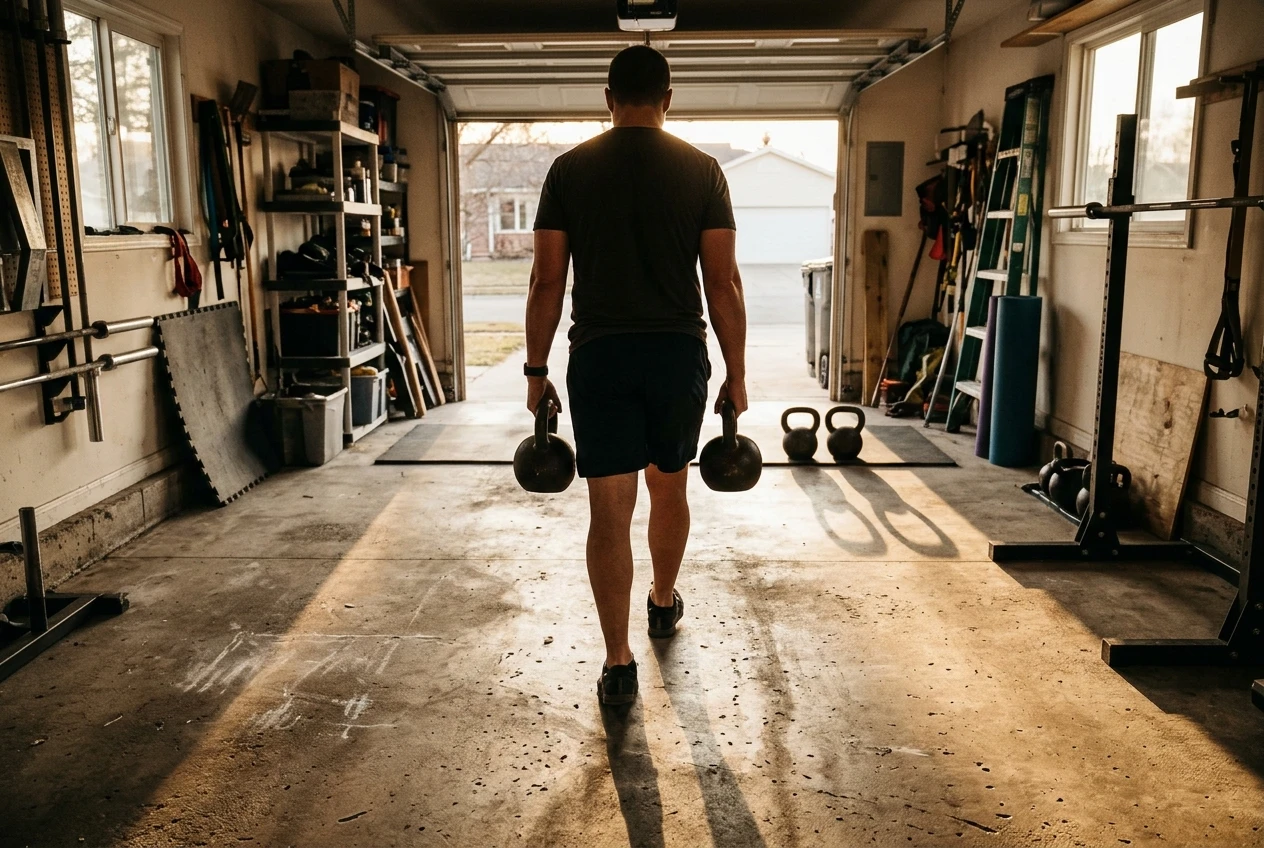
- Farmer carries with a pair of kettlebells for distance or time.
- Suitcase carries with one bell, switching hands.
- Dead hangs from a pull-up bar, if you have one.
Pick a bell weight you can hold for about 30 to 60 seconds with good posture, then add time or distance before you add weight. Using a heavier bell too soon makes you cut the set short, which defeats the purpose.
Hanging on through swings: your hands fail mid-set at moderate weight
Dynamic grip is its own problem. In a swing, the bell pulls on your fingers hard at the bottom of every rep and floats weightless at the top. Lifters whose hands tire in the middle of a swing set often squeeze the handle with full force through the whole rep, which wears out the forearm early.
Two fixes go together:
- Technique. Keep a firm hold at the bottom of the swing, where the bell is pulling hardest, and let your fingers relax a little at the top, where the bell is nearly weightless. This saves forearm energy across a long set. A video of your own swing helps you see whether you are strangling the handle.
- Specific drills. Practice swings in shorter sets with more rounds, or use a slightly heavier bell for low reps. Your hands get used to the handle’s pull at a quality you can control.
Pick one primary drill for the failure that stops you most often. A second drill can fill in a weaker area. Three or more drills in a 15-minute block spreads the effort too thin.
How long to run the block, and a reps-first way to check it worked
Run the block for about six weeks. Grip adapts slowly enough that two weeks tells you little, and by eight to ten weeks most people need a new drill or a heavier load anyway. After six weeks, take a lighter week, then retest.
Before you start, set your benchmark. Choose one test that matches your goal and record it:
- For swings: the number of unbroken swings you can do with your current bell before your hands force you to stop or re-grip.
- For carries: the distance or time you can carry a specific bell or pair of bells before setting them down.
- For hanging: how many seconds you can hold a dead hang or a heavy single-hand hold.
After six weeks, repeat the exact test with the same bell, the same rest and the same conditions. If the number went up, the block worked. If it did not, change the drill, add a slot or raise the load, and run another cycle.
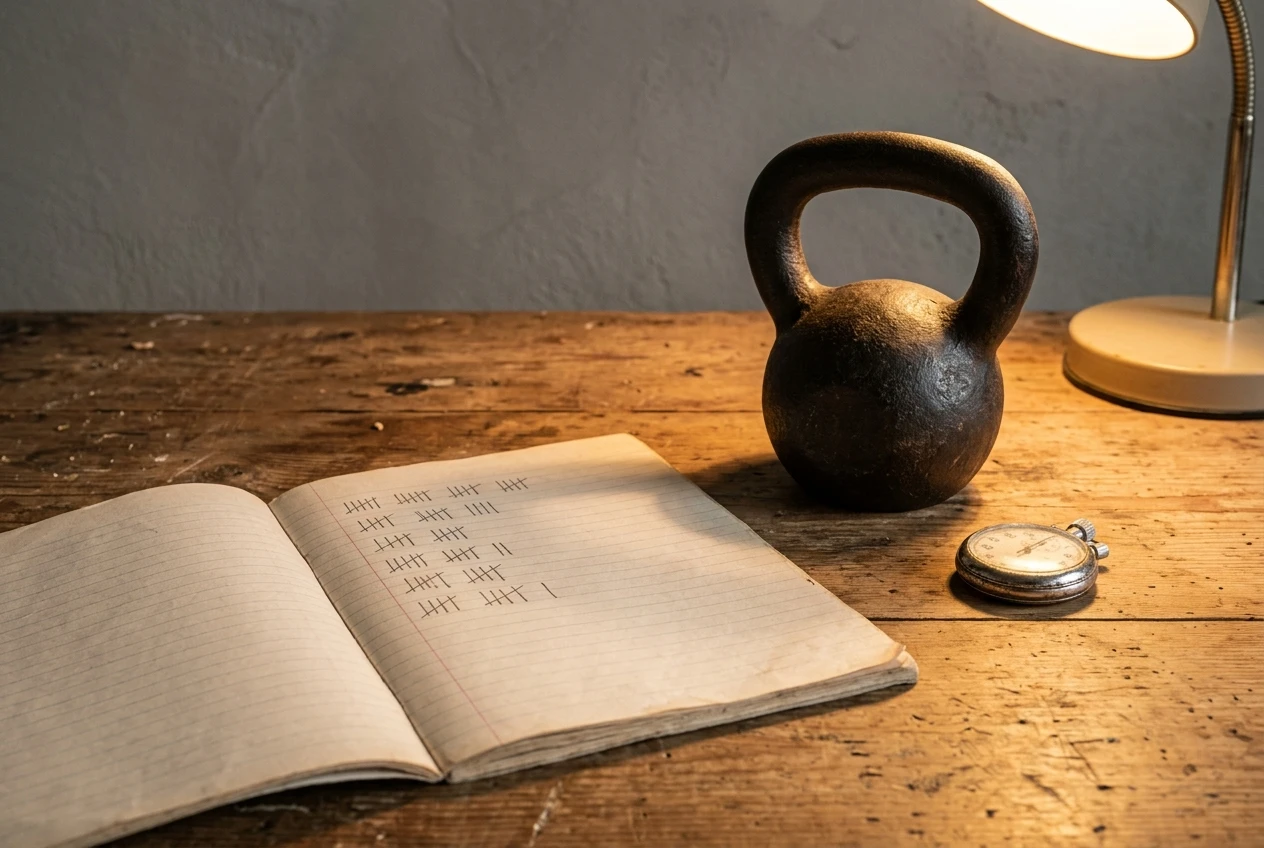
The most important rule is to keep the bell the same during the block. If you switch to a heavier bell halfway through, you can no longer compare your reps, and you lose the one measure that tells you whether your hands improved. A reps-first test for deciding when to buy a heavier kettlebell uses the same logic: let the rep count tell you when you are ready, rather than the calendar.
Where straps fit while you build grip, and when to put them away
Straps and a grip block do different jobs. Straps let your hands stay out of the way so the target muscles can work harder. A grip block trains your hands directly. Using straps on the right sets and leaving them off the block drills keeps both jobs separate.
A reasonable approach:
- Leave straps off during the grip block itself. The purpose of those drills is to make your hands work.
- Use straps on heavy sets where grip would otherwise end the set early and the goal is the legs, hips or back. This lets you train those muscles with full effort while your grip catches up.
- Take straps off for any lift you want your hands to get better at, especially swings and snatches, where hand endurance is part of the skill.
- Put straps away entirely for a lift once your grip no longer ends the set. If your benchmark rises and your hands no longer limit you, there is little reason to keep strapping that movement.
Not every kettlebell lift calls for straps, and the answer shifts from move to move. The article on whether to strap up for kettlebell complexes goes through that move by move.
Running a grip block alongside a follow-along program or your own plan
If you follow a structured program, the block fits as a fixed addition on a day when the main session is light on hands, or as a short standalone slot. Treat it as part of your weekly workload. If the program already has heavy carries or high-rep swings several days in a row, your hands may be getting plenty of volume, and the better move is to shift when the grip block happens rather than add more on top.
If you write your own plan, give the grip block the same status as any other training block: a fixed slot, a goal, a drill list and a benchmark. Write it in your plan before the week begins, so it doesn’t get skipped when you are tired. If you are deciding between a prewritten plan and your own, how to pick between following a kettlebell program and writing your own covers the trade-offs.
Either way, change one thing at a time. If you add a grip block and a new swing progression in the same week, you will not know which one moved your numbers.
If you want a follow-along kettlebell program to slot your grip block into, take a look at kettlebell.monster. Affiliate link: I may earn a commission if you sign up, at no extra cost to you.