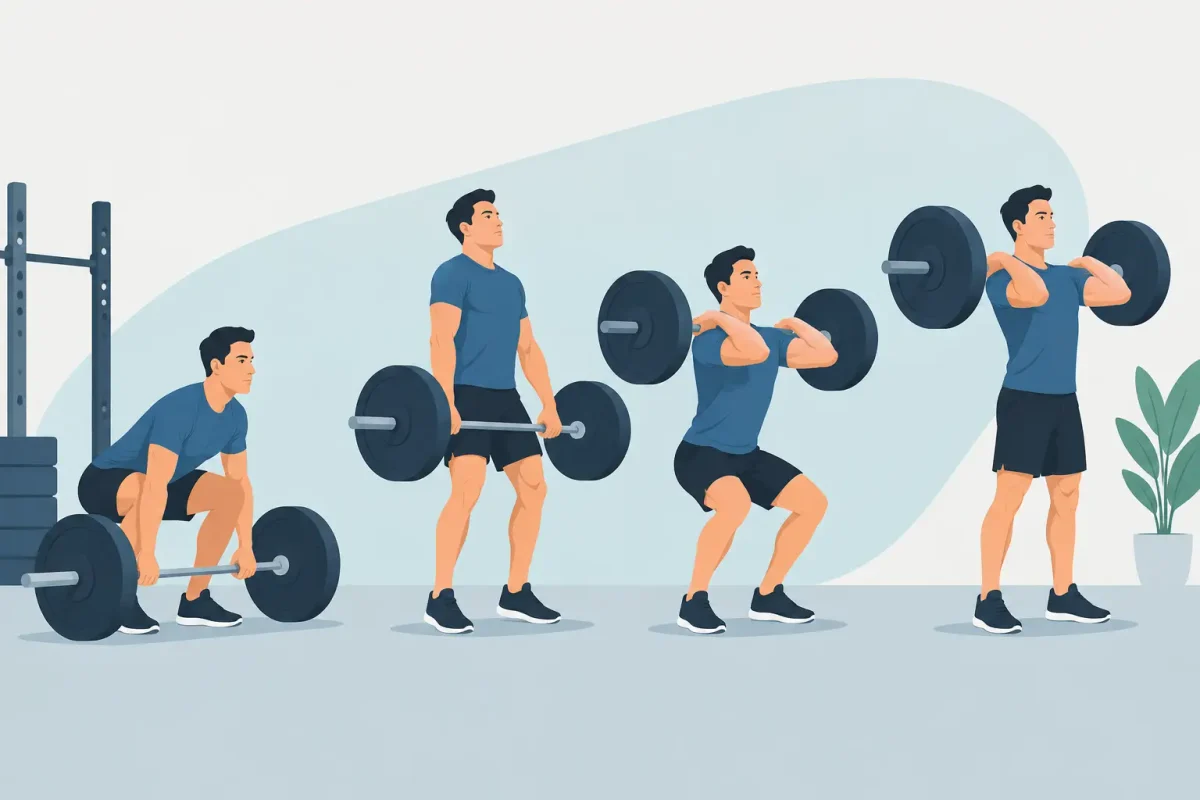
A power clean is not a deadlift pulled faster. It is a fast, coordinated lift that demands force from the floor, control through the pull, and confidence receiving the bar in a strong quarter squat. The question of how to learn power clean technique is really a question of how to build those positions without rushing the load. Get the sequence right first, and the bar will eventually move with the speed and violence that makes the lift valuable.
For athletes and serious lifters, the payoff is clear: power cleans train rapid force production, reinforce a powerful hip extension, and expose weak links in your strength and coordination. But the lift punishes impatience. A few weeks spent drilling clean positions can save months of looping bar paths, crashing catches, and missed lifts.
Start With the Positions, Not the Floor
The full power clean happens quickly, which is why beginners often struggle to diagnose what went wrong. Break it into positions you can own. Before pulling from the floor, you should be able to hold a stable front rack, perform a controlled clean pull, and receive a light bar in a quarter squat without losing posture.
Your front rack matters more than most people expect. The bar should rest across the front of the shoulders, with the elbows driven forward and high enough to keep the torso upright. You do not need a full fingertip grip on day one, but you do need the bar supported by your shoulders rather than held in your hands. If wrist mobility limits the position, spend time on it, but do not force painful range. A slightly wider clean grip and consistent front-rack practice usually improve the position.
The receiving position is a power position, not a lazy upright catch. Stand tall with your feet about hip-width apart, brace your trunk, then dip into a shallow quarter squat with your knees tracking over your toes. Receive the bar on the shoulders while keeping your chest tall. If you catch with your elbows pointed down or your weight shifting to the toes, reduce the load and fix the rack before adding speed.
Use the Hang Power Clean First
For most lifters, the hang power clean is the best entry point. Starting above the knee removes the complexity of breaking the bar from the floor and lets you focus on the explosive portion of the lift.
Begin standing with the bar at mid-thigh. Keep your arms long, shoulders slightly in front of the bar, and pressure balanced through the whole foot. Push the hips back a few inches while allowing the knees to bend. This is the hang position. It is not a deep squat and not a Romanian deadlift stretched to the limit. The bar stays close to the body, and your back remains rigid.
From there, drive hard through the floor. Extend the hips, knees, and ankles aggressively, then let the elbows travel high and outside as the bar rises. The arms do not pull the bar off the thighs. They guide the bar after the legs and hips have created the upward momentum. Then pull yourself under the bar and turn the elbows through quickly to receive it on the shoulders.
That distinction matters. Trying to curl the bar to the rack turns the power clean into an inefficient upper-body exercise. The bar should rise because of force from the lower body. Your job is to meet it in a stable receiving position.
How to Learn Power Clean Timing
Timing is where the lift starts to feel athletic instead of mechanical. The sequence is simple on paper: push through the floor, extend violently, keep the bar close, then move under it. In practice, each phase has to happen without hesitation.
A useful cue is: legs drive, hips finish, elbows turn over. Think of it as one connected action rather than four separate movements. If you pause at the top to shrug or pull with the arms, the bar will drift away from the body. If you throw your chest backward to create extension, you will likely jump forward and catch off balance.
Keep the bar close enough that it tracks near the thighs and torso. A bar that swings forward forces you to chase it, usually with a slow rack and a soft catch. Light contact at the upper thigh during the final extension is normal for many lifters, but do not chase contact by banging the bar away from your body. The goal is a vertical bar path, not a bruise.
Your feet may move slightly from the pulling stance into the receiving stance. That is normal. What you do not want is a dramatic starfish jump, a wide split, or feet that land at different times. Start with a narrow, controlled movement. As your speed improves, the adjustment will become more natural.
Build the Lift With Productive Drills
Drills are useful only when they solve a specific problem. Do not collect endless variations. Use a small number of movements that teach the positions and timing of the full lift.
The clean high pull teaches extension and bar proximity. Perform it from the hang with straight arms through the drive, then bring the elbows high and outside without turning the bar over. This is useful if you are bending the arms too early or failing to finish the hips.
The tall clean teaches a fast turnover. Start standing tall with the bar at the upper thigh, rise onto the toes slightly, and quickly pull yourself under the bar into the rack. There is almost no leg drive, which makes it clear that the turnover is an active movement under the bar, not a slow curl.
The high-hang power clean starts from the upper thigh and is often the fastest way to connect extension to the catch. Once this is consistent, move the bar to mid-thigh, then just above the knee. Only pull from the floor after those positions look similar and feel reliable.
Clean pulls build the strength to keep posture and finish the drive without adding the catch. They are valuable, but they are not a replacement for actually practicing the rack. Use them after your power-clean work or on a separate day when you want more pulling volume.
Use Loads That Let You Learn
The right starting weight is one you can catch cleanly every rep. For many people, that is an empty barbell, training bar, or light fixed bar. There is no prize for loading a movement you cannot yet receive well.
Use sets of two or three repetitions. The power clean is a speed and skill lift, so long sets often turn into fatigue practice. Take enough rest to make each set sharp, usually one to two minutes with light technique work and longer as loads rise. End the exercise when bar speed slows, positions change, or catches become inconsistent.
A simple two-day learning approach works well. On the first day, practice hang power cleans for five to six sets of three, followed by front squats and clean pulls. On the second day, use high-hang power cleans or tall cleans for four to five sets of two or three, then build leg strength with squats or deadlifts. Add load in small jumps only when every rep looks nearly identical.
The power clean depends on strength, but it does not replace strength work. Front squats improve your receiving position. Deadlifts and clean pulls build force from the floor. Romanian deadlifts strengthen the hamstrings and reinforce a controlled hinge. Rows and upper-back work help you maintain posture. Keep building those qualities while you learn the skill.
Fix the Mistakes That Limit Power
If the bar crashes painfully onto your shoulders, you are usually waiting for it instead of moving under it. Practice tall cleans with a very light load and think fast elbows. If you catch with hips high and the chest folded forward, improve your front squat position and use lighter catches until you can own the quarter squat.
If the bar loops away from your body, check for early arm bend and a bar that starts too far forward. Keep the lats engaged, sweep the bar close, and finish by driving through the floor rather than throwing the shoulders backward. If you jump forward, the same issue is often present: the bar is moving away, and you are chasing it.
If the lift feels slow despite solid technique, the answer may be strength or intent. A clean that is technically correct but hesitant will not develop much power. Once positions are stable, attack every working rep with purpose. The load should be challenging enough to demand force but light enough to preserve speed.
Video is one of the best coaching tools available to a self-directed lifter. Film from the side and slightly in front. Look for a close bar path, full extension through the drive, and a balanced catch with high elbows. One clear correction per session is enough. Trying to fix everything at once usually creates a lift that feels worse, not better.
The power clean rewards disciplined repetition. Start light, earn each lower position, and treat a crisp catch as a successful lift even when the plates are modest. Build that standard now, and the heavier barbell will have somewhere strong to land.