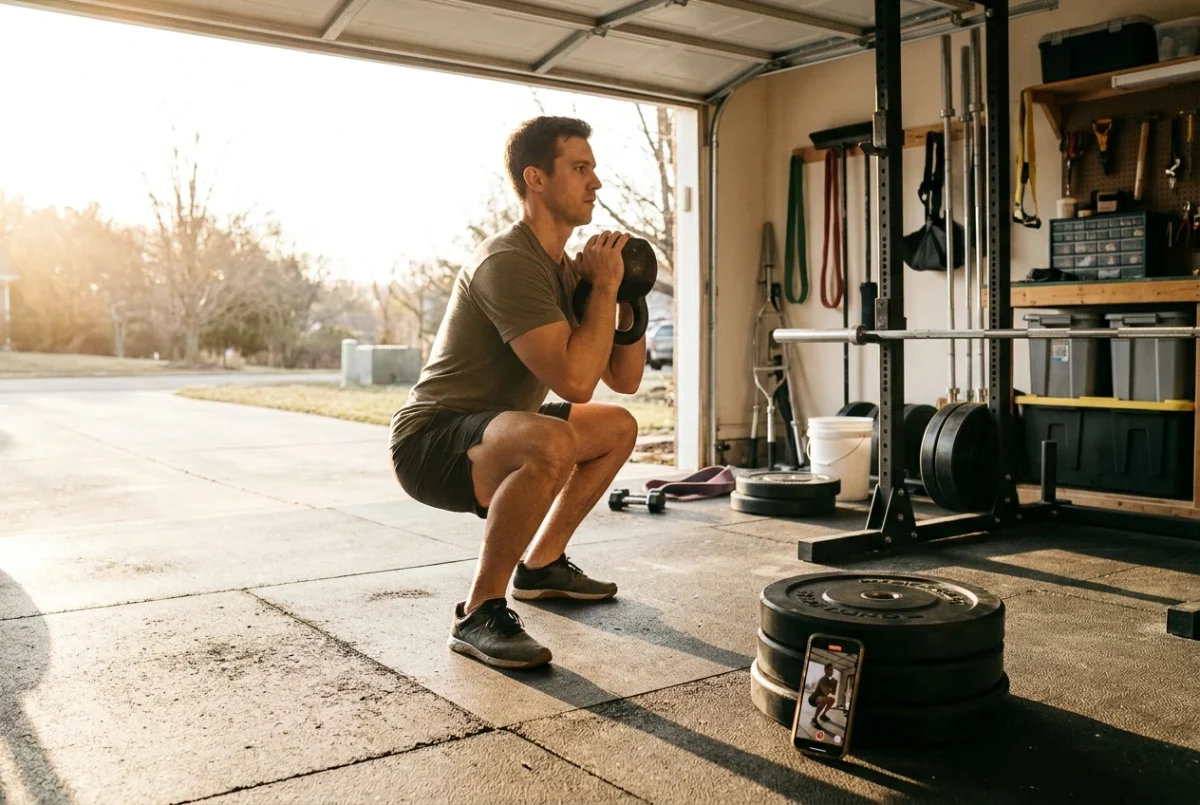
Most lifters who feel stuck on a lift reach for heavier equipment first. Sometimes that is the right call, but often the current weight still has work left in it. Progressive overload in a home gym has more levers than load, and the other levers cost nothing: reps, range of motion, tempo and rest.
This article gives you a decision rule for the moment you are standing between “buy the next kettlebell” and “keep the one I have”. You run a short test, read the results, and then spend money only if the test says the weight has stopped working.
Why a stalled lift is not automatically a gear problem
A lift stalls when your body stops getting a new reason to adapt. Heavier weight is one way to supply that reason. Doing more total work with the same weight is another, and so is doing the same work with better control.
Home lifters are tempted by the first option because it is visible and easy to buy. A heavier kettlebell arrives in a box, and the problem seems solved. But a stall has other common causes that a bigger bell does not fix:
- Reps that have sat at the same number for weeks, so nothing is asking for more.
- Range of motion that has shrunk, with shallower squats or presses that stop short of lockout.
- Rushed tempo that lets momentum do the work.
- Rest periods so long that every set starts fresh and none of them accumulates fatigue.
- Poor sleep or a run of hard weeks, which lower your output regardless of the weight on the floor.
If you buy heavier gear with one of these still in place, you carry the same problem at a higher load. You may also find the new weight is too heavy to use with good form, and then you have spent money on equipment that sits in the corner.
The reps-first test: three checks to run before you shop
Run these three checks on the lift that has stalled, in this order. Each takes one or two sessions.
Check 1: Find your rep ceiling
Pick a rep target for the lift, for example 3 sets of 8 for a goblet squat or 3 sets of 5 for a press. Do your normal workout and note how many reps you completed on each set, and how many more clean reps you think you had left.
If you finish every set and could have done several more, the weight is not your limit. If you miss reps on the last set and have done so for several sessions in a row with good sleep and food, the weight may be at your limit.
Check 2: Audit range and tempo
Film one set from the side, or watch yourself in a mirror. Look for a squat that stops above your usual depth, a press that does not reach full lockout, or a deadlift that is dropped rather than lowered.
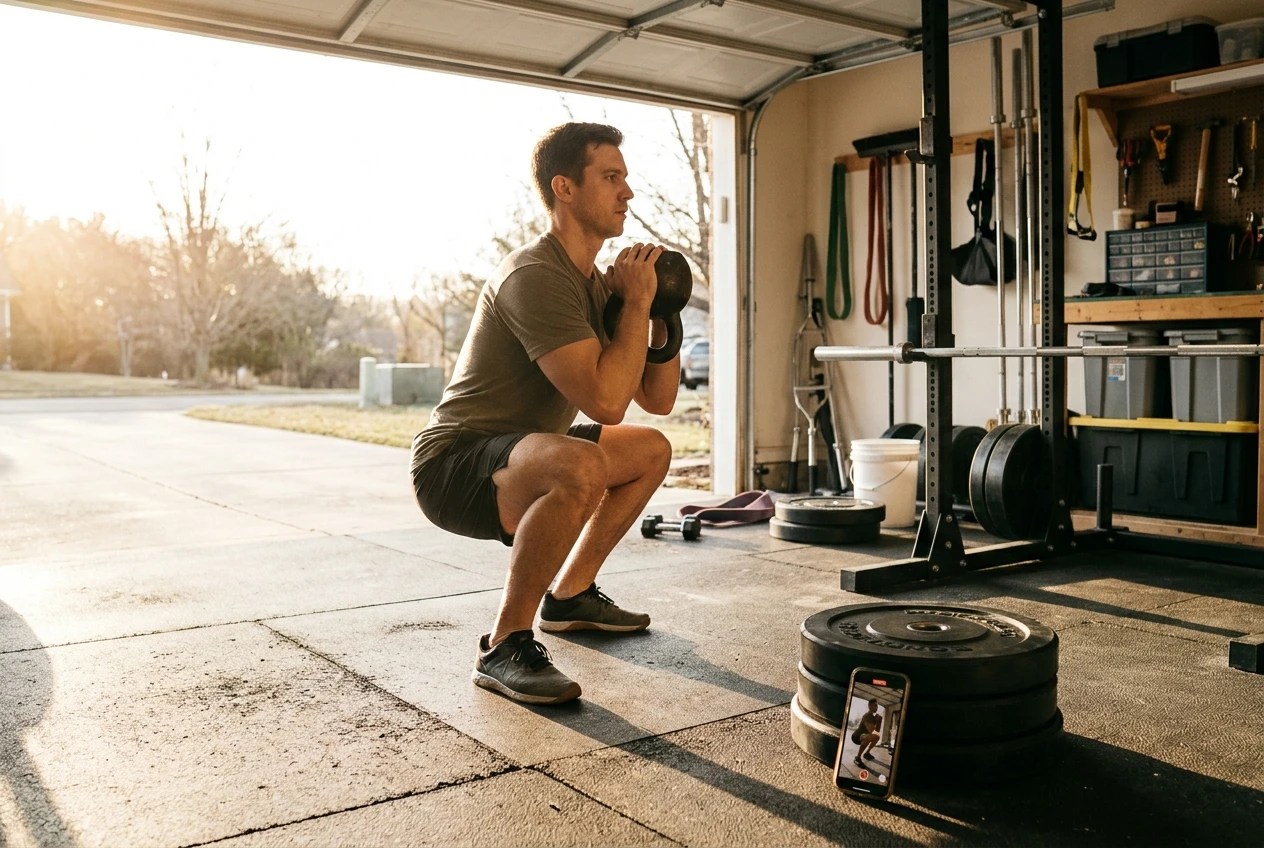
Then count the tempo. If a rep takes one second up and one second down, you have room to slow it. A three-second lowering phase makes the same bell feel noticeably heavier, which tells you whether load is the actual constraint.
Check 3: Look at rest and recovery
Time your rest between sets. Many home lifters rest three to five minutes because nobody is waiting on the equipment, and the sets become separate efforts. Cut the rest by 30 to 60 seconds and see whether performance holds.
Also check the basics outside the workout: sleep, food, and how many hard sessions you have stacked in the past week. A lift can look stalled for the same reason a phone seems slow when the battery is low, and the fix is not new hardware.
Once you have run these checks, you have the information you need for the next section.
Signs the weight really is too light (and signs it isn’t)
Reading the results correctly is the whole point of the test. Here is a practical way to sort them.
Signs the weight really is too light:
- You finish all your sets with clean form and could do many more reps in the final set. A workable rule is that if you could do about 15 or more clean reps on a lift where you are training for 5 to 8, the bell is too light for that goal.
- You have already added reps, slowed the tempo and shortened rest, and the set is still not hard.
- The lift feels easy at the top of your rep range across several sessions in a row, not just on one good day.
- Your progress in reps has run into a practical ceiling. A set of 30 swings or presses may be fine for conditioning, but if you are training for strength, sets that long are the wrong tool.
Signs the weight is not the problem:
- You had one bad session. A single flat day says very little.
- Your grip gives out before your legs, back or shoulders do. That points to a grip problem, which is covered in the gear section below.
- Your form falls apart in the final reps. You need the bell you have, with better reps.
- You have not changed anything in weeks. Without added reps or tighter tempo, you have not given the current weight a fair test.
- Sleep or food has dropped off recently.
When the signs are mixed, treat the weight as not the problem yet and work through the next section first.
How to add reps, slow the tempo or shorten rest, lift by lift
Each lift responds to a different lever. Change one at a time so you know what worked.
Goblet squat. Add reps first, one per set each session until you reach your ceiling. Then slow the lowering to three seconds, and pause for a second at the bottom. The pause removes the bounce and makes the same bell harder to stand up with.
Kettlebell press. Pressing jumps are the hardest to bridge with a heavier bell, so squeeze the most out of what you have. Add a rep per set, then slow the lowering phase. Make sure you reach full lockout overhead every rep, with ribs down and no leaning back.
Kettlebell deadlift or hinge. Pause for a second with the bell just off the floor, or lower it for three seconds. Both increase the time your back and hamstrings work without changing the weight.
Row. Hold the top position for a second and lower slowly. Rows are easy to turn into a jerking motion, and a controlled version makes a light bell feel heavier.
Swing. Tempo does not apply to a swing, because the speed comes from the hip snap. Use total reps and rest instead. Keep the sets the same size and shorten the rest, or add a set. Stay with sets of a size where the last rep still looks like the first.
If your program already has a prescribed rep scheme, add to it only as far as your form allows, and stop a set when the reps stop looking clean. A spreadsheet can handle this tracking if you want a simple setup, and the piece on whether a spreadsheet can run your kettlebell progressive overload covers how well it holds up compared to an app.
When the next kettlebell or plate is the right buy, and how big a jump to take
Buy heavier gear when the signs in the “too light” list apply and you have already used the free levers. At that point more reps would turn a strength set into a long endurance set, and the heavier bell is the only way to give the lift a new stimulus.
Then comes the question of how much heavier. Kettlebells are sold in fixed sizes, and the gap between sizes can be large as a percentage of what you lift now. Going from a 16 kg bell to a 20 kg bell is a 25 percent increase. Going from 12 kg to 16 kg is a 33 percent increase. On a press, a jump that size can cut your reps by more than half at first.
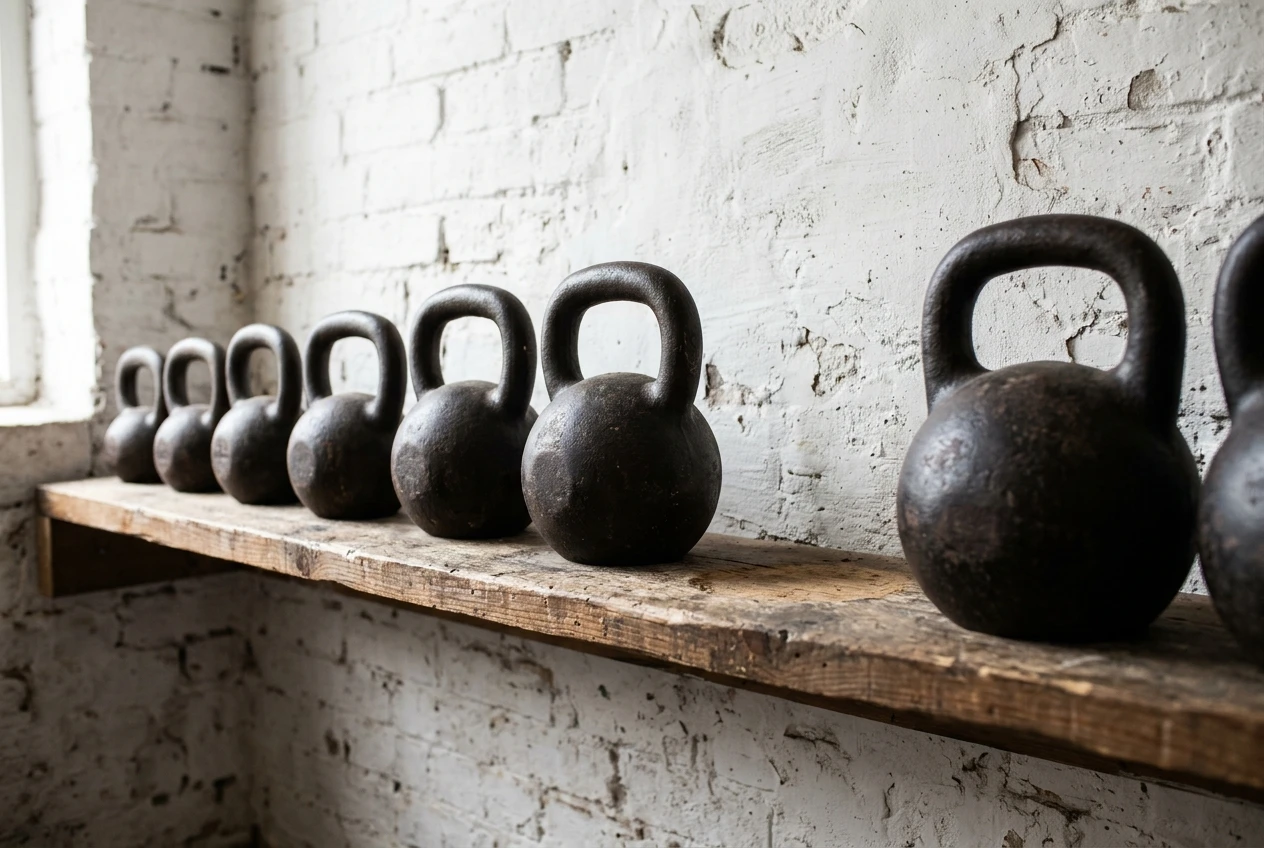
A few ways to handle a big jump:
- Check the sizes your brand sells, and take the smallest step up that still challenges you.
- Buy the heavier bell for the lifts where you have outgrown the lighter one, usually squats and hinges, and keep the lighter bell for presses.
- Expect your reps to drop when you switch. Start at the low end of your rep range and work back up using the same reps-first method.
- If a bell is much too heavy for a press but right for a squat, one bell can serve for only some lifts.
With plates or an adjustable setup, small increments are possible, so the same logic applies at a finer scale. You can add the smallest increment you have and keep working up in reps.
If you want to weigh the price of the next bell against the rest of your setup, the article on what a home gym really costs when you count the weeks you can’t train is a good place to look at the total.
Gear that supports progress without adding load
Some purchases help you train harder with the weight you already own. These are worth considering before a heavier bell, depending on what the test showed.
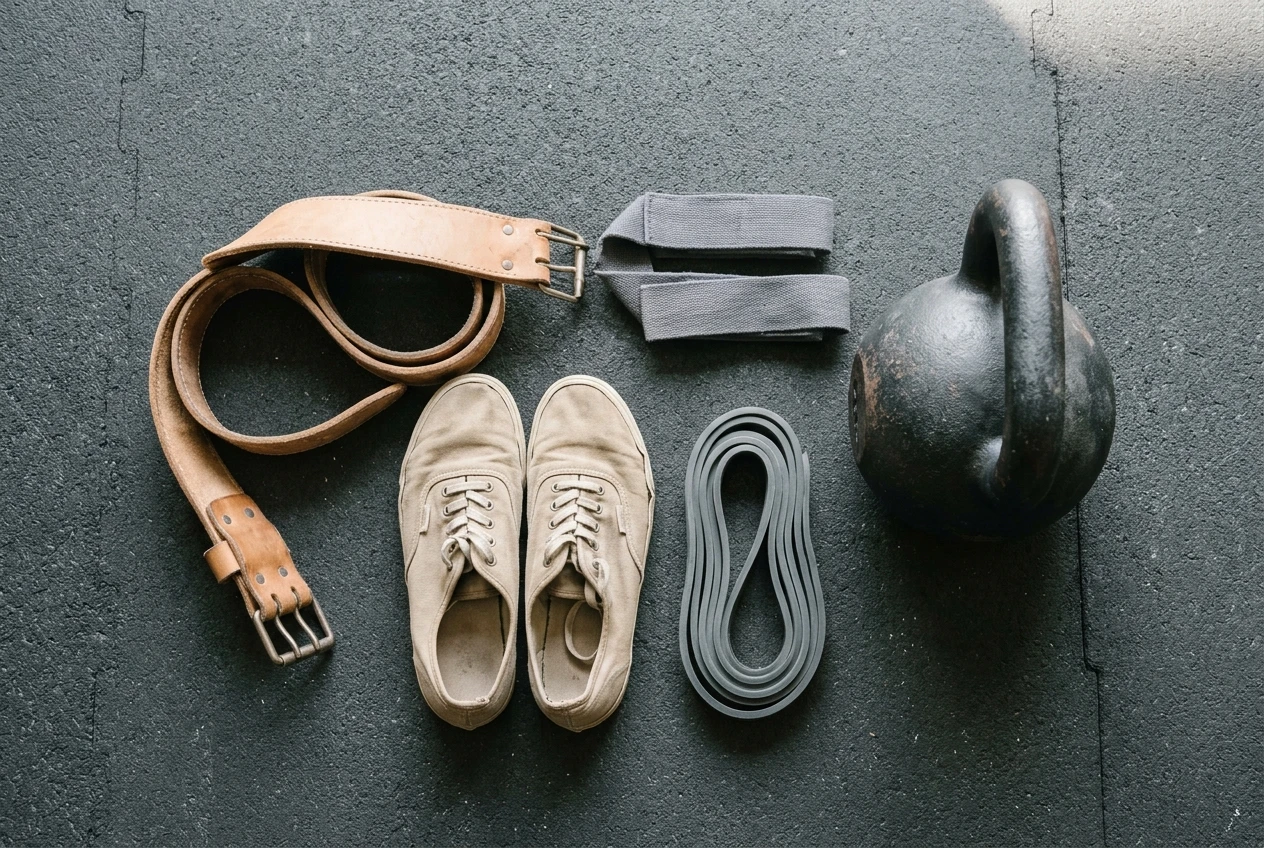
- Lifting straps. If your grip fails before the target muscles do, straps let the working muscles finish the set. They matter most on heavy swings, deadlifts and rows. The guide on whether to strap up for kettlebell complexes walks through which moves they help.
- A lifting belt. A belt can give your trunk something to brace against on heavy hinges and squats. It matters more as loads rise, and the piece on the lifting belt you need at 6 months versus 6 years explains how the choice changes with experience.
- Flat, firm shoes. Soft running shoes compress under load. A flat shoe or going barefoot, where your gym allows it, gives you a stable base for squats and deadlifts.
- Resistance bands. Bands add resistance that increases as you stretch them, and they can add load to a lift without a new bell. The article on bands or iron in a small home gym compares what each gives you per square foot.
Each of these solves a specific problem. If the test did not point to that problem, skip the purchase.
A four-week plan that tells you which way to go
Pick one stalled lift and run this plan on it. Keep the other lifts in your program as they are.
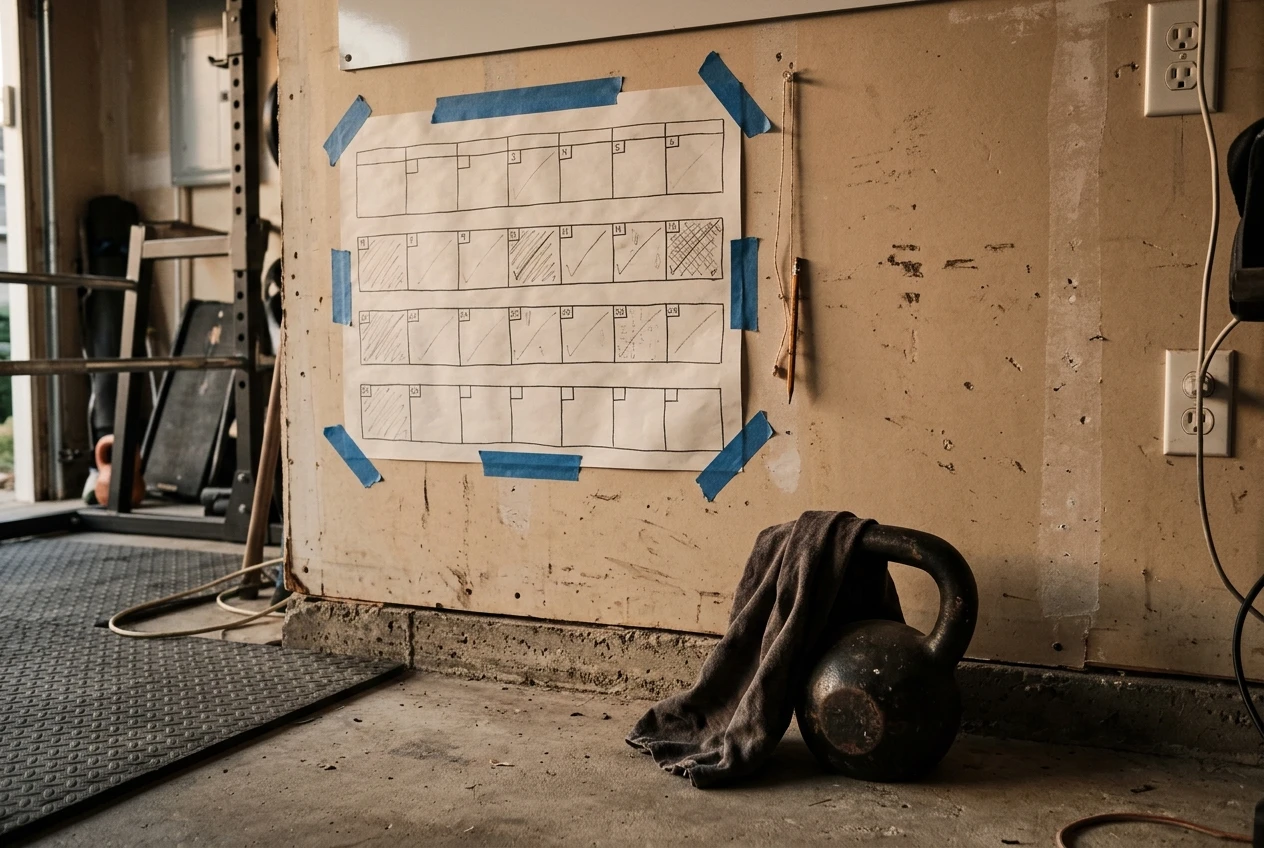
Week 1: Baseline. Train the lift as you normally do. Record reps per set, how many clean reps you had left, your rest time and whether your grip or your muscles gave out first. Do not change anything this week.
Week 2: Add reps. Add one rep to each set whenever you finish all your sets with clean form. Hold the same bell, tempo and rest. If you hit your rep ceiling and have reps left over, note it.
Week 3: Add tempo and trim rest. Keep the rep numbers from week 2. Slow the lowering phase to three seconds, and cut rest by 30 to 60 seconds. For swings, cut rest only.
Week 4: Retest. Return to the week 1 setup and see how it feels. Then read the result:
- If the week 1 workout now feels clearly easier, with plenty of clean reps left, and weeks 2 and 3 were manageable, the weight is too light. Buy the next size, using the guidance on jump size above.
- If weeks 2 and 3 were hard and you only just completed them, the current weight is still doing its job. Stay with it for another four weeks.
- If the lift did not improve and your sleep, food or grip were the limit, fix that first and repeat the plan.
You will end the month with a decision based on your own numbers rather than on a wish for new equipment.
Putting structure around the bells you already own
If you train with kettlebells and want progressions laid out for you, kettlebell.monster offers structured programming you can use with the bells you already have. That makes the reps-first approach easier to follow, because the progression is planned and you do not have to build it from scratch. Affiliate disclosure: I may earn a commission if you buy through that link.
If your home setup has a Samsung TV, there is also the Kettlebell Monster Samsung Tizen TV app, which lets you follow a workout on the big screen instead of a phone propped against a wall. Affiliate disclosure: I may earn a commission if you buy through that link as well.
Whichever way you track it, run the four weeks before you shop. The result will tell you whether the next purchase is a kettlebell, a pair of straps or nothing at all.