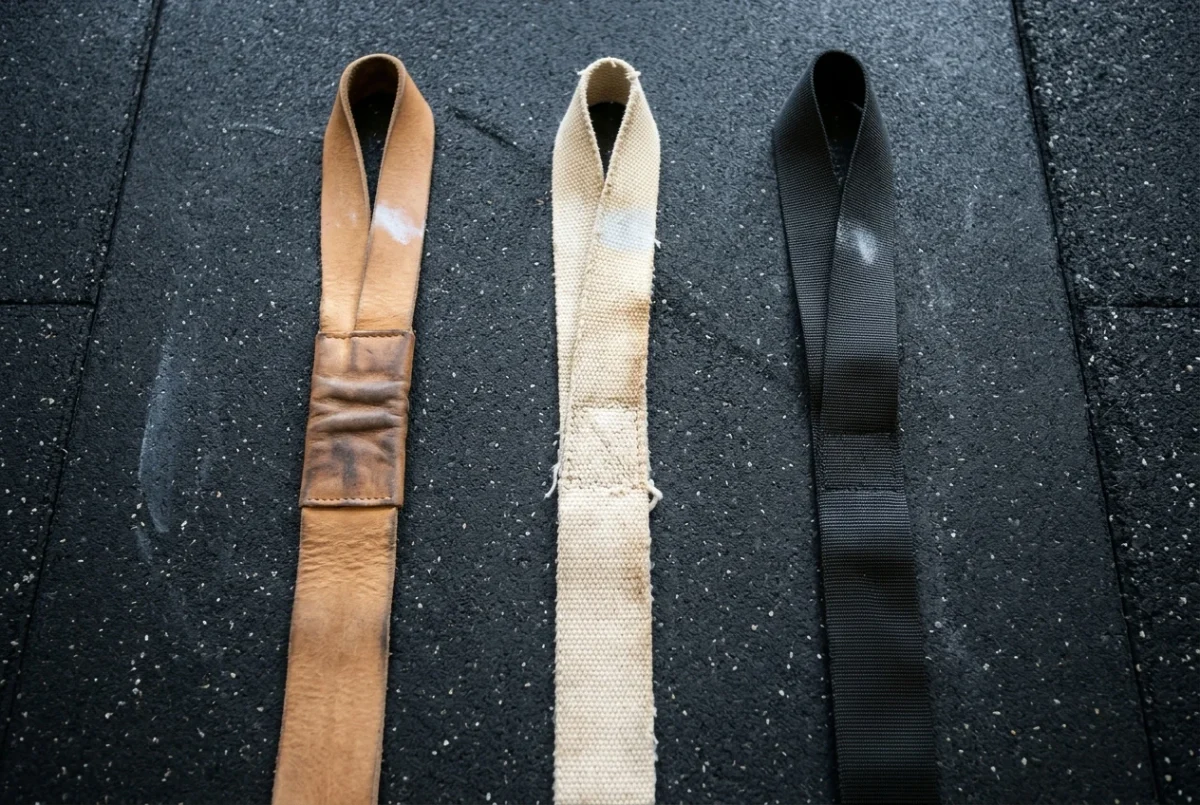
If your grip gives out before your back or legs do, straps are a reasonable fix, and the choice of leather vs nylon lifting straps comes down to which lift you are doing and how much you sweat. The material changes how the strap feels on the wrist, how it behaves when your hands are wet, and how long it lasts. Different lifts reward different answers.
This guide matches materials (leather, cotton, and nylon or other synthetic webbing) to heavy deadlifts, high rep rows and shrugs, Olympic pulls, and home gym sessions. It also covers the sessions where straps should stay in the bag.
Why your straps matter less than the moment you decide to use them
A strap does not make your grip stronger. It lets the bar stay in your hands after your fingers would have opened, which means your back, hips and traps get the work your forearms were limiting.
That is useful when the target muscle is the thing you want to train. It works against you when grip is the weak link you want to fix, because a strap removes the stimulus that would make the weak link stronger. The same pair of straps can help one set and hold back another.
A workable rule: use straps when grip is the only thing ending a set that is otherwise going well, and leave them off when grip is the skill you are building or when the weight is light enough to hold without them. The sections below assume you have already made that call and are now choosing the material.
How leather, cotton and synthetic webbing behave differently in your hands
Three properties decide most of the experience: how the strap grips the bar, what it does with sweat, and how it feels on the skin around the wrist.
Leather starts stiff and softens with use. It molds to the wrist and the bar over time, and it holds its shape well. It absorbs some moisture and can darken or feel tacky when damp, which many lifters find grippy and some find unpleasant. Leather needs a little care, since dried-out leather cracks.
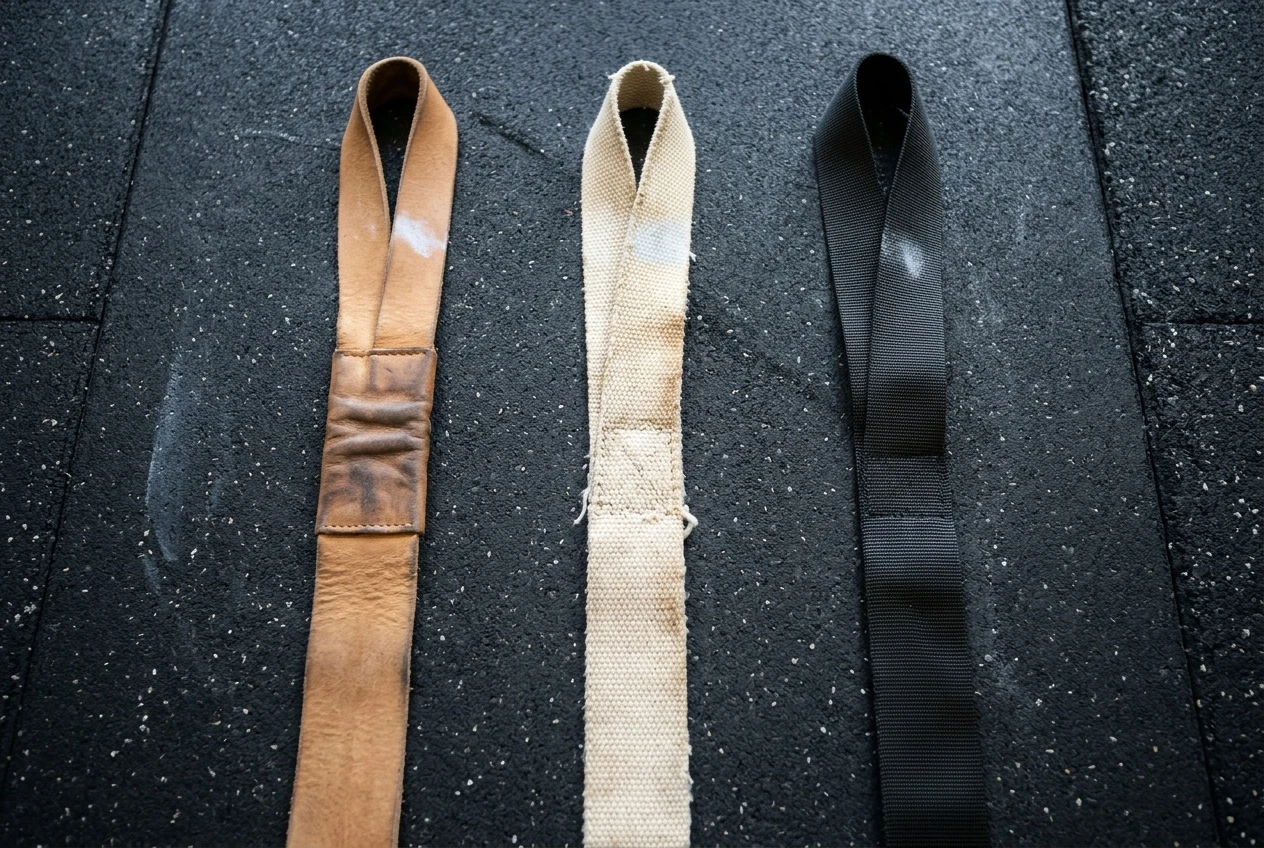
Cotton webbing is soft from the first session and has a slightly textured surface that grips the bar and itself well. It absorbs sweat, which keeps friction decent but makes the strap heavier and slower to dry. Cotton is generally gentler on the skin than stiff leather, and it can fray at the edges and tails after a lot of use.
Nylon and other synthetic webbing is smooth, light and resistant to moisture. It dries quickly and does not hold odors the way cotton can. The tradeoff is that a smooth weave can slide on a smooth bar or against itself when it gets wet, and the edges of a thin, stiff nylon strap can bite into the wrist under heavy loads. Weave, thickness and any padding or coating vary between products, so two nylon straps can feel quite different.
Some straps combine materials, such as a padded neoprene wrist section with a webbing tail. The comparison below still applies to the part that wraps the bar.
Heavy deadlifts: which material holds up and which digs in or slips
Heavy pulls put the highest tension through a strap, so the main concerns are slippage and pressure on the wrist.
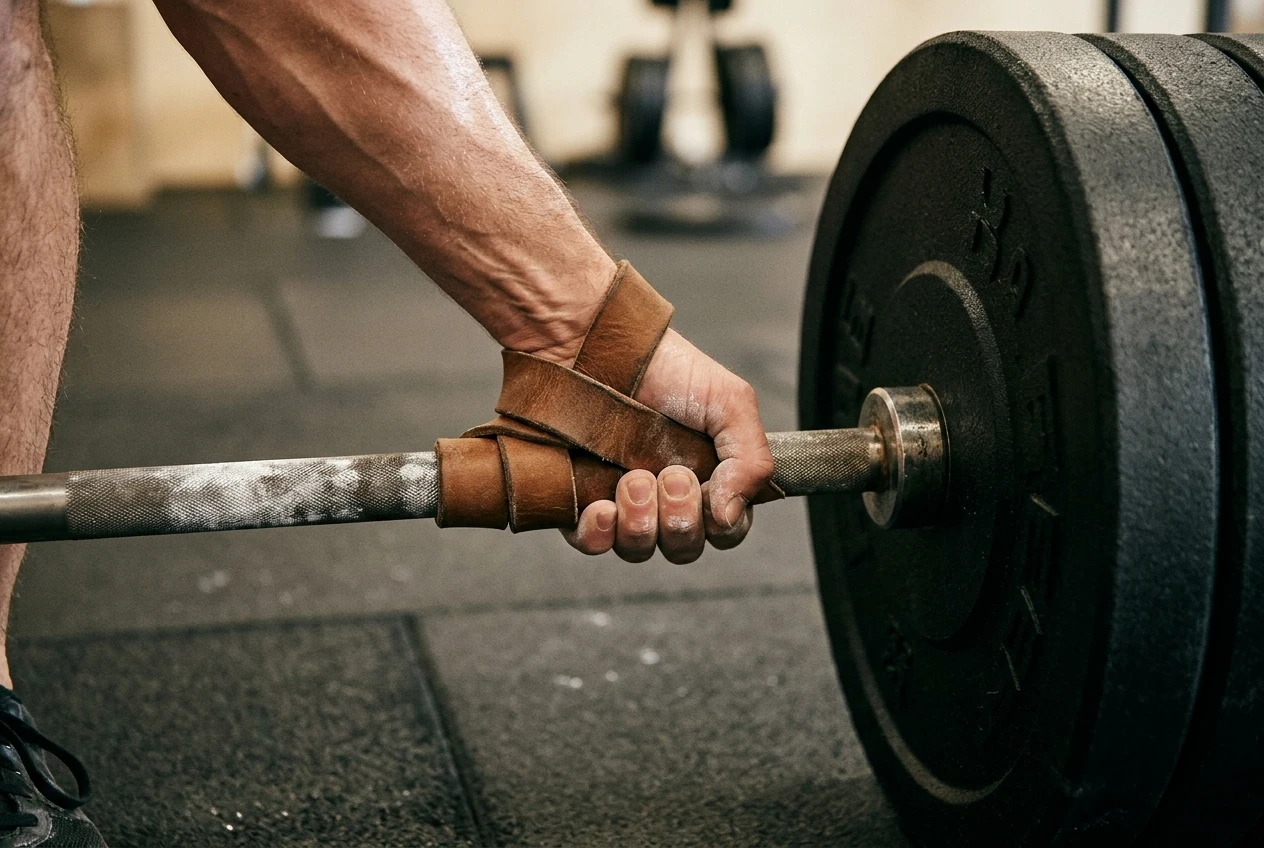
Leather and thick cotton are the usual choices here. Both have enough friction against the bar that, once wrapped tightly, they hold under a heavy load. Leather’s stiffness helps the strap keep a clean, flat wrap, and once broken in it sits comfortably on the wrist. Thick cotton is comfortable immediately but needs a tight wrap, because loose turns can creep.
Nylon can work for heavy deadlifts, but fit matters more. A thin or very slick nylon strap can slip on a knurled bar with dry or chalked hands and then dig in when it does grab. If you prefer nylon, look for a wider strap with a textured weave and wrap it tight. Wide straps spread the load across more of the wrist and forearm.
Things that matter at heavy weights regardless of material:
- Wrap direction and tightness. Wrap the tail around the bar so the strap tightens as the bar tries to pull away from your hand. A wrap that loosens as you pull is a mistake in technique, not a material problem.
- Strap width. Wider straps tend to be more comfortable under load than narrow ones.
- Length. The tail should give you enough turns to wrap snugly without running out of material. Too short means too few turns, and too long gets in the way.
High rep rows, pulldowns and shrugs: what matters when sweat builds up
Higher rep work changes the problem. The load is lighter, but the sets are long, your hands get wet, and the strap sits on your wrists for a while.
Moisture is the main issue. A strap that absorbs sweat, like cotton or leather, tends to keep its grip as it gets damp, though it gets heavier and can become unpleasant by the end of a long session. Smooth nylon dries quickly but is the most likely to slide as sweat accumulates, so it benefits from a textured weave or a re-wrap between sets.
For rows, pulldowns and shrugs, a few practical points:
- If you do many sets in a session, cotton webbing is comfortable and keeps friction when wet, and a spare dry pair helps in long workouts.
- If you sweat heavily, test a synthetic strap with a coarse weave, because it will not become waterlogged.
- For cable work such as pulldowns, the strap sits on a straight bar or attachment rather than a knurled barbell, so check that the material grips that surface.
- For shrugs, where loads are often high and the bar does not travel far, leather or thick cotton gives a secure hold without much fuss.
Because these lifts are often done for hypertrophy, the goal is to push the lats, upper back or traps close to failure. That makes them the best place for straps to earn their keep, when forearm fatigue would otherwise end the set early.
Olympic pulls and quick release lifts: when to use a different strap style
The competition lifts themselves, the snatch and the clean and jerk, are not performed with straps, because the lifter has to release and re-catch the bar quickly. Straps come in during training pulls such as snatch pulls, clean pulls and heavy deadlift variations, where the goal is loading the pull without grip as the limit.
For these, a standard wrap-around loop strap is not always the best fit, because it fixes you to the bar. Many lifters use figure-8 straps for pulls. A figure-8 strap has one loop for the bar and one for the wrist, so the bar can be released by opening the hand. They are commonly made from cotton or nylon webbing.
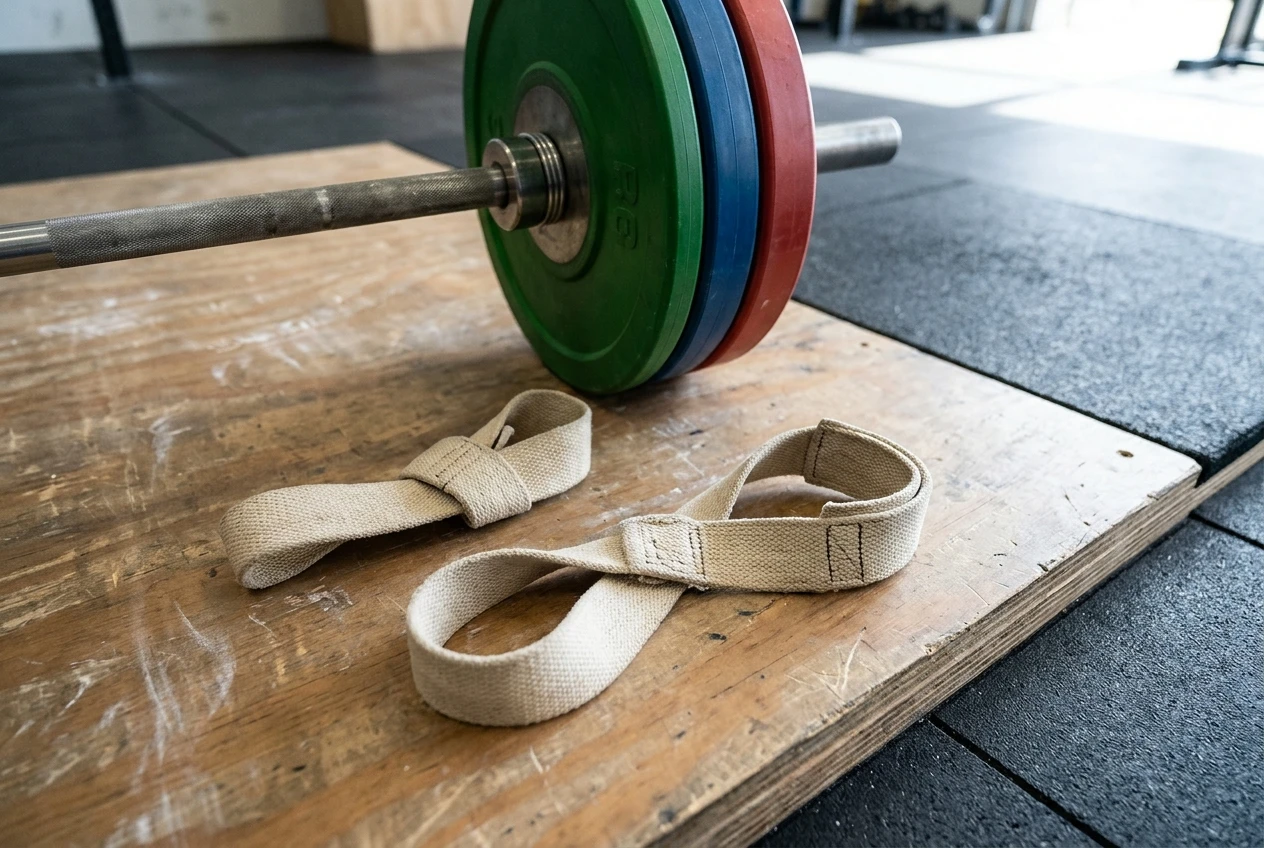
Material considerations for figure-8 straps are similar to other straps: cotton is comfortable and grippy, while nylon is lighter and dries quickly. The strap design matters more than the fabric here. Whichever you choose, no strap is a guarantee of a safe bail, so practice dropping the bar in a controlled setup, with a clear platform and bumper plates, before relying on it.
Some lifters also use a hook grip on pulls, which keeps the thumb under the fingers for a secure hold without straps. It is uncomfortable at first and takes practice. If your goal is Olympic lifting, learning the hook grip is worth the time even if you use straps on your heaviest sets.
Wrist comfort, break-in time and care: what to expect after months of use
Straps are in contact with the same skin every session, so small differences show up over weeks.
Break-in. Leather takes the longest, with a stiff first few sessions before it conforms. Cotton is ready right away. Synthetic webbing depends on stiffness, and a thick, coated nylon strap can stay rigid for a long time.
Wear points. Look at the edges and at the part that wraps the bar. Cotton frays at the edges and the tail. Nylon can melt or fuzz at cut ends and wear thin where it rubs the bar. Leather can crack where it flexes if it dries out. Stitching on loop straps is where many fail, so check it periodically.
Care. Keep the following habits in mind:
- Let cotton and leather dry fully after sweaty sessions, and do not leave them wadded up in a closed gym bag.
- Wash cotton and nylon according to the product label, since many can be hand washed and air dried.
- Condition leather lightly if it starts to feel dry, using a product made for leather.
- Replace any strap that is frayed through, cracked, or stitched loosely. A strap that fails under a heavy pull can drop the bar unexpectedly.
Chalk on a strap lowers its friction against itself, so brush or wash off buildup if the strap starts to slide.
When to leave the straps off, including kettlebell grip work
Straps should come out of the routine when grip itself is the thing that needs training, which is true more often than many lifters expect.
Good times to leave them off:
- Warm-up and lighter sets. If you can hold the weight comfortably, hold it. Use straps only on the sets where grip would otherwise cut the set short.
- Deliberate grip work. Hangs, farmer carries, thick bar work and heavy holds all rely on grip, so straps defeat their purpose.
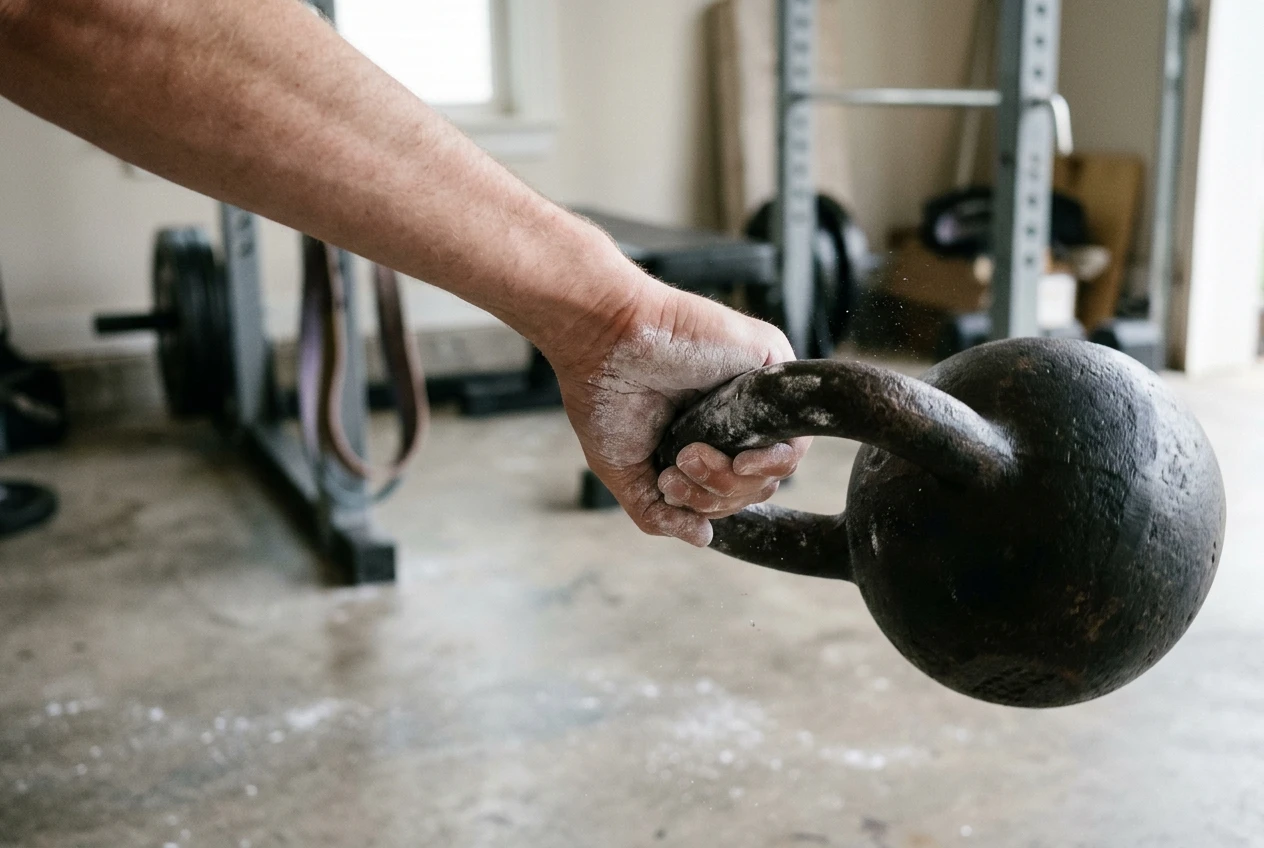
- Kettlebell training. Swings, cleans, carries and other kettlebell work challenge the hands through handle thickness, movement and repeated regripping. Straps are not used for these movements, and the work itself builds the grip and forearm endurance that make heavy pulls easier to hold.
- Lifts where you are practicing a skill. If your goal is a better hook grip or double overhand deadlift, take the straps off for the working sets and keep them for the final heavy set or back-off sets only if you need them.
A simple structure many lifters use is to do the first sets of a pull without straps and add them only when grip is clearly the limit. That keeps the grip stimulus in the session while protecting the target muscles on the hardest sets.
A simple way to choose: match your main lift to one pair
If you want a single pair, pick based on the lift you do most:
- Mostly heavy deadlifts: leather or thick cotton loop straps, wide enough to be comfortable and long enough to wrap snugly.
- Mostly rows, pulldowns and shrugs in long sessions: cotton webbing for friction when wet, or a textured synthetic strap if you want faster drying.
- Mostly Olympic pulls: figure-8 straps in cotton or nylon webbing, plus time spent learning the hook grip.
- Mostly home gym sessions with a mix of lifts: a mid-width cotton or leather loop strap covers most situations, and it is easy to keep dry in a home setup where you control the storage.
If your sweat level, bar knurling or wrist sensitivity makes one material uncomfortable, switch to another. Fit and comfort count for more than a general ranking of leather vs nylon lifting straps.
If you want your grip to get stronger so you reach for straps less often, kettlebell training is a practical place to start, since carrying, swinging and cleaning a kettlebell work the hands and forearms directly. You can try it at kettlebell.monster (affiliate link: the site may earn a commission if you sign up, at no extra cost to you).
For the rest of your gear, the guide to leather, nylon or suede lifting belt material covers how belts compare.